
Frank H. Gebhardt, 94
Daily Inter-Lake | UPDATED 7 months, 2 weeks AGO
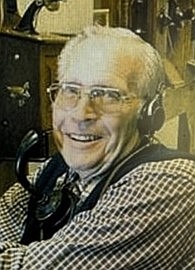
Frank H. Gebhardt, husband, father, grandfather, and great-grandfather, passed away in the early morning hours of Aug. 22, 2025. He was preceded in death by his parents; four older brothers, Edward, John, Albert and Henry; two older sisters, Marie and Alma and grandson, Tom Gebhardt.
Frank was born on May 20, 1931, to John and Minnie (Nehls) Gebhardt on his parents' farm in Dickey County, North Dakota, a few miles from the small town of Monango. He grew up the youngest of seven children. Monango was a close-knit farming community where neighbors helped their neighbors. This was evident in how the community surrounded Frank and his family when Frank was a boy and his mother passed away unexpectedly.
Eleven years older, his sister Marie returned to the farm and stepped into the role of mother, helping to raise Frank. After Marie was widowed around the late 1960s, Frank would call her nearly daily to keep in touch, up until she passed away in 2018.
When Frank was a younger man, he was quite a singer. He sang in the church choir and was often asked to lend a voice at funerals and weddings. He once entered a local vocal competition and, in the process, won a gold watch.
Throughout his life, Frank enjoyed family and hunting, fishing and golfing with all his friends. He loved road trips, bad puns, antique cars and collecting, restoring and researching the history of antique telephones. More than anything, though, he truly loved spending time with his many friends and family, visits with them, laughter, playing practical jokes and then watching as they played out.
Frank grew up working on the family farm and helping with the community harvest every fall.
For fun, he and his friends would go to dances and play baseball, football, and basketball. And while farm work was hard, Frank found time in the winters to hone the skills needed to become a pretty good mink, fox, skunk, muskrat and raccoon trapper, which served to earn a little spending money.
Speaking of raccoons, one time a neighbor, "Jake," told Frank there were no raccoons in the territory. Frank had seen their tracks, so he disagreed, and a deal was made. Jake told Frank, "If you catch a raccoon within one week, then I’ll eat it." Maybe you should never tell a trapper there is something he can’t trap because Frank's mission began in earnest. But things were looking bad on the evening of the final day of the challenge and Frank was starting to get a more than a little worried until, lo and behold, turning a corner on his way home, the headlights caught the gleam of animal eyes caught in a woven wire fence. Upon closer inspection and to Frank’s great delight, it was a big — and a little too fat for the fence — raccoon. Frank caught the raccoon, proudly knocking on Jake’s door before the midnight deadline, with the raccoon in one hand and a fork in the other. Jake’s wife threw the coon in the oven and left, so that these neighborhood boys could experience the fine and assumed acquired taste of "raccoon roast."
Another time, he bet a friend he could catch a 5-pound bass. The friend said there was no chance of that, but if he did, his wife would not only cook it up but clean it too. Well, turns out Frank couldn't find one of the right weight, so he kept a smaller bass and then stuffed every rock, nut, bolt and lead weight he could find down the mouth of what turned out to be a fairly short but pretty stocky bass weighing in right at five pounds. The lady of the house was firstly upset to find out that she was even a part of this wager and secondly, even more perturbed when — good sport that she was — she had gutted the fish, and all the contraband was discovered.
In 195,0 Frank graduated from high school. He was fond of jokes and liked to say he graduated in the "top 10" of his class. To which he'd follow up with the (true) aside that he was one of only "five" Monango High School "Bison" graduates that year. Although Frank could be very serious in his work, this was the type of self-deprecating humor Frank brought to others throughout his life. He loved people and enjoyed keeping everyone laughing.
In Jan. 1956, at 25 years old, Frank left Monango and the farm behind (which never did acquire electricity) and began work with Automatic Electric (AE) in the burgeoning telecommunications field, installing, testing, and maintaining central office telephone equipment for local telephone companies. After all the years on the farm, when Frank went to work for AE, he was astonished to learn of the heretofore unknown existence of "coffee breaks," "overtime" and "40-hour" weeks. These sorts of concepts weren't just foreign to the laborious farm life from which he’d come, they were unimaginable.
Also, in 1956, he was transferred to the Flathead Valley. Coming across the high line from the Dakotas and seeing the front range, it was the first time he encountered mountains. That experience was notable in that the question of how anyone could possibly get over or through those mountains was answered. It was also memorable in that the Flathead’s Middle Fork would become the first time he’d ever seen clean, clear water. It was the beauty of western Montana that persuaded Frank to someday make it "home."
Frank’s work in the telephone industry gave him the opportunity to travel and work throughout the continental United States and Alaska, which he enjoyed thoroughly. In Dec. 1957, Peg (Bruty) and Frank Gebhardt were married in Washington, Iowa. This would be the start of a 67-year adventure. They would travel here and there, near and far, and to and fro throughout their years together. Able partners, each brought their own complementary skills and talents to their combined personal and business lives. Most (but not all) of Frank's transfers and assignments would include Peg, their children and their bird dogs. Eventually, in 1966, Frank and Peg were able to return to Kalispell, the place where they would raise their (eventually seven) children.
Frank enjoyed telecom installation, but especially the challenge of troubleshooting the equipment. Eventually, he became well known within the industry as a resource capable of efficiently isolating and correcting bugs in Strowger Automated Toll Ticketing (SATT) systems. SATT systems recorded call billing records and when broken, because calls were still completing, revenues were not generated until whatever the problem might be was corrected. So, when billing issues occurred, they demanded — and generated — a lot of attention from the highest levels of a telephone company. Over the years, he would be sent to diagnose and correct billing troubles in multiple locales. At one point, he was "drafted" to AE’s engineering group in Chicago. A challenging job, but Chicago itself was a high sacrifice and a poor alternative to the West and the lifestyle it afforded. He was glad to be done there.
Eventually Frank, along with Peg, started Alamon Telco, Inc. a telephone equipment contracting company in 1975 and in the process the two became CEO, CFO, janitor, facilities maintenance, HR, accounting, marketing, business development, product research, engineering, fleet management and mechanic (for one used car, one used pickup), and all other duties "as assigned." Frank came to believe that if you worked in the communications industry, you could always have a job, because "people will always need a telephone." To help people enter this career field, they opened Alamon Telco Training Center in 1979. Over the 20 years it was an active facility, many people attended and received training in the latest telephone technology and continue to work in the industry to this day. When both Frank and Peg retired, Alamon was sold to the employees. In 2025, it celebrated its 50th year in business with over 200 employees.
Frank would continue in telecommunications work well into his eighties, although the latter years were mostly spent enjoying the restoral of antique phones to full working and operational status. These were then connected to and operated by vintage central office equipment. He knew this "central office" equipment intimately and this gear too, he also fully restored. Frank loved sharing and showing how these now once again functional systems operated to anyone who might be interested. This included taking portable exhibits in presentations to local grade schools. Friends and family certainly enjoyed them as well and often toured his collections. At one point, working antique "loaner" systems were on display at various telephone companies for their customers’ enjoyment. The public's interest and awareness of his hobby greatly peaked after Montana PBS included a segment featuring Frank and Peg's phone collection: "Singing in the Wires (No. 136)." (montanapbs.org)
For many years, Frank was president of the local chapter of the "Liar’s Club" coffee gathering. This declaration, however, was a point contested and disputed regularly by all the other presidents of the same club.
Frank leaves his wife of 67 years, Peg; sons, John (Kristie), Matt (Cheryl) and Chris (Stephanie); daughters, Denise (Bert Eickert), Meg (Jim Lippy), Michelle (Brad Cronk) and Jennifer (Eric Shelton); along with many grandchildren and great-grandchildren.
Ever the optimist, he was an entrepreneur, very humble, very generous, very community-minded and philanthropically minded and both a gentleman and a gentle man. He will be greatly missed. The family remains sad he’s gone but glad he’s home!
Services will be held at 11 a.m. on Sept. 5 at the Lutheran Church of Creston. In lieu of flowers, memorial donations may be made to the Church of Creston as well. Family and friends are invited to attend the viewing held between 10:15-10:45 p.m. With a reception to follow the service. The family will be holding a private burial.
Finally, thank you to the Bee Hive who assisted Frank in the last months of his life and to the Kalispell PD and chaplain services of Michelle Van Allen who attended the family on the early morning of Frank’s passing.