
Monarch butterfly festival blooms in library's garden
CAROLINE LOBSINGER | Hagadone News Network | UPDATED 1 year, 1 month AGO
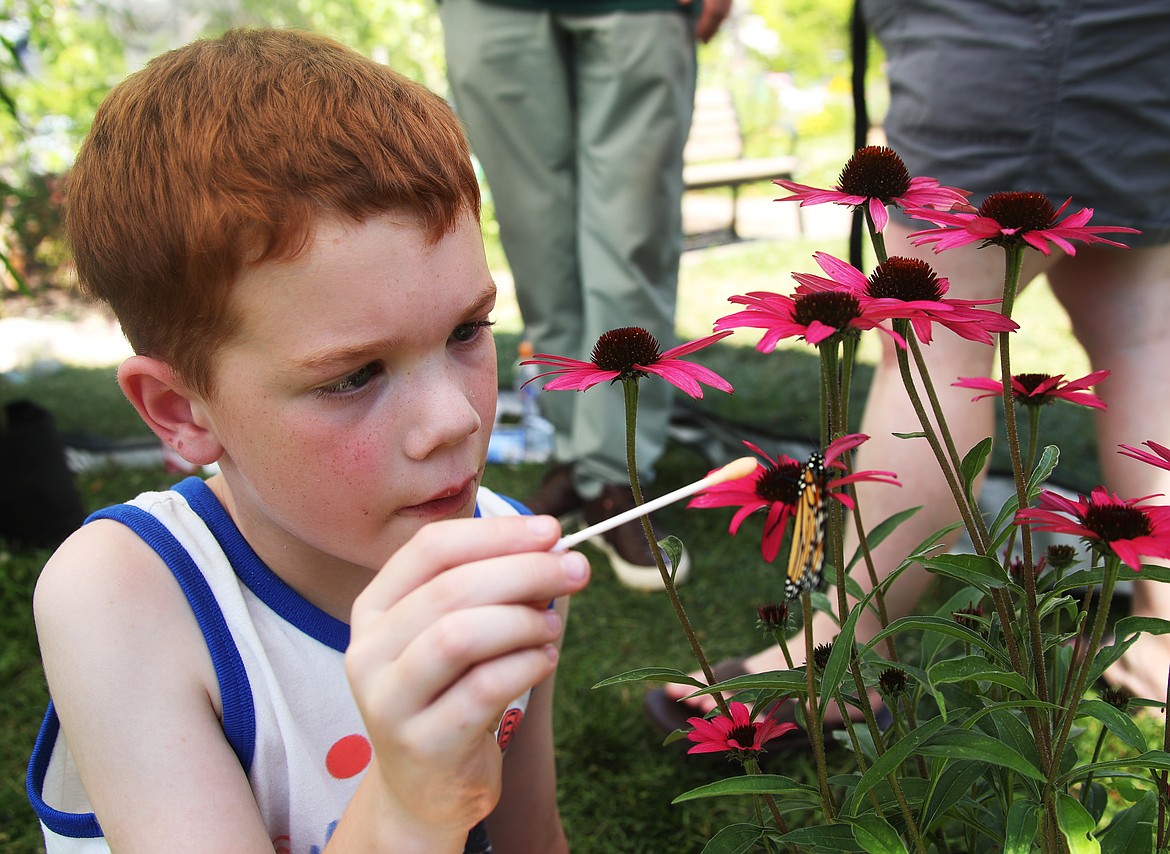
A youth carefully offers a nectar-laden Q-tip to a monarch butterfly during a recent event at the Sandpoint Library.
Photo by CAROLINE LOBSINGER
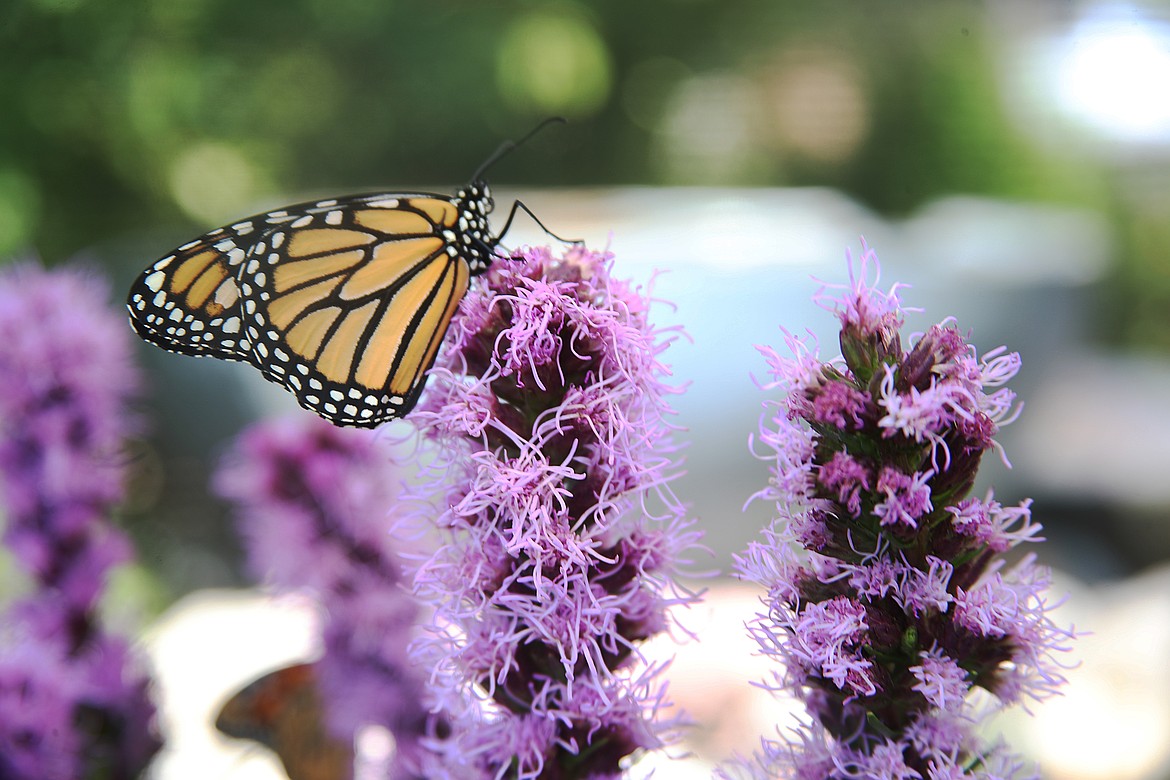
A monarch butterfly rests on a flower at a recent butterfly festival which capped the East Bonner County Library's summer reading program.
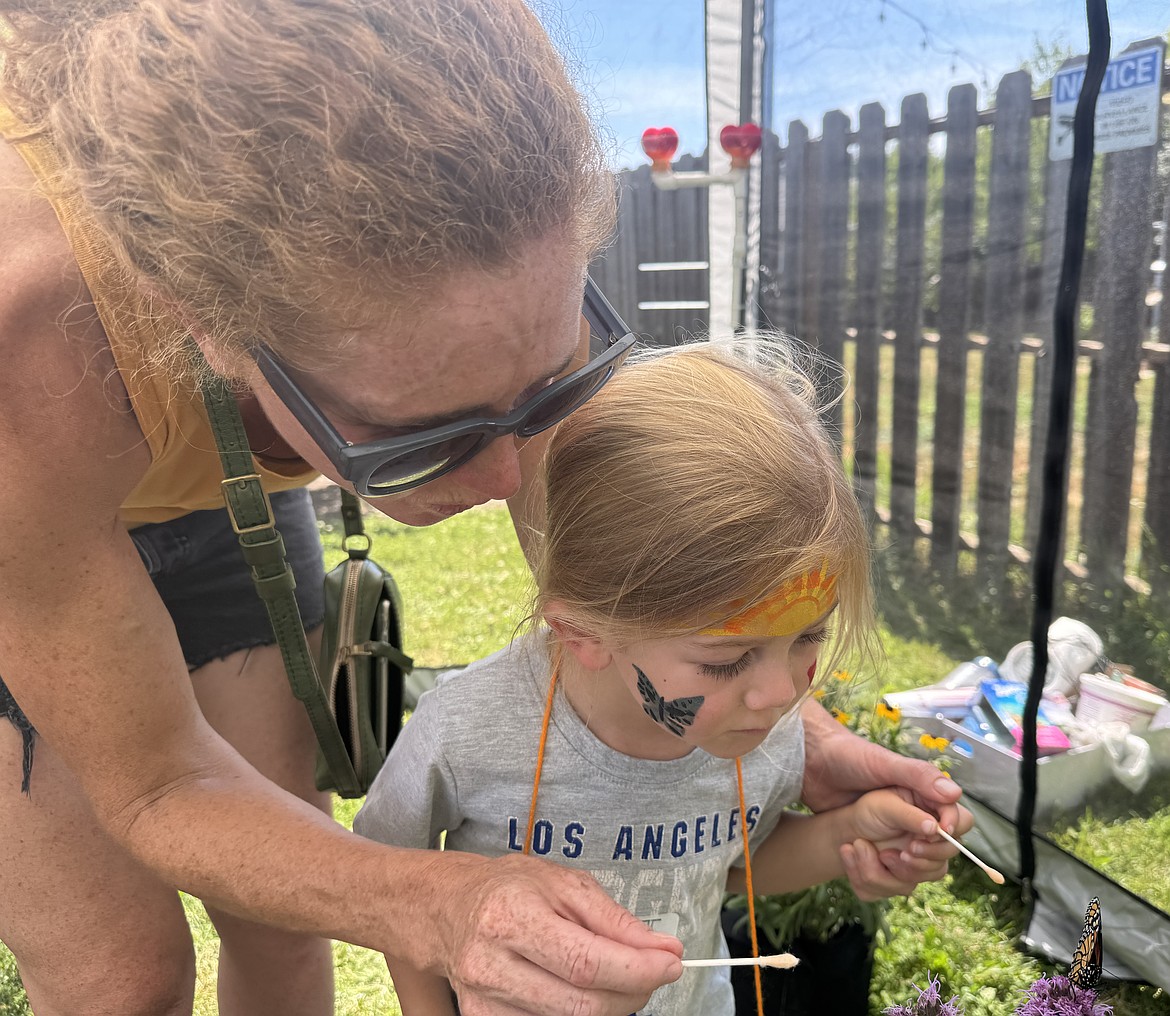
Leah and Felix Wachtel present nectar-laden Q-tips to a monarch butterfly at a recent butterfly festival held to mark the end of the Sandpoint Library's summer reading program.
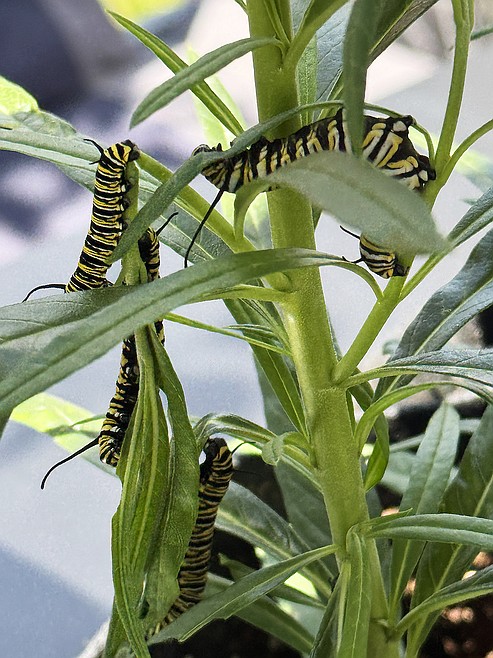
Monarch butterfly caterpillars make their way along a milkweed plant.
I grew up in the Tri-Cities, Wash., and have always loved to write. I attended the University of Washington, where I earned a double major in journalism and political science, with an area of emphasis in history. I am the fifth out of six kids — don't believe any of the stories that my siblings tell. To be able to tell others stories and take photos for a living is a dream come true — and I considered myself blessed to be a community journalist. When I am not working, I enjoy spending time with family and friends, hiking and spending time outdoors, genealogy, reading, and watching the UW Huskies and the Seattle Seahawks. I am a servant to my cat, Frankie, who yes, will eat anything and everything in sight … even wedding cookies. | August 31, 2025 1:00 AM
SANDPOINT — Tucked into a corner of the Sandpoint Library garden, several distinctive and vibrant orange-and-black butterflies flitted from one plant to another.
Others of the dozen or so monarch butterflies clasped onto the netting of the flight house walls, gently fluttering their wings as a handful of people at a time cautiously entered the enclosure to gaze enraptured at the iconic butterfly.
The celebration of all things monarch capped a summer-long reading program about the striking butterflies. During both the program and the celebration, participants learned about everything from the monarch's life cycle to its migration to the importance of milkweed to its survival.
"Over the winter we were planning summer reading and I was thinking, what's going to be really cool and interesting," said Kelli Burt, East Bonner County Library District's children's program coordinator. "… I'm really passionate about gardening and getting kids excited about learning about plants and animals."
After talking over ideas with library staff, Burt realized that centering the program around the butterflies was a natural.
Burt had worked with De Trenbeath before and knew the butterfly advocate had extensive resources involving monarchs and was actively working to boost the butterfly's population. Chair of The Mighty Monarchs Task Force, Trenbeath contacted friend Susan Burke, one of the co-founders of Wings Rising, an Athol-based nonprofit working to restore monarch populations and raise awareness about the need to protect such pollinator species.
Soon, plans for the summer-long program were in place ending in the late-July celebration which featured everything from a flight house with dozens of monarchs to milkweed plants, including some with monarch caterpillars or dot-sized eggs on the underside of the plants' leaves.
The goal of the summer reading program is to help participants realize that reading and learning are fun, that it can take place anywhere — from inside in a comfy chair to outside in a garden.
"The curiosity point is amazing," Burt said. "Stay curious about these (butterflies) and stay curious about the animals around you."
That curiosity feeds into a desire to learn more, which leads to discoveries — sometimes as close as their garden. Burt recalled a parent of a program participant realizing the family had large amounts of milkweed on their property but had been pulling it because they thought it was a weed.
They were delighted, Burt said, to realize they had the makings of a butterfly conservation area right outside their home and couldn't wait to help the plants flourish.
"For me, it's the fascination of how innate their life cycle is," Burt said of what she hopes youth take away from the summer program on monarchs. "They start out here, and they just know in their brain to go down to Mexico and to do their whole migration pattern, and it's just part of them. I hope (the youth) to just have that wonder and (to realize that), 'Wow, our world's so big and there's so many things to explore.'"
Over the summer, program participants learned about the butterflies, read about their habitat and studied the critical role that milkweed plays in the health of monarch butterfly populations. They even raised a few monarch butterflies of their own.
To cap the event and to celebrate what they'd learned, Burt organized a monarch butterfly festival and invited the community as well as reading program participants.
The event's five stations focused on a different aspect of monarchs: their lifecycle, habitat, migration, science, and interaction. At each, students, family members and the community learned about the featured topic and its role in the monarch's life. Completing the passport earned a milkweed plant to take home.
Organizers said the program aimed to highlight both the importance of monarch butterflies in the ecosystem and the critical need for milkweed due to its depletion by pesticides and development. The hope of the summer reading program — and the monarch butterfly celebration — was to both foster curiosity and encourage community involvement in planting milkweed to support monarch populations.
Pesticides have played a role in milkweed's depletion; combined with housing developments being built in areas where the plant once flourished and several other factors.
Trenbeath has been working with The Mighty Monarchs to create a series of monarch waystations in the community, ranging from the Pine Street Woods to local gardens to the University of Idaho's Sandpoint Organic Agriculture Center. It's part of an effort to create a monarch corridor stretching from North Idaho to Mexico with plenty of milkweed to help the monarchs thrive.
She has been involved in The Mighty Monarchs since it was formed following a talk by Gail Bolin a little more than three years ago at the Sandpoint Library about the monarch butterflies' declining numbers. Inspired by the talk, Trenbeath and a host of other area residents banded together to encourage the community to plant milkweed and encourage the preservation of monarch butterflies.
Several cities in the region have become monarch cities and monarch festivals are held to spread the monarchs' story and how individuals can help.
The long and the short of it, both Burke and Trenbeath said, involves milkweed. While monarchs can feed off nectar from any plant, the caterpillars are dependent on milkweed — and only milkweed — to survive.
"To them, it's tender and delicious," Burke said. "It's like eating really good lettuce."
After hatching, a monarch caterpillar will eat the plant it was born on down to twigs. Within a few weeks, the caterpillar will attach itself to a leaf or other surface, hang upside down and shed its yellow-and-black skin, revealing the protective leaf green chrysalis. Roughly two weeks later, the adult monarch emerges.
"People need to understand how important the milkweed is to the survival and future of our monarch butterfly," Burke said. "… All of our pollinators are important. Without our pollinators, we wouldn't have the majority of the food we have."
Monarchs, she noted, are a key pollinator, helping with such crops as avocados, chocolate and hundreds of fruits and vegetables grown in North America.
"Monarchs are the flagship, I think, of all pollinators and where our world is going and how it's just time for people to be more aware before it's too late," Burke said. "I think we're at a turning point."
Growing up in California, Burke said she remembers thousands and thousands of the butterflies during the migration season. It was magical to watch them in action but, over the years, the number dwindled. As she became an adult, Burke got involved in saving the monarchs; and, after moving to North Idaho, she helped launch Wings Rising with co-founder Patrick Adair, who serves as the nonprofit's chairman and CEO.
"This is more than a hobby," Burke said. "It's a passion."
Since becoming enamored with monarchs and founding Wings Rising, Burke has presented at school libraries and area nurseries and frequently attends local farmers markets to spread the word. She explains how pesticides and neonicotinoids, a specific type of insecticide that targets insects' central nervous systems, are destroying not only monarch populations but those of bees and other beneficial pollinators.
In 2024, the annual Western Monarch Count recorded just over 9,100 butterflies migrating west of the Rocky Mountains — the second lowest count in the count's 28-year history. It used to number in the millions, Burke said.
Burke raises both milkweed and monarchs on her five-acre property near Athol. This year, she hopes to raise several thousand butterflies to release on the Oregon-California border — something that could give a much-needed boost to the monarchs' overwintering population.
"They just know (where to go)," she said. "… They truly are magical creatures, they really are."
She grows the milkweed in a series of hydroponic tubs and raised beds — enough to feed thousands of monarchs as well as enough to give away.
Once, after a storm blew over a tent housing some of the monarchs she was raising, an unknown number of the butterflies got out. It wasn't too long later that Burke got a phone call from a man 10 miles down the road and who happened to have a lot of milkweed on his property.
"They ended up at his house and knew just where to go," Burke said before laughing. "They've got a good sniffer and they can smell it, they can smell that milkweed."
For more information about monarch butterflies, go to Wings Rising at wingsrising.org or reach out to The Mighty Monarchs Conservation Group via email at [email protected].
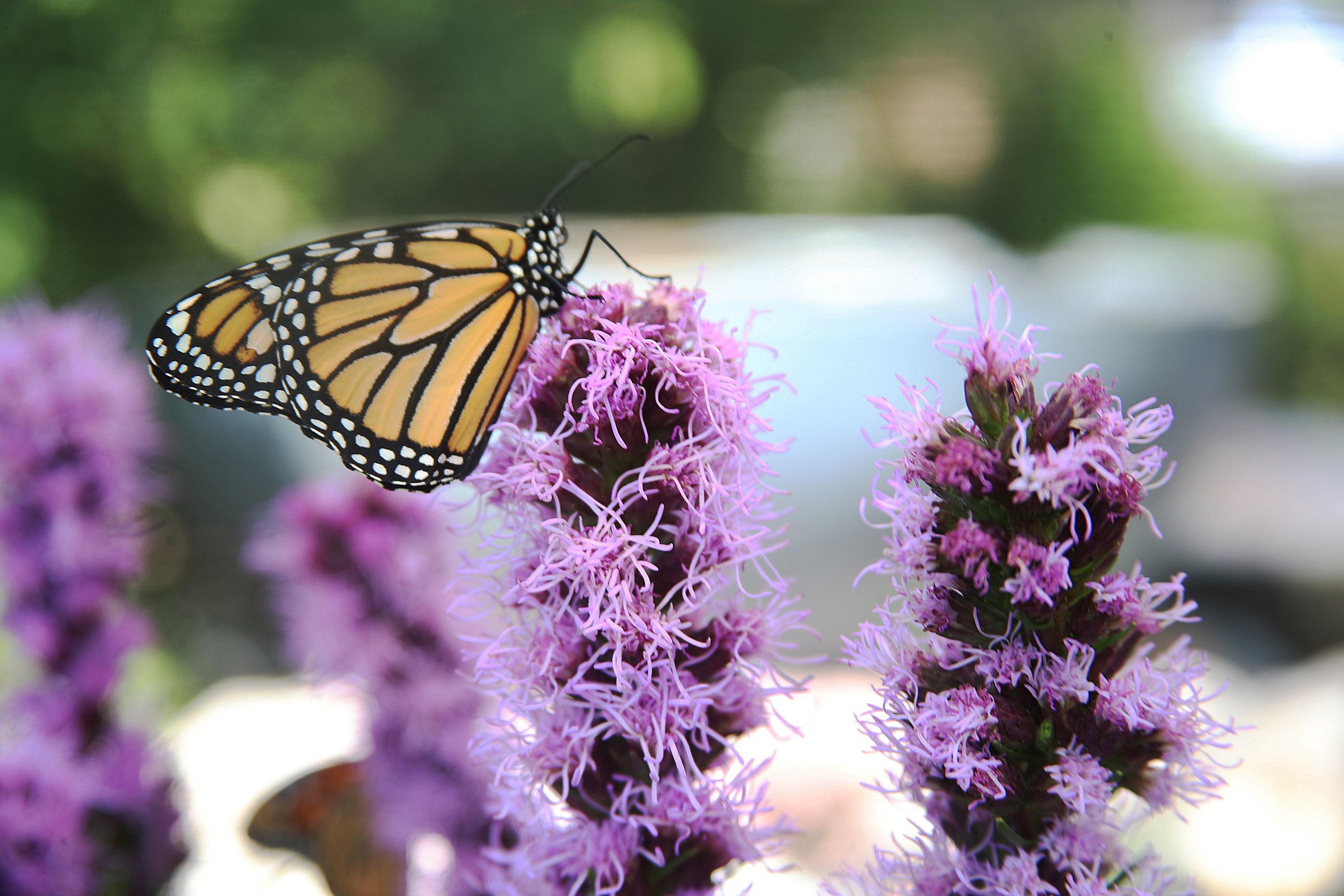 A monarch butterfly rests on a flower at a recent butterfly festival which capped the East Bonner County Library's summer reading program.
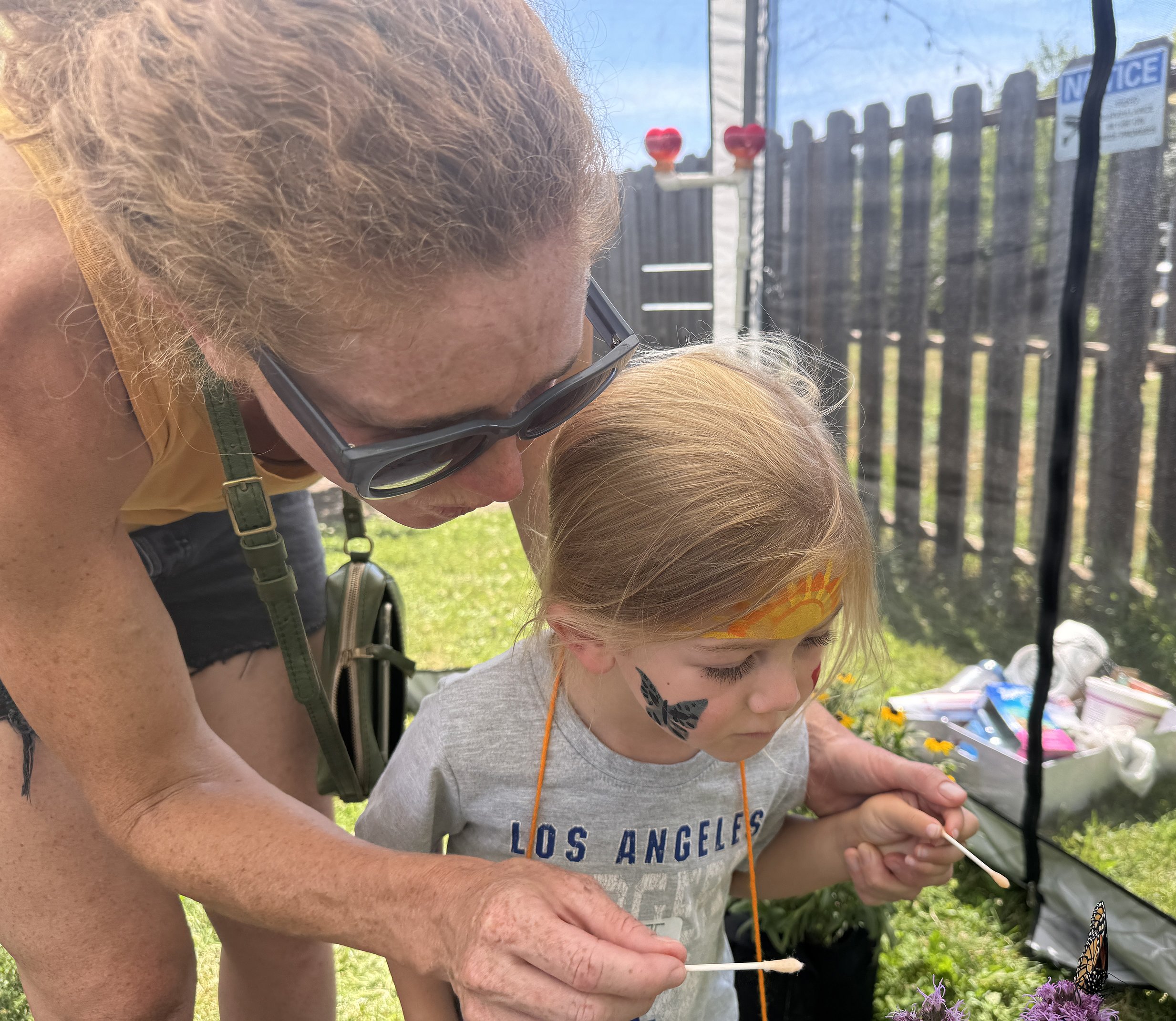 Leah and Felix Wachtel present nectar-laden Q-tips to a monarch butterfly at a recent butterfly festival held to mark the end of the Sandpoint Library's summer reading program.
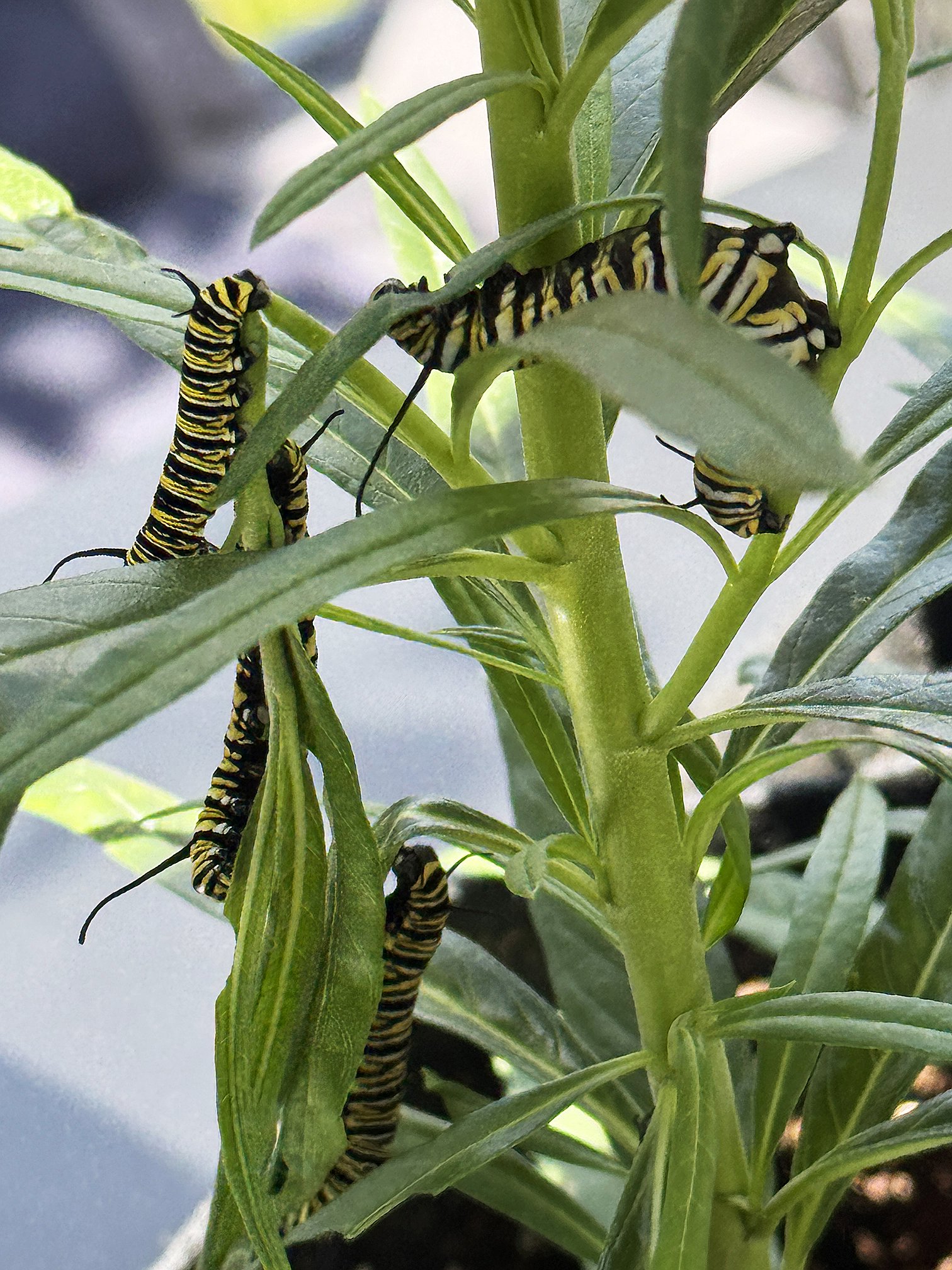 Monarch butterfly caterpillars make their way along a milkweed plant.
ARTICLES BY CAROLINE LOBSINGER

Wellness fair puts focus on health
The Wellness & Connection Fair is bringing together local health and wellness professionals together in Sandpoint for a day of presentations, activities and community resources.

BCSD pays share of ISBT shortfall
District opts to make lump sum payment
Boundary County School District paid $217,000 to cover its share of the Idaho School Benefit Trust's $13 million shortfall.

Deadline extended for 'Valor' stories
The Valor publication is gathering photos, military service details and personal stories from Boundary County veterans and military families. Featured profiles highlight local service members' contributions, achievements and sacrifices across generations.