
Dedicated Doc: Dr. Ed Vizcarra leaves legacy of patient-centered care
KRISTI NIEMEYER | Hagadone News Network | UPDATED 3 months, 3 weeks AGO
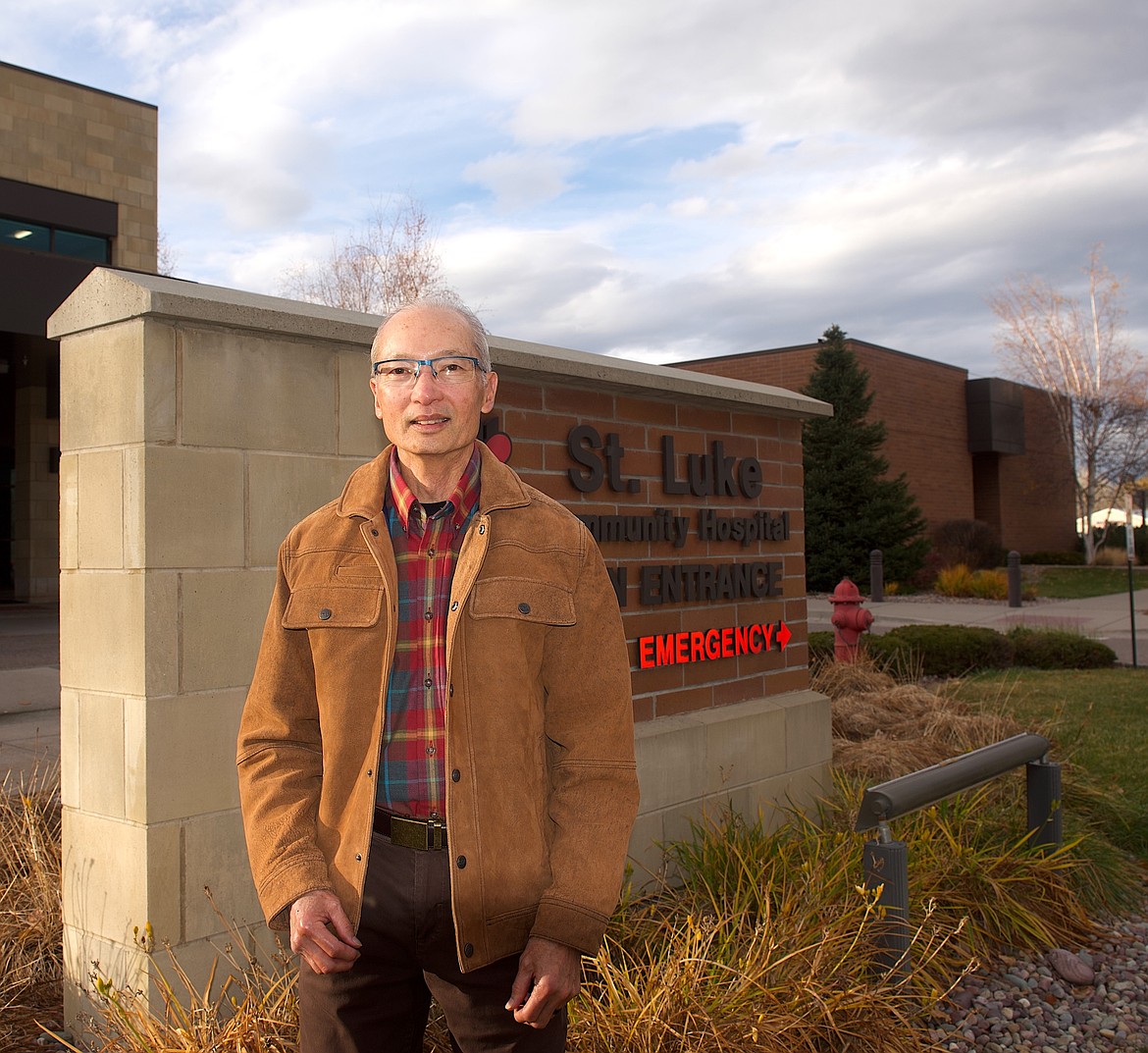
Dr. Ed Vizcarra in front of the hospital where he's worked since 1991. "I was taking care of four and five generations," he says. "I delivered babies of the babies I delivered." (Kristi Niemeyer/Leader)
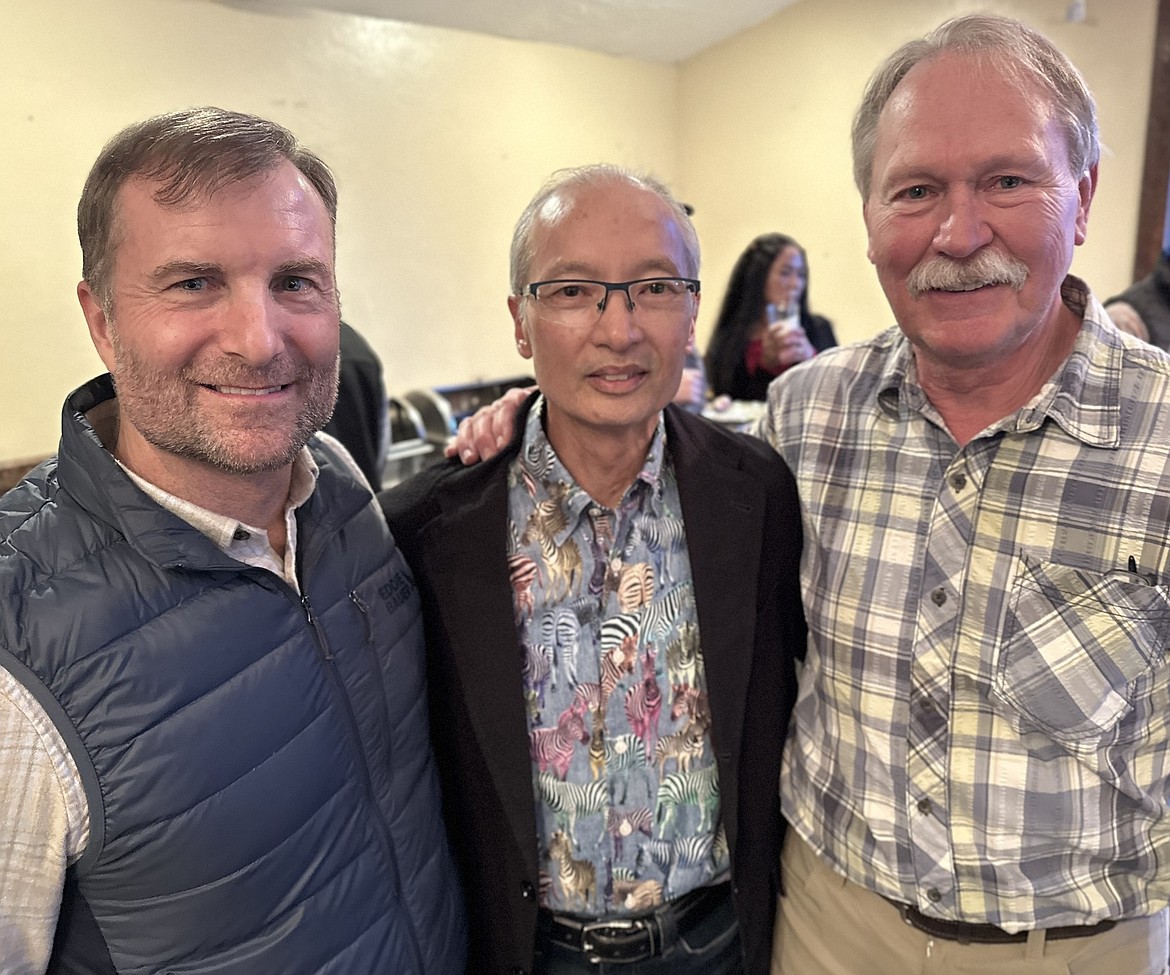
St. Luke CEO Steve Todd and former CEO Shane Roberts flank Dr. Ed Vizcarra at his retirement party in late October. (Courtesy photo)
Kristi Niemeyer is editor of the Lake County Leader. She learned her newspaper licks at the Mission Valley News and honed them at the helm of the Ronan Pioneer and, eventually, as co-editor of the Leader until 1993. She later launched and published Lively Times, a statewide arts and entertainment monthly (she still publishes the digital version), and produced and edited State of the Arts for the Montana Arts Council and Heart to Heart for St. Luke Community Healthcare. Reach her at [email protected] or 406-883-4343. | December 3, 2025 11:00 PM
When beloved family physician Ed Vizcarra retired from St. Luke Community Healthcare Network at the end of October, generations of patients and hospital staff flocked to his retirement party to express their gratitude.
“He has always led from the standpoint of what is best for the patient,” said CEO Steve Todd. Others praised his willingness to listen, lifelong curiosity and calm leadership – all skills that served him well, both as a doctor and hospital chief of staff.
During his 34 years at St. Luke’s, he’s been an integral part of a community-owned healthcare institution and medical practice that have been transformed by time and technology.
As a leader and mentor, his philosophy has been to cultivate a culture of collaboration. “What can I do to help my teammate be successful? There's where you really make a difference.”
And in an era where small independent hospitals are increasingly rare, he relished the challenge of helping St. Luke not only stay alive but thrive. “I kind of like the underdog thing – the David against Goliath thing,” he says.
Vizcarra joined a handful of family practitioners at St. Luke Hospital in 1991, lured by the area’s impressive mountains, outdoor recreation opportunities and rural nature. His family immigrated from the Philippines when he was 4 years old, and he grew up in eastern Washington on the edge of an Indian reservation, so he was no stranger to the challenges of rural communities.
He graduated from Loma Linda School of Medicine in southern California nearly 45 years ago. After a one-year pediatrics internship, he spent two years with the National Health Service Corps before completing a family practice residency, first in Reno, Nev., and then with the University of California, San Francisco.
Why switch from pediatrics to family practice? “I guess I'm too eclectic,” he said. “I didn't want to be pigeonholed into that slot.”
After practicing medicine for a few years in the Central Valley of California, he saw an opening advertised at St. Luke’s. As a mountain climber and avid hiker, “when the opportunity came up to come to Montana, I thought, ‘Well, I better check it out.’”
Family doc as quarterback
He and his wife, Eleanor, found a welcoming community, a safe environment to raise their two sons, and a healthcare institution that was growing, and had at its bedrock a commitment to family practice.
“When you think about it, if you hire a comprehensively trained family practice doctor, they can work the emergency room, admit patients to the hospital, do the clinic, deliver babies and take care of little kids. They can take care of adults, clear to geriatrics and nursing home patients.”
It’s a philosophy that Vizcarra – who has done all of the above for nearly 35 years – aligns with, caring for patients from cradle to grave.
“That's an aspect of family medicine that's not just intriguing, but so complete,” he said in a recent interview. “I mean, I have families that I grew up with. I was taking care of four and five generations. I delivered babies of the babies I delivered.”
“And there's something to be said, I think, for knowing that complete history from practically conception to when they take their last breath,” he added.
It was an approach to medicine embodied by his predecessors, Drs. Tom McDonald and Jay Ballhagen, who were similarly rooted in the Ronan community for decades.
“I like to think of them as the real doctors,” Vizcarra said. “They did everything,” from making house calls and operating on people to transporting patients to the hospital in a hearse – the only ambulance available.
Over time, St. Luke Healthcare Network has added clinics in Ronan, St. Ignatius and Polson, and completed a major hospital renovation and expansion in 2008.
Family physicians no longer “do it all.” Instead, aided by sophisticated diagnostic tools and access to specialists, they “are more and more in sort of a quarterbacking role,” says Vizcarra.
It’s important to have a gatekeeper, he believes – someone who knows the patient and their history. “Because you see all sorts of disastrous things happen when somebody over here does something that somebody over there doesn't know is happening. And then something crashes.”
Artificial Intelligence: The new frontier
In four decades as a physician, Vizcarra has also witnessed a dramatic shift in the way healthcare is delivered, spurred in large part by advancements in technology. St. Luke has an array of sophisticated equipment and services – including a CT scanner, MRI, nuclear medicine, minimally invasive surgeries, and even chemically concocted blood substitutes.
And there’s more to come: “We can replace heart valves now without cracking a chest. And we've got new drugs in the pipeline that we can develop a lot quicker because of AI.”
Instead of taking notes by hand, doctors now input information into electronic medical records, either via laptops or, more recently, using an AI app on their phone.
Vizcarra says an AI copilot for healthcare providers called Open Evidence can give him a diagnosis within seconds, based on a person’s age, symptoms and a few physical observations.
“It’s such a fascinating development,” he says. “It’s going to change medicine,” and could, he fears, eventually render family physicians obsolete.
Still, he hopes there will always be a place for doctors who take time to know their patients and can promote what he calls “lifestyle medicine.”
“We should be looking at preventative things. I mean, how do we keep people from getting sick? How do we prevent people from getting kidney disease, diabetes and heart disease with nutrition, exercise – basic things that keep people out of the hospital?”
It can be frustrating to try and encourage people to change ingrained habits. “All you can do is plant seeds,” he says. But when those seeds begin to grow, “you’re just giddy.”
Vizcarra still spends time at St. Luke’s reviewing patient records, and says it’s given him an opportunity to ease into retirement, instead of arriving there abruptly. Future plans include returning to some of his outdoor pursuits, traveling and spending time with the couple’s six grandchildren, ages 3 to 13, who all live in the Idaho Panhandle.
“I really want to get more involved with them because at some point they're going to age out,” he predicts. “And the grandparents aren’t going to be so cool.”
After 45 years, “I'm going to have to start to figure out how I'm going to interact socially with people that are not necessarily seeing me as a doctor,” he said. “It's going to be different.”
He’ll always be welcome at St. Luke’s, an institution that has benefitted from his dedication, his kind, steady devotion to patients, and his mentorship of generations of family practitioners.
“It doesn’t just have to do with patient satisfaction, it has to do with delivering good care,” he says of his mission and the hospital’s. “Good care starts with caring for each other in the organization, and then it naturally flows over to the people you're taking care of.”
Good care, like a river. That’s Ed Vizcarra’s legacy.
 St. Luke CEO Steve Todd and former CEO Shane Roberts flank Dr. Ed Vizcarra at his retirement party in late October. (Courtesy photo)
ARTICLES BY KRISTI NIEMEYER

Scholarship helps mother of two reach for college degree
For Taurie Matt, higher education offers a path to building a better life for her family. A recent scholarship from the Gianforte Family Foundation is helping her stay in school without drawing down her family’s resources.

Jig Jam: Cherry Valley students learn about music from The McDades
The McDades, a Canadian quintet that claimed the 2007 JUNO Award for Best Roots/Traditional Album, weren’t at all daunted by their audience of Cherry Valley students last Thursday.
Former Polson man files complaint against library alleging ADA violation
Former Polson resident Michael Ross has lodged a civil complaint in U.S. District Court in Missoula, accusing the North Lake County Library and its director, Abbi Dooley, of violating the Americans with Disabilities Act.