
BPA Tier 2 price increase raises costs for Bonners Ferry
NOAH HARRIS | Hagadone News Network | UPDATED 3 months, 4 weeks AGO
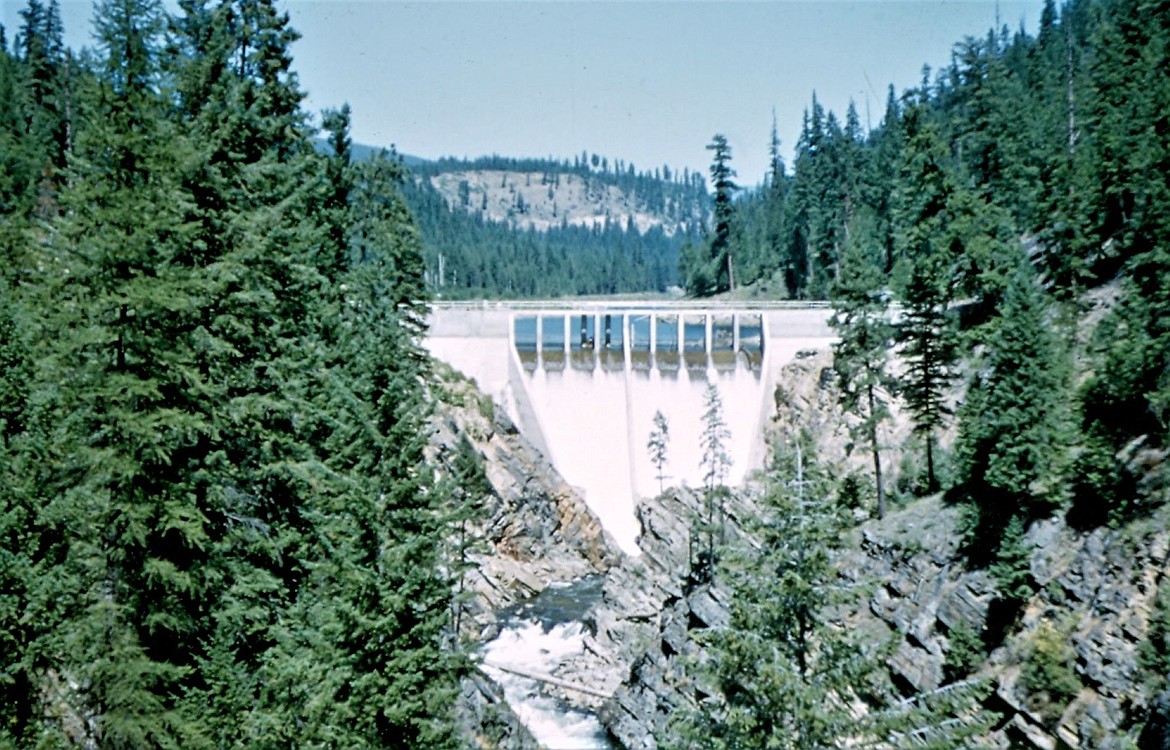
A picture taken in 1954 of the Moyie Dam, which currently supplies around 20% of Bonners Ferry's electricity. BPA supplies the rest.
(Photo courtesy of BOUNDARY COUNTY MUSEUM)
Tier 2 electricity costs for Bonners Ferry have more than doubled in the past two years, adding tens of thousands of dollars each month to the city’s BPA bill, Bonners Ferry officials said.
City administrator Mike Klaus highlighted the city’s monthly electricity bills at the Sept. 18 council meeting while discussing the upcoming extension of its Bonneville Power Administration contract through 2044.
Electricity purchased from BPA is billed under two pricing tiers: Tier 1 and Tier 2. In Tier 1, utilities lock in a set amount of power from the existing federal system at a cost-based rate. Beyond that, Tier 2 rates are charged for energy that a utility obtains from the federal agency in addition to its contractual right to power at Tier 1 rates, BPA officials said on their website.
The system can be explained using an analogy to a phone data plan: once someone uses their allotted data, any additional data costs significantly more. When the city of Bonners Ferry maxes out its Tier 1 allotment — which happens every month — it must pay the higher Tier 2 rate.
Tier 1 costs have remained relatively stable in recent years. Tier 2 costs, however, have climbed sharply. BPA says Tier 2 rates “increased 83% to reflect much higher market energy prices in the last two years.” Because BPA does not own the electricity used to meet Tier 2 demand, agency officials said BPA must purchase that power from outside suppliers, whose prices have risen.
These increasing Tier 2 prices have led to higher monthly bills for the city. In September 2023, Tier 2 rates were $33 per kilowatt hour. By October of this year, the rate had climbed to $70.66 per kilowatt-hour—more than double. That resulted in Bonners Ferry paying nearly $50,000 more this October than in September 2023 to BPA despite using less Tier 2 power.
Recently, the costs increased to $70.66 per kilowatt hour. In September 2025, Tier 2 rates were $60.25, which means Tier 2 rates rose 17.3%. As a result, the city’s Tier 2 power costs increased from $82,000 to $101,000 in one month — nearly a $20,000 increase.
Klaus said the amount city pays for overall electricity costs to BPA is expected to reach about $3.5 million in 2026, up about $200,000 from the previous year. The city implemented a 3% utilities increase this year to help offset costs. Even with the adjustments, Klaus said local utility rates remain low compared to much of the country.
“As the city, we’re trying to avoid any big jumps,” Klaus said. “Steady, low-percentage increases are more palatable than big jumps. When you look nationwide, we’re still doing well.”
Kevin Wingert, a media relations specialist at BPA, wrote in an email why Tier 2 rates have gone up.
"Power markets are increasingly volatile, and suppliers are requiring higher risk premiums to guarantee future delivery of power at a fixed price," Wingert said. "This means BPA has to pass on these higher costs onto its customers."
BPA is the only entity able to supply electricity to Bonners Ferry, Klaus said. The city’s only other source is the Moyie Dam, whose production varies depending on water levels.
The hydro project provides about 20% of the city’s total electric needs; the remainder is purchased from BPA.
Wingert shared where BPA's power comes from.
"The bulk of the power that BPA provides to the Pacific Northwest comes from the Federal Columbia River Power System, that is comprised of 31 federal hydroelectric plants located at dams in the Columbia and Snake River basins," Wingert said.
The Bonners Ferry Electric Department serves roughly 2,500 customers, with about 70% of electric sales going to customers outside city limits.
ARTICLES BY NOAH HARRIS

Bill amended to let Canadian flag to fly

PREP BASEBALL: Bonners Ferry battles in 10-0 losses to Lakeside