
Newhouse, colleagues introduce infrastructure bill
NANCE BESTON | Hagadone News Network | UPDATED 4 months, 1 week AGO
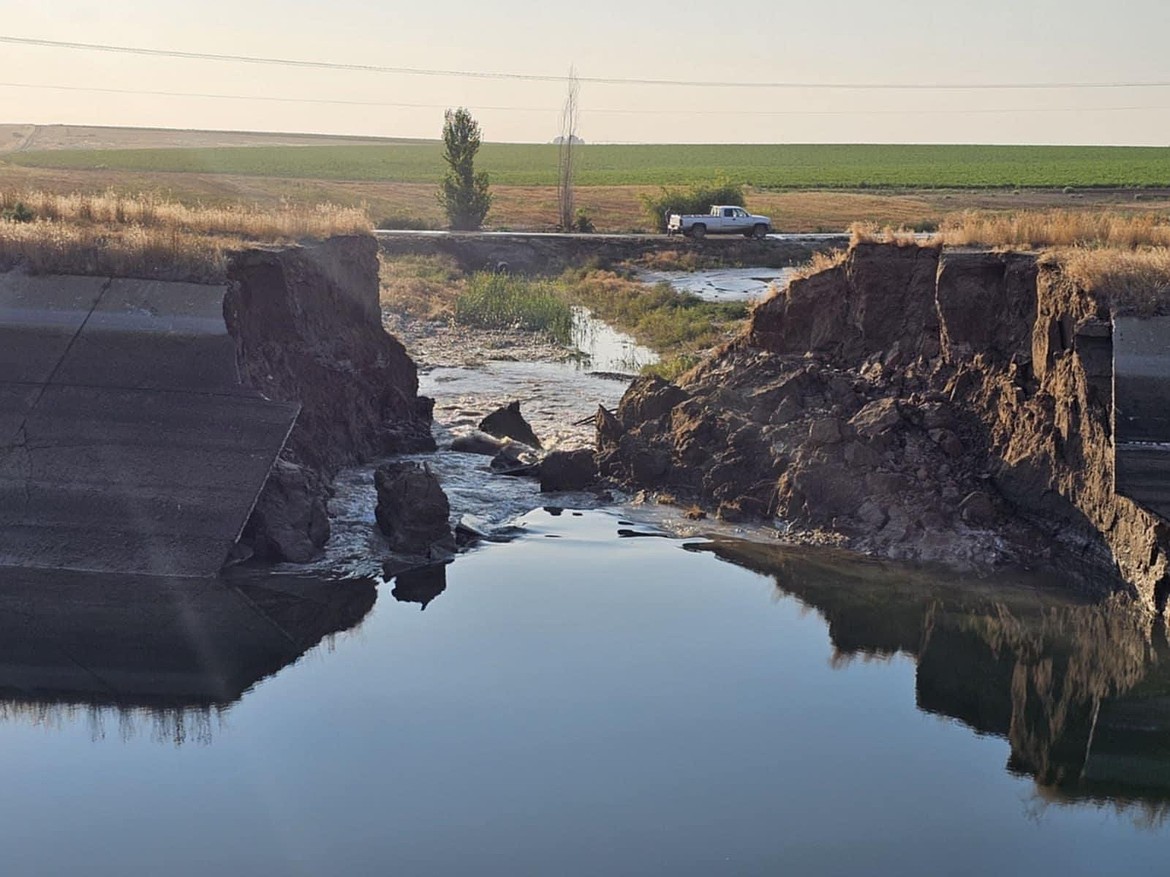
In 2024, Grant County’s East Low Canal flooded roads and fields outside Moses Lake. The canal was repaired after the breach.
FILE PHOTO
WASHINGTON D.C. — On Nov. 21, 2025, a bipartisan coalition of lawmakers introduced the Urban Canal Modernization Act, HR 6279, aimed at addressing the deteriorating condition of urban canal infrastructure across the country. This legislation, sponsored by Representatives Dan Newhouse, R-Washington; Mike Simpson, R-Idaho; Adam Gray, D-California; and Russ Fulcher, R-Idaho, focuses on providing federal support for the extraordinary operation and maintenance of urban canals deemed to be at significant risk of failure.
“As communities in Grant County and elsewhere face serious risks from aging canal systems, it is imperative that we act now to ensure vital water infrastructure is maintained and upgraded,” Newhouse wrote in a statement. “The Bureau of Reclamation’s canals are in dire need of repairs, and the surrounding communities that rely on them would be at risk if they were to fail. This legislation provides local authorities with additional resources to manage these critical pieces of infrastructure while protecting the people and property around canals of concern.”
The introduction of this bill comes in response to increasing pressures on urban canal systems that have not kept pace with population growth and infrastructure demands, Newhouse said in a statement. The Urban Canal Modernization Act modifies the Omnibus Public Land Management Act of 2009 to clarify the definition and accountability measures for “urban canals of concern,” which includes those areas where a failure would pose significant risks to lives and property.
According to the bill, an urban canal of concern is defined as a canal reach that could risk the lives of more than 100 individuals or lead to property damage exceeding $5 million. Furthermore, the Secretary of the Interior is tasked with determining whether a canal requires extraordinary maintenance based on guidelines established by the Bureau of Reclamation.
In discussions surrounding the Act, Simpson talked about the importance of addressing these pressing infrastructure challenges.
“We must act to protect Idahoans and Westerners’ way of life. The substantial urban growth around irrigation canals has created challenges and poses a threat to nearby communities,” he wrote in a statement. “The Urban Canal Modernization Act does just that by maintaining safety, expanding accessibility, and providing additional tools to ensure these crucial repairs get completed.”
Urban canals play a vital role in American agriculture and are essential for irrigation, drinking water supply, and recreation. However, many existing systems are more than a century old and require significant repairs to meet contemporary demands, according to a statement from Newhouse.
“California’s population has more than doubled since the mid-20th century, yet our water capacity hasn’t expanded to meet the needs of our communities,” Gray wrote. “The federal government must invest in our existing water systems to reduce costs for water users and farmers. The bipartisan Urban Canal Modernization Act would rebuild crumbling, outdated water infrastructure in the Valley to bring us into the 21st century.”
The proposed legislation also introduces a funding mechanism where 35% of the costs for extraordinary maintenance on urban canals will be provided by federal funds on a non-reimbursable basis. This funding model aims to alleviate the financial burden on local authorities responsible for maintaining aging canal structures.
Fulcher emphasized the importance of updating these vital irrigation systems.
“Urban canals are vital to agricultural, irrigation, and the water needs of our communities. Yet much of this critical infrastructure is in urgent need of repair,” he wrote in a statement. “The Urban Canal Modernization Act is a common-sense solution to help address these challenges and ensure our canals in Idaho and across the country get the updates they need.”
The bill has been referred to the House Committee on Natural Resources, where it will undergo further deliberation.
ARTICLES BY NANCE BESTON
1 arrested after Highway 17 stop; detectives recover fentanyl, firearms
MOSES LAKE — The Moses Lake Street Crimes Unit conducted a traffic stop on Highway 17 near Randolph Road and executed a search warrant Friday morning as part of an ongoing narcotics investigation.
4th-year drought declaration in WA, subtle effects in the Columbia Basin
EPHRATA — Washington’s fourth straight year of drought is expected to hit some regions hard, but in Grant and Adams counties, the impacts will look different – quieter, less visible and centered underground. Statewide, the Department of Ecology issued an emergency drought declaration after a warm winter left Washington with about half its usual snowpack, raising concerns about low summer streamflows, stressed fish populations and heightened wildfire risk. Seven of the past 10 years have included drought somewhere in the state. “If you look at our mountains, the challenge we are facing is clear,” Gov. Bob Ferguson said during a press conference Wednesday. “We’re taking emergency action to protect fish, farmers and communities across Washington.”
Sleep Diagnostic Center to close after doctor’s sentencing
MOSES LAKE — The Central Washington Sleep Diagnostic Center announced it will be closing its doors effective April 30. This includes locations in Moses Lake, Spokane Valley, Brewster and Wenatchee. The announcement follows the March 25 guilty plea from Dr. Eric Edward Haeger, 57, in United States District Court to adulterating and misbranding medical devices with the intent to defraud or mislead, according to a statement from the U.S. Attorney’s Office. “The adulterations by Dr Haeger show a dangerous disregard for the safety of his patients,” Washington Attorney General Nick Brown said in a statement. “This is a win for patient safety, for protecting public dollars from fraud, and for ensuring citizens of Washington get necessary healthcare. This case exemplifies the great work our team is doing in collaboration with our federal partners to fight fraud and protect Washingtonians.”