
Natural Resources Committee recognizes North Fork cleanup
KAYE THORNBRUGH | Hagadone News Network | UPDATED 3 weeks AGO
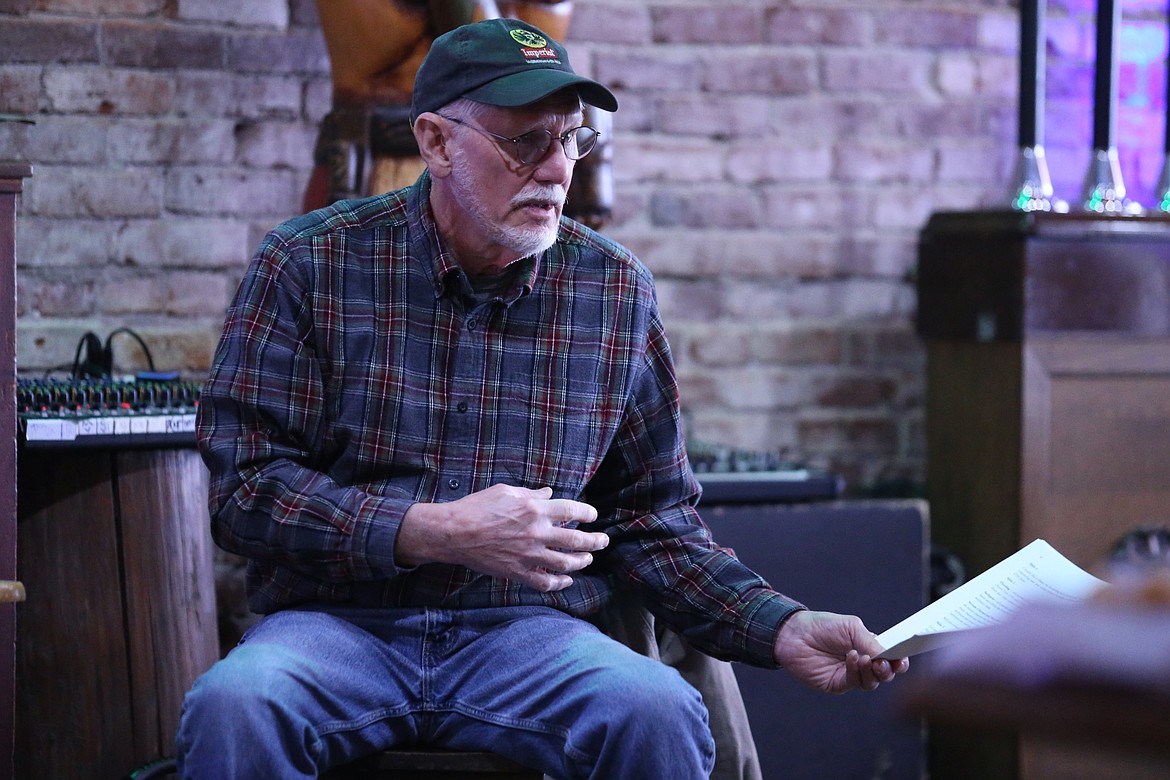
Ed Lider addresses a crowd at the Iron Horse downtown.
KAYE THORNBRUGH/Press
Kaye Thornbrugh is a second-generation Kootenai County resident who has been with the Coeur d’Alene Press for six years. She primarily covers Kootenai County’s government, as well as law enforcement, the legal system and North Idaho College. | December 5, 2025 1:07 AM
COEUR d’ALENE — Not many people who dedicate their lives to environmental restoration get to see their work completed.
Ed Lider is one of the few.
Lider, who worked for the U.S. Forest Service in North Idaho from 1980 to 2010, was among the stakeholders who worked for decades in the North Fork Coeur d’Alene River subbasin to reduce sediment pollution and restore cold water fisheries habitat.
Thanks to their efforts, water quality in multiple previously impaired segments has improved. It includes 168 miles of streams removed from the impaired waters list because of on-the-ground restoration efforts.
“It was far from healthy when you went to work,” Sandy Emerson said to Lider. “There aren’t many projects that do as well as this did. You’re to be congratulated and recognized for that.”
At the Iron Horse in downtown Coeur d’Alene, Lider sat down Wednesday afternoon with the 4C Natural Resources Committee to discuss the work and its impact.
When Lider began his career with the Forest Service in 1980, he said the agency focused more on cutting trees and building logging roads in or along streams rather than restoring them.
In 1985, Lider inventoried the roads in the North Fork Coeur d’Alene River watershed and found “huge failure rates” on the culverts. He said erosion and sedimentation were the subbasin’s most significant water quality issues. Modeling showed that removing roads could reduce sediment.
Lider identified funding opportunities for restoration and rallied volunteers for the restoration projects. He engaged the local watershed community by reaching out to conservation groups such as the North Idaho Fly Casters Club and showing them how streams recovered after road removal.
It was because of Lider’s efforts that the Forest Service began tying restoration and road removal directly to timber sale contracts, ensuring that timber dollars would fund restoration.
Lider said his proudest moment came when the Forest Service committed to taking responsibility for the agency's actions in the watershed, rather than building roads and then walking away.
“That was a highlight of my career because that’s when watershed protection became a team effort,” he said.
Key to the success of the restoration work was cooperation between local, state and federal partners. Lider said he aimed to foster a collaborative environment by working with local groups like the Kootenai Environmental Alliance.
“When I first started, KEA was a bad word in the Forest Service,” he said. “That’s really changed.”
Lider said he was surprised by how quickly systems and fish populations rebounded after stakeholders removed sediment sources and added wood to the streams.
“The many little projects we’ve completed have been collectively beneficial to the recovery of the larger watershed system,” he said.
ARTICLES BY KAYE THORNBRUGH
Rathdrum police seek victims amid burglary investigation
Rathdrum police arrested a suspect Tuesday who they believe to be involved in multiple burglaries, according to a news release.

BLM: Migrating eagle population peaked early this year
The annual migration of bald eagles to Lake Coeur d’Alene to feed on spawning kokanee is past its peak, according to the Bureau of Land Management.
North Idaho ski areas open after slow start
Amid challenges like warm temperatures and strong winds that caused power outages across the region, all three ski areas in North Idaho are open, though operations are limited in some cases.