
OPINION: Economy of status
BRENT REGAN/Common Sense | Coeur d'Alene Press | UPDATED 3 weeks AGO
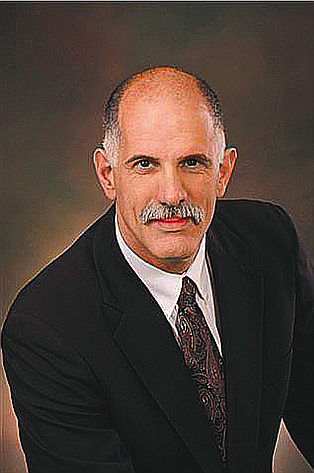
Regan
We live in a time of stark political dichotomy where a person’s interpretation of facts depends on their political affiliations. People will see some action of President Trump as MAGA or fascist, depending on their political party and their news sources. Scott Adams has referred to this phenomenon as “Two movies playing on one screen” where the viewer can form a radically different conclusion based on their own biases and filters. Compared to reality, neither view is 100% accurate. The best indicator for judging which view is more accurate is which perspective best predicts the future. If you are hallucinating, it is very difficult to forecast what will happen next.
One component in understanding reality is to understand what motivates people. If asked to list the top human motivations you may get answers like money, power and sex. These are frequently at the root of many decisions, good and bad, but there is another fundamental motivation; the acquisition of status.
We are social creatures who create vast and hyper complex societies that span the globe. The pursuit of status stands out as one of the most pervasive and influential forces shaping our actions. Rooted in evolutionary biology, reinforced by social structures, and amplified by modern culture, the quest for status influences everything from career choices to social interactions.
From an evolutionary perspective, the drive for status can be traced back to our ancestors' need for survival and reproduction. In prehistoric societies, higher status often meant better access to resources, mates, and protection. Those who achieved prominence through hunting prowess or leadership gained advantages that increased their chances of passing on genes. Prestige, the achievement of status, motivates individuals to excel in ways that benefit the group, fostering cooperation while satisfying personal ambitions. In essence, status-seeking is hardwired into our biology as a mechanism for reproductive success.
In contemporary society, this motivation manifests in myriad ways, often subtly disguised as other pursuits. Consider the workplace: many people strive for promotions not solely for financial gain but for the elevated social standing that comes with titles like "CEO" or "Senator." Social media exacerbates this, turning status into a quantifiable metric through likes, followers, and viral content. Platforms like Instagram and LinkedIn encourage users to curate images of success such as luxury vacations, professional achievements, or physical fitness, not just for enjoyment, but to signal superiority.
The pursuit of income beyond what is needed for a comfortable lifestyle can be attributed to the quest of status. Fashion, for instance, is less about utility and more about signaling affiliation with elite groups. People buy expensive items to display wealth and rank. In education, the prestige of Ivy League universities motivates students to endure grueling application processes, not merely for knowledge but for the lifelong status boost. Even altruism can be status-driven; philanthropy among billionaires often serves to enhance reputation rather than pure benevolence. These examples highlight how status permeates decisions, pushing individuals to conform, compete, or innovate.
However, this motivation is not without drawbacks. The relentless pursuit of status can lead to burnout, ethical compromises, and social fragmentation. In extreme cases, it fuels conflicts, from workplace rivalries to geopolitical tensions, where nations vie for global dominance. Tying self-worth to status creates vulnerability to failure and rejection. To be ostracized from one’s societal group and be emotionally and even physically painful and can, tragically, lead to suicide.
The acquisition of status is a primary human motivation, deeply embedded in our evolutionary past and amplified by modern society. Understanding that status is a core driver will give you a more accurate view of reality and increase your prospects for future success.
It’s just common sense.
• • •
Brent Regan is chairman of the Kootenai County Republican Central Committee.