
Polson Commission discusses new well, changes residential impact fees
EMILY MESSER | Hagadone News Network | UPDATED 2 months, 4 weeks AGO
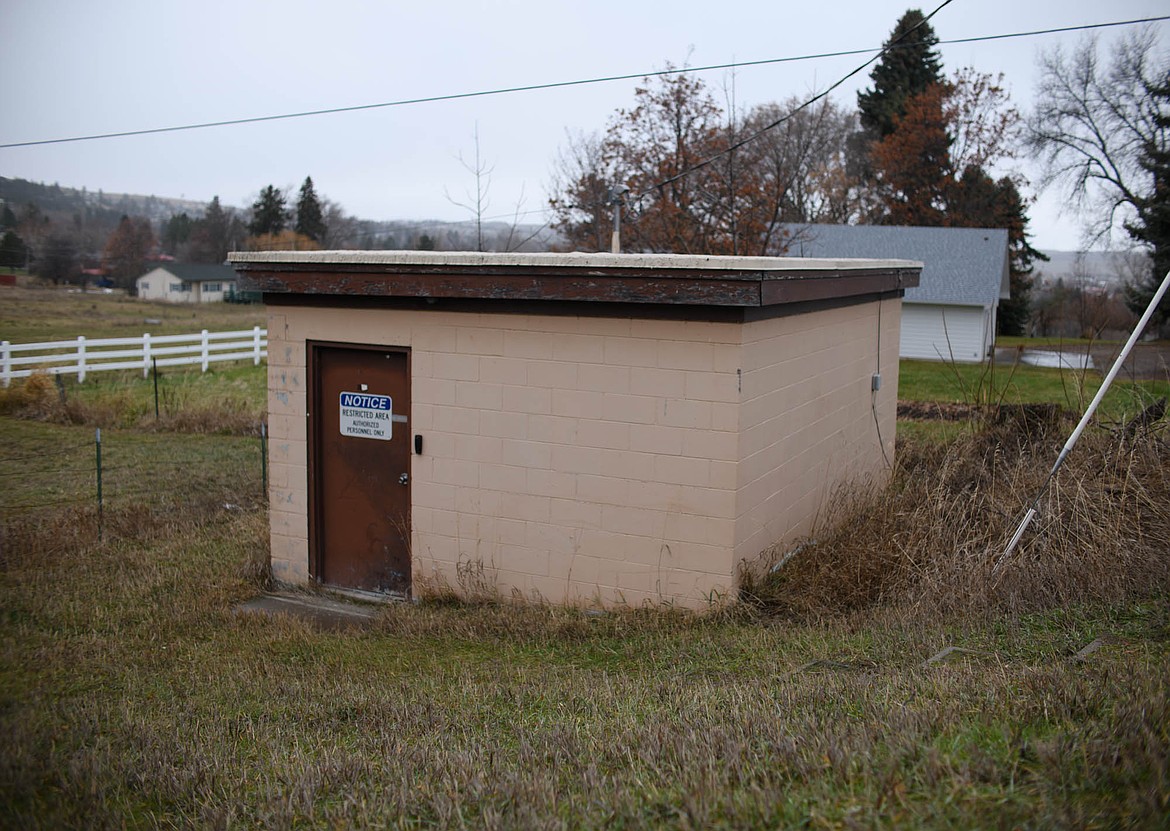
Off Devlin Lane in Polson, two pump houses sit near wells No. 4 and 5. No. 5 has historically underperformed and the administration is moving forward with a plan to construct a new replacement well at O’Malley Park. (Emily Messer/Leader)
Emily Messer joined the Lake County Leader in July of 2025 after earning a B.A. degree in Journalism from the University of Montana. Emily grew up on a farm in the rolling hills of southeast Missouri and enjoys covering agriculture and conservation. She's lived in Montana since 2022 and honed her reporter craft with the UM J-School newspaper and internships with the RMEF Bugle Magazine and the Missoulian. At the Leader she covers the St. Ignatius Town Council, Polson City Commission and a variety of business, lifestyle and school news. Contact Emily Messer at [email protected] or 406.883.4343 | December 10, 2025 11:00 PM
After 25 years of underperformance and failed revival attempts, Polson City Well No. 5 will be replaced with a new well, planned for O’Malley Park.
A non-action item on the Polson City Commission agenda on Monday, Dec. 1, was to discuss the status of this well and the potential relocation. This is one of eight wells the city operates.
City Manager Ed Meece explained that when he arrived at Polson in 2020, the priority was planning and constructing well No. 8. After its completion, the city prioritized efforts to revive well No. 5, which has been sandy since completion in 2000.
Wells 4 and 5 are near each other and are pulling from the same aquifer, meaning that neither well would be able to provide its maximum gallons per minute, explained Ashley Walker, the city’s public works director.
The city consulted with senior hydrogeologist, Brad Bennett from Water & Environmental Technologies (W.E.T.) Engineering, to determine the best location for a new well. The Montana Department of Environmental Quality requires various setbacks from sewer lines and storm water lines, to prevent contamination.
“So, in a park setting, that really is the big potential,” Bennett said at the meeting. “At the end of the day, I think what you would probably see is a wellhead sticking out of the ground. And if everything goes really well, a small pump house, somewhere in the vicinity, probably in one corner of that park. Most people wouldn't even know that it's there.”
According to Meece, the city would have to “tweak” its water rights for the use of this new permanent well, since it would be considered a replacement well. He said well No. 5 would have to be officially abandoned and filled with cement.
Bennett’s recommendation is to drill a test well up to a maximum depth of 500 feet to determine the best location for a well within O’Malley Park. The cost for drilling a test well through W.E.T. Engineering will be just over $70,000.
Meece explained that the purpose of this discussion was to update the commission before drilling equipment appeared at O’Malley Park.
In response to commissioners’ concerns about whether placing a well in a popular city park would pose a problem, Walker said it would be located in the southwestern corner and not infringe on baseball fields or playground equipment.
As to whether parts from well No. 5 could be repurposed for the new one, he told commissioners, “Unfortunately, sand turned our impeller into little stubs. There’s not much left to work with there.”
Increased Impact Fees
The commission also heard first readings of two resolutions that would substantially increase the impact fees for developments within the city limits. Both are based on recommendations from an impact fee advisory committee that’s been studying the issue for multiple years.
City manager Ed Meece reminded commissioners that fees have not increased since 2014, despite ever-increasing costs to the city of supplying new infrastructure to both residential and commercial developments.
Meece said that the city has “basically eaten the cost” on substantial increases to materials, equipment and labor involved in providing public services for new developments in the intervening 11 years.
“The fact that we haven’t made adjustments in such a long period of time is how we’ve ended up where we are today,” he said.
The first resolution, which was unanimously approved, would change the way in which residential impact fees are assessed from a blanket fee for residential units to calculations based on the number of fixtures in each residence. At the same time, the new fee structure removes park and administration fees from the formula, in accordance with Senate Bill 133, which was passed in 2025.
The fixture calculation would assess a basic water fee of $306 per unit for a minimum of five fixture units (consisting of a clothes washer, kitchen, a full bath, half bath and outdoor hose bibb). The fee for 14 units (the number of water fixtures in an average single-family home or, for billing purposes, an Equivalent Dwelling Unit) would be $4,284, an increase of about 29%.
The basic wastewater fee of $200 per unit would also be based on five units, consisting of a clothes washer standpipe, full bath and kitchen. The fee for an average home of nine fixtures would be $1,800, or an 18% increase.
Meece pointed out that basing impact fees on the number of fixtures in a household gives homeowners and developers a means to control those initial costs, since fewer fixtures means lower fees.
The second resolution, to adjust impact fees for non-residential developments, was unanimously tabled after Commissioner Lisa Rehard asked for more input at the next meeting from the advisory committee on a move that would increase fees dramatically.
That proposal is based on meter size for both water and sewer and would be substantially more than the existing fees. For example, the cost of a one-inch meter for a commercial establishment would increase from $5,633 to $10,189, while a one-inch sewer hookup would increase from $2,607 to $4,277.
The commission also completed the second reading of the amended chicken ordinance, which will allow ducks within city limits. The amendment included lengthening the time of permit from the maximum of one calendar year to three calendar years to address the fee-to-cost aspect of the application. It also included discretionary inspections to reduce costs associated with the application review. The resolution was passed and will be effective Dec. 30.
Meece also provided an update on Bunker's Bar & Grill as he investigates what option is best for managing the restaurant. He and Jodi O'Sullivan, the finance officer, have been analyzing revenue and expenses for the last 24 months.
Meece is digging into the menu and removing items that are more likely to spoil. He also explained that he is assessing the menu for places where they can increase or decrease menu items.
Meece said he will be having a meeting with some of the restaurant staff to determine if a lease, partial management or maintaining full management by the city is the best option.
ARTICLES BY EMILY MESSER

Polson commissioners hear plan for reducing E. coli in Flathead Lake
Representatives from the Flathead Lakers and the Polson Bay Golf Course presented a plan to the Polson City Commission last Wednesday to reduce stormwater runoff, which had caused increased levels of E. coli in Flathead Lake near Boettcher Park.

City Commission finalizes Salt Cafe grant, hears from market vendors
The Polson City Commission council chambers were full of support Monday night for Andrew Perkins, owner of Salt Cafe, who has been awaiting funding from the Tax Increment Finance District grant he received nearly three years ago.
Foundation established for Polson Police
A non-profit called the Polson Police Foundation was launched at the end of 2025 to support the department by contributing to training, officer wellness, critical equipment and community initiatives.