
PET TALK Em-bark-ing on a holiday getaway: Tips for traveling with pets
PET TALK | Coeur d'Alene Press | UPDATED 5 days, 22 hours AGO
Pet Talk
The holiday season brings fun, food and family, but for some, the travel it takes to get there can be chaotic and stressful.
For pet owners hoping to include their furry friends in the festivities, a little extra planning can make all the difference in ensuring a smooth and happy trip.
Dr. Christine Rutter, a clinical associate professor at the Texas A&M College of Veterinary Medicine and Biomedical Sciences, offers helpful tips for pet owners to consider before hitting the road with their furry companions.
On the road again
Whether your pet is a confident “road dog” or a cautious “‘fraidy cat,” their comfort level with travel should guide how you plan and prepare.
According to Rutter, pets accompanying their owners on holiday trips should feel safe and not as if they are being uprooted from the normal routines that bring them comfort and security.
“Some pets are extremely anxious in new environments and won’t settle down, won’t eat or eliminate on a leash or will bark at every noise or new animals in their environment,” she said. “Other pets are very chill about traveling, love a car ride and are perfectly happy in new environments; this usually happens because owners have done ‘practice trips’ with the pet to let them know that changing environments is OK.”
When spending an extended amount of time in a vehicle, Rutter recommends offering your pet entertainment and treats as a distraction from the road bumps and swift turns.
“I usually bring familiar food, a few familiar toys and any needed medications in a ‘go bag,’” Rutter said.
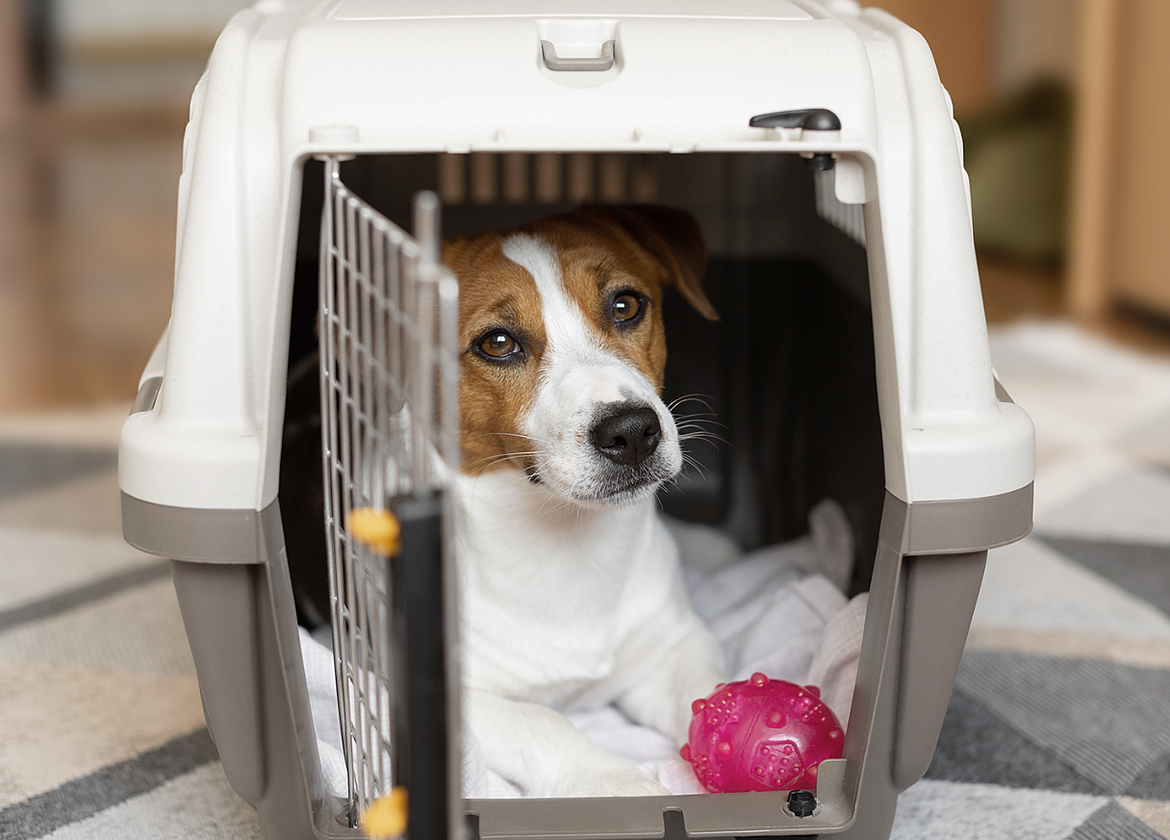
Owners can also help reduce pets’ anxiety during travel by getting them used to being in a crate, riding in a car and being in crowded and noisy environments before the actual trip occurs.
“Acclimating your pet to their travel arrangements and new environments before the trip is key,” Rutter said. “The other precaution that I recommend is to look up emergency veterinary hospitals along your route and preemptively investigate ‘day care’ or boarding options if you plan to visit a location during your trip that does not allow pets.”
When preparing for a road trip, Rutter’s priorities for owners include:
• Restraining pets with a crate or barrier while riding in a car
• Making sure pets are leash trained and comfortable eliminating while on a leash
• Locating pet-friendly hotels
• Never leaving pets unattended in a hotel room, as this can lead to barking and significant anxiety
• Never leaving pets unattended in a car — no matter the time of year
In addition, owners should be mindful of their pet’s need for breaks. Similar to humans, dogs and cats need to stretch their legs after a few hours of being in the car; the frequency of these breaks will depend on the pet’s health status and normal activity levels of the pet — more active dogs may need to get out more often and walk around.
Key to all of this is identifying the particular needs of your furry friend to ensure they’re comfortable being away from home.
Flight travel pre-purr-ations
Preparation is also especially important for plane travel with pets because airlines may have different rules on paperwork and crate requirements. Owners set on bringing a furry friend on board should contact the airline well in advance to make sure they are informed on the rules and expectations that plane travel with pets entails.
Taking weight and breed restrictions into consideration is vital if you want your pet to travel in a carrier at your feet rather than the common cargo hold.
“Particularly, many airlines will also have breed limitations that exclude brachycephalic (flat-faced) breeds from unattended travel,” Rutter said.
Owners should talk to the airline and their veterinarian ahead of time about potential health concerns for brachycephalic breeds.
“Travel is hard, even for people who know what is going on,” Rutter said. “Many flights are quite long, and the process of check-in, flight, landing and reclaiming the pet can be stressful and complicated.”
Because complications of air travel are more and more common, managing the logistics of a pet through those complications can be extremely hard, Rutter said.
For this reason, the pet’s veterinarian may prescribe a sedative medication to help ease nerves. Rutter advises doing a trial run of the medication at home so that you can know what to expect.
Bringing a pet along for your holiday festivities can be a great idea; after all, for many of us, pets are an important part of the family. A little extra planning for their comfort will help ensure your trip is filled with calm rides, cozy cuddles and cheerful memories.
•••
Pet Talk is a service of the College of Veterinary Medicine and Biomedical Sciences, Texas A&M University. Stories can be viewed on the web at vetmed.tamu.edu/news/pet-talk. Suggestions for future topics may be directed to [email protected].