
OUR GEM: Taking public comments on wetland protection rule changes
SHARON BOSLEY, Special to The Press | Coeur d'Alene Press | UPDATED 2 months, 4 weeks AGO
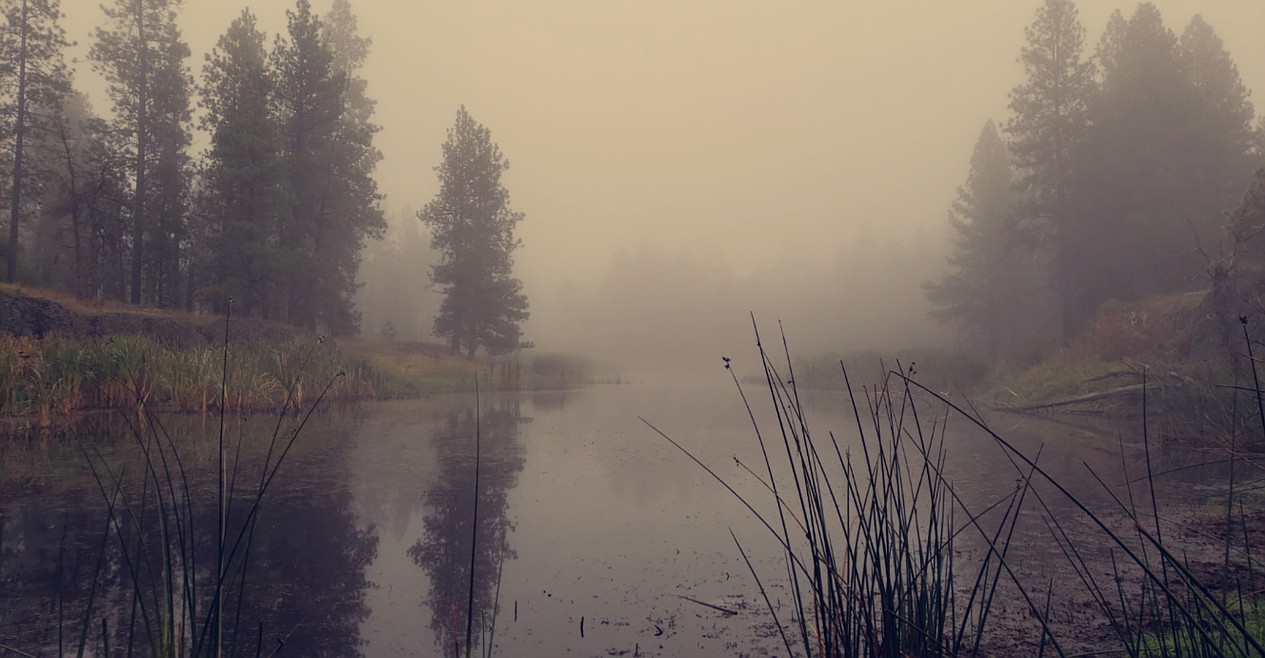
Photo courtesy of Our Gem.
The Clean Water Act (CWA) aims to protect our water resources by regulating the discharge of pollutants into the waters of the United States. Its goal is to help ensure all waters are swimmable, fishable and drinkable. The purpose of defining the Waters of the United States (WOTUS) is to determine which waterways the CWA protects. The definition determines which waters require permits for activities that may discharge pollutants or disturb aquatic features. Critical changes to the Clean Water Act, specifically those affecting wetlands, have been proposed by the U.S. Environmental Protection Agency (EPA).
Public comments on these proposed revisions are open until Jan. 5. More information on the rule change, its potential impacts on North Idaho wetlands and how to submit comments is provided below.
The definition of WOTUS has undergone multiple regulatory and judicial changes over several decades. Most recently, the U.S. Supreme Court’s decision in Sackett v. Environmental Protection Agency (2023) narrowed the scope of waters protected under the CWA. The court determined that “waters” include only relatively permanent, standing, or continuously flowing bodies of water, such as streams, rivers, lakes, and oceans. The decision also clarified that wetlands fall under federal jurisdiction only when they have a continuous surface connection to these waters.
In response to Sackett, the EPA and the U.S. Army Corps of Engineers (USACE) finalized a revised WOTUS definition to align federal regulations with the court’s ruling. Under the updated definition, many wetlands lacking a visible surface connection to jurisdictional waters are no longer federally regulated, leaving their protection to state and tribal regulation. States, tribes and local governments retain authority to adopt standards that are more protective than the federal baseline.
The new WOTUS rule aims to clarify which waters are subject to federal jurisdiction, addressing longstanding concerns from regulated entities and states regarding inconsistent interpretations and shifting regulatory frameworks. Historically, overlapping court decisions and repeated rule revisions led to uncertainty about which waters required federal permits. The current rule seeks to provide more consistent application by focusing jurisdiction on traditional navigable waters, their relatively permanent tributaries and wetlands with a direct surface connection to these waters. The rule removes interstate waters as an independent category and maintains exclusions for certain features, including most ditches, prior-converted cropland and waste treatment systems.
The narrower WOTUS definition may reduce federal protections for many wetlands that no longer meet the requirement of having a visible, continuous surface connection to regulated waters.
When wetlands fall outside federal jurisdiction, activities such as filling, draining or development may occur without federal permitting or mitigation requirements. Unless states or tribes choose to regulate them independently, these wetlands may be more vulnerable to fragmentation, habitat loss, altered hydrology, reduced water-quality functions and increased susceptibility to pollution or sedimentation. This could collectively diminish watershed health and resilience.
Wetlands play a crucial ecological role. Loss or degradation of wetlands can affect the environment in several ways. Wetlands support diverse species, including many that rely on wetland or riparian habitat during part, or all, of their life cycle. They also help improve water quality by filtering pollutants, moderate flooding by storing excess water, contribute to groundwater recharge and play a role in carbon storage.
Although wetlands occupy a small percentage of global land area, they contain a disproportionately large share of the world’s soil-based carbon and species diversity. Collectively, these rule changes, which may allow the discharge of pollutants into wetlands to go unregulated, can alter watershed function and resilience, particularly in areas where state or local protections do not replace federal oversight.
The proposed rule was published in the Federal Register on Nov. 20 and includes a 45-day public comment period. Stakeholders may submit comments until Jan. 5, 2026, at regulations.gov, using docket number EPA-HQ-OW-2025-0322-0001.
Sharon Bosley is the executive director for the Basin Environmental Improvement Project Commission.
• • •
The Our Gem Coeur d’Alene Lake Collaborative is a team of committed and passionate professionals working to preserve lake health and protect water quality by promoting community awareness of local water resources through education, outreach and stewardship. Our Gem includes local experts from the University of Idaho - Idaho Water Resources Research Institute, the Coeur d’Alene Tribe, the Idaho Department of Environmental Quality, the Basin Environmental Improvement Project Commission, the Kootenai Environmental Alliance, the Coeur d’Alene Regional Chamber of Commerce and Kootenai County.