
Daines reintroduces effort to rollback Montana Wilderness Study Areas
MICAH DREW Daily Montanan | Daily Inter-Lake | UPDATED 1 hour, 56 minutes AGO
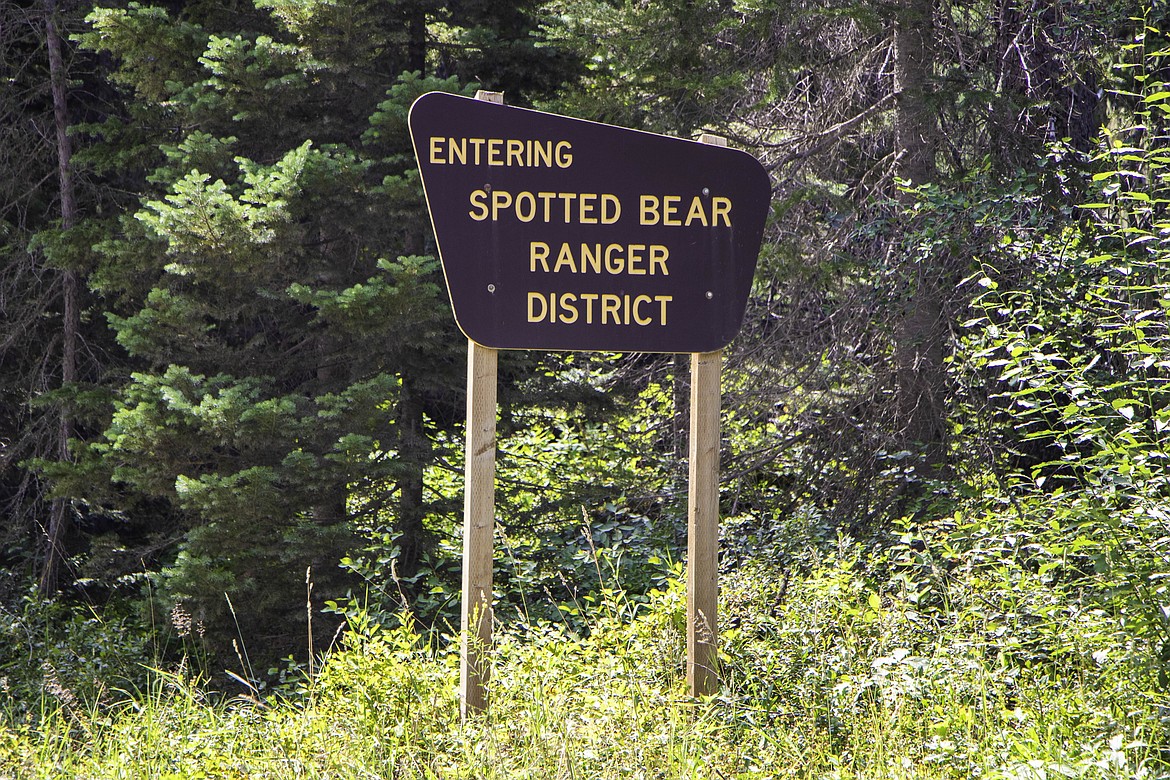
A sign near the Hungry Horse Reservoir as patrons enter the Spotted Bear Ranger District. (Kate Heston/Daily Inter Lake)
Montana U.S. Sen. Steve Daines has restarted his efforts to rollback federal designations from some of Montana’s Wilderness Study Areas, seeking to turn them back to general public land management and increase access by sportsmen.
But conservation organizations say the move would lead to a slippery slope that could strip protections from roughly a million acres of key wildlife habitat and recreational lands.
The Montana Sportsmen Conservation Act, which Daines originally introduced in 2022, would remove WSA designations from three areas in Montana — the Middle Fork Judith, Hoodoo Mountain, and Wales Creek Wilderness Study Areas.
Middle Fork Judith WSA is approximately 81,000 acres and located on the Lewis and Clark National Forest across the Little Belt Mountains southeast of Great Falls.
The Hoodoo Mountain and Wales Creek WSAs each comprise just over 11,000 acres of BLM land near Ovando and Lincoln.
They are part of 44 sections of public land designated under two federal acts.
Montana’s WSAs on U.S. Forest Service land stem from a 1977 bill sponsored by U.S. Sen. Lee Metcalf, a Montana Democrat, who set aside nine landscapes totaling more than 700,000 acres to protect until Congress could officially determine whether to designate them as wilderness.
In 1976, the Federal Land Policy and Management Act instructed the BLM to inventory and assess its lands and in 2000, an Interior Secretarial order set aside 38 WSAs on BLM land in Montana for evaluation.
Both federal acts had timelines for land management agencies to make a determination over whether to incorporate the WSAs into federal Wilderness. While a majority of WSAs didn’t make the cut, no federal action was taken to reclassify them.
More recently, the Forest Service determined in 2021 that the Middle Fork Judith WSA is “unsuitable for inclusion in the Wilderness Preservation System,” according to Daines’ bill, while the BLM made the same recommendation for Hoodoo Mountain and Wales Creek in 2020.
“As a lifelong sportsman, increasing access to Montana’s great outdoors is one of my top priorities,” Daines said in a statement. “The ‘Montana Sportsmen Conservation Act’ promotes our outdoor way of life by returning restrictive WSA’s to general public land management, which will improve wildlife habitat restoration, reduce the risk of catastrophic wildfires, and unlock better access to public lands.”
Wilderness Study Areas are managed as de facto wilderness, but with some key differences.
Motorized and mechanized recreation, including snowmobiling and biking, are prohibited in wilderness areas, but are allowed in some WSAs along existing roads.
According to a 2020 report to the Montana Environmental Quality Council, Middle Fork Judith allows winter and nonwinter motorized access along with mountain biking.
Another big management difference is resource extraction.
On BLM land, logging is permitted, while some logging can be allowed on Forest Service land with extensive public input. Removing WSA designations could bolster management agencies’ ability to greenlight logging to thin old and dense timber, which proponents say is key to helping prevent wildfires and bolster economic activity.
Opponents to Daines’ legislation include many conservation groups that say a top-down decision made in Congress leaves out voices on the ground.
“Montanans want a seat at the table in shaping the future of our public lands. This deeply flawed bill is not locally driven or balanced,” Montana state director of The Wilderness Society Barb Cestero said in a statement. “Instead, it represents the kind of top-down, one-size-fits-all approach Montanans have consistently rejected. We invite Senator Daines to join the many Montanans who are rolling up their sleeves to develop local, collaborative and balanced solutions for these public lands so that our kids and grandkids can enjoy the same freedom to explore wild places as we do today.”
The debate over Wilderness Study Areas has been ongoing for decades, and routinely arises within the state legislature as well.
During the 2025 Legislature, Republican Sen. Tony Tezak of Ennis introduced a joint resolution urging Congress to release all of Montana’s 44 WSAs. The bill, Senate Resolution 14, died in committee on a bipartisan vote.
“Sen. Daines knows this approach has been rejected — by Montanans, by conservation groups, and by lawmakers from both parties — and he chose to bring it back anyway,” Ben Super, executive director of the Montana Conservation Voters Education Fund, said in a statement. “That’s not leadership. It’s a deliberate decision to override local voices and weaken safeguards for irreplaceable public lands without public support or a credible alternative.”
But the federal delegation has its own coalition of broad supporters as well, ranging from local government officials to outdoor groups and even Republican Montana Gov. Greg Gianforte, who sponsored bills while in Congress to remove WSA designations. A spokesperson from the Governor’s Office did not immediately respond to a question about his support for the federal legislation.
The Judith Basin and Powell county commissioners signed letters of support for the legislation, as did Montana Sportsmen for Fish and Wildlife, the Montana Outfitters and Guides Association, Montana Farm Bureau Federation and the Great Falls Bicycle Club.
If Hoodoo Mountain and Wales Creek changed designations, “both would retain critical wildlife habitat protections while providing the land management agencies the flexibility to do needed work to manage and improve habitat,” Jeff Darrah, executive director of Montana Sportsmen for Fish and Wildlife wrote in a letter. A different designation “would help support wildlife-dependent recreation and hunting opportunities, and facilitate the long-term viability of big game wildlife populations.”
Montana’s U.S. Sen. Tim Sheehy is listed as a co-sponsor to Daines’ bill, while U.S. Rep. Troy Downing is leading the companion effort in the House.
“Land management must be fit for purpose, and the science shows that the Hoodoo Mountain, Wales Creek, and Middle Fork Judith Wilderness Study Areas would be better served without their WSA designations,” Downing said in a statement. “I’m proud to lead the effort in the House to return these lands to general management, unlocking public access and breaking down barriers preventing effective stewardship.”
Montana’s western U.S. Rep. Ryan Zinke did not release a statement of support with the rest of the federal delegation, but Daines said he was looking forward to working with Zinke to get the bill passed. Zinke did not respond to a question about supporting the bill by publication time.
Zinke was a former Interior Secretary during President Donald Trump’s first term, and under his tenure the BLM supported releasing WSAs.