
Challenges and perseverance subjects of annual tree fruit convention
CHERYL SCHWEIZER | Hagadone News Network | UPDATED 1 hour, 12 minutes AGO
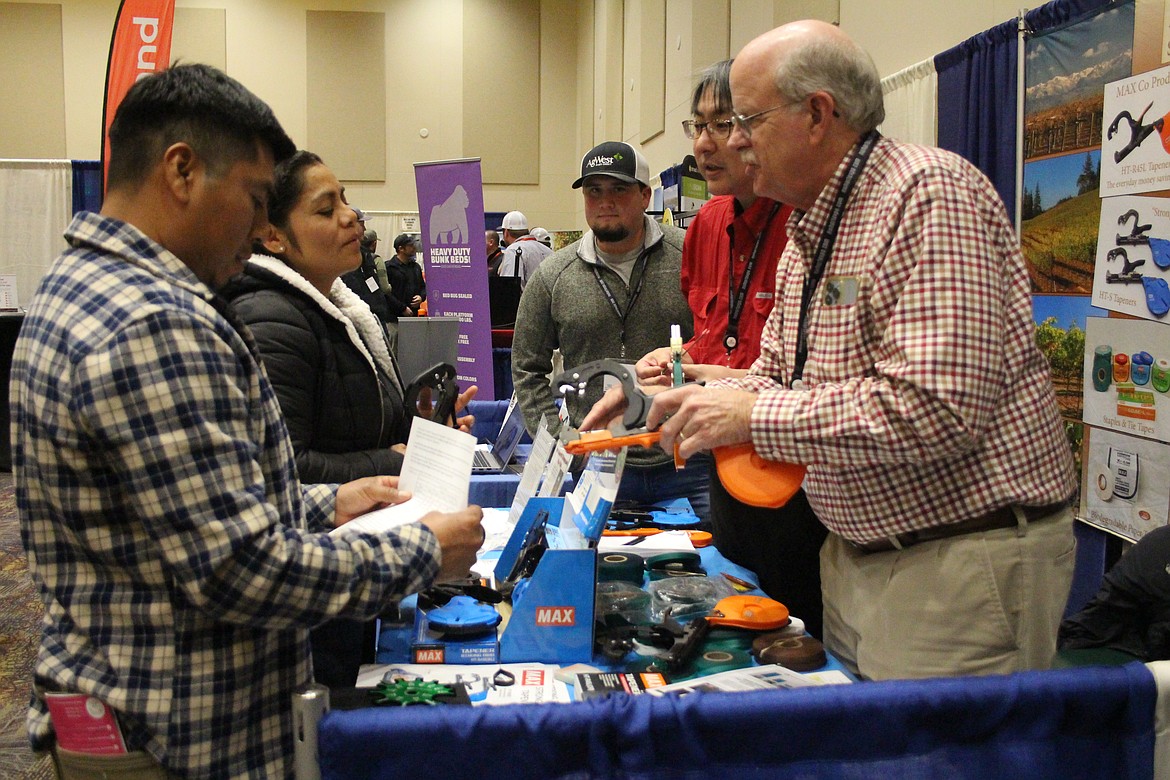
Washington State Tree Fruit Association convention attendees check out one of the booths at the convention in Wenatchee.
Cheryl Schweizer/Basin Business Journal
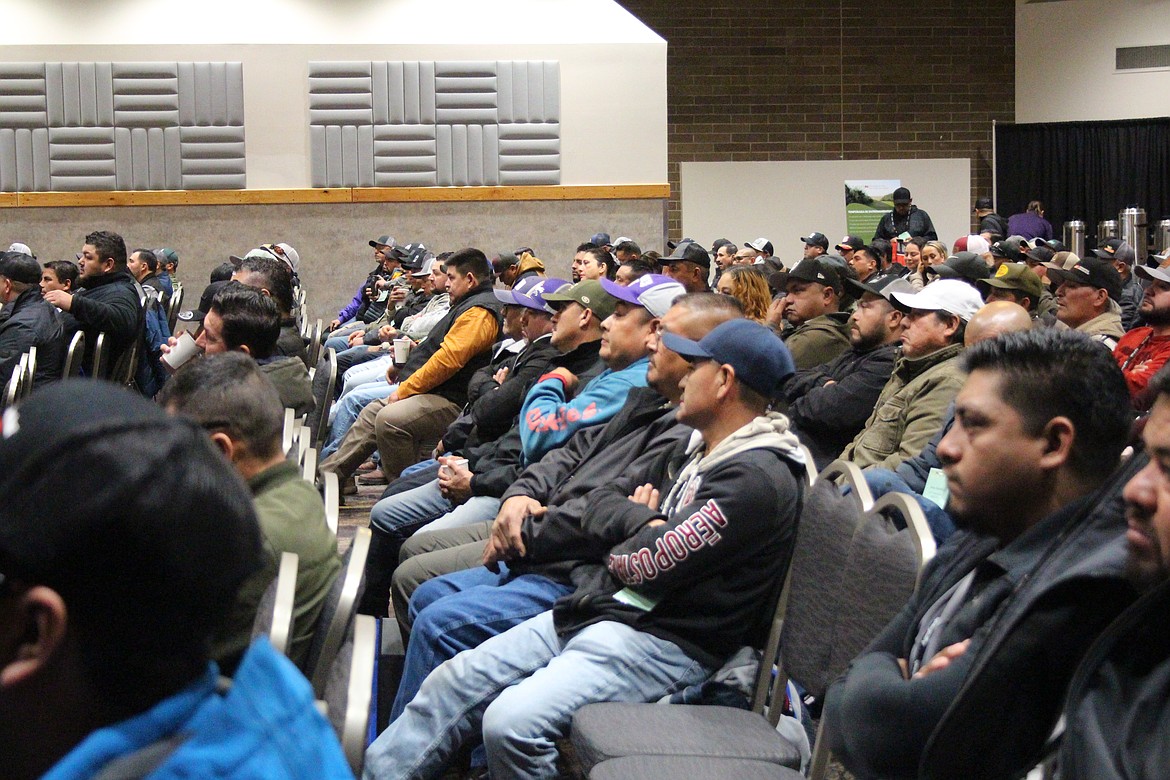
The Spanish-language session at the WSTFA annual convention filled the room.
Cheryl Schweizer/Basin Business Journal
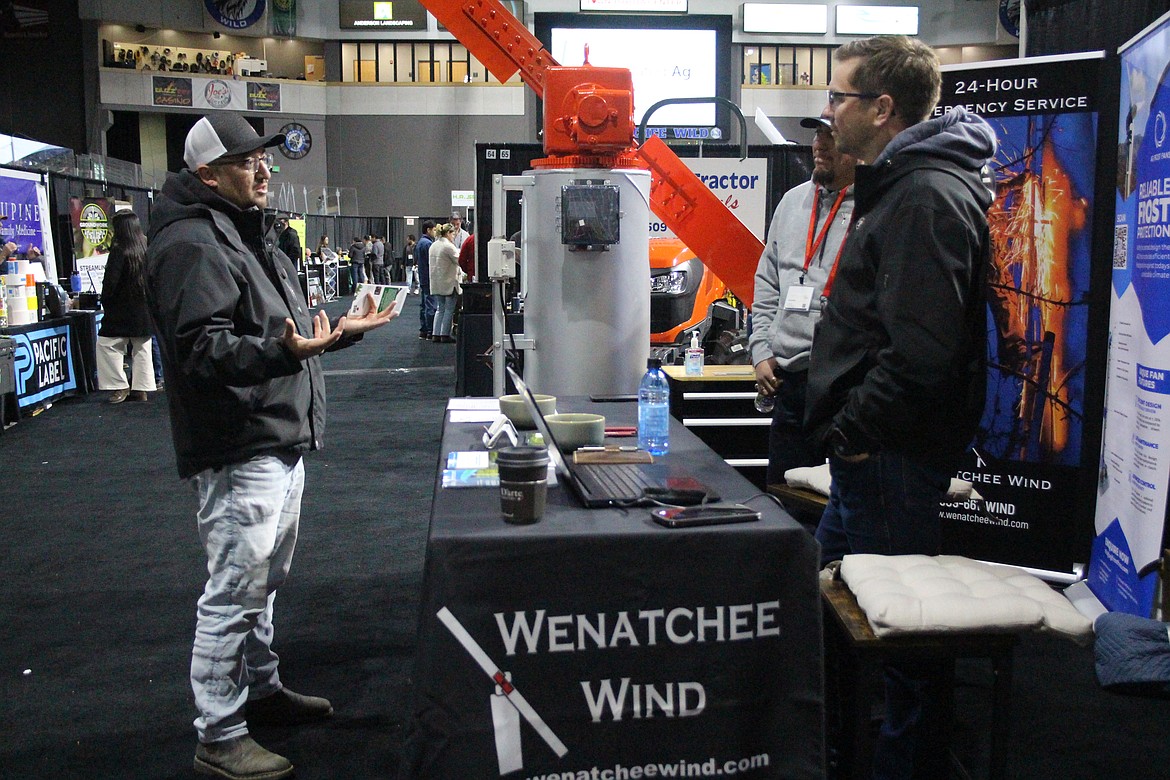
Attendees talk over the state of the tree fruit business at the annual WSTFA convention in Wenatchee.
Cheryl Schweizer/Basin Business Journal
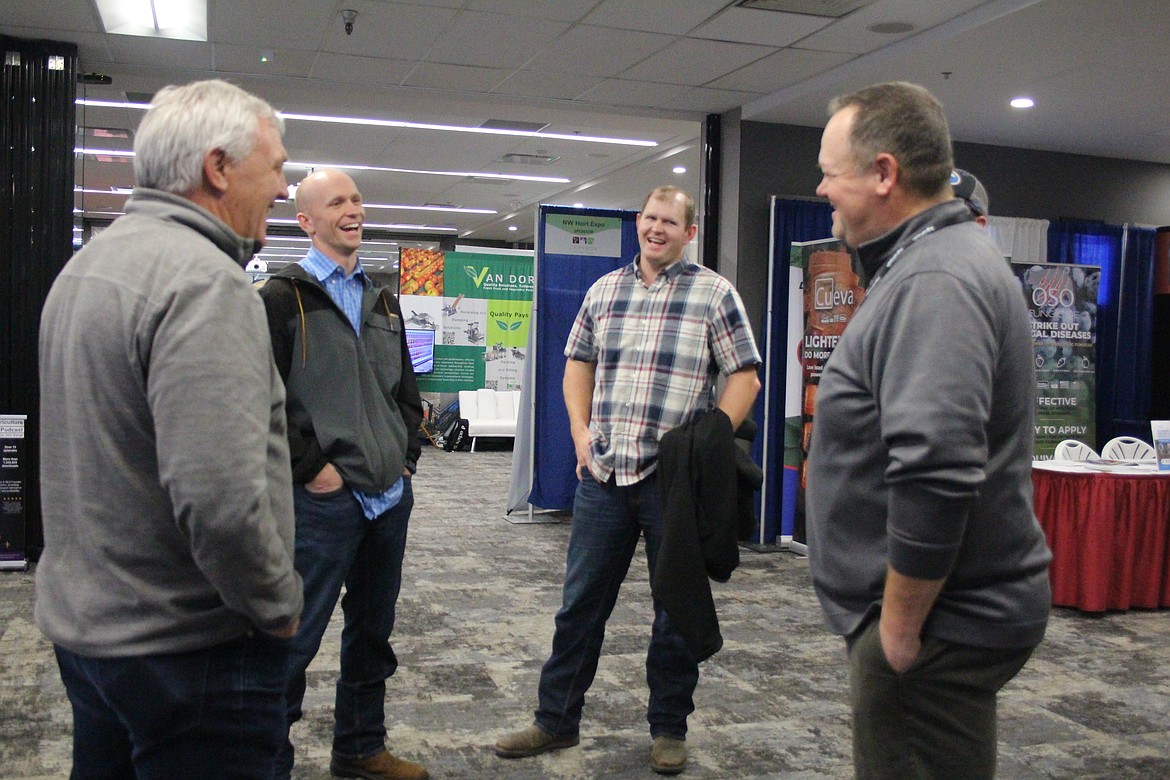
Growers and industry representatives share a laugh at the WSTFA convention in Wenatchee in early December.
Cheryl Schweizer/Basin Business Journal
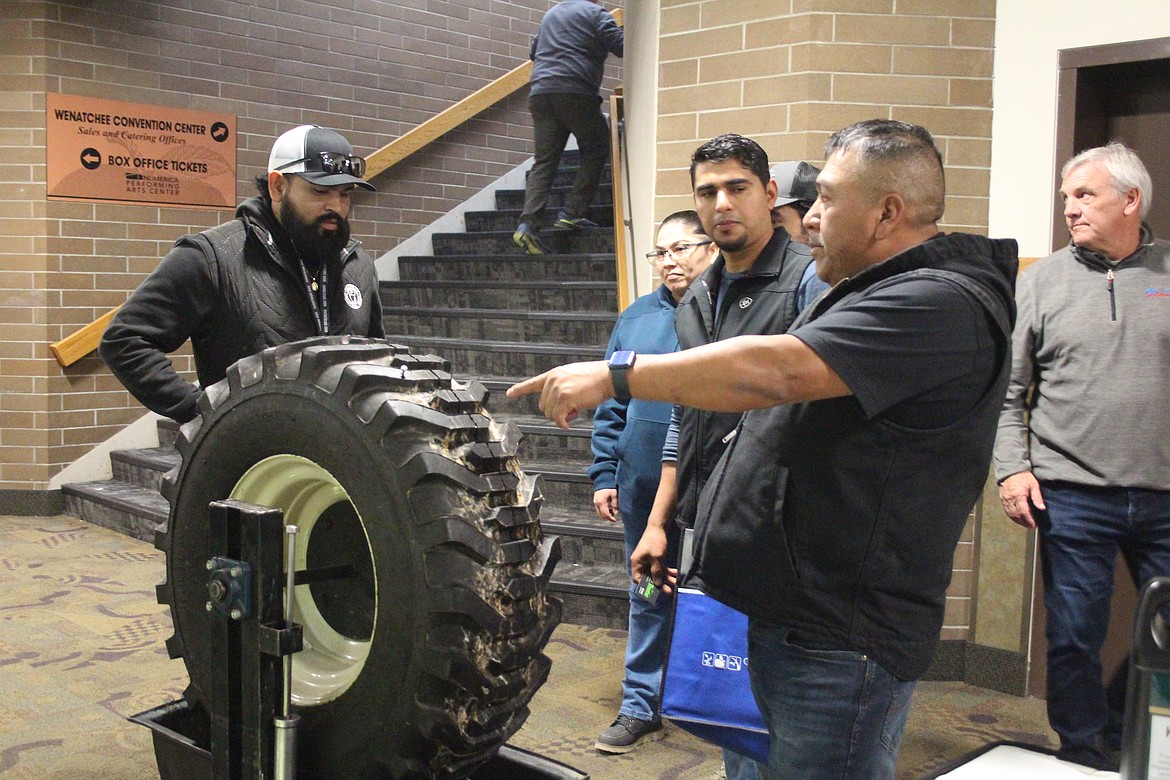
Attendees talk with vendors at the WSTFA annual convention in Wenatchee.
Cheryl Schweizer/Basin Business Journal
Senior Reporter Cheryl Schweizer is a journalist with more than 30 years of experience serving small communities in the Pacific Northwest. She began her post-high-school education at Treasure Valley Community College and enerned her journalism degree at Oregon State University. After working for multiple publications, she has settled down at the Columbia Basin Herald and has been a staple of the newsroom for more than a decade. Schweizer’s dedication to her communities and profession has earned her the nickname “The Baroness of Bylines.” She covers a variety of beats including health, business and various municipalities. | December 29, 2025 1:00 AM
WENATCHEE — Anybody who’s been through them knows it’s been a rough couple of years in the tree fruit industry. One of the themes at the Washington State Tree Fruit Association annual meeting was that while it’s been a bumpy ride, Washington growers have the knowledge and skill to lead the comeback.
Veteran orchardist Welcome Sauer said growers have done it before. He cited the market collapse of 1999-2000.
“In the big downturn in the late 90s, we got out of that two ways,” Sauer said. “One is with the advent of new varieties, Fujis, Galas and other new varieties really pulled us out of that They delivered a completely different eating experience. And those varieties countered the downtrend in Red Delicious. And the market loved them. The export markets loved them. Every market the United States loved Gala. And we made money on those varieties.”
The second factor was the research that led to improved fruit quality, ranging from new orchard practices to new chemicals.
“The invention of methyl cyclopropane - Smart Fresh – allowed us to solve, very quickly, the mushy apple problem, so the consumer eating experience improved dramatically, starting in the early 2000s right on through, and that product’s safe and ubiquitously used in the industry. And so we returned to profitability,” he said.
Michael Doerr, an entomologist who works for Wilbur-Ellis, said the downturn of the late 1990s and early 2000s required growers to look at what they were doing and think about what they needed to do differently. That paid off with a sustained period of growth, he said.
“We really had to look closely at what was going on in our market, and how (we were) going to compete globally. What came out of that was this incredible 20-year run in horticulture, where we were market shapers in this industry. We led the world in this industry,” he said.
Veteran cherry grower Norm Gutzweiler, Wenatchee, said growers should concentrate on those parts of the process that they can control.
“The only thing as a grower that we can do is do a better job of raising large, firm, sweet cherries for the market. If (the cherries) hit the market in better condition, the people will buy them sooner, and the more they clean off their shelves the more they can put back on the shelf. So that’s what we need to do – as growers, we need to start concentrating on raising better quality fruit.”
In lean times it becomes even more important to pay attention to orchard management, Doerr said. Neglecting any part of the process has knock-on effects, he said.
“Pest surges can often be tied to economics, and I see it a lot in codling moth, the market I work the most in. When there’s tough times and pruning programs are sacrificed, and thinning programs are (sacrificed) and spray intervals are sacrificed, pest surge (can result),” he said.
While a lot has changed in and around the tree fruit industry, some things haven’t changed and never will. Doerr cited chemical application as an example.
“If you look back to the 1935 spray guide, it’s going to say – in the 1935 spray guide by WSU – that all pesticide recommendations assume thoroughness of coverage. That fundamental never, ever changes,” Doerr said.
Prices for all commodities, including tree fruits, are not keeping pace with production costs, Gutzweiler said. In previous downturns growers started taking orchards out. Mac Riggan of Chelan Fresh said that’s a decision some growers may have to make, citing the title of the 2025 convention, which was perseverance.
“My thought was, ‘You can persevere, but you might have to decide that you’re done farming.’ It depends on the individual person. What your age is, what you have to risk, if you have a succession plan, if you don’t,” Riggan said.
Growers that do keep farming need to be well-informed about the state of the apple, cherry and pear markets, Riggan said.
“I think a lot more conversations have to be held within the industry. We need to share more information. It’s not about price collusion. It’s about really sharing what the reality is of market, crop size compared to demand on the consumer side, accepting the reality of that and then working with your retail partners to somehow maximize the value back to all parties,” Riggan said.
Gutzweiler said timing is important, and growers need to decide what varieties will work best for them. He cited cherries – a cherry grower probably will make money early in the season, and probably late in the season, he said. The news isn’t so good for the grower harvesting at the peak.
“From mid-June clear until the third week of July. That whole time right there, that’s when we have so many cherries. The market knows it, everybody knows we’ve got lots and lots of cherries,” he said. “We’re trying to get them packed, we’re trying to get them shipped, and the price (declines).”
Shawn Peery, national vice-president of produce for the Albertson’s grocery chain, said quality is crucial. Quality is what brings customers back, Peery said.
“Customers buy with their eyes, but they return with their taste buds,” he said.
Sauer said evolving customer tastes are another industry fundamental.
“The demand for good, new, high-quality, great-eating experience products continues,” he said.
There’s less optimism than there was 20 years ago, he said.
“In reality, I think what will happen is the bottom 10 to 15% of the volume in the industry on older blocks, of older strains, of older varieties, won’t be able to be economically viable,” Sauer said.
Apples, cherries and pears are still being grown, nonetheless, even in the face of international competition and ever-changing marketing conditions. Doerr said growers – and the industry in general - have to be planning both how to get through the downtown and manage the rebound.
“We all need to look at how we can improve that efficiency and stay prepared, because when this market turns, it’s going to turn quickly, and you’re going to have to be able to capture that turn right away,” he said. “I tell our folks, if you stay ready, you don’t have to get ready.”
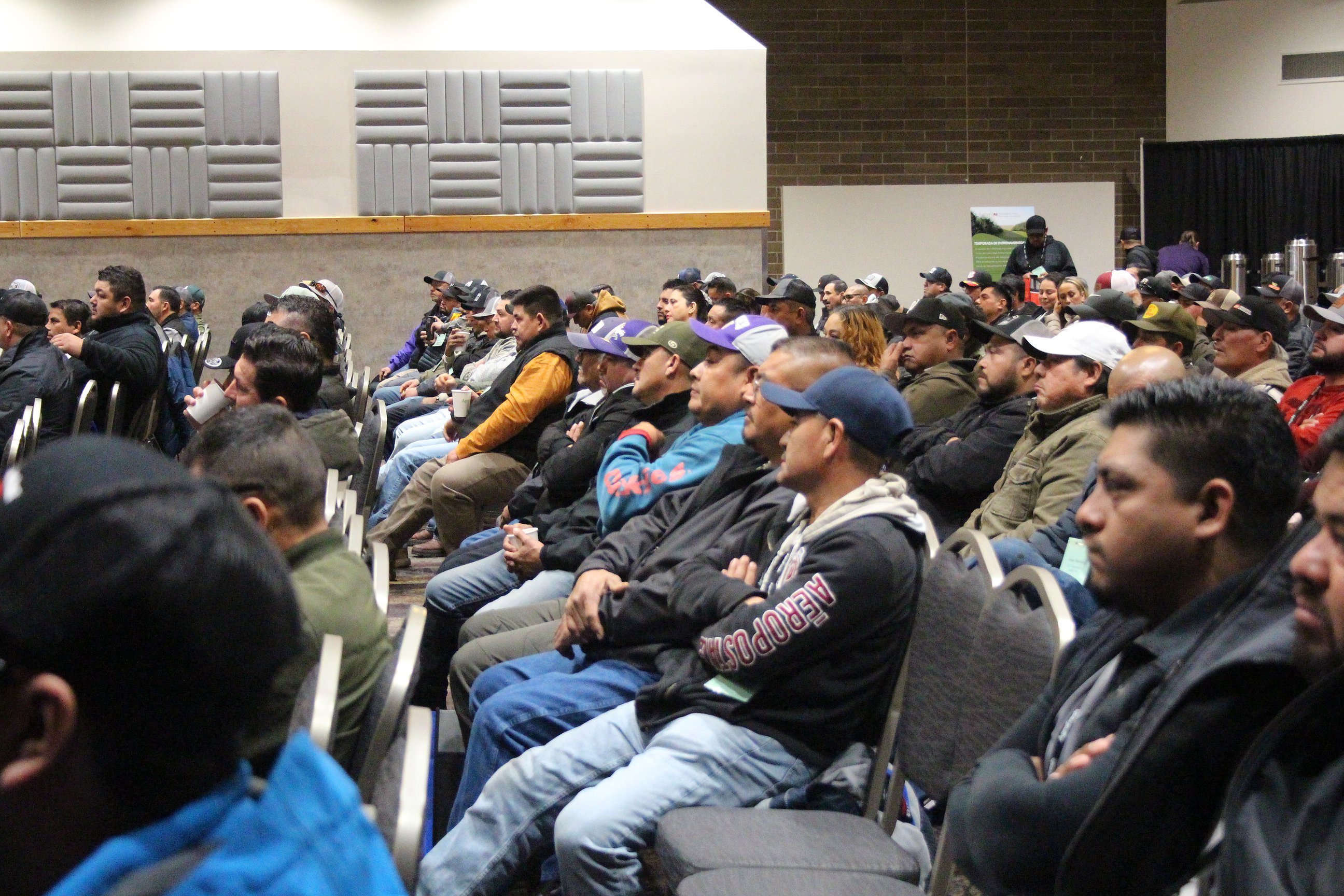 The Spanish-language session at the WSTFA annual convention filled the room.
Cheryl Schweizer/Basin Business Journal
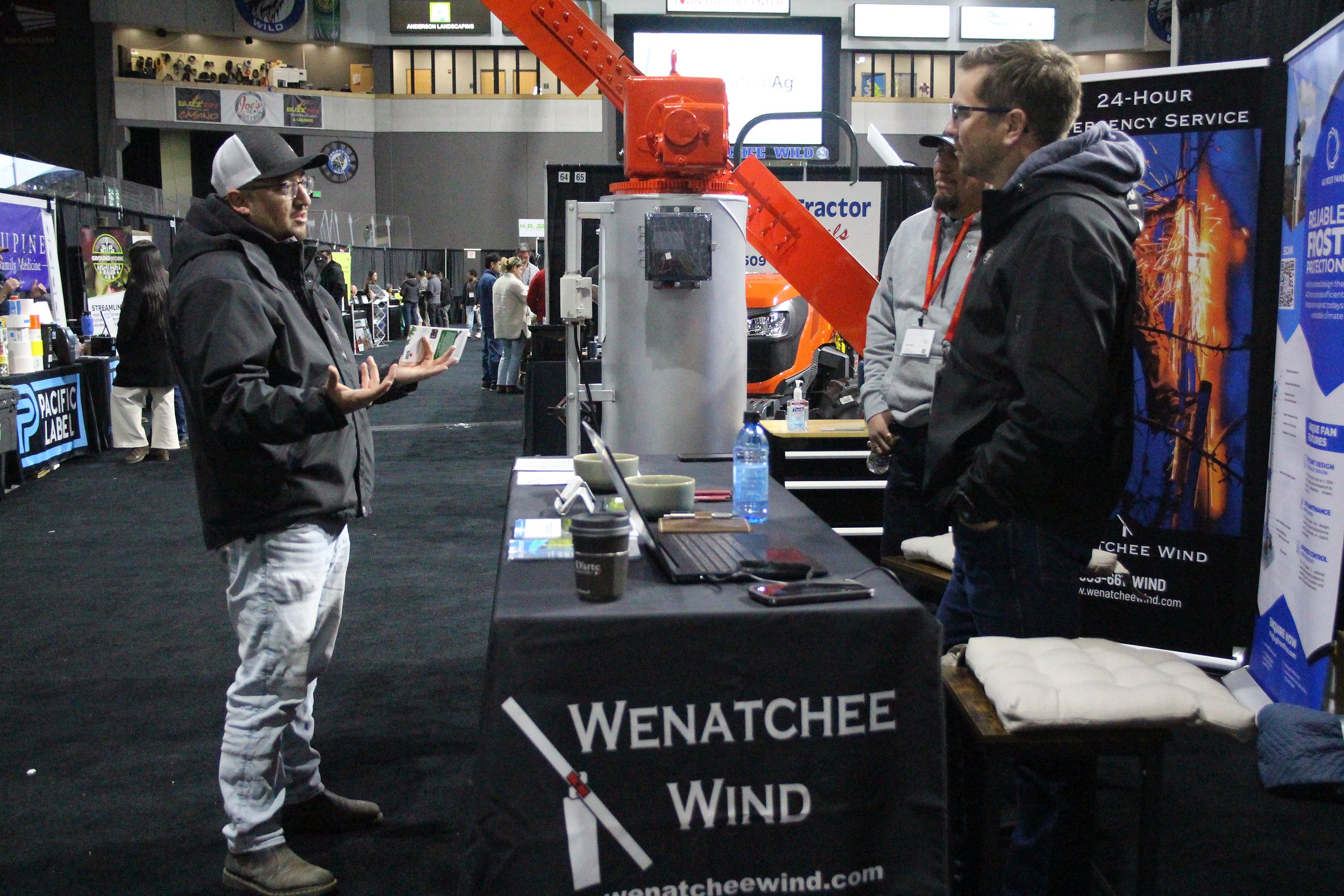 Attendees talk over the state of the tree fruit business at the annual WSTFA convention in Wenatchee.
Cheryl Schweizer/Basin Business Journal
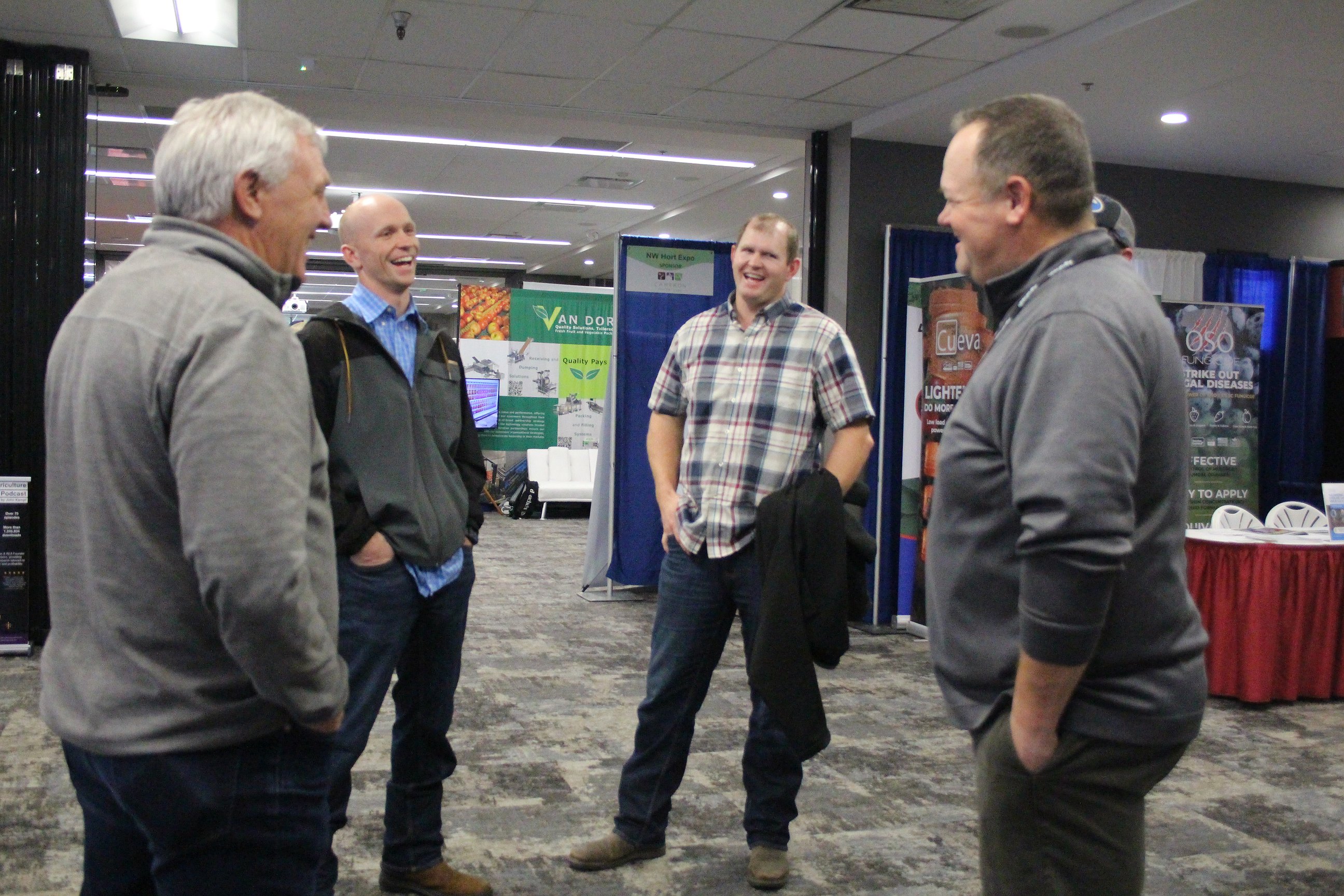 Growers and industry representatives share a laugh at the WSTFA convention in Wenatchee in early December.
Cheryl Schweizer/Basin Business Journal
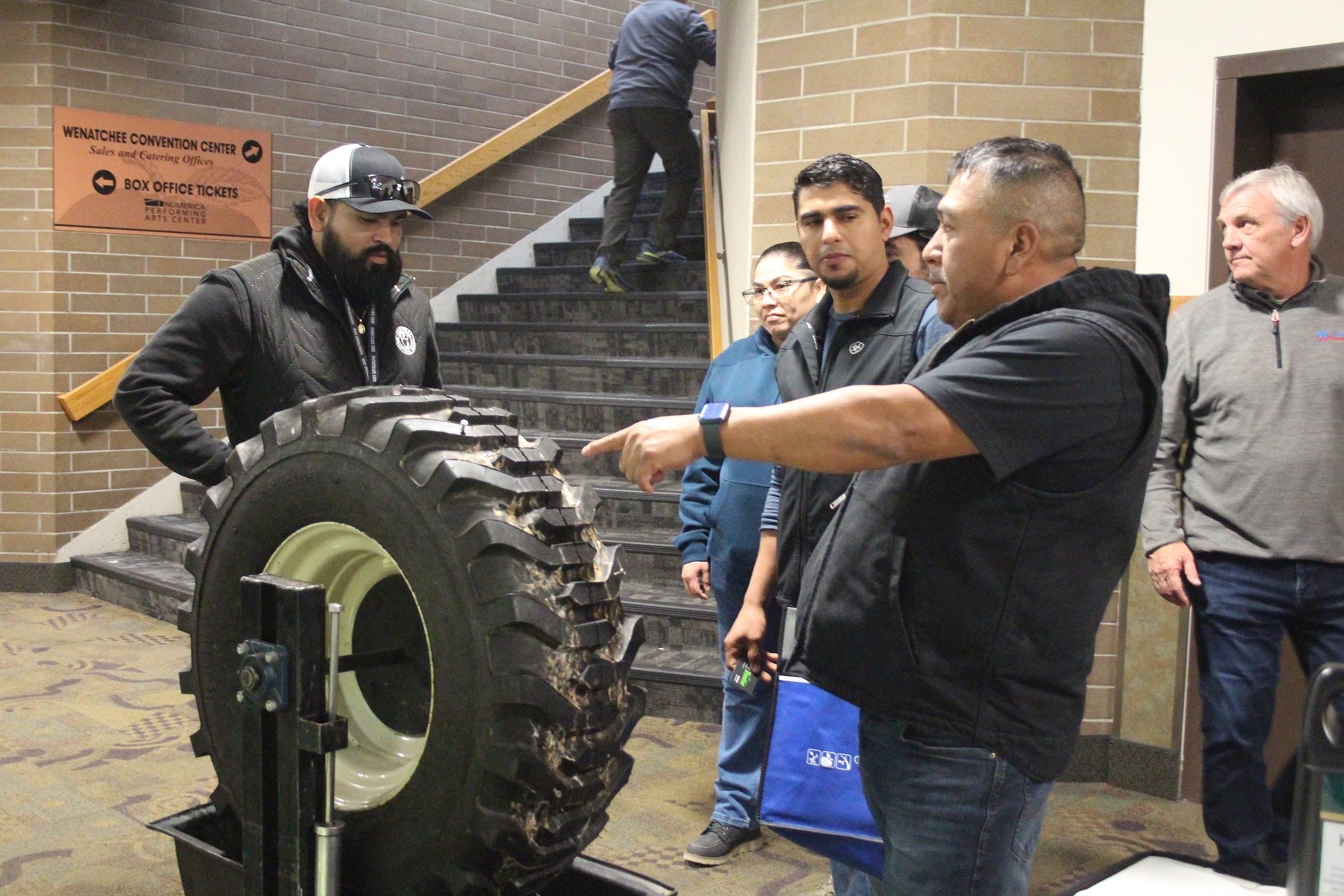 Attendees talk with vendors at the WSTFA annual convention in Wenatchee.
Cheryl Schweizer/Basin Business Journal
ARTICLES BY CHERYL SCHWEIZER

Moses Lake man arrested for alleged assault after standoff
MOSES LAKE — A Moses Lake man was booked into the Grant County Jail on suspicion of first-degree burglary and fourth-degree assault after he allegedly broke into a woman’s home late Christmas night.
Challenges and perseverance subjects of annual tree fruit convention
WENATCHEE — Anybody who’s been through them knows it’s been a rough couple of years in the tree fruit industry. One of the themes at the Washington State Tree Fruit Association annual meeting was that while it’s been a bumpy ride, Washington growers have the knowledge and skill to lead the comeback. Veteran orchardist Welcome Sauer said growers have done it before. He cited the market collapse of 1999-2000. “In the big downturn in the late 90s, we got out of that two ways,” Sauer said. “One is with the advent of new varieties, Fujis, Galas and other new varieties really pulled us out of that. They delivered a completely different eating experience. And those varieties countered the downtrend in Red Delicious. And the market loved them. The export markets loved them. Every market the United States loved Gala. And we made money on those varieties.”
Adams Co. commissioners approve 2026 budget
RITZVILLE — Adams County Commissioners approved a $62.5 million budget Tuesday, the last step in what commission chair Mike Garza said was a difficult job. “It was a tough, drawn-out process,” Garza said. “I think we came up with something that’s as fair as it can be.”