
Idaho senators urge President Trump to reverse course on marijuana policy change
KEVIN FIXLER Idaho Statesman | Coeur d'Alene Press | UPDATED 2 hours, 50 minutes AGO
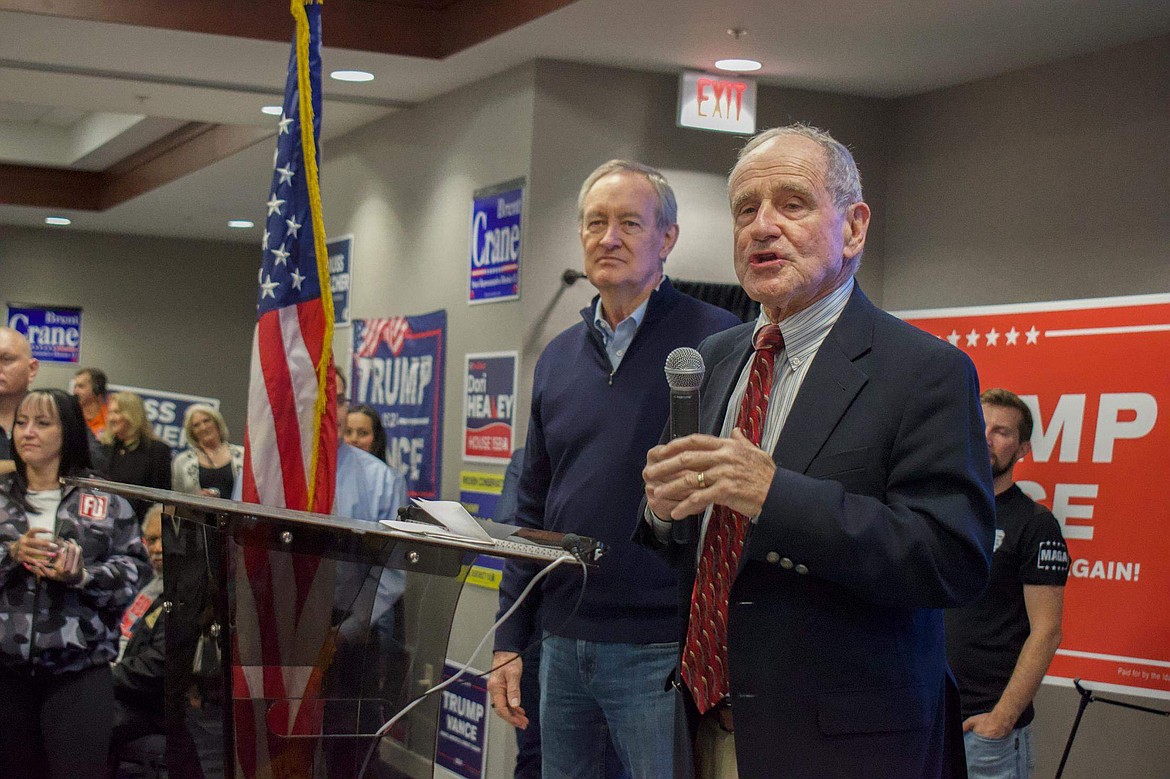
Idaho’s U.S. Sens. Jim Risch, right, and Mike Crapo, both Republicans, are against President Donald Trump’s decision to reclassify marijuana to a lower-level drug through an executive order. Vincent Medina Idaho Statesman file
Idaho’s U.S. senators have sounded the alarm with President Donald Trump over his recent decision to relax federal marijuana restrictions.
Republicans Mike Crapo and Jim Risch each signed a letter sent to Trump opposing his executive order this month that directs reclassification of marijuana to a lower-level drug in the U.S. Initial word of the president’s intentions generated a stern reply from 22 GOP senators.
“In light of the documented dangers of marijuana, facilitating the growth of the marijuana industry is at odds with growing our economy and encouraging healthy lifestyles for Americans,” read the Dec. 17 letter to the Republican president. “We urge you to continue your strong leadership of our country and our economy, and to turn away from marijuana rescheduling.”
Trump’s goal in shifting marijuana from a Schedule I to a Schedule III drug at the federal level is to expand research of the controlled substance for possible health care benefits and medical treatments, according to the order. It followed through on plans by his predecessor, President Joe Biden, to reclassify marijuana, first initiated in May 2024.
“The federal government’s long delay in recognizing the medical use of marijuana does not serve the Americans who report health benefits from the medical use of marijuana,” read Trump’s Dec. 18 order. “Americans who often seek alternative relief from chronic pain symptoms are particularly impacted.”
Despite the easing of cannabis laws in most of Idaho’s neighboring states and across the nation, marijuana remains illegal in the Gem State in almost all forms. Within the Pacific Northwest and Mountain West, only Wyoming maintains the same level as Idaho in outlawing the drug. All others states in the two regions permit at least medical use.
Rep. Bruce Skaug, R-Nampa, who chairs the House judiciary committee in the Idaho Legislature, sponsored two bills in 2025 that became law in efforts to curb already-illegal marijuana use in Idaho. One set a $300 minimum fine — thought to be the steepest in the U.S. — for misdemeanor possession of less than 3 ounces of the drug. A second law will put before voters a constitutional amendment in 2026 that, if passed, would allow only the Legislature to legalize certain drugs in the state, including marijuana.
Skaug said he and Idaho’s two U.S. senators are on the same page in their response to Trump’s executive order. In an interview with the Idaho Statesman, Skaug described himself as “very disappointed” by the president’s decision.
“It does not follow the science or the data that we have from the different states who have legalized marijuana, and the effects that it has had negatively in those states,” he said by phone.
‘Reversing longstanding inequities’
The push to change marijuana’s federal classification got underway during Biden’s presidency. It came after the Democratic administration issued an executive order that granted pardons to thousands of people convicted of federal crimes for marijuana use or simple possession.
“It’s an important move toward reversing longstanding inequities,” Biden said of efforts to reschedule the drug. “Far too many lives have been upended because of a failed approach to marijuana.”
Trump’s action this month is not expected to have immediate impact, including in states such as Idaho, where the drug remains illegal for almost all uses, said attorney Josh Hurwit, who served as the U.S. Attorney for Idaho during the Biden administration. Already, federal prosecutors were directed to no longer pursue low-level possession offenses, even as state prosecutors retain the authority to do so if they wish, he told the Statesman in a phone interview.
“The (Trump) executive order doesn’t really change the federal dynamic of where we are now,” said Hurwit, now a private attorney with Holland & Hart law firm in Boise. “It could theoretically if marijuana is rescheduled and you get more research done and there are policy effects that trickle out either at the state, federal or local levels. But it’s not a sea change right now.”
At the very least, Trump’s decision signals a continuation of the Justice Department’s de-emphasis under Biden of prosecutions for having or using marijuana, he added.
“It would be inconsistent if federal prosecutors start bringing charges, given the rescheduling process and the executive order,” Hurwit said. “Legally or operationally, they could, but that’s clearly not the focus of this administration, or the focus of the past administration either.”
The letter from the group of Republican senators to Trump, authored by U.S. Sen. Ted Budd, R-North Carolina, features only three states that had both senators sign on: Idaho, Wyoming and Tennessee. Marijuana possession and use is almost entirely illegal in those three states, among some others.
“Rescheduling would also give a massive tax break to marijuana companies,” the letter further warned. “Marijuana business leaders have said they will use this infusion of funds to increase their marketing and to expand their businesses into additional states.”
After Trump’s executive order, Budd swiftly issued a follow-up statement that called the president’s action a “shortsighted policy decision” that risks “detrimental effects on the health and safety of Americans, especially our nation’s youth.”
Requests for comment sent to the congressional offices for Crapo and Risch went unreturned Monday. Automatic email replies said office spokespeople were away for the year-end holidays through the beginning of January.
Risch, 82, is running for reelection in the Senate in 2026 and holds Trump’s endorsement for another six-year term. Crapo, 74, was elected to a fifth term in 2022.