
Liquor store adapts to taste trends, state rules
MONTE TURNER | Hagadone News Network | UPDATED 3 months AGO
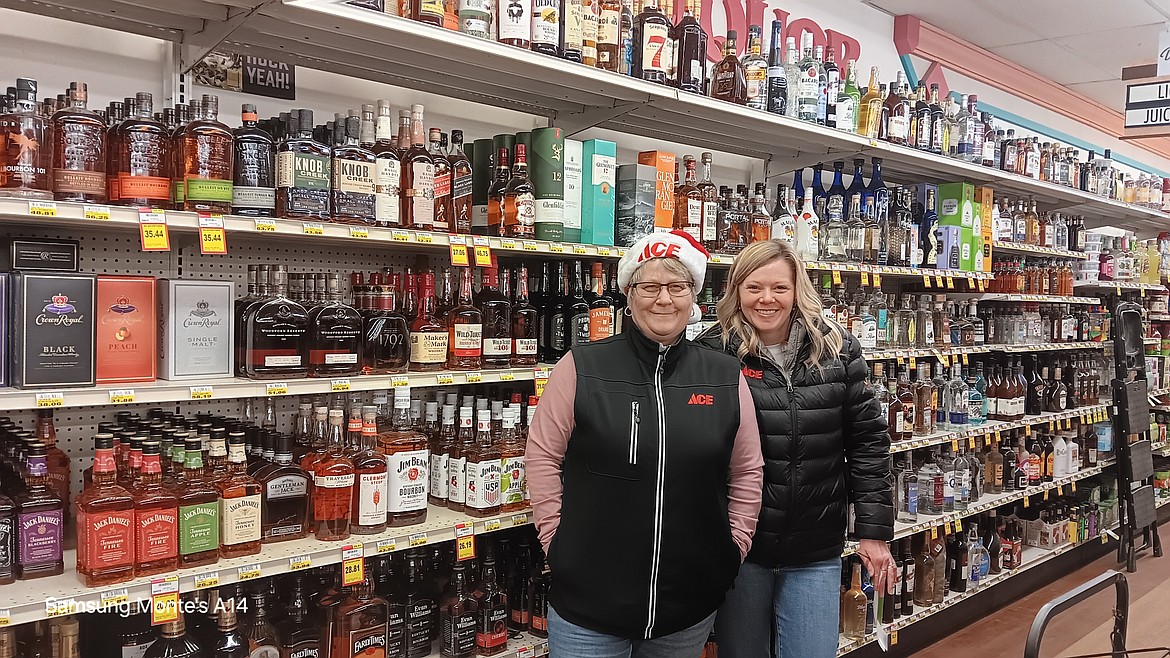
Loretta Dana, left, and Krystle Darlow stand in front of the state liquor store isle inside Darlows Quality Foods in Superior. (Monte Turner/Mineral Independent)
Operating a liquor business in Montana requires careful attention to state law, which tightly regulates how, where and what types of alcohol can be sold.
For retailers across the state, understanding these rules is essential to staying compliant while meeting customer demand.
Montana’s liquor licensing system is governed by the Montana Alcoholic Beverage Code under Title 16, Chapter 4 of the Montana Code Annotated. The law outlines the different licenses available and places clear limits on alcohol sales. Grocery and convenience stores are generally permitted to sell only beer and wine, while spirits are sold exclusively through state-licensed liquor stores.
These distinctions play a major role in how businesses plan their inventory and operations.
In Superior, Darlow’s Quality Foods is licensed for all alcoholic beverage sales.
The Montana Department of Revenue oversees enforcement through inspections and audits. The department also controls liquor distribution, meaning retailers (bars) purchase spirits directly through the state rather than private vendors.
Geographic restrictions further shape the market, as Montana law prohibits alcohol sales within 600 feet of schools and churches to reduce minors’ exposure and maintain community standards. Alcohol sold for off-premises consumption must also remain in sealed containers.
According to Montana Code Annotated 16-3-304, alcohol can be sold from 8 a.m. to 2 a.m. the next day. This applies to both on-premises consumption, such as bars and restaurants, and off-premises sales, like liquor stores and supermarkets. The regulation balances business interests with public safety, aiming to prevent late-night sales that may lead to alcohol-related incidents.
For Chris Darlow, owner of Darlow’s Quality Foods with his wife Krystle, working within this system is simply part of doing business.
“We only go through the Montana Department of Revenue,” Darlow said when asked about vendors and deliveries, noting that the state handles liquor distribution entirely. Beer and wine are handled by private distributors.
Consumer tastes, however, have changed significantly in recent years. Flavored liquors have surged in popularity, especially novelty products.
“Peanut butter whiskey started getting popular about three years ago,” Darlow said, adding that flavored schnapps have remained a staple for much longer, often used for popular items like Jello shots.
Darlow’s store also supplies several bars, which by law must order from state liquor stores. The business currently services five bars, reaching as far as Quinns Hot Springs & Resort in Paradise, Montana. Bar clients place their orders through the store’s liquor manager, Loretta, with deliveries made on Wednesdays and Thursdays.
If a bar needs additional items between deliveries, staff members can stop by the store to pick them up. Payments are made by check or credit card.
Some of the strongest demand right now is for premium whiskeys and ready-to-drink beverages.
“Blanton’s and Buffalo Trace are really popular,” Darlow said, along with flavored Crown Royal varieties. Customers have also shown growing interest in canned vodka and seltzer drinks such as High Noon, Nutrl and Cutwater.
Behind the scenes, managing these relationships is a key part of the operation.
Loretta Dana, the store’s liquor manager, says she enjoys working closely with bar owners and managers. “I have such a great relationship with all the bar managers,” she said. “They are very easy to work with.”
As Montana’s alcohol market continues to evolve, retailers like Darlow’s Quality Foods balance shifting consumer trends with a regulatory framework designed to promote safety, accountability and community standards.
ARTICLES BY MONTE TURNER

St. Regis mill expanding operations, adding employees
Driving along Montana 135 just outside St. Regis, it’s hard to miss the towering stacks of bundled posts and poles, and the large building at Big Sky Forest Products.

Superior students send postcards from the British Isles
Every two years, Superior teacher Jeff Schultz organizes an unforgettable European tour for students and locals touring different countries.

Legion begins refurbishing highway fatality markers
Ray Welch American Legion Post 13 in St. Regis is responsible for maintaining fatality markers along Interstate 90 from Lookout Pass to mile marker 77, just east of Alberton, as well as along Montana 135 from St. Regis to the Sanders County line.