
Quincy man faces controlled substance homicide charge
NANCE BESTON | Hagadone News Network | UPDATED 1 year, 2 months AGO
QUINCY — On Thursday, Abraham Cristobal Flores Velazquez, 32, of Quincy was arrested for controlled substance homicide in relation to a Yakima overdose death. The arrest was made by Yakima County’s Law Enforcement Against Drugs task force, after which he was transferred to detectives from the Grant County Interagency Narcotics Enforcement Team, also known as iNET,and booked in the Grant County Jail.
“The summary of the controlled substance homicide law is: if you are the person that provides the controlled substance to a person who overdoses and dies, then you can be charged with controlled substance homicide,” Grant County Sheriff’s Office Public Information Officer Kyle Foreman said.
Flores Velazquez is accused in connection with the death of his cousin, Ariel Armas Flores, who was 29. Armas Flores died in September 2024 at a residence located in the 100 block of N Street Southeast in Quincy. Autopsy results indicated that his death was due to acute intoxication from a combination of fentanyl, methamphetamine and alcohol.
Investigations pointed to Flores Velazquez as a suspect because he was the last person to have seen Armas Flores alive. Throughout the five-month investigation, Flores Velazquez cooperated with the Narcotics Enforcement Team, even consenting to multiple interviews.
In Grant County, the death of Armas Flores is part of more than a dozen overdose-related fatalities from the past year. In 2024, iNET conducted inquiries into 13 overdose deaths, a sharp increase in excess of 62% from the eight cases in 2023. For four of these 13 incidents, charging recommendations have been or will be presented to the Grant County Prosecutor's Office.
Area law enforcement agencies and medical professionals have regularly told the Columbia Basin Herald that the number of overdoses in Grant and Adams counties is likely under-reported due to people fearing legal repercussions.
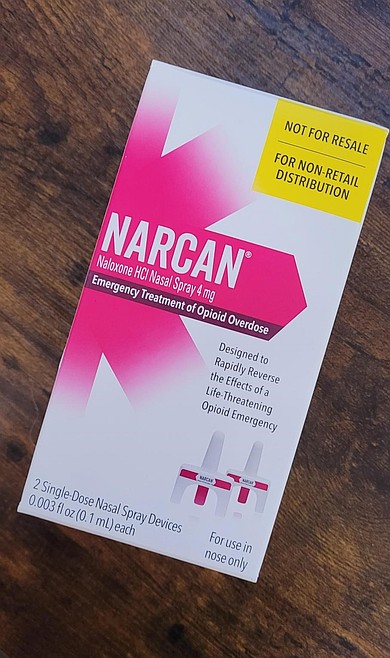
If someone is suspected to be overdosing, Foreman recommends calling 911, if the substance involved is suspected to be an opioid, administer Narcan and wait for EMTs to show up.
“You can get Narcan at several different places and get it for free,” Foreman said. “It's accessible so many times, even before EMTs arrive, someone at the scene — a friend or someone who is with the person who's overdosing, has already administered Narcan because it's so readily available.”
Foreman said it is ok to use Narcan — also known as naloxone — if a person is unsure of what substance caused the overdose. The overdose countermeasure has no potential consequences if the individual is not overdosing on an opioid.
He also wants to remind people they are protected under Washington’s Good Samaritan Law, which means people are protected from liability for any unintentional harm that may be caused when dealing with a drug overdose.
Investigations into controlled substance homicides often require extensive time due to the wait for autopsy, toxicology reports and cell phone data. Proving suspicions can be particularly challenging, according to GCSO. However, a closure rate of over 30% in four out of 13 cases represents a 5% improvement compared to 2023.
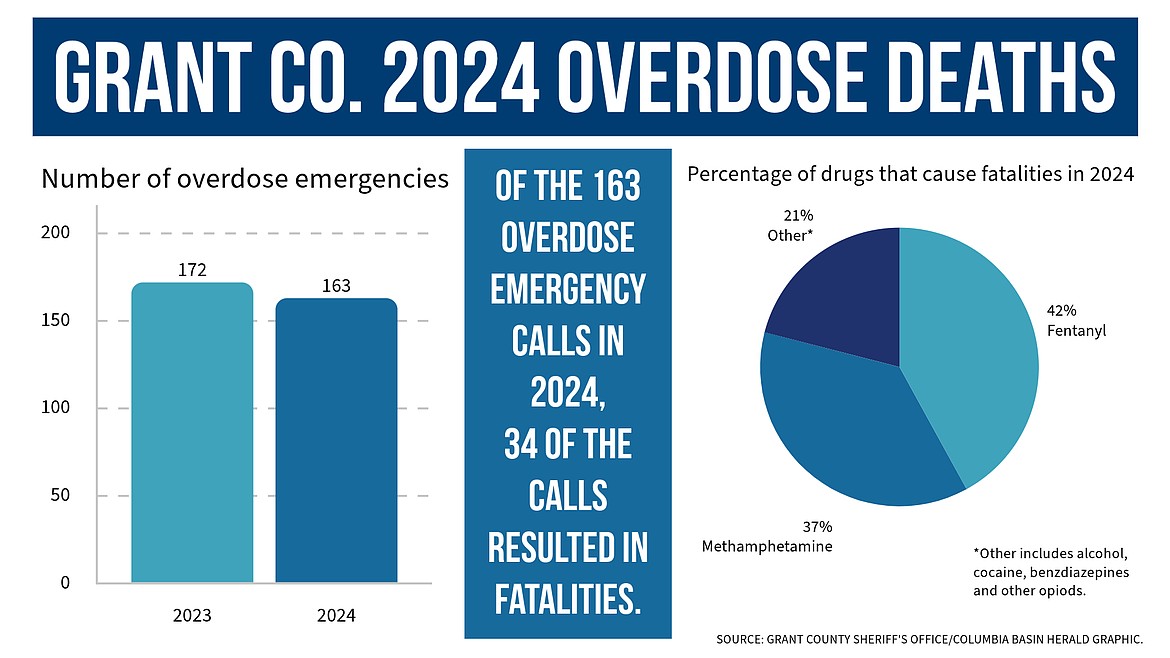
First responders in Grant County dealt with 163 overdose emergencies in 2024, slightly fewer than the 172 calls in the previous year. Of these, 34 resulted in fatalities. Fentanyl was identified as the cause of 42% of these deaths, methamphetamine was responsible for 37%, and the remaining 21% were attributed to other substances, including a mix of alcohol, cocaine, benzodiazepines and other opioids.
“iNET is working very hard to not only stop drug traffic in mid to high-level drug trafficking in Grant County but also to find the people who are responsible for controlled substance homicides and make sure that they are prosecuted as well,” Foreman said.
The investigation involved collaboration from several agencies, including the Quincy Police Department, Grant County Coroner’s Office, LEAD Task Force, and the Grant County Sheriff’s Office.
RCW 69.50.315
Medical assistance—Drug-related overdose—Prosecution for possession.
(1) A person acting in good faith who seeks medical assistance for someone experiencing a drug-related overdose shall not be charged or prosecuted for possession of a controlled substance pursuant to RCW 69.50.4013, or penalized under RCW 69.50.4014, if the evidence for the charge of possession of a controlled substance was obtained as a result of the person seeking medical assistance.
(2) A person who experiences a drug-related overdose and is in need of medical assistance shall not be charged or prosecuted for possession of a controlled substance pursuant to RCW 69.50.4013, or penalized under RCW 69.50.4014, if the evidence for the charge of possession of a controlled substance was obtained as a result of the overdose and the need for medical assistance.
(3) The protection in this section from prosecution for possession crimes under RCW 69.50.4013 shall not be grounds for suppression of evidence in other criminal charges.
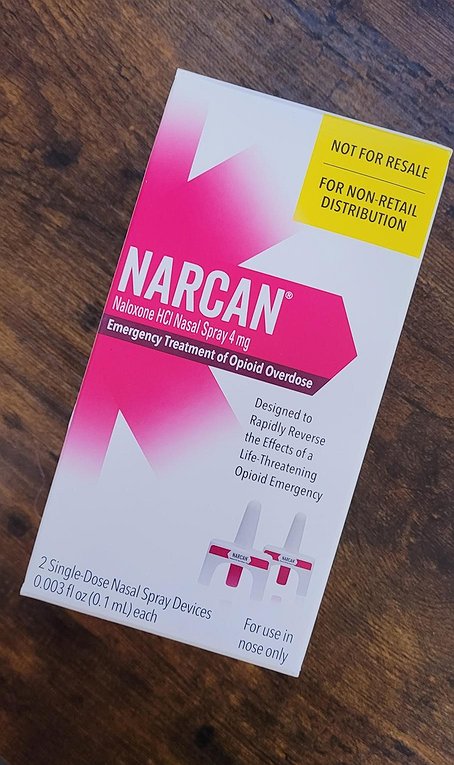 Narcan, also known as naloxone, can prevent an overdose death when the overdose is caused by an opioid. Using the nasally-administered medicine is risk free and will not cause other issues.
ARTICLES BY NANCE BESTON
1 arrested after Highway 17 stop; detectives recover fentanyl, firearms
MOSES LAKE — The Moses Lake Street Crimes Unit conducted a traffic stop on Highway 17 near Randolph Road and executed a search warrant Friday morning as part of an ongoing narcotics investigation.
4th-year drought declaration in WA, subtle effects in the Columbia Basin
EPHRATA — Washington’s fourth straight year of drought is expected to hit some regions hard, but in Grant and Adams counties, the impacts will look different – quieter, less visible and centered underground. Statewide, the Department of Ecology issued an emergency drought declaration after a warm winter left Washington with about half its usual snowpack, raising concerns about low summer streamflows, stressed fish populations and heightened wildfire risk. Seven of the past 10 years have included drought somewhere in the state. “If you look at our mountains, the challenge we are facing is clear,” Gov. Bob Ferguson said during a press conference Wednesday. “We’re taking emergency action to protect fish, farmers and communities across Washington.”
Sleep Diagnostic Center to close after doctor’s sentencing
MOSES LAKE — The Central Washington Sleep Diagnostic Center announced it will be closing its doors effective April 30. This includes locations in Moses Lake, Spokane Valley, Brewster and Wenatchee. The announcement follows the March 25 guilty plea from Dr. Eric Edward Haeger, 57, in United States District Court to adulterating and misbranding medical devices with the intent to defraud or mislead, according to a statement from the U.S. Attorney’s Office. “The adulterations by Dr Haeger show a dangerous disregard for the safety of his patients,” Washington Attorney General Nick Brown said in a statement. “This is a win for patient safety, for protecting public dollars from fraud, and for ensuring citizens of Washington get necessary healthcare. This case exemplifies the great work our team is doing in collaboration with our federal partners to fight fraud and protect Washingtonians.”