
'We don't have to hate each other just because we disagree'
NANCE BESTON | Hagadone News Network | UPDATED 1 year, 5 months AGO
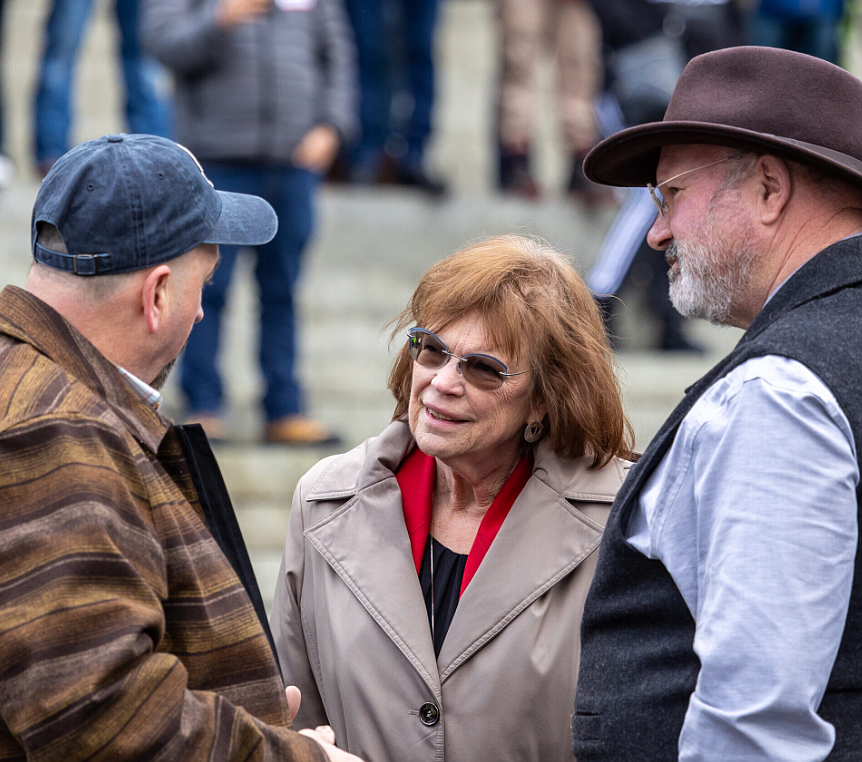
Judy Warnick, R-Moses Lake, said she is known for working across the aisle to accomplish tasks in the Senate. “There's always, always, always an opportunity for bipartisanship,” Warnick said. She believes that despite political parties, most of the legislature is trying to do what is best for the people they represent instead of prioritizing partisan arguments.
COURTESY PHOTO/OFFICE OF SEN. JUDY WARNICK
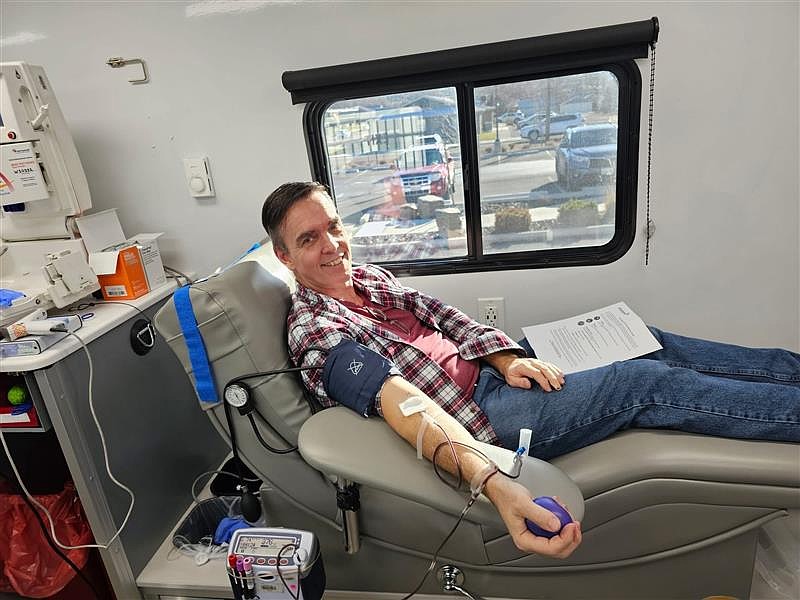
Andrew Koeppen, Grant County Republican Chair donated blood and made a post about it on the GCR Facebook. Koeppen said he tries to post content that will engage people in civic conversations. He said the comments under his post encouraging people to donate blood were from both parties and overall positive. He said that sometimes civil conversations need to start with what two people have in common, instead of what makes them different.
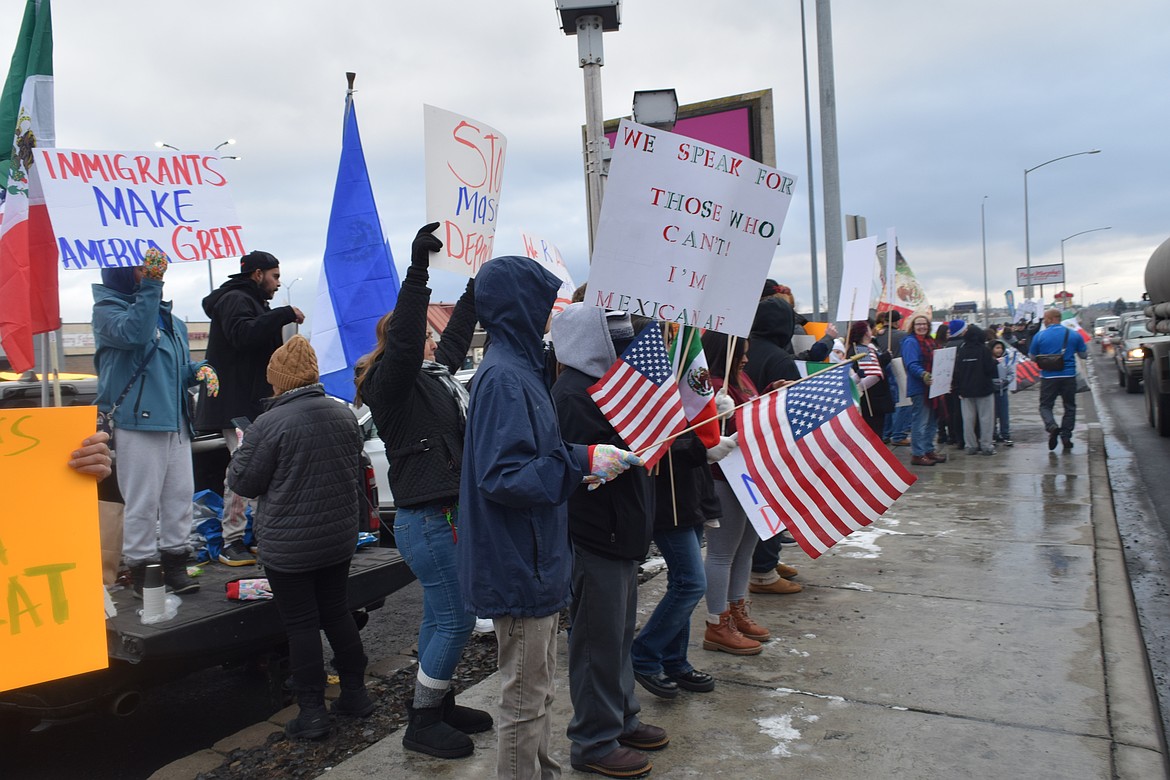
On Saturday in Moses Lake around 500 people gathered for a protest regarding immigration deportations. There were both civil interactions with people asking questions, honking with agreement and also less civil interactions with people stopping to yell slurs from their vehicles, flip off protestors and make other negative gestures.
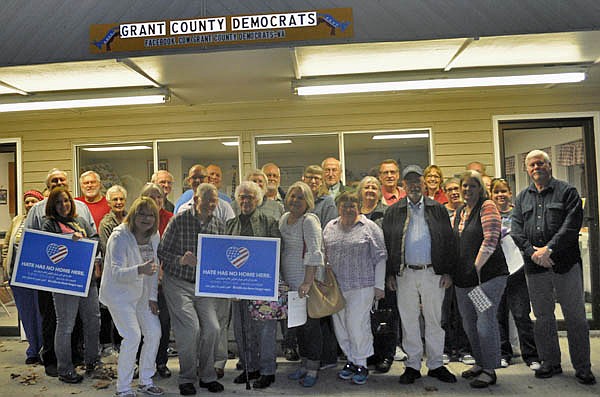
Grant County Democrats pose for a photo outside their Grant County Fairgrounds booth. Stephen Starr, the chair of the GCD said the booths are helpful to promote dialogue with fair attendees. As people walk in through the red gate on one side are the Grant County Democrats and the other is the Grant County Republicans.
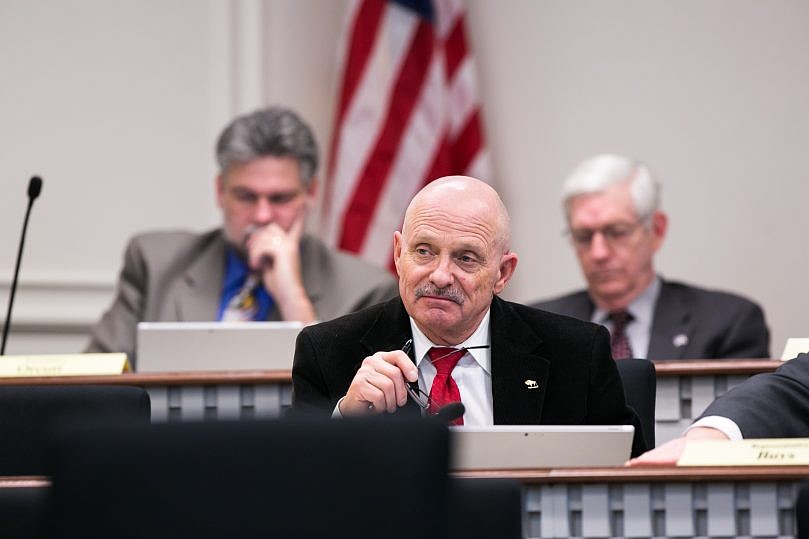
Rep. Tom Dent, R-Moses Lake, said it is crucial for people to work across party lines. Dent said he is an advocate for bipartisanship because things don't get done without civil discourse and cooperation He said the only way to accomplish anything in the Washington Legislature is to be willing to work with people you don’t fully agree with. He emphasized finding similarities instead of focusing on differences.
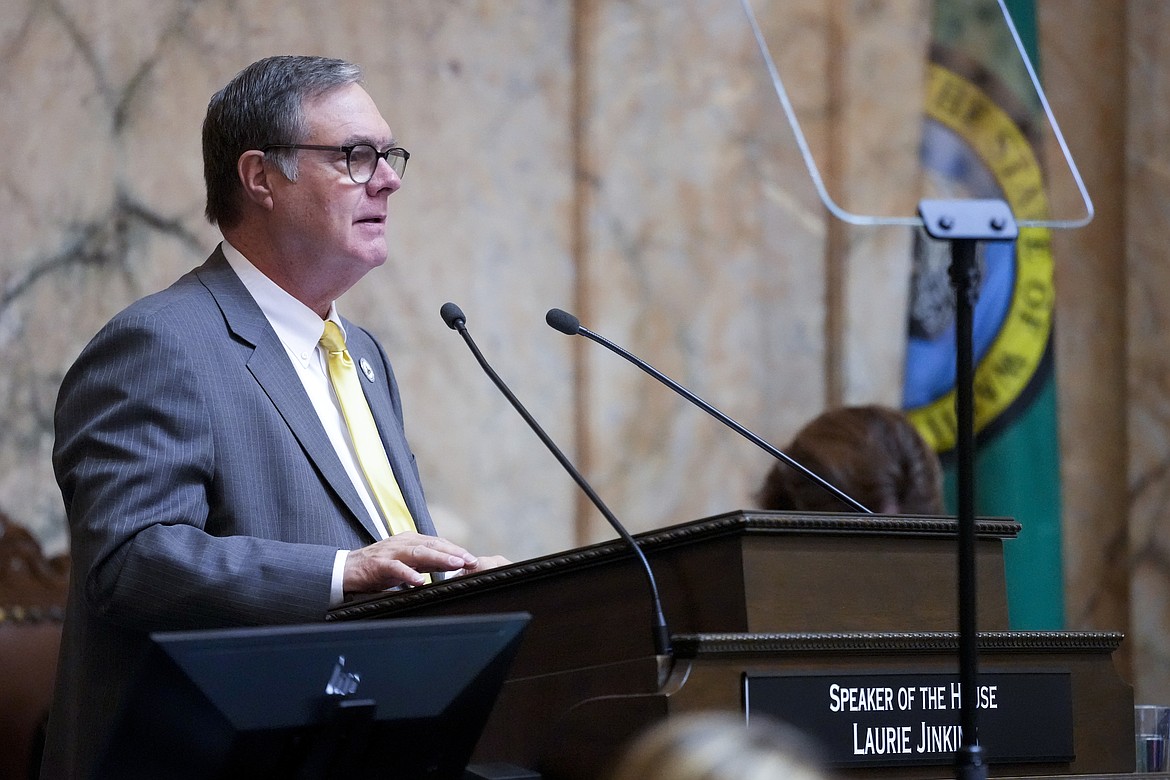
Lt. Gov. Denny Heck, one of the collaborators on the Project for Civic Health said he would like to see more respectful discourse, principled compromise and expansion for people’s capacity to disagree better. He said he has noticed a decrease in civil interactions regarding politics especially in conversations where parties disagree with one another.
MOSES LAKE — In a time marked by increasing polarization and divisive rhetoric, the Project for Civic Health in Washington state aims to foster respectful dialogue and collaboration across party lines.
Lieutenant Governor Denny Heck, a Democrat, explained the core principles of the initiative and its potential implications for the state’s civic landscape. Local leaders including Rep. Tom Dent, R-Moses Lake; Sen. Judy Warnick, R-Moses Lake district; Grant County Democratic Chair Steve Starr and Grant County Republican Chair Andrew Koeppen discussed how they are practicing civic health in their roles.
“The Project for Civic Health is a partnership between the Office of Lieutenant Governor, the University of Washington's Evans School for Public Policy, the Washington State University/UW Ruckelshaus Center and the Henry M. Jackson Foundation,” Heck said. “Its purpose is to promote activities that will lead us in a direction of improved civic health.”
Heck highlighted three founding principles of the project: first, to encourage “more respectful discourse in the public square,” second, to cultivate a “deeply, broadly held value of trying to reach principled compromise,” and finally, to “expand our capacity to disagree better.”
His motivation for spearheading the initiative stems from a personal desire for more civil interactions.
“Everybody on the face of the planet, all the things I just said, we would like to have more of. We've been having less of it,” Heck said.
Civil discussions
Warnick said one of her priorities is to be able to have civil conversations and work alongside people with different political views.
“I've always worked to be as bipartisan as I can," Warnick said. “I will talk to people from the other side of the aisle. I've been known for that. There's always, always, always an opportunity for bipartisanship.”
Warnick said she aims to establish fruitful relationships with newly introduced members of the state legislature and carry that cooperative spirit into her role on the Higher Education and Workforce Development Committee, where she hopes to collaborate on issues important to both education and public safety.
“I'm sent to Olympia to represent the 13th District and by doing that I am sent to meet with 39 other senators, whether they're my party or the majority party,” Warnick said.
Koeppen said one thing he does as the chair is promote information on Facebook that both parties can agree on – such as the need to donate blood. He said that there was positive dialogue under those posts from both Republicans and Democrats. He also encourages civil dialogue on topics that are more controversial.
“I really am emphasizing respectful dialogue with people we don't agree with, and we've had people come into our central committee meetings who the majority had issues with,” Koeppen said. “But even though we held his feet to the fire, asked really, really tough questions; after the meeting, he said, ‘Thank you for keeping it all civil and respectful,’ and I think we can all work towards that just by being respectful. Let's talk about our opinions. Let's work together where we can and in places where we can agree. Let's at least be civil in our discussions. I'm all for peaceful discussions, peaceful protests where we don't agree. I'm all for sitting down and having logical, respectful debates.”
Bipartisanship
One aspect of the Project for Civic Health is a focus on fostering bipartisanship amidst an increasingly polarized politicized environment. Heck referenced the partnership with the Ruckelshaus Center and their efforts to train elected city council members and freshman legislators.
“They identified a couple of pain points. One is that sometimes interaction with the public was difficult, not difficult in the sense that people were just saying things with which they disagree, but how it is they interacted,” Heck said. “They took them through a series of exercises and activities… taught them better how to listen, how to value other people's point of view, even when they did not agree.”
Dent said he is a big advocate for bipartisanship because “that’s the only way we can actually get things done.” He said the only way to accomplish anything in the legislature is to be willing to work with people you don’t fully agree with. He strongly emphasized finding similarities instead of focusing on differences.
“Everything in the legislature is about relationships, so I plan on achievement through my relationships and working with folks who can help support whatever I want to accomplish, whatever that could be,” Dent said.
Dent said both major parties must respectfully work with each other to ensure goals are being accomplished while representing their districts in the legislature. He said there is no way for him to complete his ambitions without working civilly alongside both people from his party and Democrats.
“We have to serve the people that put us there, and that is something I've worked on since I've been here,” Dent said. “We need to work with each other across the aisle and solve problems and fix some issues that need to be fixed and get around the partisan bickering and battle. We just have to fix some things and the answers are there.”
Starr said the Grant County Democrats frequently work across party lines with the party even supporting a number of Republican candidates.
“We've always attempted to have straightforward civic conversations. We have a building at the fair that we staff full-time, and we have a lot of interaction with people each year with both Republicans and Democrats. Our position is to encourage reasonable conversation. People are welcome to disagree, but we just have a basic core set of values like everybody deserves a basic amount of health care. We live in a county that is overwhelmingly Republican, our goal is to elect the most competent people to local office, and we have supported a number of Republicans running for local office, who you know we definitely don't agree with all of their political views. But, we believe they are the most competent candidate and do the best job running our local governments.”
Media
Heck also addressed the emerging challenges posed by media fragmentation and the decline of local journalism.
“Part of the problem statement… is the virtual collapse of local journalism is really unhealthy for democracy,” he said. “Things that we can and should do to help local journalism are… fellowships funded by the legislature.”
He said local journalism plays a vital role in maintaining an informed citizenry and healthy discourse.
Starr reiterated a similar sentiment, saying he tries to find media on the right, left and more in the middle.
“I think it's important for us as Democrats to understand what Republicans’ views are, what their priorities are, and how they think and what they're hearing and really the only way to do that is to either talk to Republicans or expose ourselves to media that tends to have a more conservative viewpoint,” Starr said. “I would recommend that everybody do that. It really helps to have a civil conversation with someone on something you don’t agree with if you understand where they are coming from.”
Regarding the pervasive influence of social media in shaping public opinion, Heck voiced concerns about its role in declining civic health. He described the platforms as “a big culprit” that thrives on sensationalism and division.
“Their entire business model is predicated… on the need to attract as many eyeballs as possible for as long as possible,” he said.
This, he argues, leads to a landscape where misinformation and emotionally charged content prevail.
When asked how individuals can better navigate the current media landscape and its effects on political discussions, Heck had a straightforward recommendation.
“Turn off your damn television set,” he advised. “It’s hard to though, right? Because those channels are jumping up and down on our fear and anger buttons too,” he said, illustrating the challenges faced by individuals seeking civil discourse.
However, Koeppen said he recommends people consider another approach rather than turning off the news and media. He recommends people remember there is someone's parent, child, partner – a living person – behind the screen and that person deserves respect.
“It's the general policy of the Grant County Republican Party you can make comments, and we believe in the First Amendment, you can make comments for or against various things, but don't attack the person. You can attack the idea. You can present evidence. You can have a nice, civil debate, but we need to present a positive opinion that we can be reasoned with. One of my own beliefs – and it's a Biblical belief says, ‘prove all things, hold fast that which is true.’ That means we are constantly supposed to be evaluating even our own beliefs, our own understanding. The only way you can do that is to listen to the other side.”
That verse is 1 Thessalonians 5:21.
Thinking forward
Looking to the future, Heck expressed hope for the long-term impact of the Project for Civic Health on Washington State’s civic engagement.
“At a minimum, I hope it holds back the tide of the decline that we all seem to be experiencing,” he said.
His vision includes an effort to instill values of respectful dialogue and bipartisan cooperation among all elected officials, from local school boards to state government.
Ultimately, Heck said "We don't have to hate each other just because we disagree.”
In an era characterized by animosity and fragmentation, the goal of the Project for Civic Health offers a potential pathway toward more constructive conversations, underscoring the importance of understanding, listening, and engaging across differences. As the Evergreen State’s leaders move forward with the initiative, the hope is not only to improve civic health but to foster a more unified and respectful political climate for future generations.
“I want to see us pull together and become a great state that we're capable of, and we have to look at some of these challenges that we have, and we just can't blame somebody for the problems,” Dent said. “We've made some mistakes, but let's just fix them, right? You make mistakes. I shouldn't be blaming you; I should be helping you overcome the mistake and continue on, right? I'm really big on working towards solutions, working together, working to make Washington as good as it can be.”
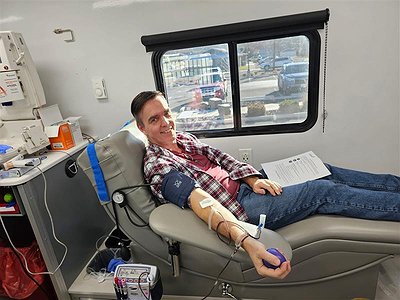 Andrew Koeppen, Grant County Republican Chair donated blood and made a post about it on the GCR Facebook. Koeppen said he tries to post content that will engage people in civic conversations. He said the comments under his post encouraging people to donate blood were from both parties and overall positive. He said that sometimes civil conversations need to start with what two people have in common, instead of what makes them different.
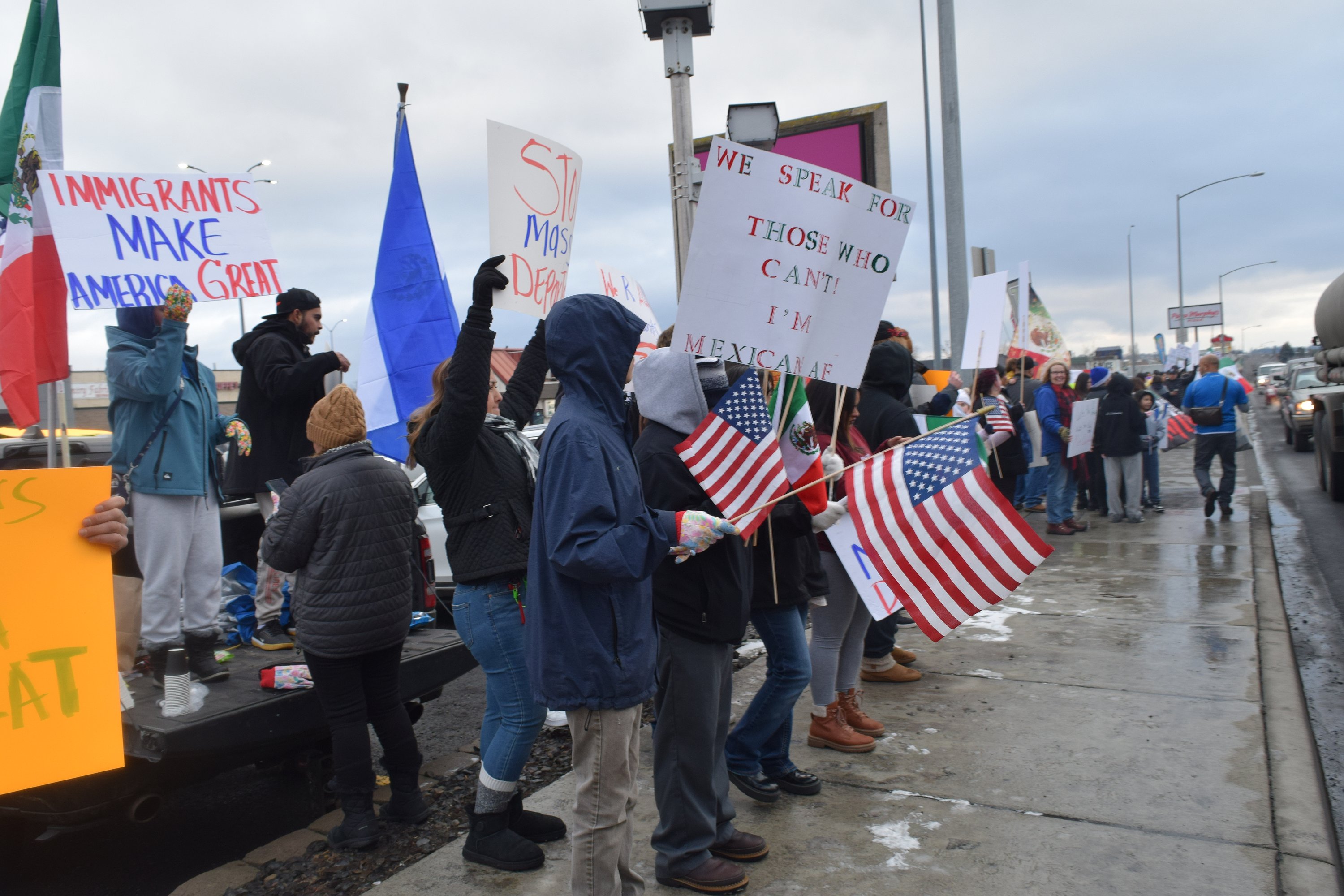 On Saturday in Moses Lake around 500 people gathered for a protest regarding immigration deportations. There were both civil interactions with people asking questions, honking with agreement and also less civil interactions with people stopping to yell slurs from their vehicles, flip off protestors and make other negative gestures.
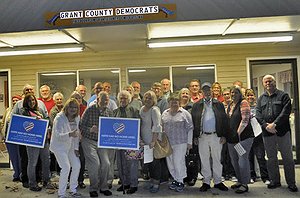 Grant County Democrats pose for a photo outside their Grant County Fairgrounds booth. Stephen Starr, the chair of the GCD said the booths are helpful to promote dialogue with fair attendees. As people walk in through the red gate on one side are the Grant County Democrats and the other is the Grant County Republicans.
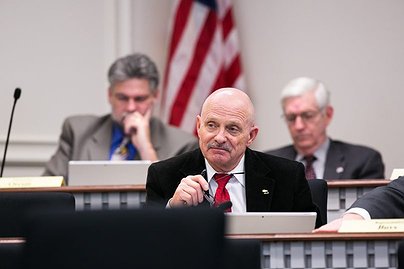 Rep. Tom Dent, R-Moses Lake, said it is crucial for people to work across party lines. Dent said he is an advocate for bipartisanship because things don't get done without civil discourse and cooperation He said the only way to accomplish anything in the Washington Legislature is to be willing to work with people you don’t fully agree with. He emphasized finding similarities instead of focusing on differences.
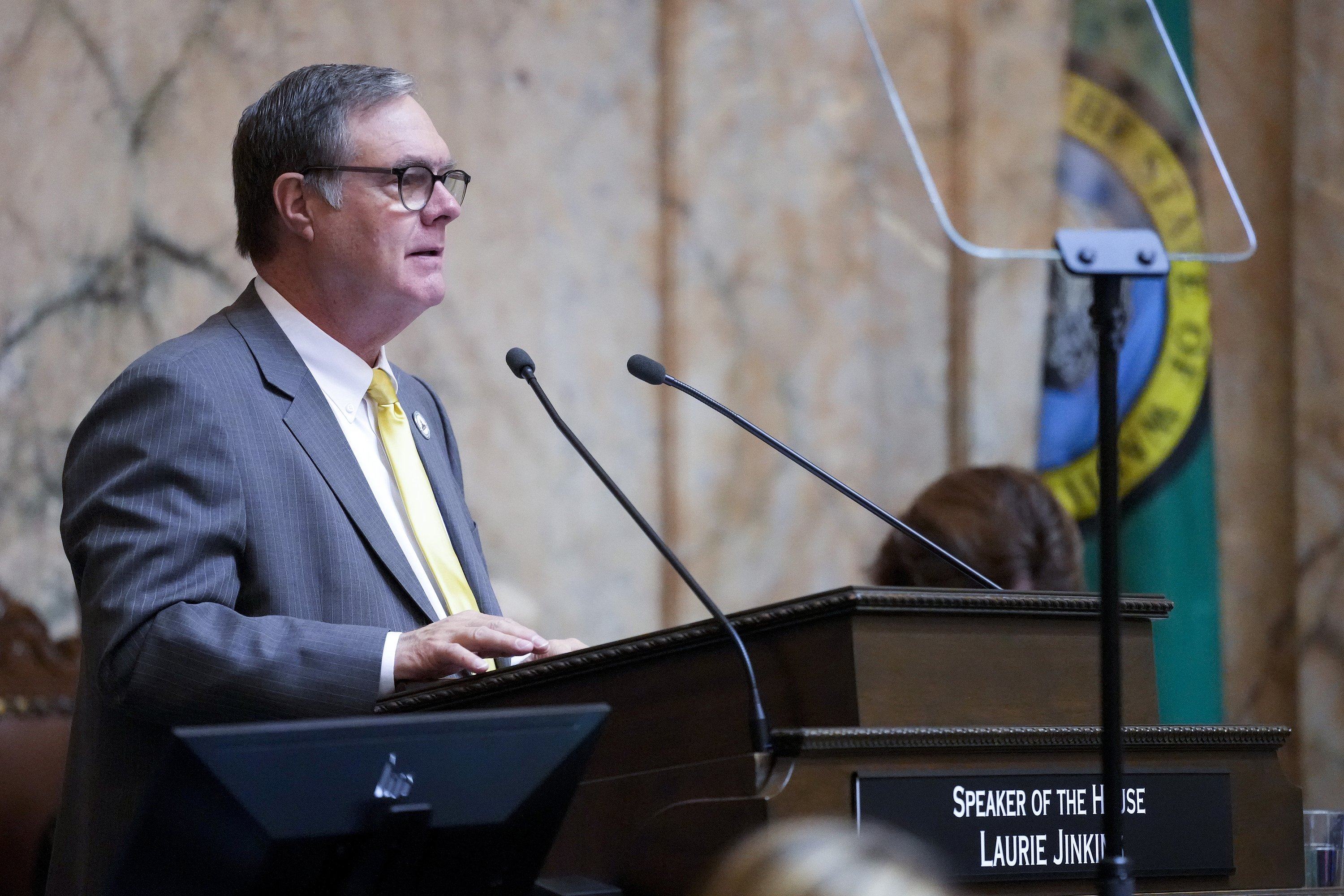 Lt. Gov. Denny Heck, one of the collaborators on the Project for Civic Health said he would like to see more respectful discourse, principled compromise and expansion for people’s capacity to disagree better. He said he has noticed a decrease in civil interactions regarding politics especially in conversations where parties disagree with one another.
ARTICLES BY NANCE BESTON
Grant County Sheriff candidates discuss transparency, trust
EPHRATA — As Grant County voters prepare to submit their primary ballots, three candidates are vying for the position as Grant County Sheriff including incumbent Joey Kriete and challengers Josh Sainsbury and Darrick Gregg are competing in the upcoming primary election. To help readers compare the candidates' priorities, qualifications and plans for the office, each was asked the same question and given an equal opportunity to respond.
Grant County Commissioner candidates deliberate fiscal responsibility, budgeting
EPHRATA — Four Republicans are seeking election to Grant County Commissioner Position 3 in the upcoming primary: Shannon Durfee, Kelly Raap, Seth Weeks and Janice Flynn. To give voters a clear comparison of the candidates' positions and priorities, each was asked the same set of questions and provided the same deadline to respond. Durfee, Raap and Flynn submitted responses by the deadline; Weeks did not respond.

Sheriff candidates discuss staffing, retention
EPHRATA — As Grant County voters prepare to select their next sheriff, incumbent Joey Kriete and challengers Josh Sainsbury and Darrick Gregg are competing in the upcoming primary election. To help readers compare the candidates' priorities, qualifications and plans for the office, each was asked the same question and given an equal opportunity to respond. This installment focuses on one of the most pressing challenges facing law enforcement agencies: recruiting, retaining and supporting qualified staff within the Grant County Sheriff's Office.