
Four Seasons Farm Service
JOEL MARTIN | Hagadone News Network | UPDATED 1 year, 9 months AGO
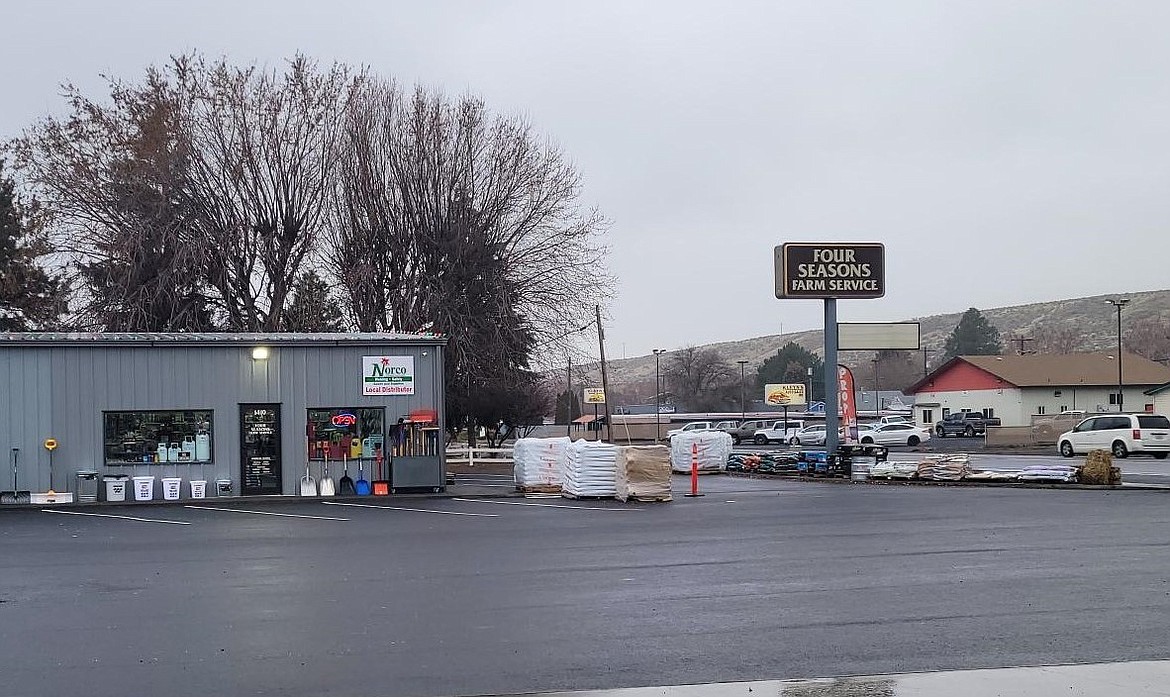
Four Seasons Farm Service takes the name seriously. In the spring, the business offers a variety of products to help with planting, in summer there are loads of items for animal husbandry, the fall selection helps with harvesting and more and during the winter shoppers can find a snow shovel and insulated work gloves.
R. HANS MILLER/COLUMBIA BASIN HERALD
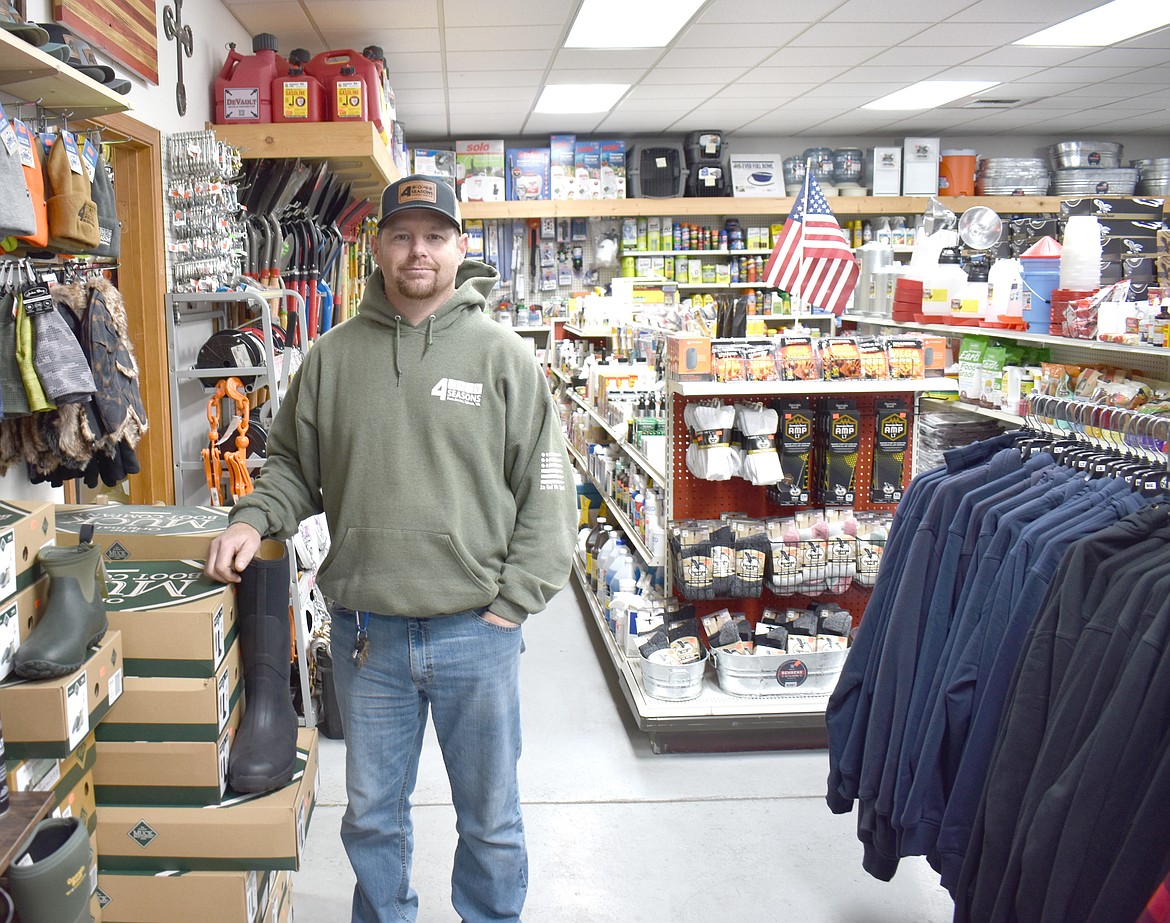
J.J. Heston, owner of Four Seasons Farm Service in Ephrata, believes that a personal connection with customers goes a long way in making his business a success.
Joel Martin has been with the Columbia Basin Herald for more than 25 years in a variety of roles and is the most-tenured employee in the building. Martin is a married father of eight and enjoys spending time with his children and his wife, Christina. He is passionate about the paper’s mission of informing the people of the Columbia Basin because he knows it is important to record the history of the communities the publication serves. | January 6, 2025 3:00 AM
EPHRATA — J.J. Heston, owner of Four Seasons Farm Service, was already familiar with the store long before he owned it.
“All through high school and my young adult years, I’d say ‘Hey, Dad, what do I spray on this weed?’ ‘Go see (then-owner Bernie Martin),’” he said. “‘Hey Dad, where do you get fertilizer?’ ‘Go see Bernie.’ So I just kind of bypassed Dad and came to talk to Bernie.”
Bernie Martin’s memory fills Four Seasons, as even a short conversation with Heston attests. Martin moved to the Ephrata area in 1979 after graduating from WSU, according to his online obituary, and went to work at Four Seasons in 1984. He bought the business in 1989 and ran it for 30 years before his failing health forced him to sell in 2019. He passed away in 2021.
When Martin stepped down, Heston said he had been working for Martin for about a year and a half, and he was happy to take over.
“When he got sick, I came down and asked him if he needed help, and he took me up on that,” Heston said. “And then it worked into an ownership thing. It's awfully humbling to be able to take another man's legacy and carry on with it.”
Now that he’s the man people come to for answers, Heston said, he’s aware of the heavy responsibility.
“(I’m) completely open and honest with them and let them know that this isn't (just) for a sale,” he said. “I want my customer to have the best information, even if that means I'm not getting this sale, because when they leave the store, they remember ‘He was helpful; he looked out for our best interest,’ and hopefully that's enough to bring them back.”
Four Seasons Farm Service is a family business, Heston said. His oldest daughter had worked for Martin about half a year before her dad did, and Heston’s youngest daughter helped with the software and pricing structure.
“My wife has, from day one, done the back side of things, all the bookwork, all the accounts receivable, the billing,” he said. “It's a family deal. Every single month, we're stuffing statements together and mailing them off. And the trade shows are a lot of fun.”
Four Seasons is very old-school in the way the store is operated. The inventory, which fills the store to the brim, is neatly organized but not stored on a computer. But it’s a personal business, Heston said. As a man of strong faith and a recovering addict, he said, he finds an honest connection with people goes a long way.
“It makes me boldly unique,” he said. “I speak about my faith in Christ to just about everybody who walks through the door. I hug customers, I laugh with them, I cry with them, I pray with them openly. I bring them into the office if they need to talk … It’s an incredible blessing.”
It all boils down to motivation, Heston said. Money is fine, but it’s not the only factor in a successful business.
“I'm not financially motivated,” he said. “You have to have money to pay your bills, but I'm people-driven. I'm connection-driven. So the more networking I do, the more connected I get with people, every time I get a new vendor, God works in ways where we could only begin to understand. He’s put people in my life that were supposed to be there, and we've kindled and made these long, lasting friendships because of this store. It's such a gift.”
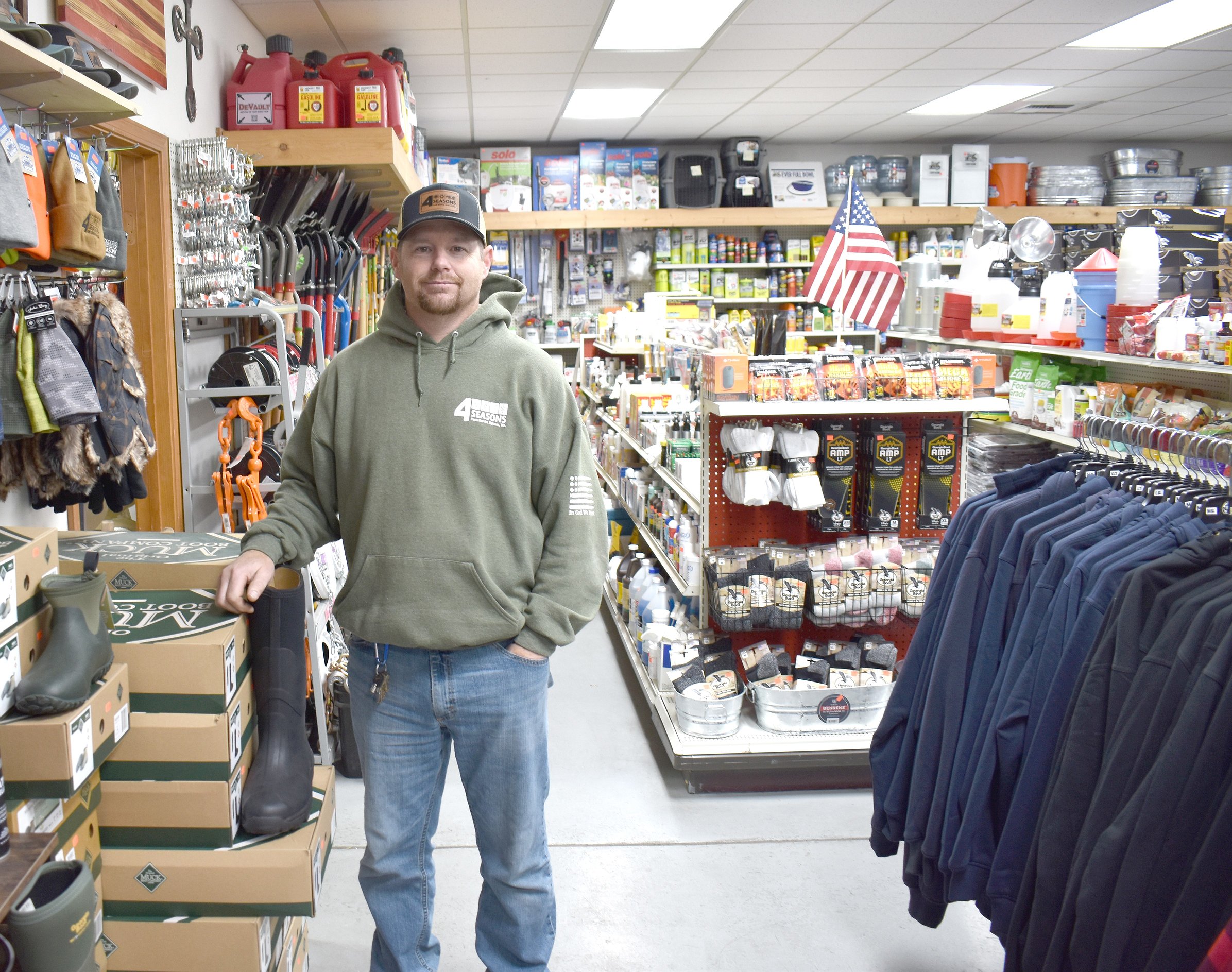 J.J. Heston, owner of Four Seasons Farm Service in Ephrata, believes that a personal connection with customers goes a long way in making his business a success.
ARTICLES BY JOEL MARTIN

Endless battle
Noxious Weed Control Board works to keep invasive plants under control
MOSES LAKE — Some of the nastiest plants in Grant County were the topic of a class led by Jay Johnson, a consultant with the Grant County Noxious Weed Control Board, Tuesday. The Noxious Weed Control Board, as its name would suggest, is tasked with keeping weeds under control in Grant County. That’s not a small job; the board’s website lists 129 species of noxious weeds that are found around Grant County. A noxious weed is defined as an invasive, non-native plant that threatens agricultural crops, local ecosystems or fish and wildlife habitat, according to the Noxious Weed Control Board. Washington state law requires that these weeds be identified and their spread kept to a minimum, if not completely eradicated. “We’re one of those agencies a lot of people don’t really understand,” Johnson said. “We’re a county office and … our funding is tax-based assessment. When you get your tax bill and you look down at all the expenses that you pay for, there we are.”

BASIN EVENTS: Oct. 16-24
COLUMBIA BASIN — Whether you feel like shopping, crafting, learning or seeing a show, there’s something happening for you this week in the Basin. Oct. 16 ‘My Family (Mi Familia)’ screening Spanning three generations, “My Family (Mi Familia)” is a heartfelt drama that follows the Sánchez family as they build their lives in East Los Angeles. Through love, hardship, triumph, and sacrifice, the film explores the immigrant experience, the strength of family bonds, and the traditions that connect one generation to the next. Lowrider show and taco truck before the screening. Sponsored by Columbia Basin Allied Arts, EDUBS C/S and the Moses Lake Creative District. $12 per person. Doors open at 6 p.m., film begins at 7 p.m. at the Moses Lake Civic Center Auditorium, 401 S. Balsam St. Tickets and info: www.cba-arts.org.

Moses Lake author encourages women to look beyond church culture norms
MOSES LAKE — A Moses Lake author’s book, “A Christian Woman Striving to Live Her Faith in a Man-Controlled World,” takes aim at the role to which many churches relegate the female half of their congregations. “It’s to encourage women in the faith,” Linda Curran said. “A lot of churches say, ‘Teach Sunday school, do this, do that, but don’t (evangelize.)’" In her book, Curran recounts a time when she moved to a new community and joined a church there. She was surprised to learn that, as a new female member, she had been automatically assigned church cleaning duties. When she questioned it, she wrote, she was met with condescension and her objections were brushed aside. In other churches, she said, women who were capable of teaching were relegated to “women’s ministry.”