
Home solar can trim bills, but research before installing
JOEL MARTIN | Hagadone News Network | UPDATED 1 year, 9 months AGO
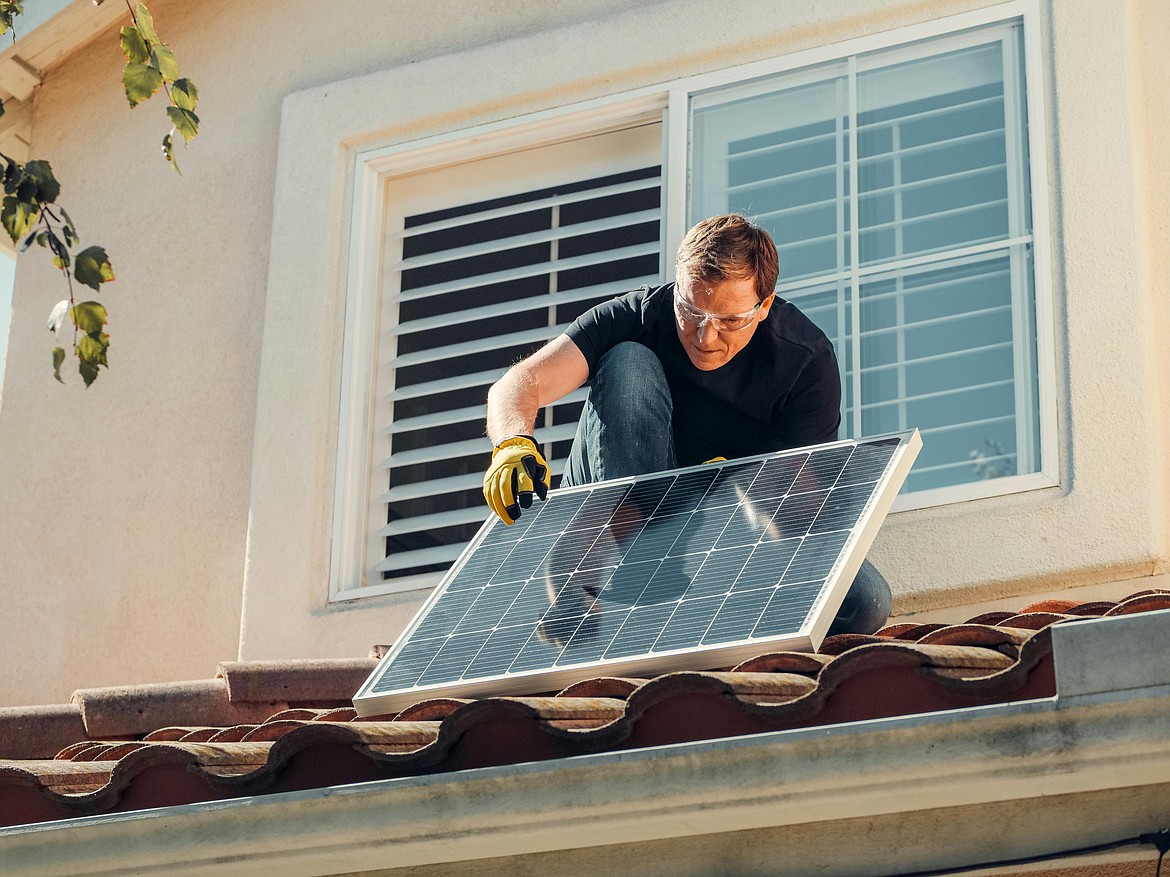
Installing solar panels on your home can save money over the long haul but be sure you know the up-front costs and what to expect from the system.
PHOTO BY KINDEL MEDIA VIA PEXELS
Joel Martin has been with the Columbia Basin Herald for more than 25 years in a variety of roles and is the most-tenured employee in the building. Martin is a married father of eight and enjoys spending time with his children and his wife, Christina. He is passionate about the paper’s mission of informing the people of the Columbia Basin because he knows it is important to record the history of the communities the publication serves. | January 17, 2025 2:20 AM
EPHRATA — With the cost of everything going up, some homeowners want to embrace self-sufficiency in energy by mounting solar panels on their roofs to generate power. And considering the Basin’s abundant sunshine, that seems like a great solution for this area.
“We do encourage customers to go into their solar investment fully educated with clear expectations,” said Chris Buchmann, energy programs supervisor for the Grant Public Utility District.
Certainly, there can be benefits to home solar. Avista’s solar power calculator for a randomly selected 2,016-square-foot home in Othello with a monthly electrical bill of $104 (the average bill in Othello according to findenergy.com) showed that a solar array on the roof, without any other modifications, would generate about 89% of that home’s electricity on average every year. That can add up to a pretty good chunk of change over time. In addition, the federal government offers tax credits to help offset the cost of installing a solar system.
State incentives for solar systems are also available and information can be found at solarwa.org/solar_incentives.
The first thing to find out is if your home is suited to solar panels at all. Solar panels can be used in any climate, according to the U.S. Department of Energy’s website, but if you have trees casting shade on your roof, they may not do enough good to be worth the cost. Then too, solar panels work best on south-facing roofs with a slope between 15 and 40 degrees, according to the DOE. The age and overall condition of the roof is also a factor.
“The average cost to replace a roof is about $10,000, depending on the size of the roof and other factors, and it will last anywhere from 20 to 50 years depending on the materials used,” the DOE’s Solar Energy Technologies Office wrote. “According to the National Renewable Energy Laboratory, the average cost of installing a residential rooftop solar array is $19,000. Combined with a roof replacement, the total bill can amount to nearly $30,000; however, NREL researchers estimate that when done together, the average cost could be $25,000, potentially saving homeowners an average of $4,000.”
Installing solar panels on the roof isn’t really a DIY job for most people. The U.S. Department of Energy recommends that homeowners go through a qualified professional who holds a certification to do so and works with high-quality solar panels. The industry-standard certification is awarded through the North American Board of Certified Energy Practitioners, according to the DOE’s website.
For a metered home, it’s important to remember that the power generated by roof solar isn’t just the homeowner’s to use. Some people think installing solar panels means they can go off the grid, but that’s not how it works. Locally, the electricity that’s generated on a home roof goes to the local utility in a process called net metering. With net metering, when a home generates more electricity than it’s using at that moment, like during sunny daylight hours, that electricity is put back into the utility’s grid and the homeowner gets a credit on their bill to offset that. The homeowner is still dependent on the utility for power in most cases.
“One of the big things that customers think when they're looking at installing a solar system is that, when the power goes out, if I have solar, the lights in the home will stay on,” Buchmann said. “And that's not a true fact. If your meter loses power, you will no longer generate power.”
The only way to have power during an outage is to have a battery backup installed in the home, Buchmann explained, at which time you’re not actually using the solar power from the roof, just running off the battery. It will still have to be recharged through the utility.
No home electric system runs at 100% efficiency, but if it did, that still wouldn’t negate the home’s power bill entirely, Buchmann said, because there’s still a minimum charge assessed just for having the meter.
For customers who decide to go ahead with home solar, Buchmann said, the necessary application forms are on the PUD’s website and the PUD will work with the contractor installing the system to make sure it’s safe and efficient for everyone. Typically, a contractor will submit the design through the PUD’s application process and the customer doesn’t have to be directly involved. But for those who need to know more before starting out, the PUD is happy to help, he said.
“If a customer calls in and asks about a program, we make sure that they do understand all the parameters of the project, how much it's going to cost, understand our rates, understand all of those things, and that it's something that they can afford,” he said. “We take a neutral stance as a PUD on (home solar) but my department feels like it's our duty to make sure that they understand that, and they take that into consideration.”
Where to learn more:
Grant County PUD
www.grantpud.org
Avista
avista.wattplan.com
Big Bend Electrical Cooperative
www.bbec.org
ARTICLES BY JOEL MARTIN
Endless battle
Noxious Weed Control Board works to keep invasive plants under control
MOSES LAKE — Some of the nastiest plants in Grant County were the topic of a class led by Jay Johnson, a consultant with the Grant County Noxious Weed Control Board, Tuesday. The Noxious Weed Control Board, as its name would suggest, is tasked with keeping weeds under control in Grant County. That’s not a small job; the board’s website lists 129 species of noxious weeds that are found around Grant County. A noxious weed is defined as an invasive, non-native plant that threatens agricultural crops, local ecosystems or fish and wildlife habitat, according to the Noxious Weed Control Board. Washington state law requires that these weeds be identified and their spread kept to a minimum, if not completely eradicated. “We’re one of those agencies a lot of people don’t really understand,” Johnson said. “We’re a county office and … our funding is tax-based assessment. When you get your tax bill and you look down at all the expenses that you pay for, there we are.”
BASIN EVENTS: Oct. 16-24
COLUMBIA BASIN — Whether you feel like shopping, crafting, learning or seeing a show, there’s something happening for you this week in the Basin. Oct. 16 ‘My Family (Mi Familia)’ screening Spanning three generations, “My Family (Mi Familia)” is a heartfelt drama that follows the Sánchez family as they build their lives in East Los Angeles. Through love, hardship, triumph, and sacrifice, the film explores the immigrant experience, the strength of family bonds, and the traditions that connect one generation to the next. Lowrider show and taco truck before the screening. Sponsored by Columbia Basin Allied Arts, EDUBS C/S and the Moses Lake Creative District. $12 per person. Doors open at 6 p.m., film begins at 7 p.m. at the Moses Lake Civic Center Auditorium, 401 S. Balsam St. Tickets and info: www.cba-arts.org.

Moses Lake author encourages women to look beyond church culture norms
MOSES LAKE — A Moses Lake author’s book, “A Christian Woman Striving to Live Her Faith in a Man-Controlled World,” takes aim at the role to which many churches relegate the female half of their congregations. “It’s to encourage women in the faith,” Linda Curran said. “A lot of churches say, ‘Teach Sunday school, do this, do that, but don’t (evangelize.)’" In her book, Curran recounts a time when she moved to a new community and joined a church there. She was surprised to learn that, as a new female member, she had been automatically assigned church cleaning duties. When she questioned it, she wrote, she was met with condescension and her objections were brushed aside. In other churches, she said, women who were capable of teaching were relegated to “women’s ministry.”