
Under the sea
JOEL MARTIN | Hagadone News Network | UPDATED 1 year, 8 months AGO
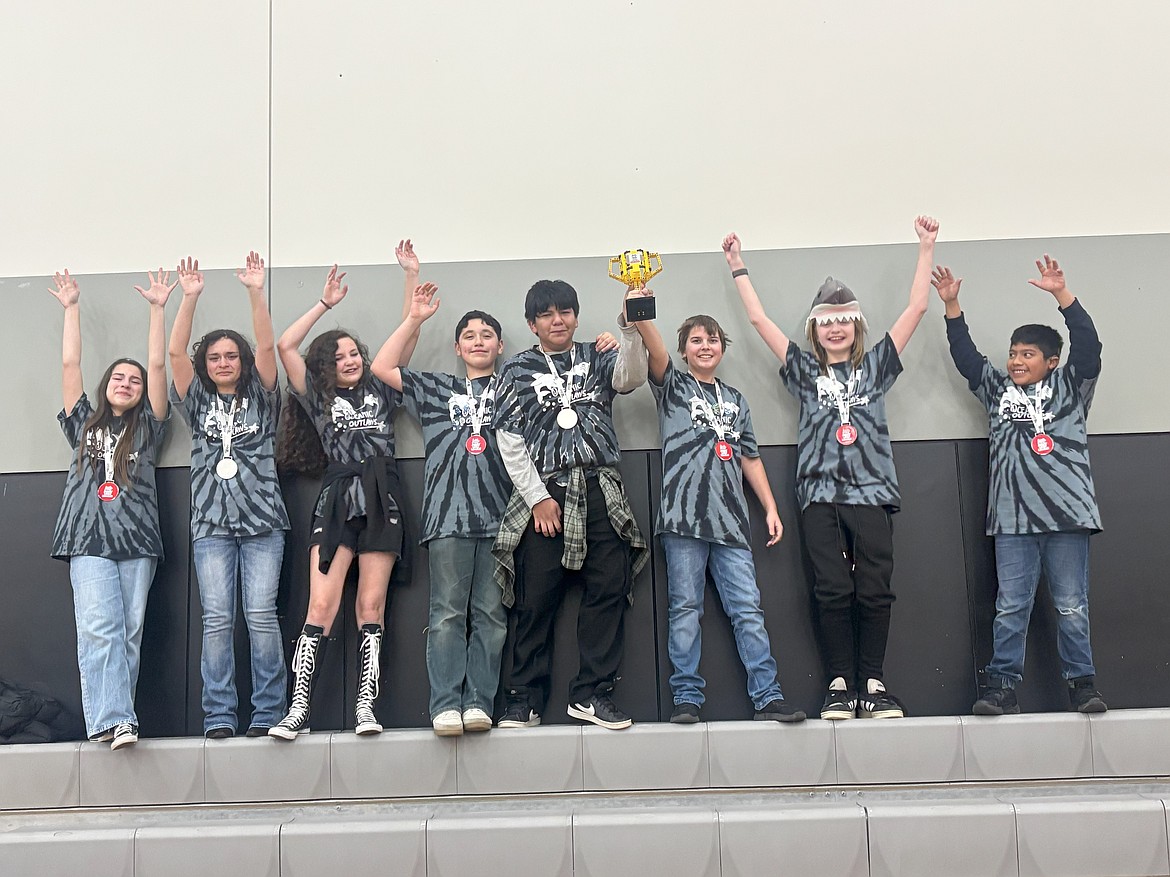
The Royal Middle School Oceanic Outlaws snagged first place for Eastern Washington at the state robotics competition in Spokane Jan. 18. From left: Eva Villa, Maria Gallegos, Lilly Piper, Martin Alcala, Jose Villanueva, Caleb Freeman, Archer Guyton and Emmanuel Luis Reyes.
COURTESY PHOTO/THERESA PIPER
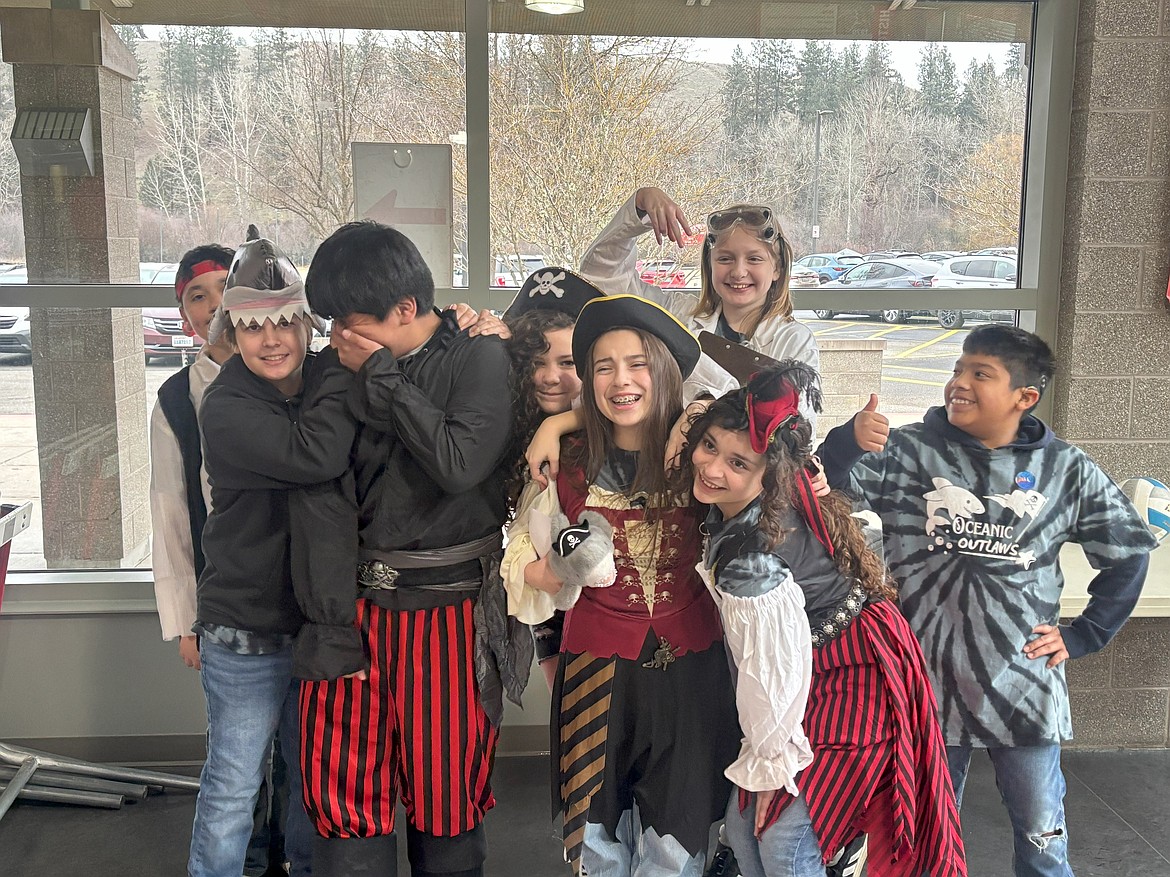
The Oceanic Outlaws in full piratical regalia. The robotics theme this year is “Submerged,” and the students vied to find solutions to oceanic problems.
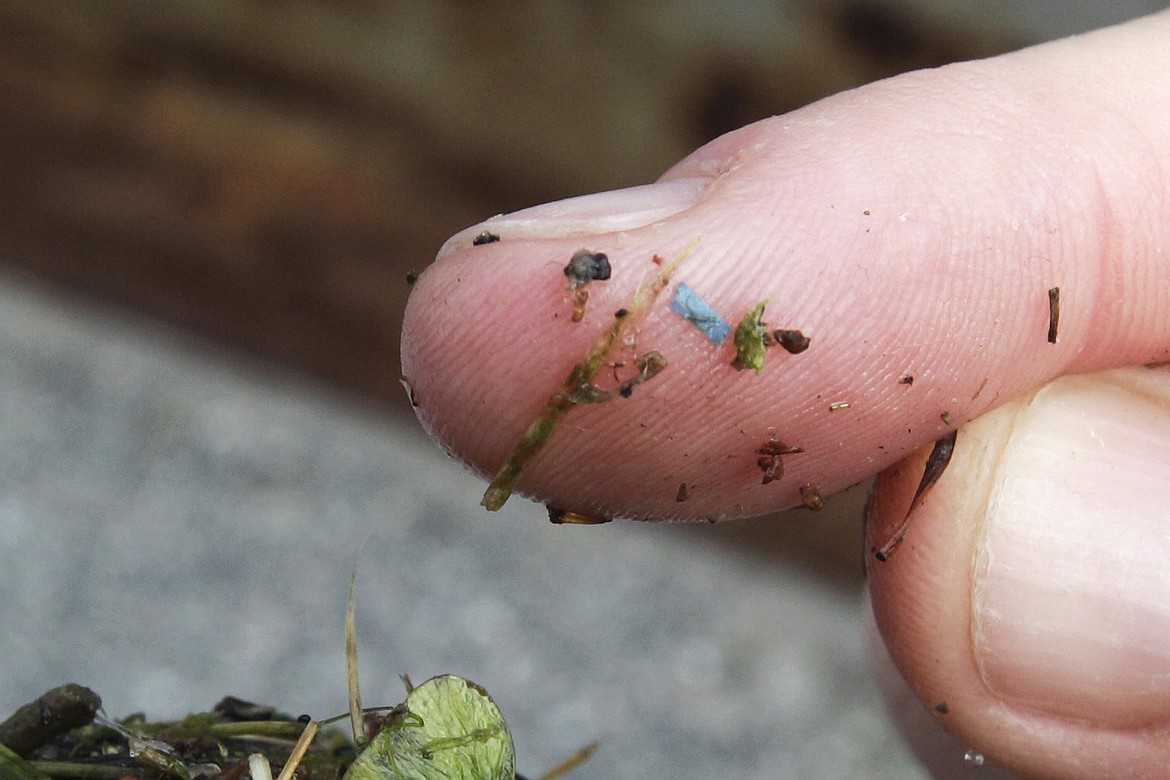
A blue rectangular piece of microplastic sits on the finger of a researcher with the University of Washington-Tacoma environmental science program, after it was found in debris collected from the Thea Foss Waterway in Tacoma. The Royal Middle School robotics team developed a way of disposing of the pollutant through mealworms.
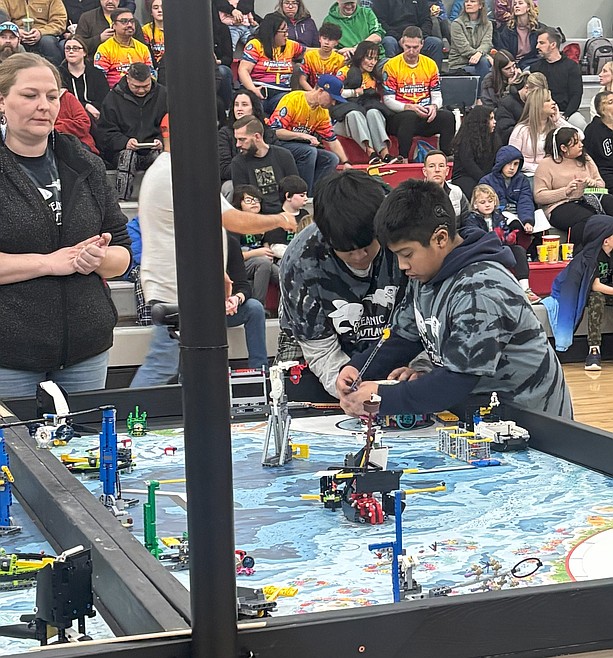
Members of the Royal Middle School Oceanic Outlaws robotics team set up the robot game challenge at the state competition in Spokane Jan. 18.
Joel Martin has been with the Columbia Basin Herald for more than 25 years in a variety of roles and is the most-tenured employee in the building. Martin is a married father of eight and enjoys spending time with his children and his wife, Christina. He is passionate about the paper’s mission of informing the people of the Columbia Basin because he knows it is important to record the history of the communities the publication serves. | January 30, 2025 1:00 AM
ROYAL CITY — The Royal Middle School Oceanic Outlaws robotics team is headed to Nationals.
The eight seventh- and eighth-grade students took home the Champion Finalist award at the FIRST LEGO League state competition in Spokane on Jan. 18, according to their coach, RMS science teacher Theresa Piper.
“We started robotics back in September, and they've been working really hard on investigating a problem and then developing an innovative solution based on this year's theme for research,” Piper said. “The theme was ocean exploration, and they've been talking to experts all over the world and developing different solutions, testing out and deciding which was the best.”
The students left Royal Middle School on Jan. 17, escorted by police cars and fire trucks with sirens and lights in a demonstration of community support. The team’s name comes from the theme for the year, “Submerged.” Challenges and solutions for this year’s competitions center around solving oceanic problems, according to the organizers’ website. The Eastern Washington championship was held at St. George’s School in Spokane.
The Oceanic Outlaws competed against 29 other teams, including the Royal Turtles from Royal Intermediate School.
The competition involved an innovation project, robot design, core values and robot games, Piper explained. The team only took fifth place in the robot game, she said, in which they design a robot to perform a 2 1/2-minute task. But their innovative design, coding skills and ability to explain how it works made up for that.
The innovation project the RMS team chose was removing microplastics from sea water. Microplastics, or bits of plastic debris about the size of a pencil eraser or smaller, are an increasing problem in the world’s oceans, according to the National Oceanic and Atmospheric Administration, as sea creatures mistake the stuff for food.
The Oceanic Outlaws rose to the challenge, developing a mealworm composting unit designed for wastewater facilities, Piper wrote in an email to the Columbia Basin Herald. The students consulted with the Royal Dairy about its vermicomposting program, as well as experts from the Moses Lake wastewater treatment facility, the University of Hawaii and Western Washington University.
“Through their research, they found that the majority of microplastics enter our oceans through laundry water,” Piper said. “And they said, ‘How could we capture this?’ … They decided to focus on filtering at a wastewater facility. The idea was to collect microplastics in, I think they called it, a rapid sand filter, and then that would be emptied out to a mealworm composting bin where the mealworms digest all the microplastics.”
In Piper’s classroom, there’s a model terrarium filled with Styrofoam and mealworms, she said, and the students have been watching the worms’ progress.
“We have not given them any food at all, and they've just been digesting and tunneling through the plastic,” Piper said. “I think we started that in October, and they're still alive. Some of them have even metamorphosed into beetles, so they're so healthy that they're going through their normal life cycle.”
As anyone who did group projects in school knows, it’s awfully easy for all the work to fall on one or two dedicated students. The fact that the Oceanic Outlaws didn’t do that went a long way toward clinching the championship for them, Piper said.
“A big part of (the competition) is inclusion, making sure every teammate is part of the process,” she said. That's really where they score very well. (With) some teams, you'll find that you have one kid who's an all-star that can program and code really well, and the team will lean sort of heavy on that. And our strength is that all of our team members participate equally.”
The national competition will be held in May in Long Beach, Calif. Although Royal has sent individual students to the national competition in the past, Piper said this is the first time the team as a whole has qualified. The students are assiduously fundraising to build up the roughly $14,000 it will cost to send them there.
“They’re actively seeking donations and sponsorships from anyone who is able to help,” Piper said. “We’re also doing small fundraisers in our building as well, selling Valentine-grams to students and doing concessions at sporting events.”
The California event will include teams not only from the U.S. but all over the world, Piper said, giving students from Royal a chance to interact with their STEM-minded international counterparts.
“This is a wonderful opportunity for our kids, and I'm so very proud of them,” Piper said. “And they're very proud of themselves and incredibly excited for this adventure.”
Anybody interested in helping the Oceanic Outlaws get to Nationals can contact Royal Middle School at 509-346-2268.
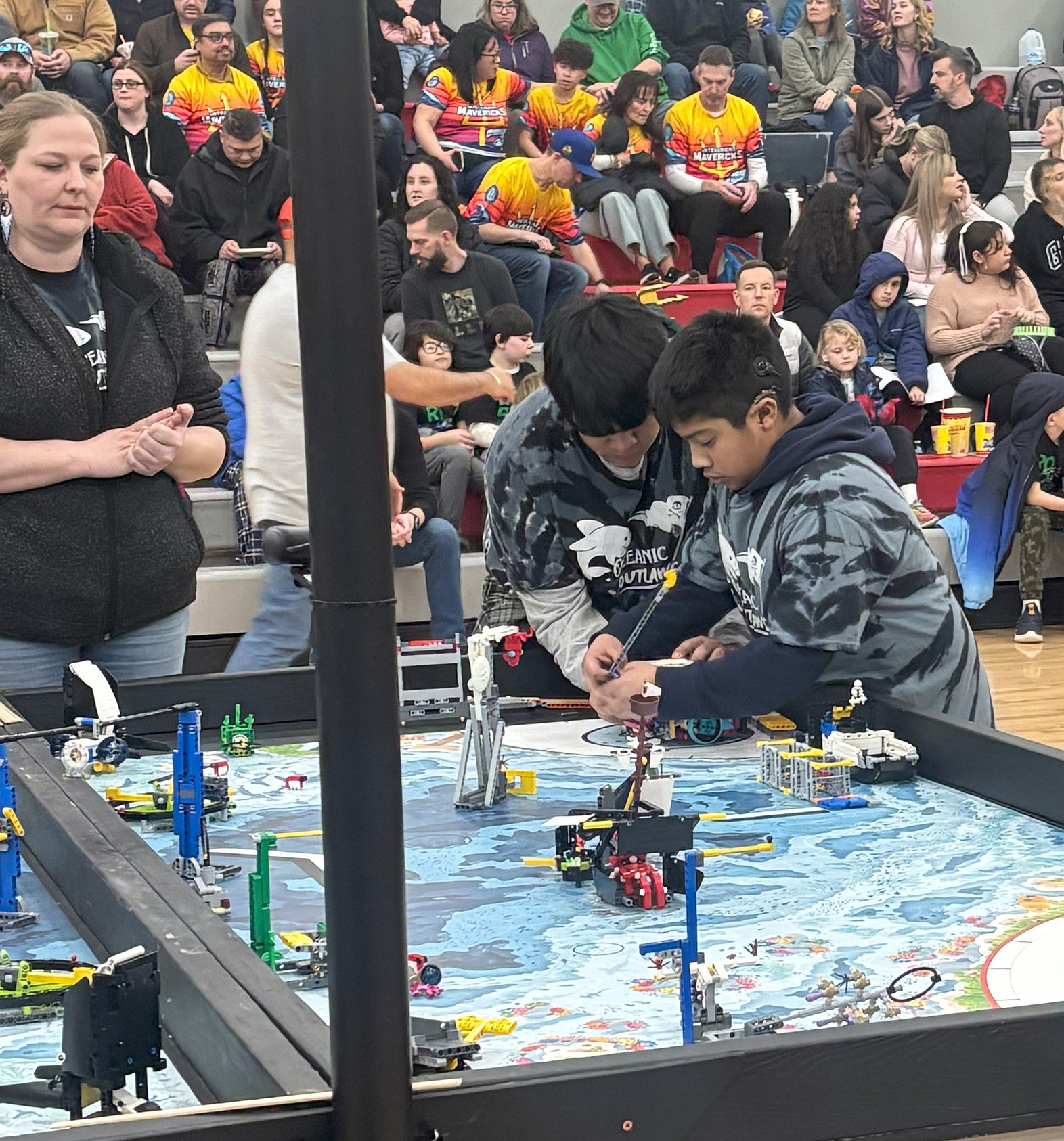 Members of the Royal Middle School Oceanic Outlaws robotics team set up the robot game challenge at the state competition in Spokane Jan. 18.
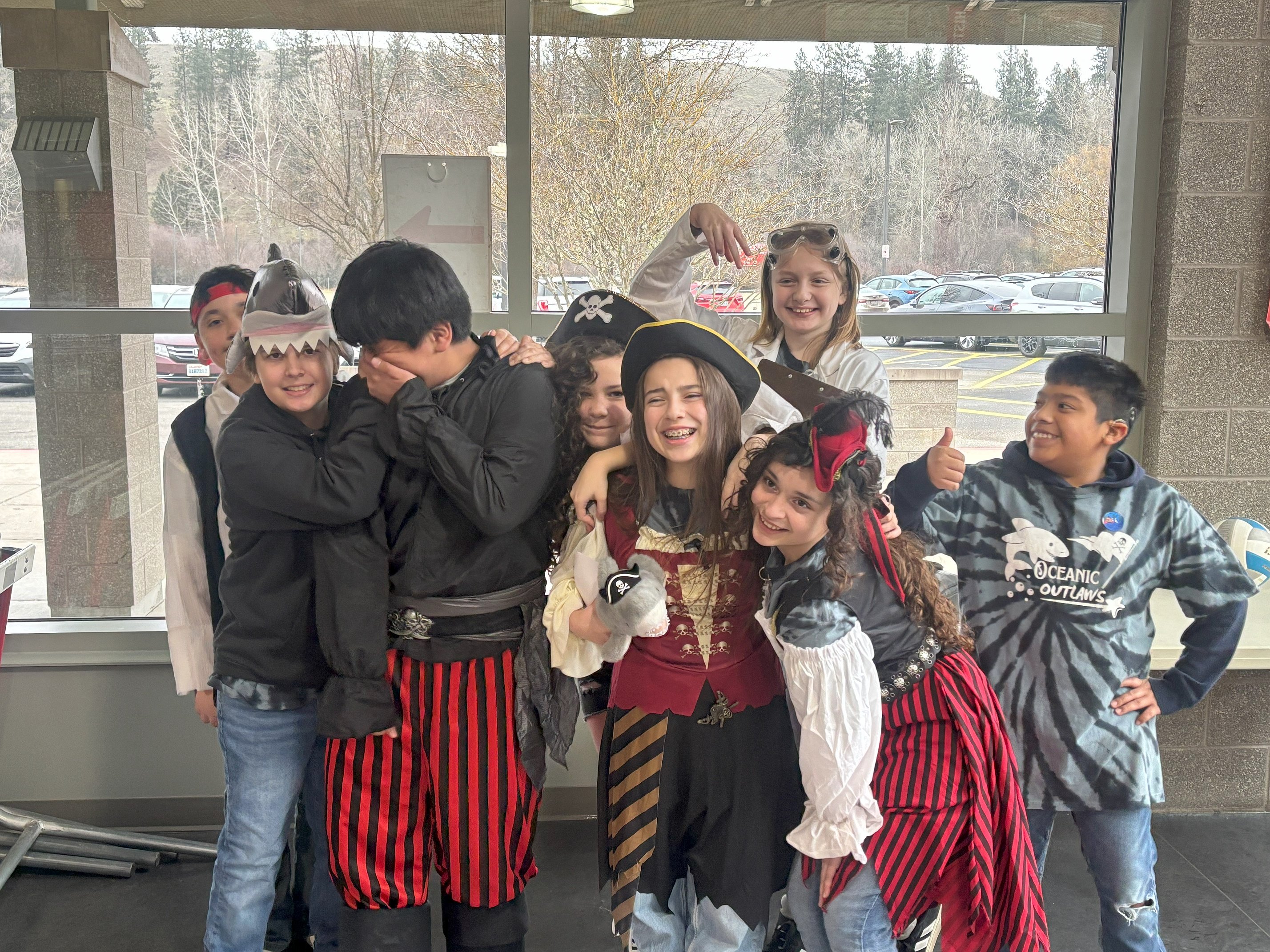 The Oceanic Outlaws in full piratical regalia. The robotics theme this year is “Submerged,” and the students vied to find solutions to oceanic problems.
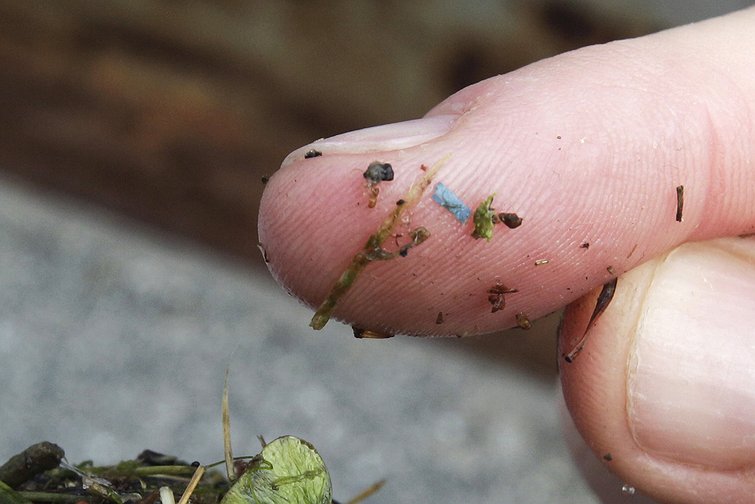 A blue rectangular piece of microplastic sits on the finger of a researcher with the University of Washington-Tacoma environmental science program, after it was found in debris collected from the Thea Foss Waterway in Tacoma. The Royal Middle School robotics team developed a way of disposing of the pollutant through mealworms.
ARTICLES BY JOEL MARTIN

Endless battle
Noxious Weed Control Board works to keep invasive plants under control
MOSES LAKE — Some of the nastiest plants in Grant County were the topic of a class led by Jay Johnson, a consultant with the Grant County Noxious Weed Control Board, Tuesday. The Noxious Weed Control Board, as its name would suggest, is tasked with keeping weeds under control in Grant County. That’s not a small job; the board’s website lists 129 species of noxious weeds that are found around Grant County. A noxious weed is defined as an invasive, non-native plant that threatens agricultural crops, local ecosystems or fish and wildlife habitat, according to the Noxious Weed Control Board. Washington state law requires that these weeds be identified and their spread kept to a minimum, if not completely eradicated. “We’re one of those agencies a lot of people don’t really understand,” Johnson said. “We’re a county office and … our funding is tax-based assessment. When you get your tax bill and you look down at all the expenses that you pay for, there we are.”

BASIN EVENTS: Oct. 16-24
COLUMBIA BASIN — Whether you feel like shopping, crafting, learning or seeing a show, there’s something happening for you this week in the Basin. Oct. 16 ‘My Family (Mi Familia)’ screening Spanning three generations, “My Family (Mi Familia)” is a heartfelt drama that follows the Sánchez family as they build their lives in East Los Angeles. Through love, hardship, triumph, and sacrifice, the film explores the immigrant experience, the strength of family bonds, and the traditions that connect one generation to the next. Lowrider show and taco truck before the screening. Sponsored by Columbia Basin Allied Arts, EDUBS C/S and the Moses Lake Creative District. $12 per person. Doors open at 6 p.m., film begins at 7 p.m. at the Moses Lake Civic Center Auditorium, 401 S. Balsam St. Tickets and info: www.cba-arts.org.

Moses Lake author encourages women to look beyond church culture norms
MOSES LAKE — A Moses Lake author’s book, “A Christian Woman Striving to Live Her Faith in a Man-Controlled World,” takes aim at the role to which many churches relegate the female half of their congregations. “It’s to encourage women in the faith,” Linda Curran said. “A lot of churches say, ‘Teach Sunday school, do this, do that, but don’t (evangelize.)’" In her book, Curran recounts a time when she moved to a new community and joined a church there. She was surprised to learn that, as a new female member, she had been automatically assigned church cleaning duties. When she questioned it, she wrote, she was met with condescension and her objections were brushed aside. In other churches, she said, women who were capable of teaching were relegated to “women’s ministry.”