
Early Literacy Fair gets children comfortable with reading
JOEL MARTIN | Hagadone News Network | UPDATED 1 year, 3 months AGO
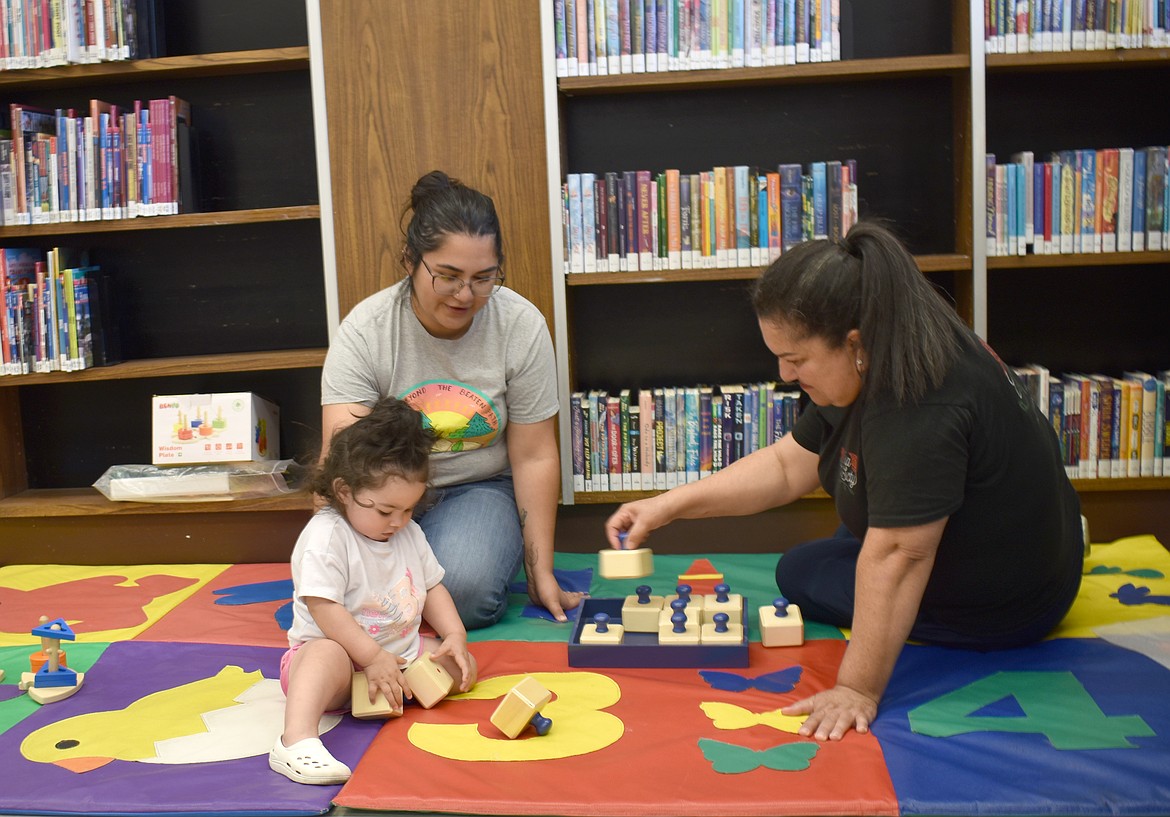
Marieli Sanchez, 1 1/2, matches noisemaking toys at the Early Literacy Fair with her mom Maira Sanchez, left, and grandmother Bianca Sanchez.
JOEL MARTIN/COLUMBIA BASIN HERALD
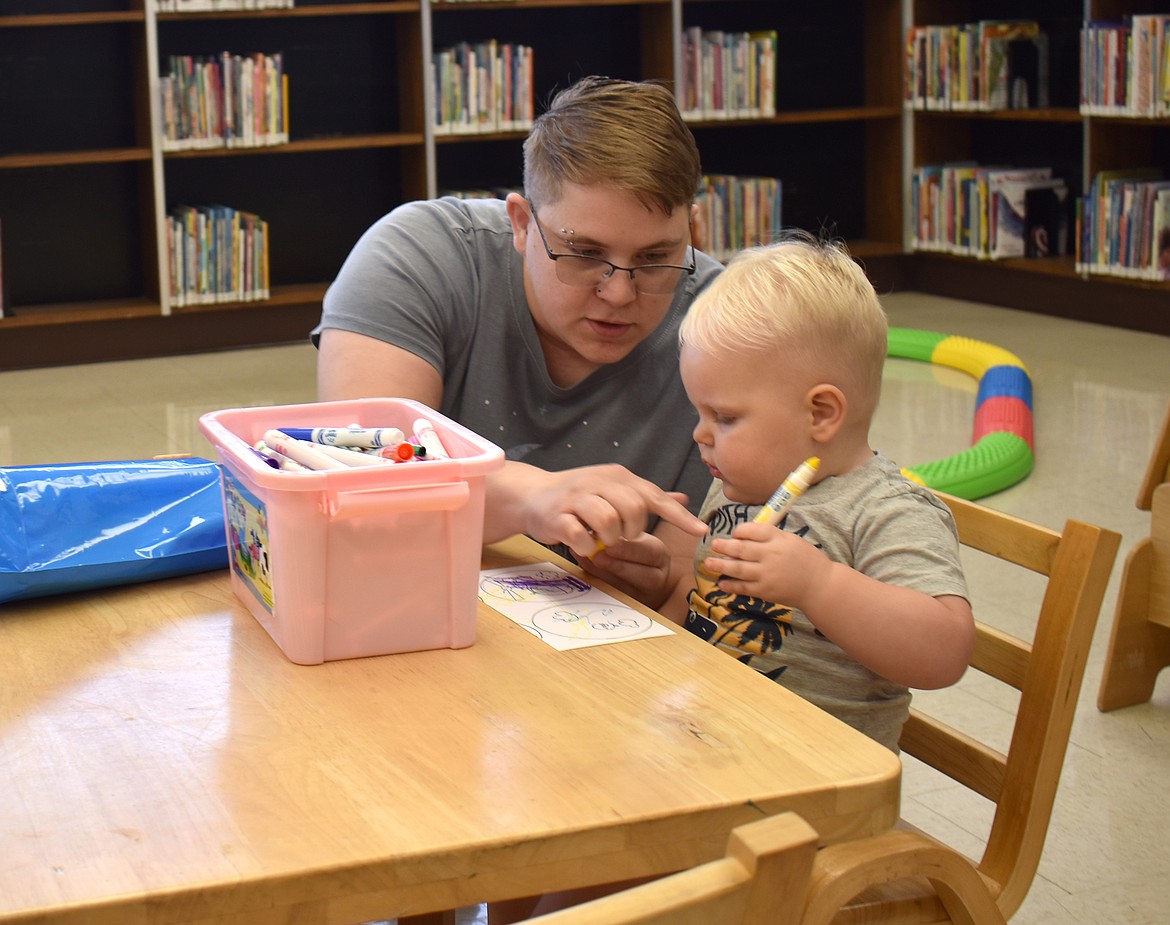
Nineteen-month-old Orion Linville learns what to color on – paper – and what not to – the table – at the Early Literacy Fair with his mom, Tabatha Linville.
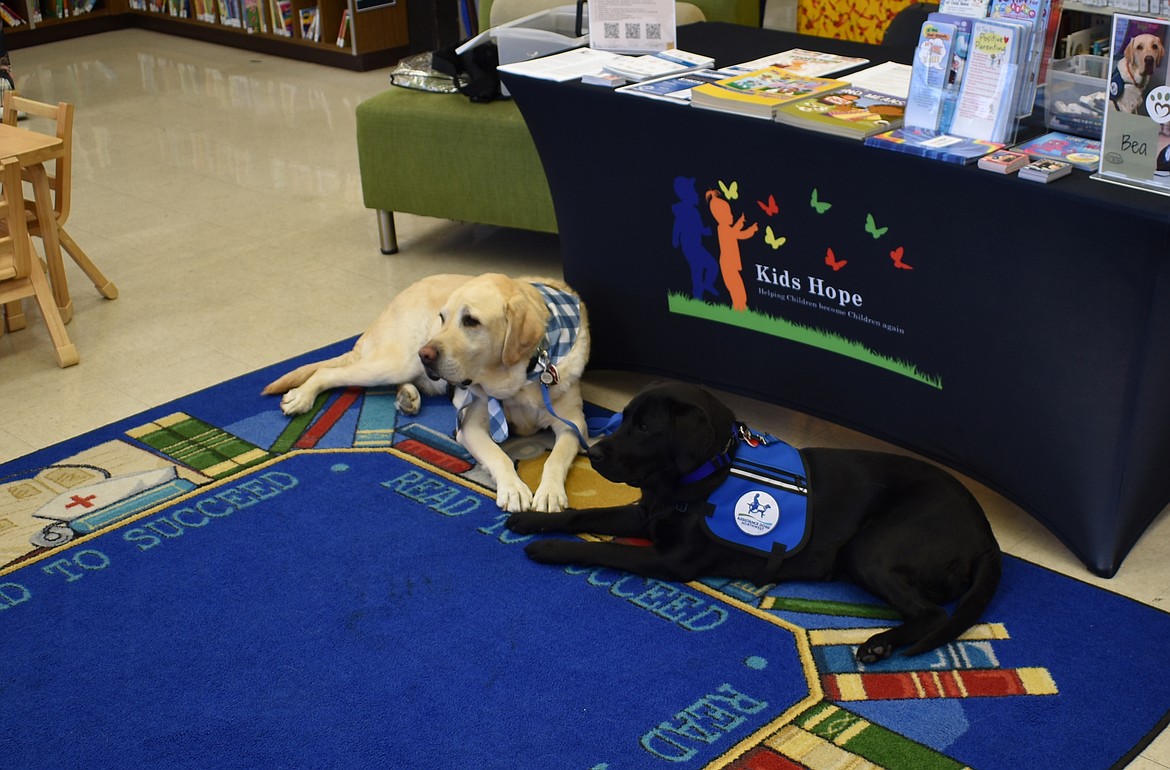
Kids Hope comfort dogs Valor, left, and Bea wait for children to come by and visit at the Early Literacy Fair Thursday.
Joel Martin has been with the Columbia Basin Herald for more than 25 years in a variety of roles and is the most-tenured employee in the building. Martin is a married father of eight and enjoys spending time with his children and his wife, Christina. He is passionate about the paper’s mission of informing the people of the Columbia Basin because he knows it is important to record the history of the communities the publication serves. | July 1, 2025 3:00 AM
MOSES LAKE — If you can get children reading and learning early, they’ll never stop. That’s the theory behind the Moses Lake Public Library’s Early Literacy Fair.
“We have a variety of what are called the big books,” said children’s librarian Zach Walker, holding up an ABCs book that looked to be about 12 inches by 18. “The letters are all nice and big, so (children) can more easily start with the big stuff and work their way down to the smaller ones.”
The Early Literacy Fair is the library’s way to give small children, mostly under 5 years old, a chance to get acquainted with books and other brain-stimulating activities. Several activity stations were set up Thursday in the children’s section of the library, with books, coloring sheets and crayons and activities to engage little hands and young minds.
“We also have a collection of different sorting and matching activities,” Walker said. “Some of them are just simple ones, like match the shapes or match the colors. We have little maraca things, each (of which) has a different sound to it. It's a mix-and-match memory game, and that's always a lot of fun for the kiddos. We also have a little screw puzzle where each of the different pegs has a different shape and color and kids have to match which one goes with which one.”
Besides the library’s own stations, the Moses Lake Museum & Art Center was there with a craft project, and Moses Lake Pediatric Dentistry to promote good dental hygiene. Kids Hope brought its two comfort dogs Valor and Bea to be petted and played with. Off to the side was a table with pizzas donated by Pizza Hut and apple juice donated by Safeway.
“We do story times at the museum,” said museum Director Dollie Boyd. “So, I know how crucial it is to read to children. I had a couple of little ADHD kids myself, and they were always up and moving around, but we could always settle down and read stories to them. It’s very important to read to kids and have other people read to them.”
Marieli Sanchez, 1 1/2, had discovered the sound-matching game and was getting acquainted with the different sounds.
“I think we like (the early literacy fair),” Marieli’s mom Maira Sanchez said. “It’s pretty fun, and getting her socialized with other little kids around her age is pretty nice. Finding places where you can get together with other moms and kids around the same age nowadays in town is kind of hard. It’s hard to find a place where you can go without spending any money.”
A few feet away Orion Linville, 19 months, was getting the hang of coloring with a marker.
“We try to do all the activities,” said Orion’s mom, Tabatha Linville. “The (museum’s) mobile rec stuff, the stuff that’s here (at the library), just to keep them involved and work on socialization. It’s so hard. I stay home with him, so I know what he’s saying, but other people are like ‘I don’t get it’ and I’m like ‘Let’s figure out how to teach you (to communicate) like a normal person.’”
Walker is a former schoolteacher, he said, so he has an appreciation of the importance of learning to read young.
“It's never too never too early to get started with developing these sorts of skills and growing these sorts of neural networks,” he said. “It's very important to develop reading skills as soon as possible.”
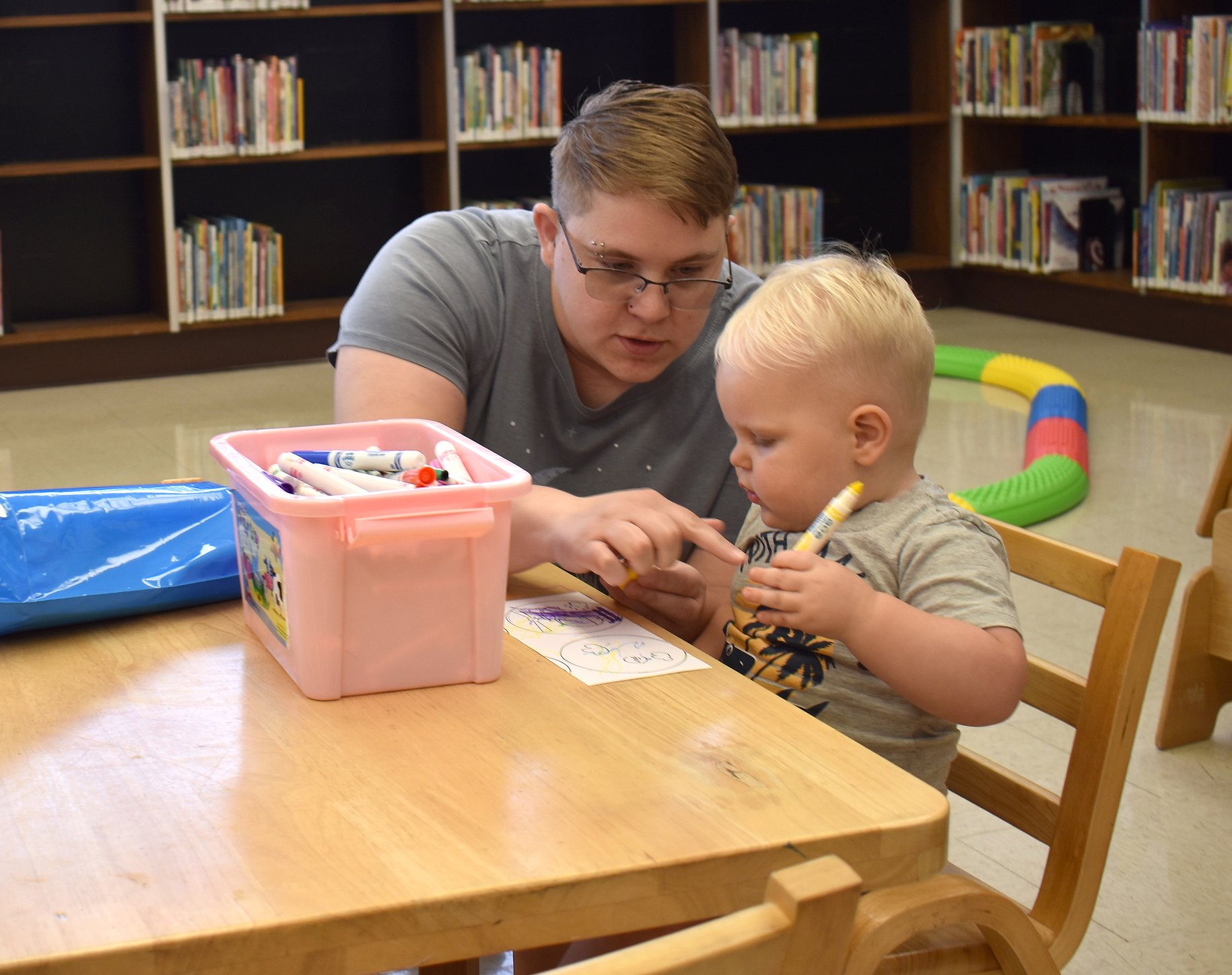 Nineteen-month-old Orion Linville learns what to color on – paper – and what not to – the table – at the Early Literacy Fair with his mom, Tabatha Linville.
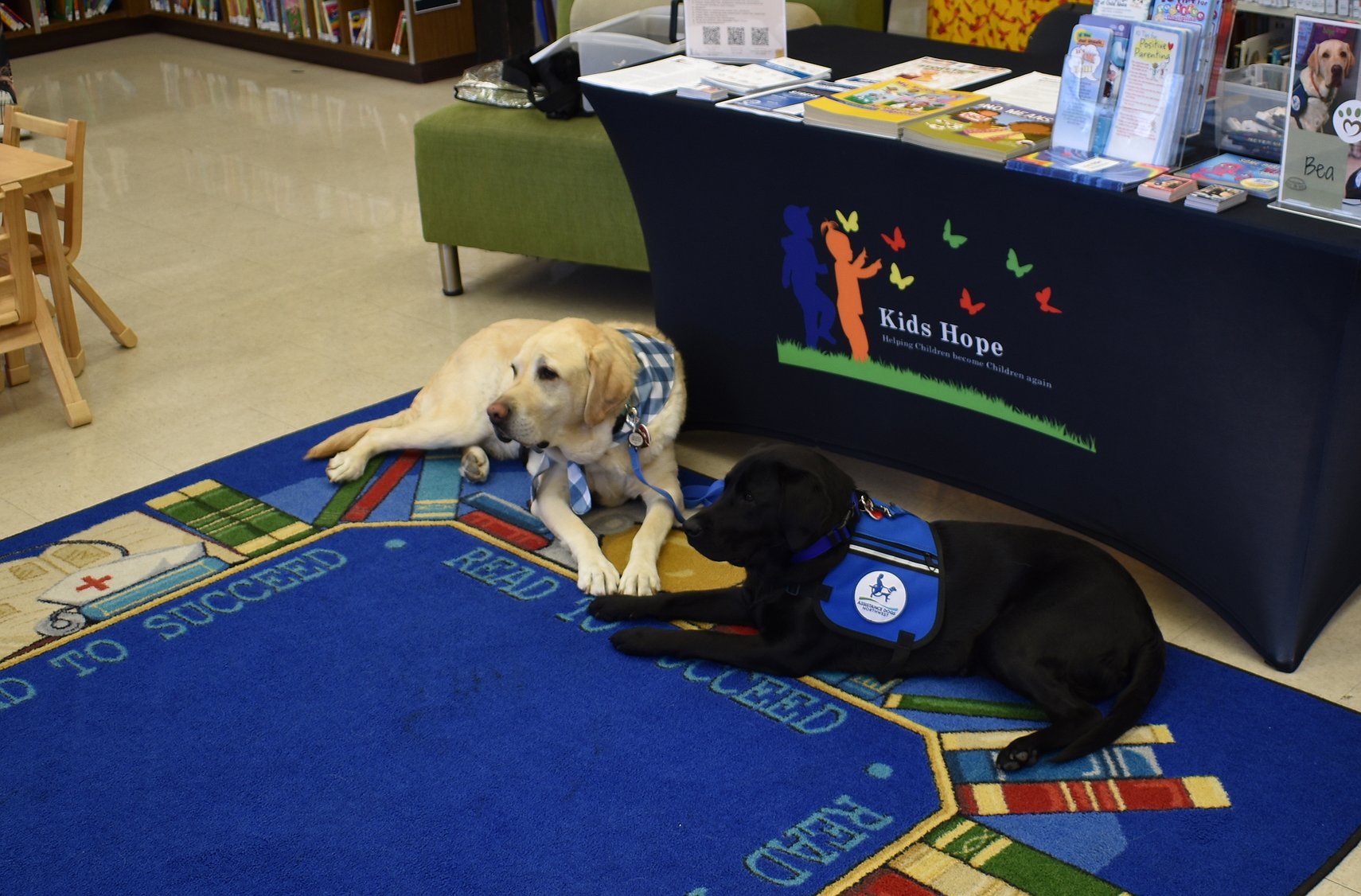 Kids Hope comfort dogs Valor, left, and Bea wait for children to come by and visit at the Early Literacy Fair Thursday.
ARTICLES BY JOEL MARTIN

Endless battle
Noxious Weed Control Board works to keep invasive plants under control
MOSES LAKE — Some of the nastiest plants in Grant County were the topic of a class led by Jay Johnson, a consultant with the Grant County Noxious Weed Control Board, Tuesday. The Noxious Weed Control Board, as its name would suggest, is tasked with keeping weeds under control in Grant County. That’s not a small job; the board’s website lists 129 species of noxious weeds that are found around Grant County. A noxious weed is defined as an invasive, non-native plant that threatens agricultural crops, local ecosystems or fish and wildlife habitat, according to the Noxious Weed Control Board. Washington state law requires that these weeds be identified and their spread kept to a minimum, if not completely eradicated. “We’re one of those agencies a lot of people don’t really understand,” Johnson said. “We’re a county office and … our funding is tax-based assessment. When you get your tax bill and you look down at all the expenses that you pay for, there we are.”

BASIN EVENTS: Oct. 16-24
COLUMBIA BASIN — Whether you feel like shopping, crafting, learning or seeing a show, there’s something happening for you this week in the Basin. Oct. 16 ‘My Family (Mi Familia)’ screening Spanning three generations, “My Family (Mi Familia)” is a heartfelt drama that follows the Sánchez family as they build their lives in East Los Angeles. Through love, hardship, triumph, and sacrifice, the film explores the immigrant experience, the strength of family bonds, and the traditions that connect one generation to the next. Lowrider show and taco truck before the screening. Sponsored by Columbia Basin Allied Arts, EDUBS C/S and the Moses Lake Creative District. $12 per person. Doors open at 6 p.m., film begins at 7 p.m. at the Moses Lake Civic Center Auditorium, 401 S. Balsam St. Tickets and info: www.cba-arts.org.

Moses Lake author encourages women to look beyond church culture norms
MOSES LAKE — A Moses Lake author’s book, “A Christian Woman Striving to Live Her Faith in a Man-Controlled World,” takes aim at the role to which many churches relegate the female half of their congregations. “It’s to encourage women in the faith,” Linda Curran said. “A lot of churches say, ‘Teach Sunday school, do this, do that, but don’t (evangelize.)’" In her book, Curran recounts a time when she moved to a new community and joined a church there. She was surprised to learn that, as a new female member, she had been automatically assigned church cleaning duties. When she questioned it, she wrote, she was met with condescension and her objections were brushed aside. In other churches, she said, women who were capable of teaching were relegated to “women’s ministry.”