
Moses Lake Museum exhibit, ‘Balance,’ highlights the permanent and the transitory
JOEL MARTIN | Hagadone News Network | UPDATED 7 months, 3 weeks AGO
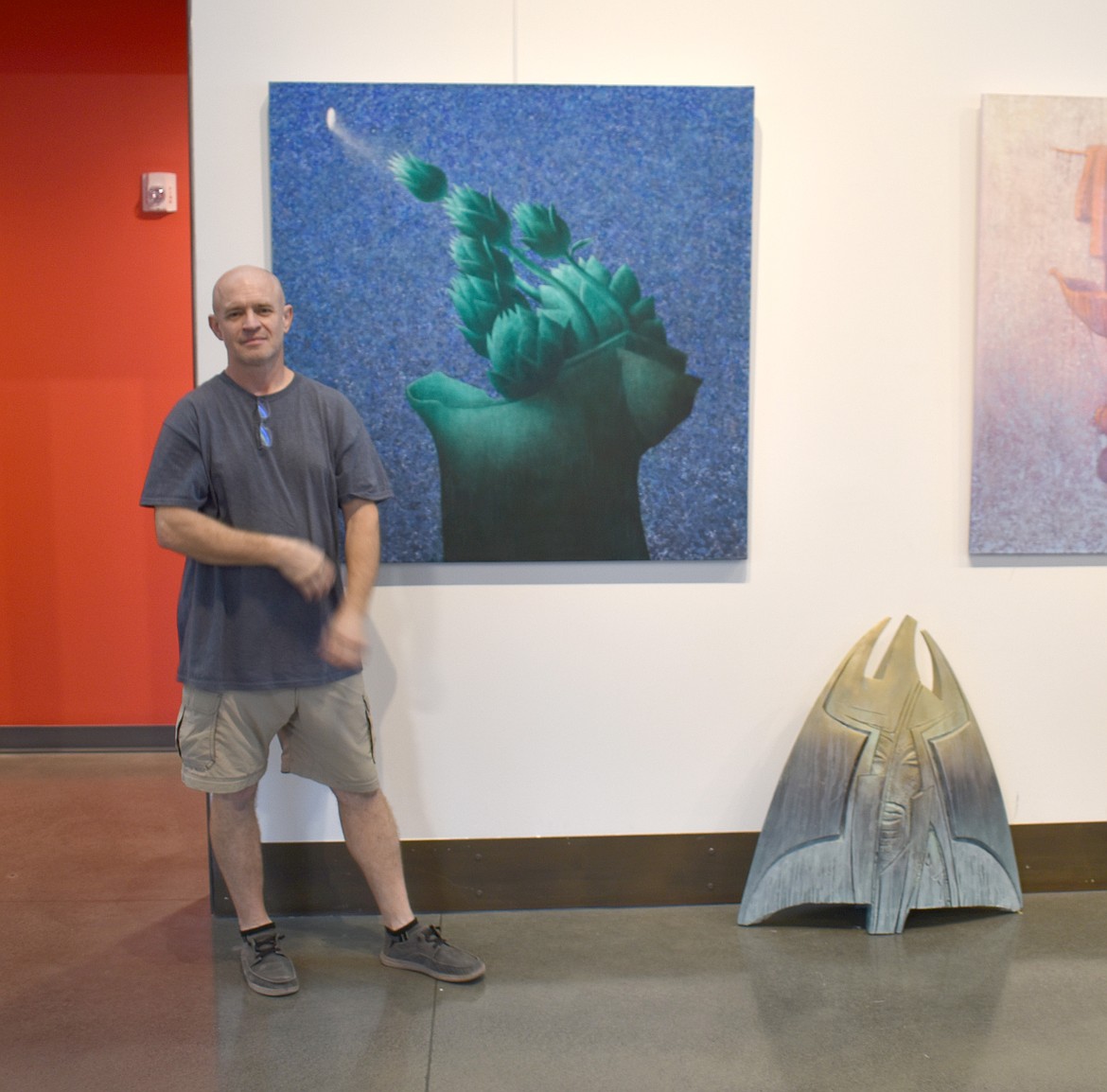
Artist Mihail Kivachitsky stands in front of one of the paintings in his exhibit “Balance,” opening Friday at the Moses Lake Museum & Art Center.
JOEL MARTIN/COLUMBIA BASIN HERALD
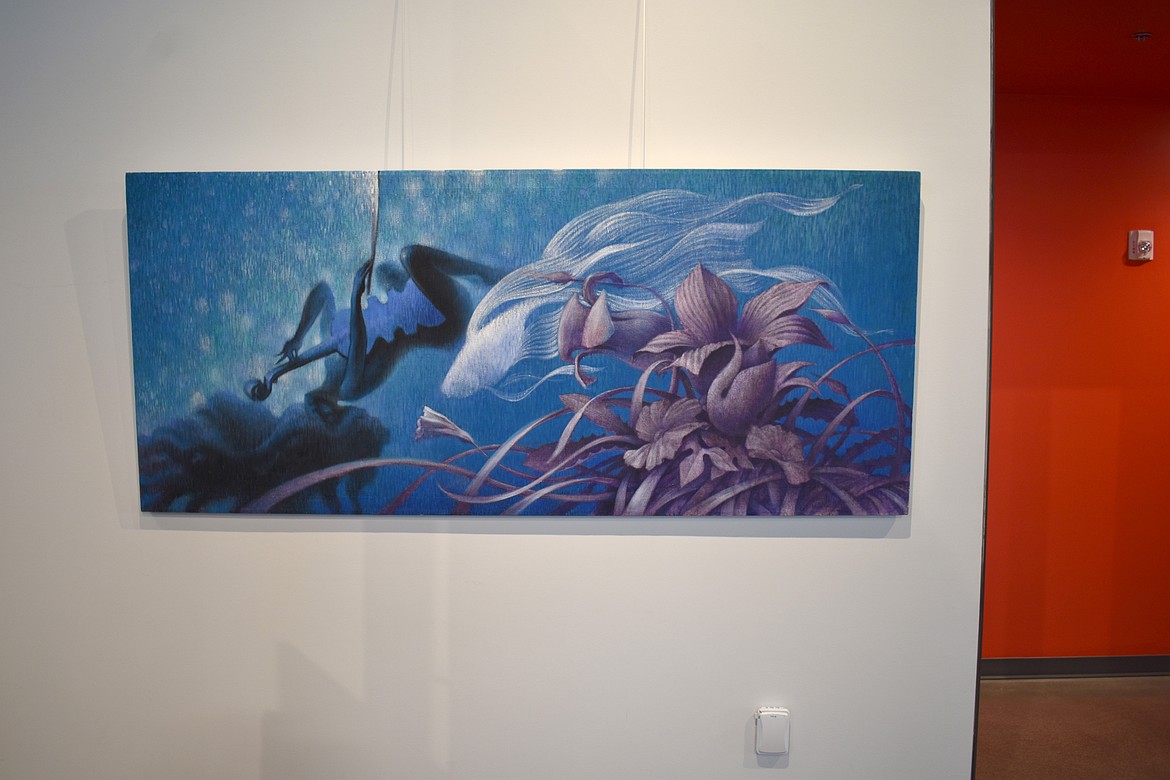
“Through the Paradise” by Mihail Kivachitsky was inspired by the path of the comet NEOWISE through the sky.
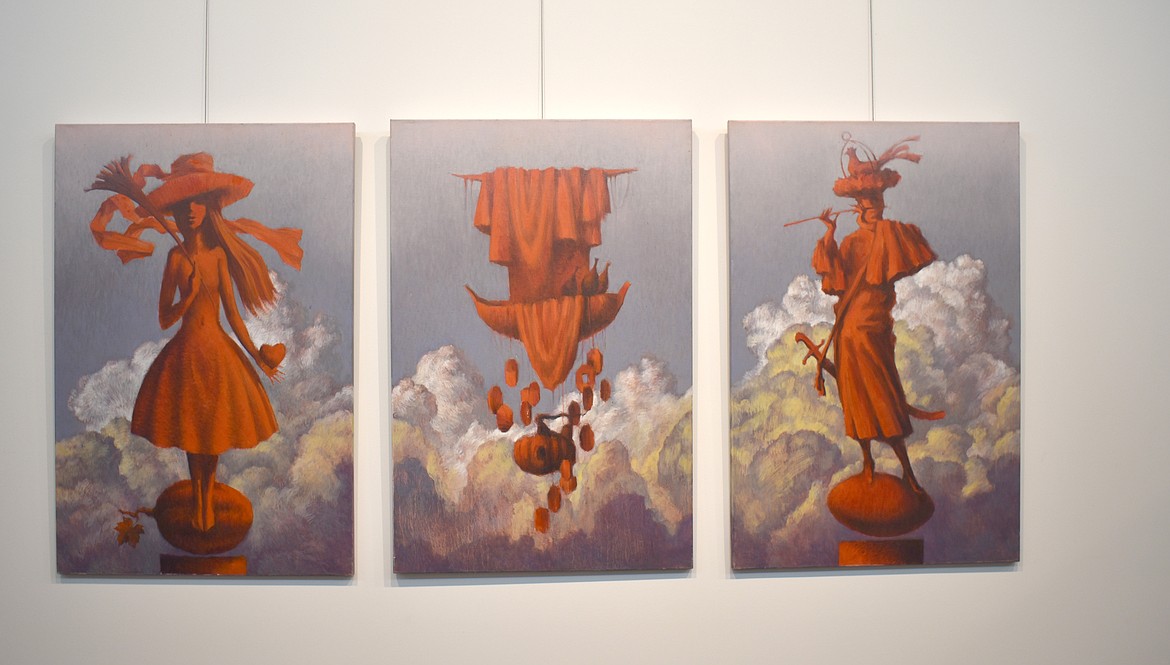
“The History of Love” by Mihail Kivachitsky illustrates the blurring of the distinction between reality and illusion.
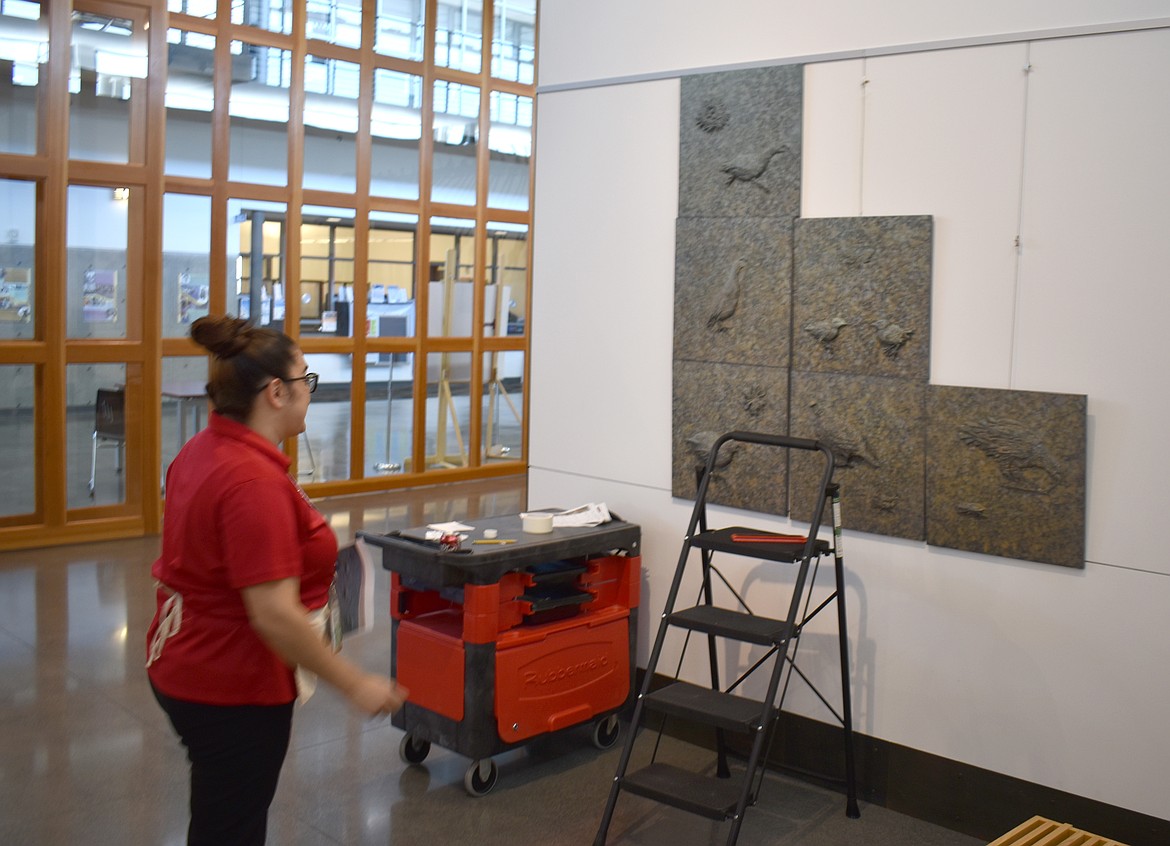
Gallery Coordinator Veronica Talbot hangs the nine plates of a fresco showing the life of a quail, circling around to its death at the claws of an eagle, at the Moses Lake Museum & Art Center.
Joel Martin has been with the Columbia Basin Herald for more than 25 years in a variety of roles and is the most-tenured employee in the building. Martin is a married father of eight and enjoys spending time with his children and his wife, Christina. He is passionate about the paper’s mission of informing the people of the Columbia Basin because he knows it is important to record the history of the communities the publication serves. | July 10, 2025 3:15 AM
MOSES LAKE — Some things are temporary and some aren’t. How those intersect is the theme of an exhibit opening at the Moses Lake Museum & Art Center Friday.
“The world is crazy, and so many things are happening, but some things still (are) not changing,” said artist Mihail Kivachitsky. “The stars (and their) astronomical characteristics are a reflection of that … It can be actual today, it was actual 1,000 years ago, and probably is going to be in the future.”
Kivachitsky’s exhibit is entitled “Balance.” That balance between the transitory and the unchanging permeates many of the pieces on display, he said. One of those, entitled “Through the Paradise,” is an underwater scene with an ethereal long-tailed fish nosing its way past a woman floating below the surface playing a cello. The image was inspired by the Comet NEOWISE, which was visible from Earth through most of July 2020.
“The comet was not passing in a moment,” Kivachitsky said. “It (took) days. Today it’s passing the earth, but one day it (will be) passing paradise. It’s an unreachable distance in the universe, and the comet is not in any rush … It’s one more brief moment, one more 1,000 miles … and the cello makes one note, but (it lasts) 1,000 years.”
The blending of sea and sky is another theme that runs through Kivachitsky’s work. A painting called “The Allegory of Star Navigation” shows a prehistoric fish gliding among the stars while a human figure looks up from a tiny boat. This was inspired by an incident in his life, he said.
“Once my friends invited me to go ocean fishing in the night,” he said. “We were two hours on the boat, and I feel like it’s claustrophobic when you realize how deep the water is and how far the (bottom) is. But the stars. These are my stars. I remember those stars all my life … It doesn’t matter how deep the water is, how dark the sea (is) in front, the stars always give you a chance to find the right way.”
The painting titled “Atlantis” imagines the ancient city on the ocean floor as a flower, opening to receive what could either be a Hindu deity or a wisp of light, depending on the viewer’s perception.
Kivachitsky was born in the former Soviet Union. His family, ethnically Polish, was forcibly relocated during the Stalin era to Bishkek, Kyrgyzstan, where he was born and raised. Kivachitsky graduated from the National Academy of the Arts in Bishkek and made several public sculptures for the Kyrgyz government. He still does a certain amount of sculpture, mostly in bronze, on commission, he said. He currently divides his time between Soap Lake and Mountain View, Calif.
Most of the art in “Balance” is oil on canvas, he said, painted in at least 10 layers with some wide variations in the consistency of the paint.
Besides the paintings, a few sculptures will be on display as well. There’s also a set of nine metal-plate frescoes based on the Buddhist concept of the wheel of life, he said, inspired by an eagle he saw swoop from the sky near Soap Lake to devour a quail.
Not everything in Kivachitsky’s exhibit is symbolic. There’s a set of paintings commissioned by the husband of an airline pilot after she pulled off a miraculous emergency landing, and a self-portrait he painted on the shore of Lake Lenore.
Kivachitsky held a showing in 2022 in Soap Lake, but this is the first time some of the pieces in “Balance” have been exhibited, he said.
“He approached us a while back, maybe last year or even before that, about doing a show,” said Museum Director Dollie Boyd. “We saw his work and we were like, of course. It’s really beautiful. I love the scale of it.”
The final impact of a piece of art is in how the viewer perceives it, Kivachitsky said.
“I don’t give the answer in the picture,” he said. “I make a situation and the viewer, the person looking, is like a co-creator.”
‘Balance’
Moses Lake Museum & Art Center
401 S. Balsam St.
July 11-Aug. 29
Opening reception 4-7 p.m. July 11
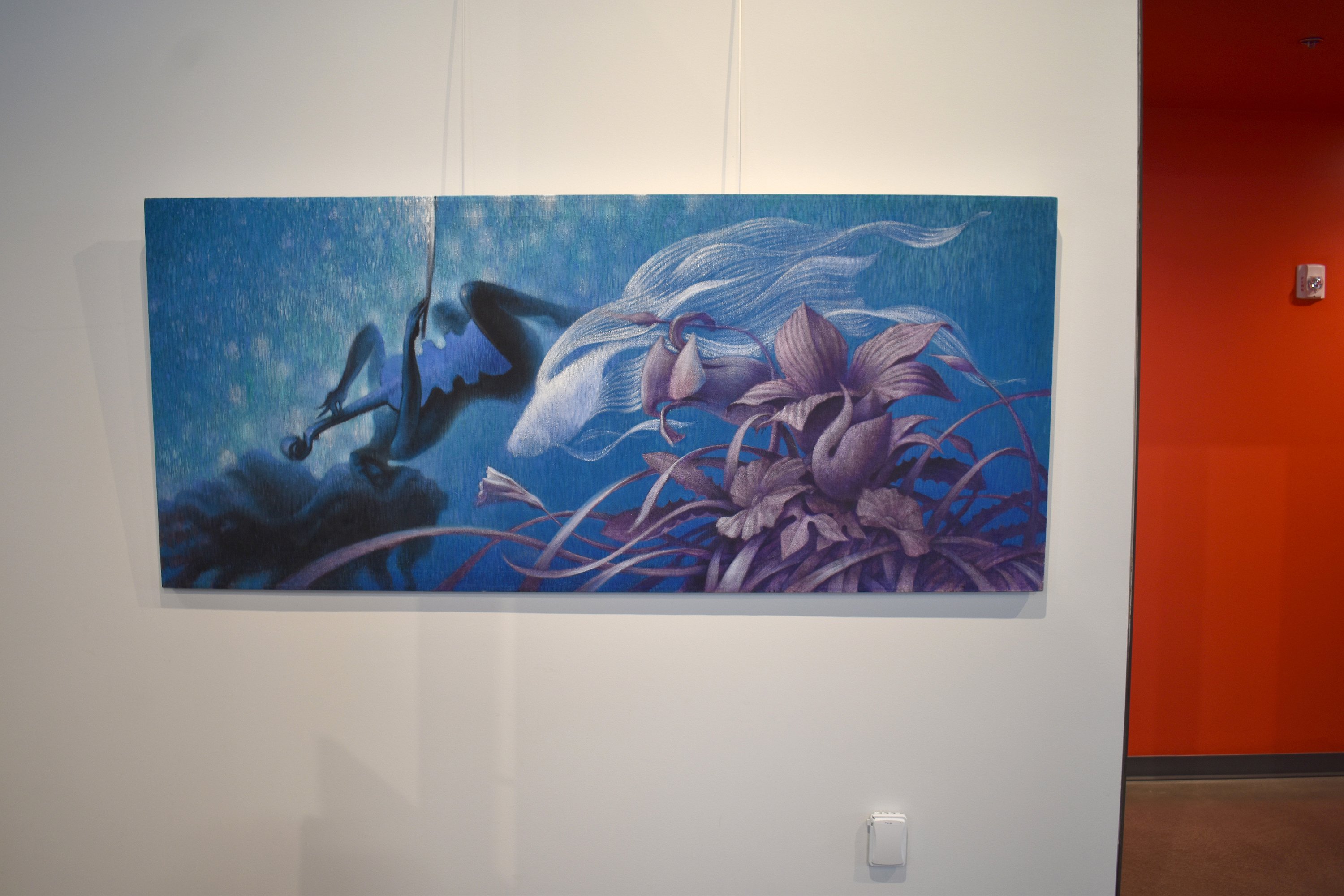 “Through the Paradise” by Mihail Kivachitsky was inspired by the path of the comet NEOWISE through the sky.
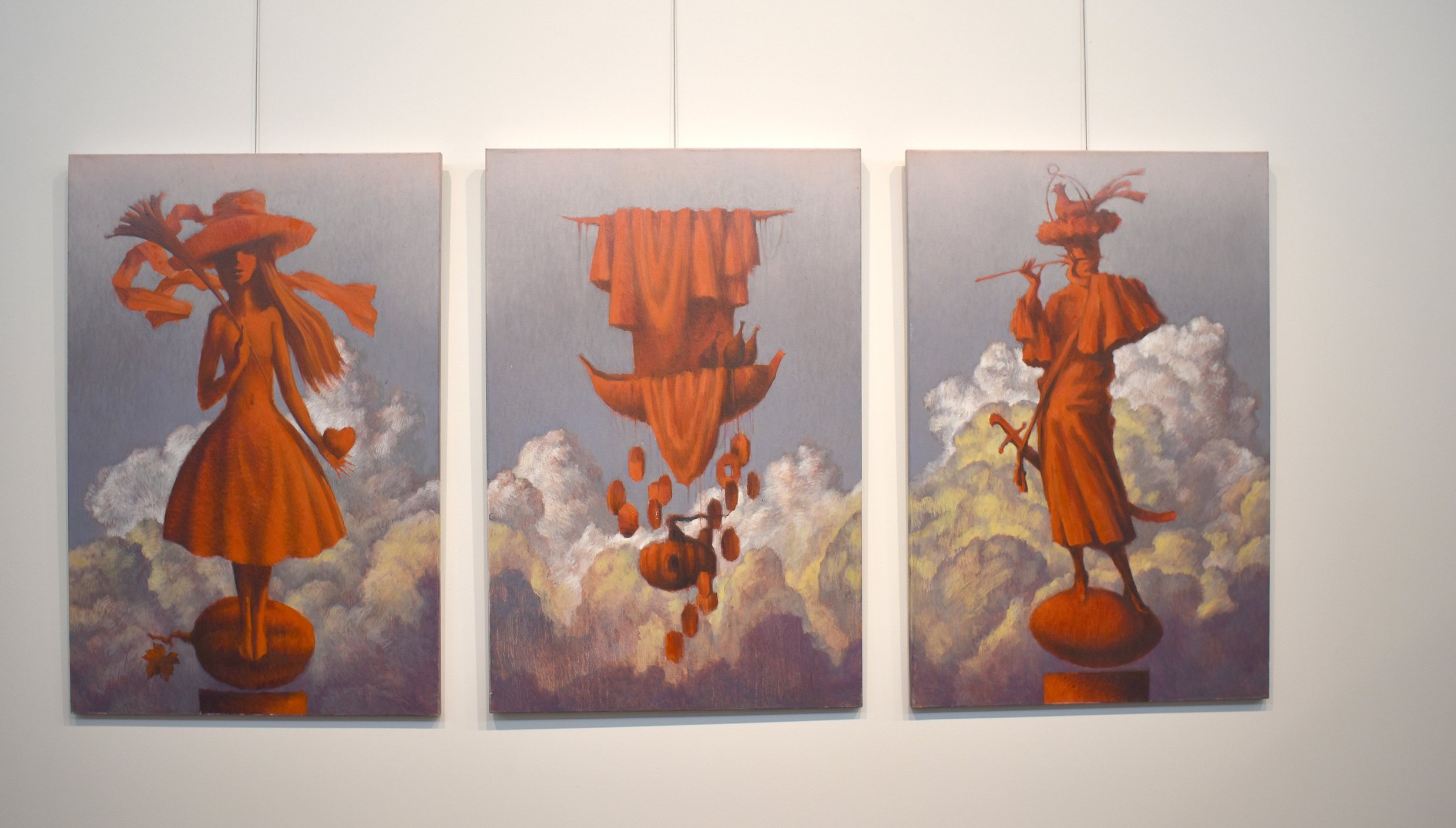 “The History of Love” by Mihail Kivachitsky illustrates the blurring of the distinction between reality and illusion.
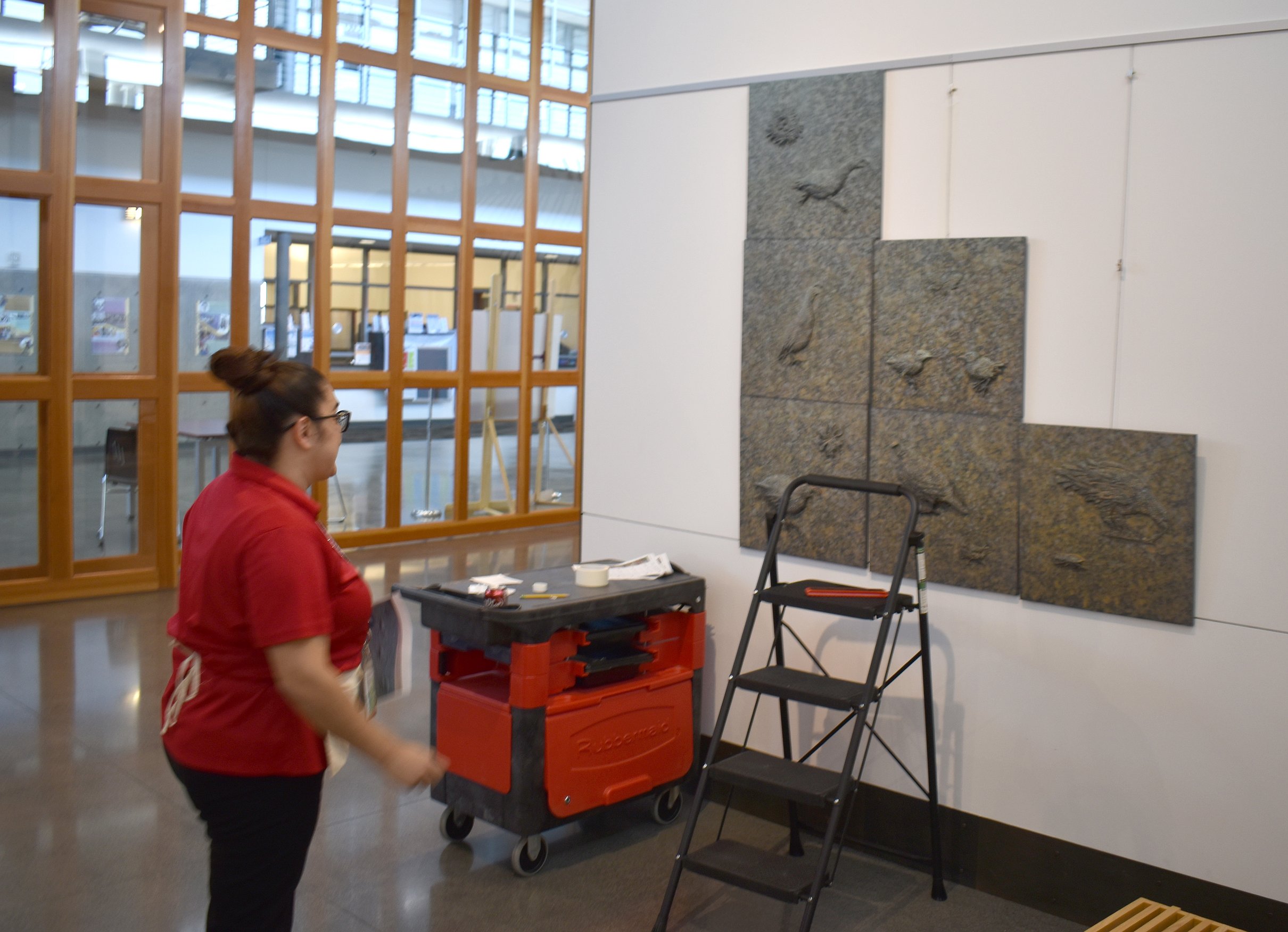 Gallery Coordinator Veronica Talbot hangs the nine plates of a fresco showing the life of a quail, circling around to its death at the claws of an eagle, at the Moses Lake Museum & Art Center.
ARTICLES BY JOEL MARTIN
Space Burger booth open March 13-15
MOSES LAKE — Those who can’t wait for the Grant County Fair can get their Space Burger fix next weekend, according to an announcement from the Lioness Club of Moses Lake. The iconic Grant County sandwiches will be available at the Grant County Fairgrounds March 13-15, according to the announcement. There is no admission fee to get into the fairgrounds that weekend.
SENIOR EVENTS: March 2026
COLUMBIA BASIN — Plays, art shows, auctions and more await seniors in the Columbia Basin this month. Here are some opportunities to get out and about in March.
Valentine’s Day cards flood Brookdale Hearthstone with love
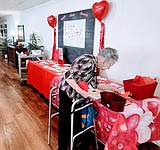
MOSES LAKE — Residents at Brookdale Hearthstone Assisted Living in Moses Lake got Valentine’s Day greetings from across the country last month. “I believe that the only states we have not received (cards from) yet are Vermont and Maine,” Lifestyle Director Imelda Broyles said Feb. 24. “We keep receiving new cards every single day. They have not stopped. My residents are in awe with every single one of the cards that we’ve been receiving.” The Hearts Across America project started as a way for children in school classrooms to exchange Valentine’s Day cards with classes in other states or even countries, but the idea has expanded to senior living facilities, according to the project’s social media.