
Commissioners press feds on Little Bitterroot Lake's low water level
HANNAH SHIELDS | Hagadone News Network | UPDATED 8 months, 1 week AGO
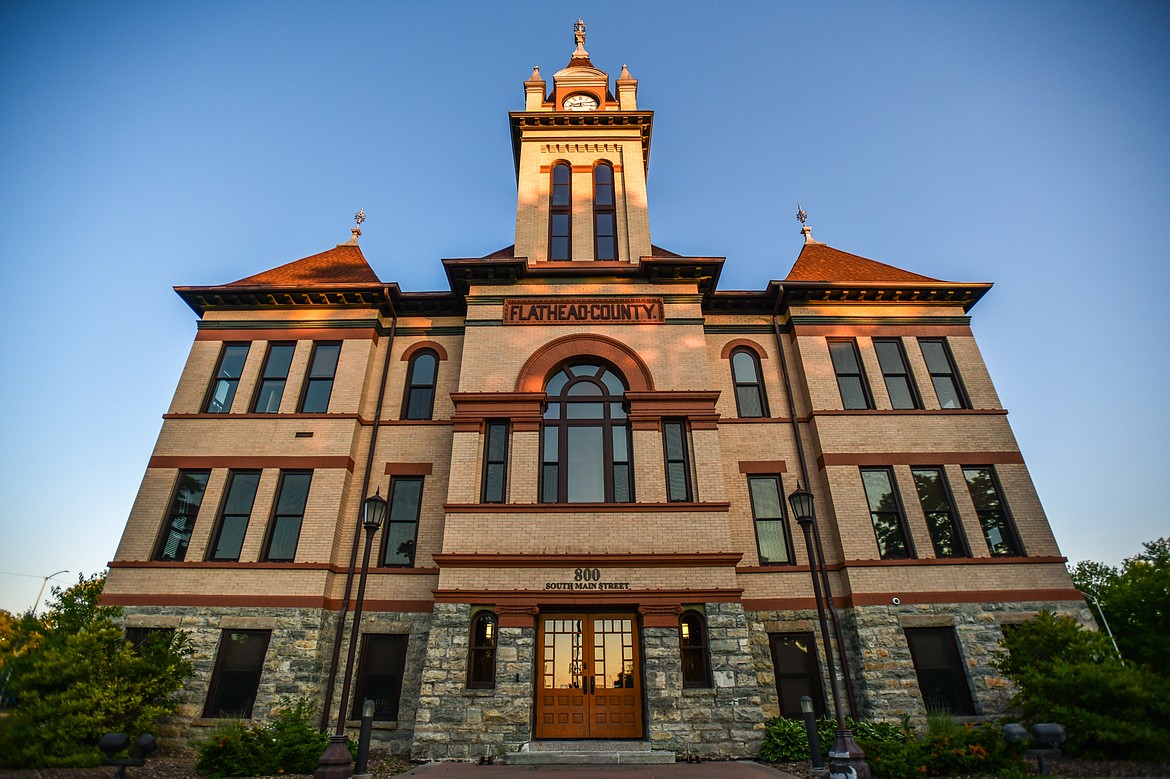
The Flathead County Courthouse in Kalispell on Thursday, June 22. (Casey Kreider/Daily Inter Lake)
RURAL GOVERNMENT REPORTER, REPORT FOR AMERICA Hannah Shields covers rural government and accountability reporting for the Daily Inter Lake and Northwest Montana weekly papers as part of the national Report for America program. Her reporting focuses on transparency, public spending and the impact of local government decisions on small communities. Shields has covered issues ranging from school district finances to development disputes and rural infrastructure projects. She regularly uses public records and investigative reporting to examine institutions that affect local residents. Her work helps bring greater oversight and visibility to rural government across Northwest Montana. IMPACT: Hannah’s work strengthens transparency and accountability in rural communities that often lack consistent watchdog coverage. | July 24, 2025 12:00 AM
Flathead County commissioners on Tuesday demanded answers from the Bureau of Indian Affairs on why the water level at Little Bitterroot Lake has remained low the past two years.
In emails sent to the federal agency ahead of the meeting, commissioners alleged water levels at Little Bitterroot Lake are insufficient for boat egress at both of the county’s boat ramps. Commissioners also outlined concerns about inadequate water supply to meet irrigation needs and the potential effect on bull trout and other fish species.
Chuck Stephens, an irrigator in the Camas Water District, told commissioners on Tuesday this is the first time in eight years he’s struggled to pull water for irrigation.
“The water is just about dry,” Stephens said. “I’m out of water today.”
The Camas district supplies water to about 13,000 irrigated acres in the northwest portion of the Flathead Indian Irrigation Project. It is served by four reservoirs: Little Bitterroot Lake, Hubbart Reservoir, Upper Dry Fork Reservoir and Lower Dry Fork Reservoir.
Little Bitterroot Lake is the largest of the four reservoirs with a storage capacity of about 26,400 acre feet, said Nick Belcourt, a spokesperson for both the Bureau of Indian Affairs and the Flathead Indian Irrigation Project.
The Little Bitterroot Basin watershed is low in elevation and unreliable in nature, he said. There’s been insufficient snow and rain runoff over the last five years to fill the watershed and meet irrigation needs.
“We've been struggling to deliver water in the Camas division for the past three years,” he said.
Without an influx of water coming in, the outflow gate is left partially open all year to take what water is available. In some years, there hasn’t been enough runoff to refill the lake, Belcourt said.
“Typically, in a low flow scenario, we operate the Little Bitterroot Lake as a flow-through reservoir,” Belcourt said. "Without any input flows coming in, we only take what water can be produced out of the reservoir.”
Stakeholders from federal, state and local agencies filled the seats during the meeting. Representatives from U.S. Rep. Ryan Zinke, R-Mont., and U.S. Sens. Steve Daines and Tim Sheehy’s offices were among those in attendance.
Commissioner Randy Brodehl verified with each stakeholder that neither the Bureau of Indian Affairs nor the Flathead Indian Irrigation Project notified them about the low water level at Little Bitterroot Lake.
“Why hasn't there been any concern addressed with the different groups that are represented?” Brodehl asked Delcourt.
“That'd be a tough question for me,” he replied. “I am acting [project manager]. The current leadership all quit ... I’m the last one standing.”
COUNTY COMMISSIONERS sent a letter to the U.S. Department of the Interior in May, asking to turn management of the four reservoirs over to the Bureau of Reclamation.
“In recent years, maintenance of the system has declined dramatically,” the letter read. Commissioners listed several maintenance issues in the letter, such as broken stream gauges, faulty floodgates and leaking canals.
“It is clear the [Bureau of Indian Affairs] lacks both the resources and specialized personnel to meet the system's technical needs,” the letter read.
The Department of Interior sent a response last week, saying it would work with the commissioners to address their concerns. However, the letter did not respond to their request to transfer management to the Bureau of Reclamation.
The federal department maintained that “snowpack levels have been below average for several years,” according to the Natural Resources Conservation Service. “Hence, reduced snowmelt volume restricts [the Bureau of Indian Affairs'] ability to fill the four reservoirs.”
The Flathead Indian Irrigation Project was authorized by Congress in 1904 between the Bureau of Reclamation and the Bureau of Indian Affairs. Construction of the project was mostly completed in 1924, and the latter bureau assumed full control of it.
Federal funding was provided under Section 3211 of the Water Infrastructure Improvements for the Nation Act of 2016 and the Montana Water Rights Protection Act of 2020 for maintenance improvement and repairs of the irrigation project.
ARTICLES BY HANNAH SHIELDS

Flathead Library director to retire after her contract expires in 2028
Flathead Library Director Teri Dugan will retire at the end of her contract, which was extended through 2028 by trustees on Thursday.

Flathead County Library continues negotiations for new Kalispell branch
Flathead County Library trustees are re-negotiating the purchase of property at the Kalispell Center Mall for a future Kalispell branch.

'We know we can do the job:' Smith Valley Fire Department deploys all-woman volunteer shift
Smith Valley Fire Chief Amy Beick walked into the station one December day and saw something she’d never encountered in her two decades at the department.