
BBCC receives significant donation to Agriculture Program
CALEB PEREZ | Hagadone News Network | UPDATED 1 year, 2 months AGO
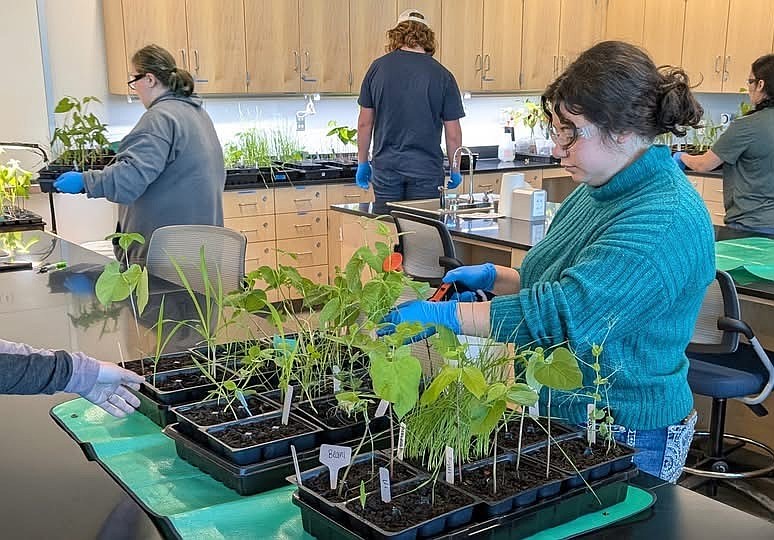
Students of BBCC’s Agriculture program run tests on various plants during one of their classes. The seed donation by Williamson Farms will allow for students at the college to extend the number of projects they can work on in the program.
COURTESY PHOTO/BIG BEND COMMUNITY COLLEGE
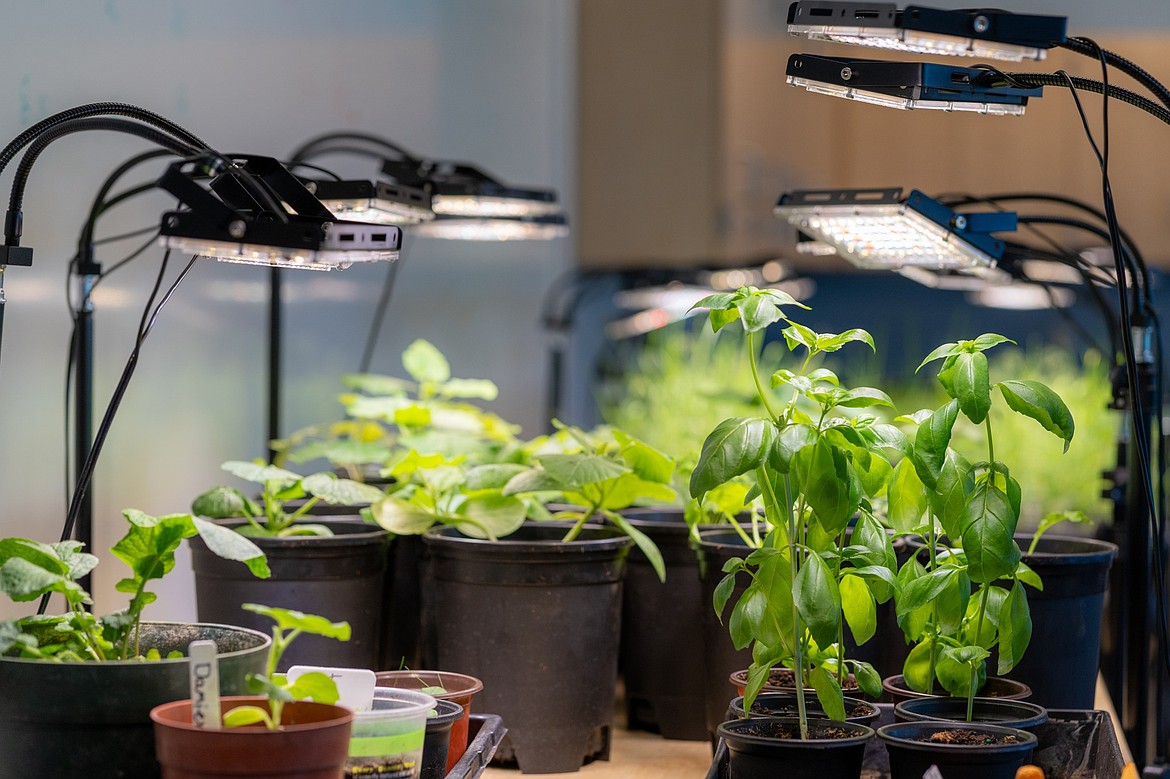
Various plants grow under lights in one of the classrooms at Big Bend. The seed donation is coming in at about the same time as the completion of the college’s Greenhouse Learning Center, which will significantly help develop the Ag program.
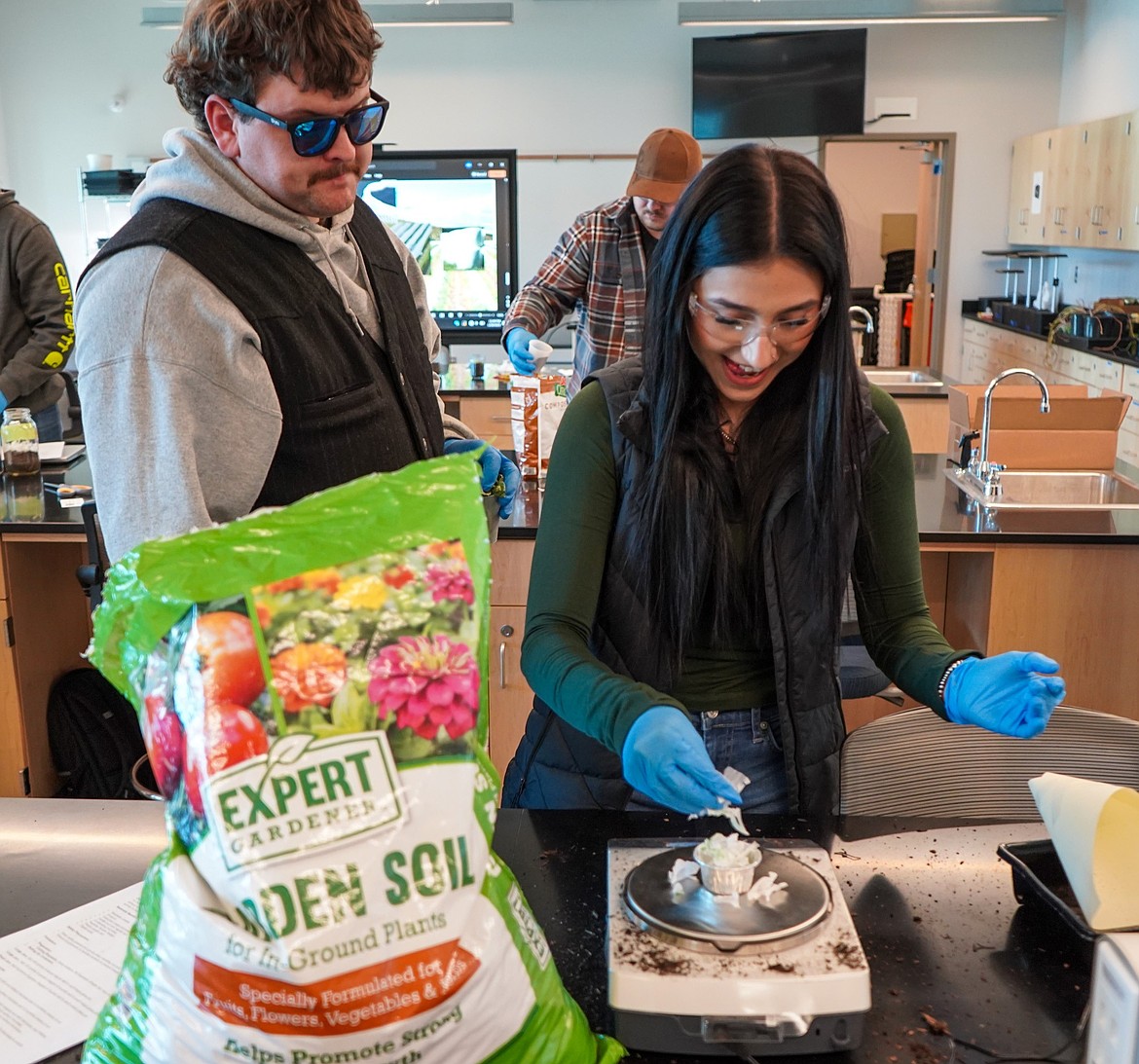
Two students participate in a test involving soil during one of the classes in the Ag program at Big Bend. Aaron Mahoney who works in the Ag program at the college said the extra seed will be beneficial to studies of agriculture, specifically, tests that lead to the plants dying.
MOSES LAKE – The Big Bend Community College Agriculture program recently received a donation of commercial seeds valued at more than $30,000 from Eric Williamson of Williamson Farms, Inc. in Quincy. The donation will significantly support hands-on learning in several agriculture courses and help offset one of the program’s largest recurring expenses.
“This support enables our students to gain hands-on experience in plant development, crop nutrition, genetics, breeding, disease and insect management, and crop water needs,” said Agriculture Professor Aaron Mahoney. “Moreover, with our new greenhouse, students will have the opportunity to manage and grow a wider variety of crops, deepening their insights into agricultural production and (plant and soil sciences).”
The donation includes a wide variety of seeds, including carrots, beans, tomatoes, peppers, cauliflower, broccoli, melons, cucumbers and corn. Each of these will be used by students in the Crop Production, Plant Science and Pest Management courses at BBCC.
This donation was made possible through the college’s advisory group, made up of industry players who give the school insights as to where the industry is moving, said Mahoney.
“When I met with them at our last advisory meeting, I told them one of the things budgetarily that is always really expensive for us is seed,” said Mahoney.
One of the advisory board members, Garrett Devine, was a former student of BBCC’s Ag program and has built a close relationship over the years. During a conversation he had with Mahoney, they discussed the college’s expenses on seeds, and Devine learned about their constant need.
“I work for Quincy Foods, and I was just talking to one of my growers that I work with, Eric Williamson, and he mentioned that he had some seed and that he was looking for a good place to donate it,” said Devine. “It just worked out perfectly that I knew someone that needed seed.”
With the seed donated by Williamson, Mahoney said the program can utilize the seed in the program without the college or the students having to worry about the cost. Getting seed from a local grower also gives the students an example of what crops are typically grown in the Columbia Basin.
The college’s typical seed budget is usually around $1000 and was usually based on using old and outdated seeds that weren’t always the best quality. Mahoney said that due to this, the classes that utilize the seeds were not always getting the results that they needed due to poor germination and the product only lasted about a year after purchase.
Mahoney said students will use the seeds to study the growth of the plants and their various developmental stages, and in the Spring, they study the effects of herbicides on plants. The higher quality of seed also means that the plants will have better genetics which gives them better resistance to disease, faster growing rates and more purity to the plants.
“We grow a lot of crops just to kill them,” he said. Devine said that the pepper seeds will be valuable to the school as the pepper industry has been growing at Williamson farms and around the area.
“They’re one of the bigger producers in the area and one of the needs that we actually have in Ag is for people who can start pepper plants in greenhouses,” he said. “That’s been an ongoing topic in the industry, and so the fact that we’re actually going to have students doing that at Big Bend is pretty neat, and it’ll just give them lots of different projects to tackle over the fall and winter months in the greenhouse.”
The new Greenhouse Learning Center, which is set for operation in the Fall semester, will be a 30-by-70-foot facility located behind the college’s Workforce Education Center. It will feature precision growing technologies, heating and cooling systems and raised garden beds outside the structure to expand growing space.
“The Paul Lauzier Foundation has been a big supporter of the new greenhouse and having that as well as the new commercial seed really helps benefit our program,” he said. “Not only from the teaching side of things but also showcases a lot of the student activities that we will be able to do now that may have been financially a little harder to do previously.”
The extra seed will also allow the college to do more projects within the Ag program and will allow for further development within the greenhouse that would not have been possible before, said Mahoney.
"I’m just a big supporter of what Dr. Mahoney is doing at Big Bend, and I think the program is headed in a really cool direction, especially with that new greenhouse,” said Devine. “They’re doing a lot of cool stuff, so I hope that a lot of young people get involved and learn something out of all that.”
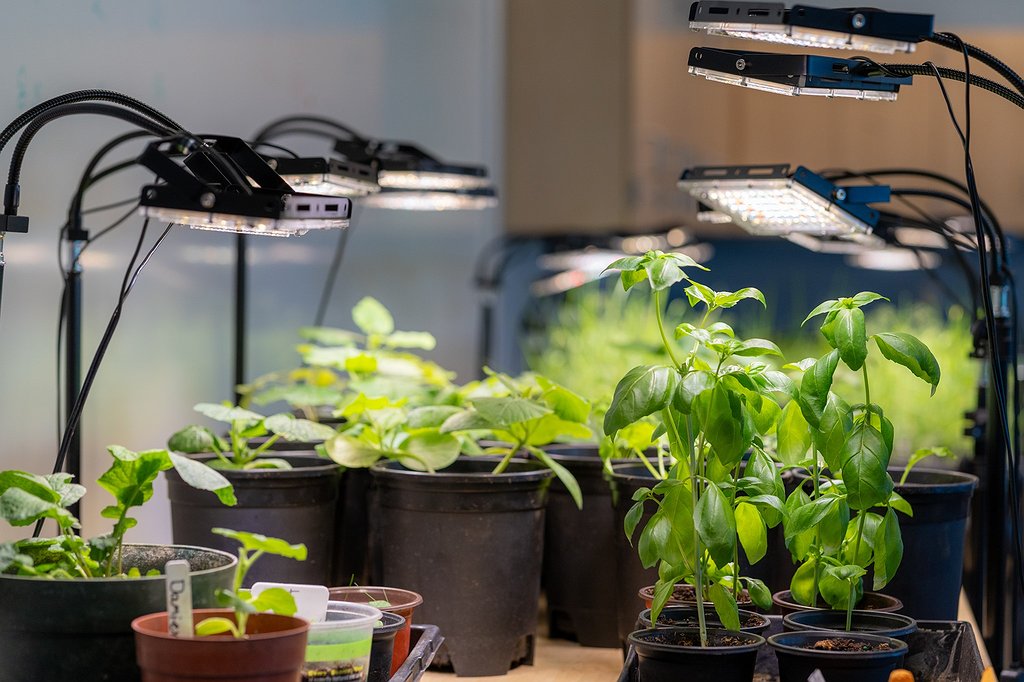 Various plants grow under lights in one of the classrooms at Big Bend. The seed donation is coming in at about the same time as the completion of the college’s Greenhouse Learning Center, which will significantly help develop the Ag program.
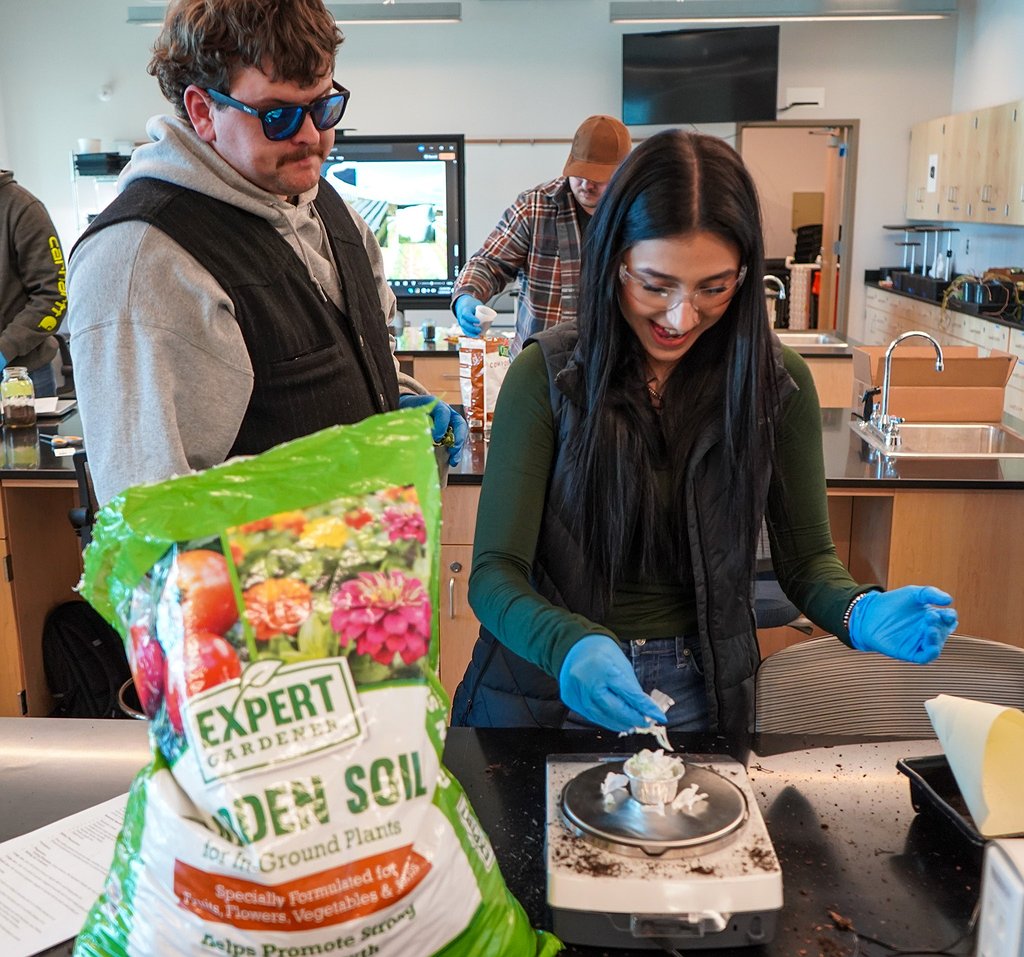 Two students participate in a test involving soil during one of the classes in the Ag program at Big Bend. Aaron Mahoney who works in the Ag program at the college said the extra seed will be beneficial to studies of agriculture, specifically, tests that lead to the plants dying.
ARTICLES BY CALEB PEREZ

WA COLLEGE SPORTS SCHEDULE: Oct. 15-22, 2026
MOSES LAKE — The college sports world continues to be hot with competition deep in the month of October. See where your favorite teams are heading this week.

Tigers pull off OT victory over Huskies
OTHELLO — The Ephrata Tigers (4-7-2) earned a competitive 3-2 overtime victory on the road against the Othello Huskies (5-6) Tuesday evening. Both teams are now looking to close out the regular season on high notes. “Great game, we had a tough first half trying to match them, they’re so fast up top and they have some really great through balls,” said Tigers Head Coach Gary Keplec. “We had trouble matching that and then we mixed things up in the second half, brought girls in and put girls in different places. We went back out and we challenged them.” The first half was strongly in favor of the Huskies. Othello held control of the ball for much of the time, putting pressure on Tigers goalkeeper junior Aiyana Valle, who made multiple key stops.

Vikings earn road victory over Wenatchee Friday
WENATCHEE — The Big Bend Community College Vikings (5-8) gained a competitive road win over the Wenatchee Valley College Knights (3-17). Both teams were looking to come back from losses, and the Vikings got back in the win column 3-0. “It was very exciting,” said Vikings Head Coach Lindsey Linthicum. “Our girls just came in with a fire in their belly, ready to compete and ready to take on Wenatchee.” The first set showed BBCC’s strength as they had nine total kills. While Wenatchee Valley battled hard, the Vikings gained a 25-20 victory to start the match.