
OUR GEM: Restoration turns back the clock at Hepton Lake
Angelo Vitale, Special to The Press | Coeur d'Alene Press | UPDATED 1 year, 1 month AGO
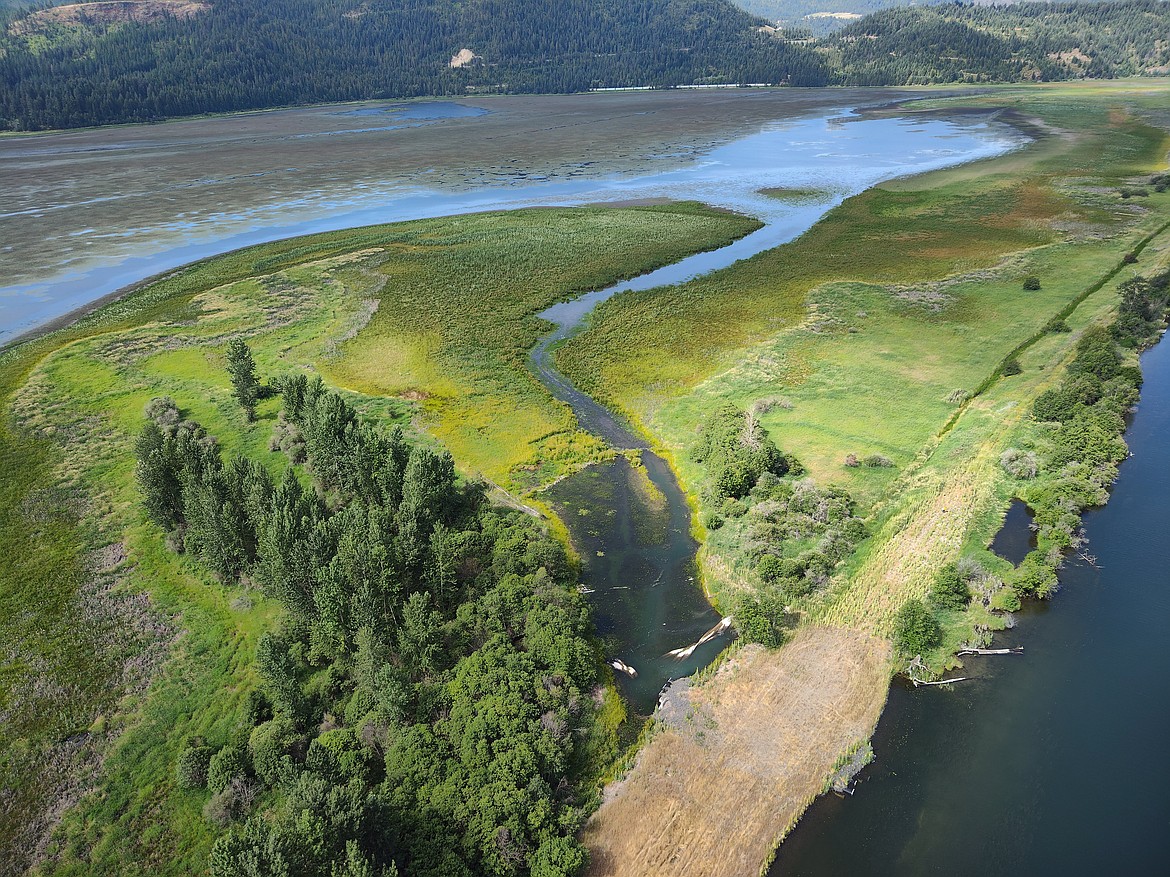
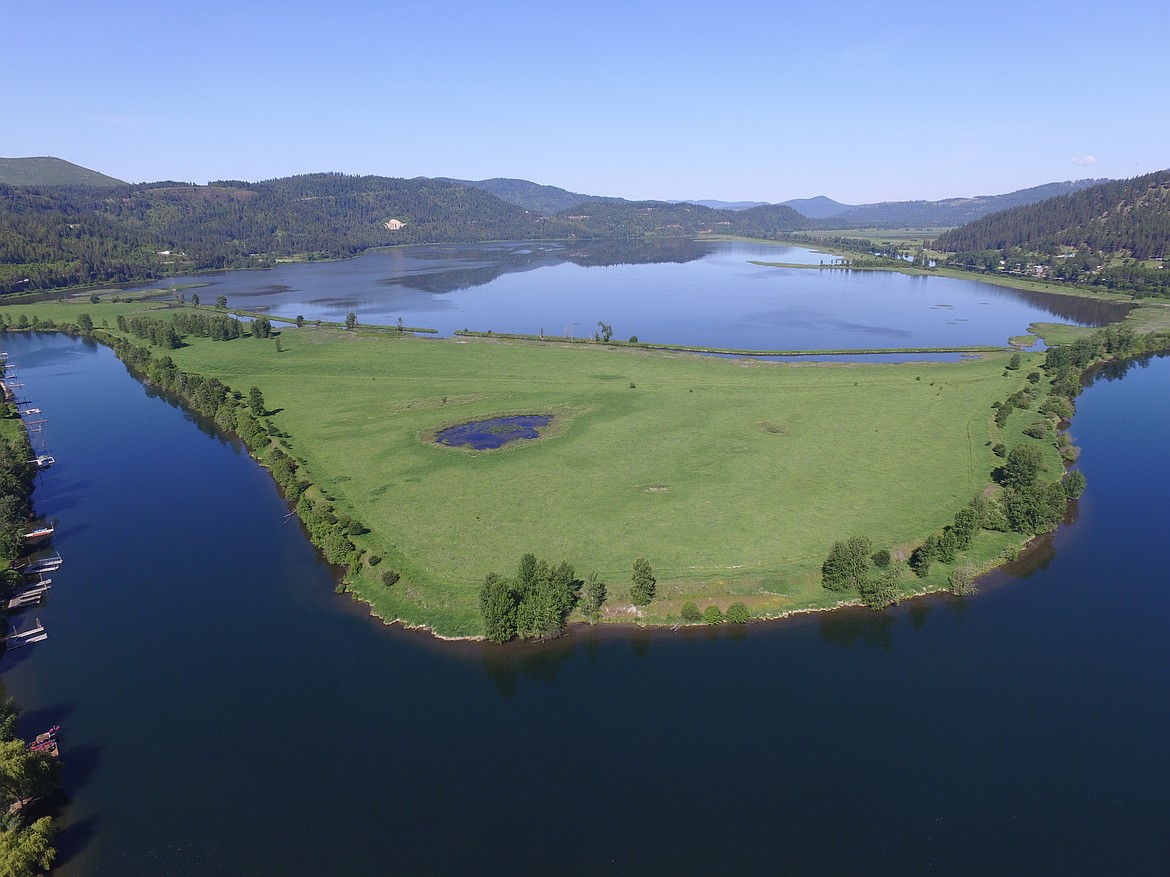
Last year, the Coeur d’Alene Tribe wrapped up construction on an ambitious wetland restoration project that has been in the works for more than a decade. The Snyihms he mulshu’lmkhw Project (Swimmer’s Landing among the Cottonwoods) is located along the bank of the lower St. Joe River in a place that Tribal people referred to as emish n(ilemn, meaning “waiting for the animal place.” The site formerly was a floodplain marsh and wet meadow, regularly inundated by floods from the river. The presence of culturally significant plants and wildlife supported a high level of use by the Coeur d’Alene People.
This place hasn’t looked anything like it did in the old days for quite some time. Levees were built in the late 1930s to isolate the river from the broad valley bottom to allow for farming. The native vegetation was plowed under and replaced by annual crops. A major challenge for farming was that the operations at the Post Falls Dam — more than 44 miles away — made the area considerably wetter during the growing season, despite the presence of the man-made levee. Consequently, farmers had to employ a complex system of drainage ditches and pumps to dry the site down enough to produce a crop.
Recent folklore has it that the 60-year-old levee separating the St. Joe River from the 1,500-acre farm field was blown up with dynamite during the floods of 1996 to provide flooding relief to neighboring landowners. Whether this is true or not is contested, but the aftermath had some very real consequences for natural resources on the Reservation.
For the past 26 years, the property commonly referred to as Hepton Lake, existed as a shallow, uniform expanse of open water. The water was slightly too deep for beneficial vegetation to get reestablished. On the other hand, the shallow water provided ideal spawning habitat for non-native northern pike, an apex predator known for having an outsized impact on local trout populations.
Over a period of nearly five years, the Tribe developed a plan to employ creative engineering design to reconstruct the levee with hydraulic control structures to manage water and meet multiple resource objectives. The concept was to provide some hydraulic separation between the river and Hepton Lake to mitigate some of the negative impacts of “too much water” during the summer growing season, but also to reap the benefits that come with periodic inundation of the site by flood flows from the river, and to manage water levels without the reliance on costly electric pumps.
Construction was completed during the late winter and spring of 2024. The constructed levee plug measures 500 feet long by 40 feet wide at its base. The plug was constructed using an engineered mixture of aggregates and fines, forming a water-tight barrier between Hepton Lake and the St. Joe River. Four 3-foot diameter culverts were installed in the center of the levee to allow for adaptive water level management.
Unique aspects of the project involved holding back the mighty St. Joe River in the dead of winter with a sheet pile wall while constructing on partially frozen ground to overcome site inaccessibility. As a testament to public-private partnerships, the Coeur d’Alene Tribe self-performed a significant amount of the construction before a seamless handoff was made to a local contractor to complete the earthwork. With completion of the project, the Tribe can now manage the site to support traditional hunting and gathering practices in an area uncontaminated by the mining waste effluent that is prevalent in other parts of the Coeur d’Alene Basin, and where such cultural uses have been precluded.
This project received an Engineering Excellence Award from the American Council of Engineering Companies in Idaho to celebrate a win-win for the cultural and environmental impact of ecological restoration projects. True to tribal traditions, this project recreates an ecosystem as close to pre-settlement conditions as possible that will be sustained for the benefit of future generations.
For updates on this project, see https://www.restorationpartnership.org.
• • •
Angelo Vitale is a fisheries manager.
The Our Gem Coeur d’Alene Lake Collaborative is a team of committed and passionate professionals working to preserve lake health and protect water quality by promoting community awareness of local water resources through education, outreach and stewardship. Our Gem includes local experts from the University of Idaho - Idaho Water Resources Research Institute, Coeur d’Alene Tribe, Idaho Department of Environmental Quality, the Basin Environmental Improvement Project Commission, Kootenai Environmental Alliance and the Coeur d’Alene Regional Chamber of Commerce.
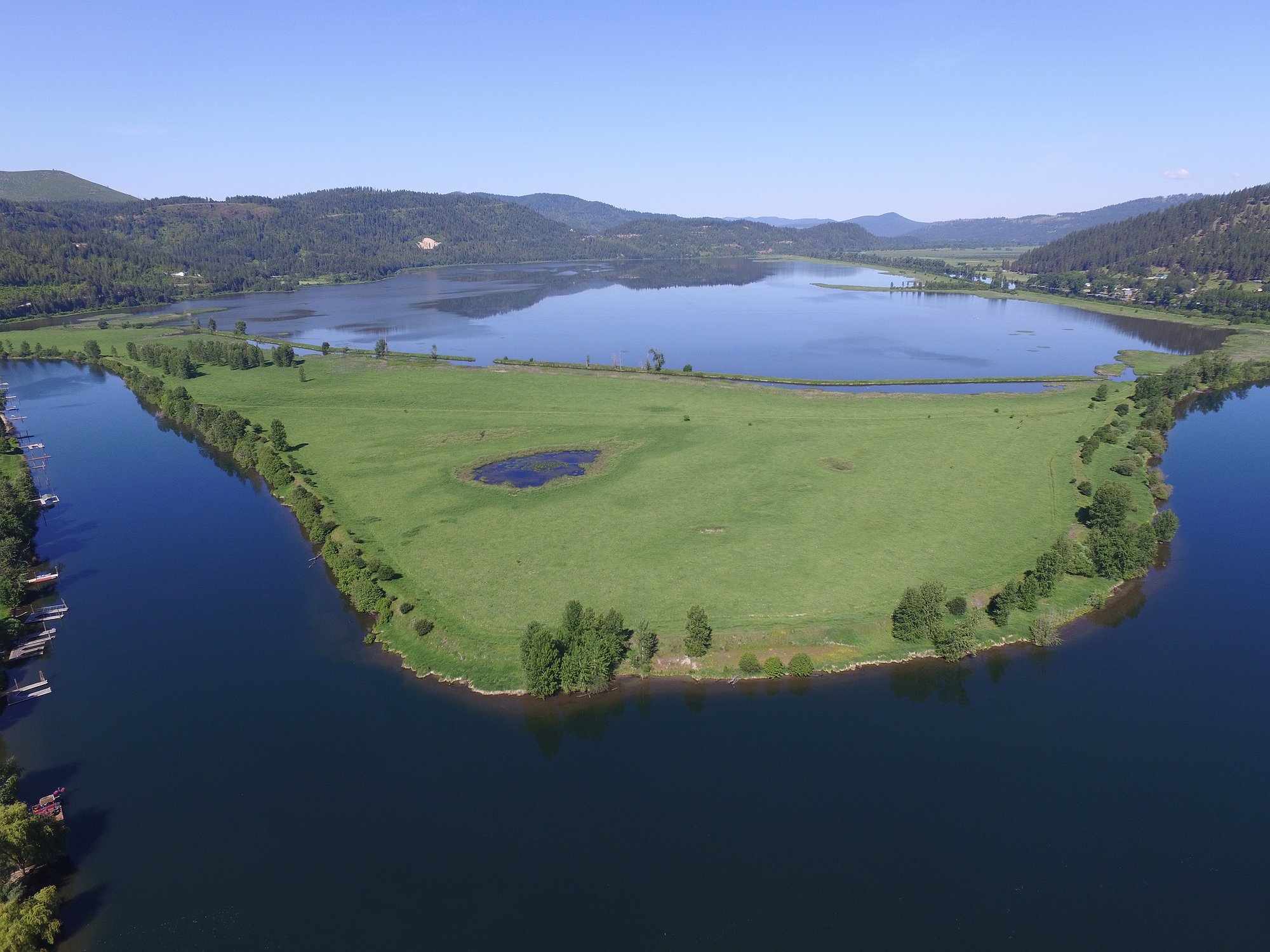 The area known as Hepton Lake before the restoration work.