
4-H helps students plan – and finance – their futures
JOEL MARTIN | Hagadone News Network | UPDATED 1 year, 2 months AGO
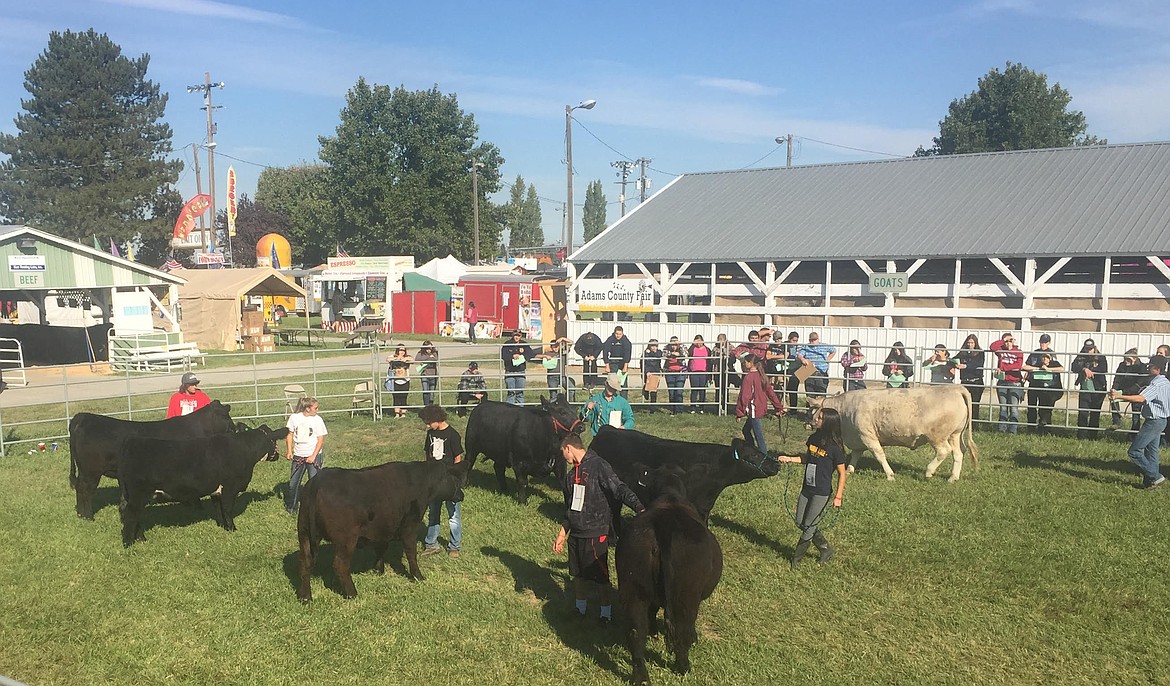
4-H students judge livestock at the Adams County Fair. Participating in 4-H not only prepares students for leadership in adulthood, it can help pay for their education.
FILE PHOTO

Hardy Shattuck of Connell was the winner of a WSU CAHNRS 4-H Scholarship. He plans to study agronomy at Washington State University.

Norah Gilbertson of Spokane learned about horses through 4-H, but also about leadership and public speaking. She’s using her 4-H scholarship to study medicine.
Joel Martin has been with the Columbia Basin Herald for more than 25 years in a variety of roles and is the most-tenured employee in the building. Martin is a married father of eight and enjoys spending time with his children and his wife, Christina. He is passionate about the paper’s mission of informing the people of the Columbia Basin because he knows it is important to record the history of the communities the publication serves. | July 30, 2025 5:10 AM
PULLMAN — Farming is all about the future: plant today, harvest tomorrow, and prepare for another season in between. The cycle continues, which is why it makes sense for 4-H and Washington State University to help each other help students.
“We have some wonderful donors over the years that have created endowments to support 4-H youth moving on into post-secondary education,” said Denise Echelbarger, WSU Extension 4-H director of development. “And then we have the ones that the university gives to individuals who are attending WSU, 4-Hers who are focusing on ag.”
There are nine scholarships for 4-H students listed on WSU’s website, plus two more from the Washington State 4-H Dairy Endowment, which manages its own separately, Echelbarger said. They range from $500 to $3,000 and have various eligibility requirements. One thing the recipients seem to have in common, however, is that they’ve been involved in 4-H for most of their lives.
“I’ve been involved in 4-H since I was in kindergarten, because both my sisters were in 4-H and some really good family friends were our club leaders,” said Hardy Shattuck of Connell, who was awarded the WSU CAHNRS 4-H Scholarship. That one is reserved for students who plan to attend WSU’s College of Agricultural, Human, and Natural Resource Sciences, abbreviated CAHNRS and pronounced “Conners.” He joined 4-H himself in the fourth grade, he said.
“It allowed me to show sheep from the end of third grade year and on,” he said. “That grew a lot of connections with people in the show community. It teaches you how to raise animals, and we did a lot of other stuff like community service and visiting farms.”
Shattuck didn’t grow up on a farm, but he works on a family friend’s farm baling hay, he said. He’s also doing an internship at Valley Agronomics in Basin City.
“I take soil samples and petiole samples, deliver chemicals and whatever they need,” he said.
He’ll be majoring in agronomy and hopes to return to the Columbia Basin as an agronomist when he finishes at WSU, he said.
The Washington State 4-H Foundation Trustees Scholarship has rather less stringent requirements, according to the WSU website. It’s open to high school seniors who are going to a two- or four-year college. Norah Gilbertson of Spokane, who received it this year, is taking it to Carroll College in Helena, Montana.
“I’m on the pre-medicine path,” Gilbertson said. “I’m currently planning on double-majoring in biology and health sciences working toward med school. I had two years of Running Start at Eastern Washington University, so I have a good amount of credits that are transferring in.”
Gilbertson also didn’t grow up in an agricultural family. She’s the first in her family to ride and show horses. But even more than introducing her to horses, 4-H gave her public speaking and leadership skills that she’s continued to carry with her.
“Last year I was club president, and that really helped me learn about leadership, organization and planning events,” she said. "Also, I was on a committee for Spokane County and that really helped me grow as a leader … And then 4-H has a big emphasis on service and helping others in your community, and that has helped me gain a love for my community, and I want to serve it.”
Once she’s done with pre-med and medical school, Gilbertson plans to be a general surgeon in a rural or underserved community in Eastern Washington, she wrote on the WSU Spokane County 4-H website.
The wish to return home is a common one among 4-H scholarship recipients, Echelbarger said.
“I would almost guarantee that they would be reaching back out to their communities that they've come from,” she said. “They seem to be very in tune and connected to their environment and realize where they've found good mentorship and go back to where they've received that.”
One award recipient had to decline her scholarship this year, Echelbarger said, because she’s taking a year off from school to serve as Future Farmers of America secretary. She’ll try for the scholarship again next year, Echelbarger added.
“I think it’s one of America’s best-kept secrets how much good comes out of 4-H,” she said. “It seems like the ones that it really impacts, even for lifelong learning, are those kids who not only enjoy the learning experience but then see the reward of giving back with their time and support to their own communities.”
For more information or to apply, visit https://extension.wsu.edu/4h/youth/scholarship-opportunities, or contact Denise Echelbarger at 509-335-3653 or [email protected].
 Hardy Shattuck of Connell was the winner of a WSU CAHNRS 4-H Scholarship. He plans to study agronomy at Washington State University.
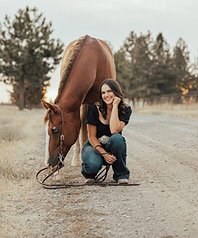 Norah Gilbertson of Spokane learned about horses through 4-H, but also about leadership and public speaking. She’s using her 4-H scholarship to study medicine.
ARTICLES BY JOEL MARTIN

Endless battle
Noxious Weed Control Board works to keep invasive plants under control
MOSES LAKE — Some of the nastiest plants in Grant County were the topic of a class led by Jay Johnson, a consultant with the Grant County Noxious Weed Control Board, Tuesday. The Noxious Weed Control Board, as its name would suggest, is tasked with keeping weeds under control in Grant County. That’s not a small job; the board’s website lists 129 species of noxious weeds that are found around Grant County. A noxious weed is defined as an invasive, non-native plant that threatens agricultural crops, local ecosystems or fish and wildlife habitat, according to the Noxious Weed Control Board. Washington state law requires that these weeds be identified and their spread kept to a minimum, if not completely eradicated. “We’re one of those agencies a lot of people don’t really understand,” Johnson said. “We’re a county office and … our funding is tax-based assessment. When you get your tax bill and you look down at all the expenses that you pay for, there we are.”

BASIN EVENTS: Oct. 16-24
COLUMBIA BASIN — Whether you feel like shopping, crafting, learning or seeing a show, there’s something happening for you this week in the Basin. Oct. 16 ‘My Family (Mi Familia)’ screening Spanning three generations, “My Family (Mi Familia)” is a heartfelt drama that follows the Sánchez family as they build their lives in East Los Angeles. Through love, hardship, triumph, and sacrifice, the film explores the immigrant experience, the strength of family bonds, and the traditions that connect one generation to the next. Lowrider show and taco truck before the screening. Sponsored by Columbia Basin Allied Arts, EDUBS C/S and the Moses Lake Creative District. $12 per person. Doors open at 6 p.m., film begins at 7 p.m. at the Moses Lake Civic Center Auditorium, 401 S. Balsam St. Tickets and info: www.cba-arts.org.

Moses Lake author encourages women to look beyond church culture norms
MOSES LAKE — A Moses Lake author’s book, “A Christian Woman Striving to Live Her Faith in a Man-Controlled World,” takes aim at the role to which many churches relegate the female half of their congregations. “It’s to encourage women in the faith,” Linda Curran said. “A lot of churches say, ‘Teach Sunday school, do this, do that, but don’t (evangelize.)’" In her book, Curran recounts a time when she moved to a new community and joined a church there. She was surprised to learn that, as a new female member, she had been automatically assigned church cleaning duties. When she questioned it, she wrote, she was met with condescension and her objections were brushed aside. In other churches, she said, women who were capable of teaching were relegated to “women’s ministry.”