
Model of Moscow home built for Bryan Kohberger murder trial
KEVIN FIXLER / Idaho Statesman | Bonner County Daily Bee | UPDATED 8 months, 1 week AGO
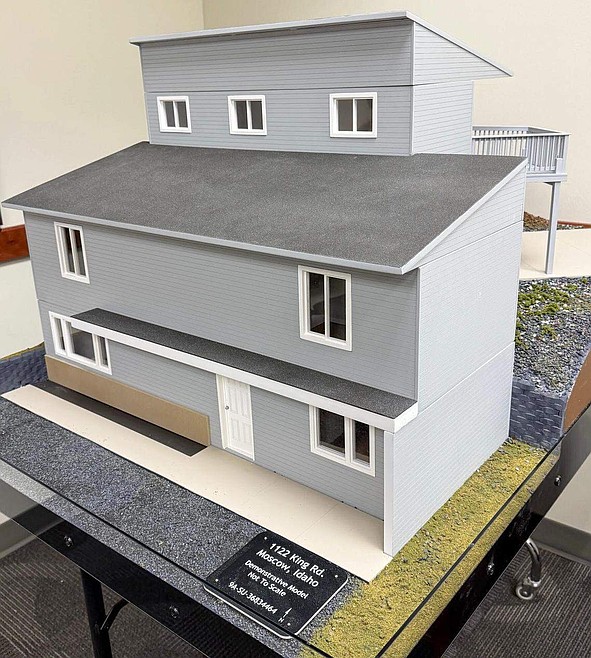
The FBI built a not-to-scale model of the home at 1122 King Road in Moscow where four University of Idaho students were fatally stabbed in November 2022 for Bryan Kohberger’s scheduled murder trial in Boise. / Latah County Prosecuting Attorney’s Office Provided
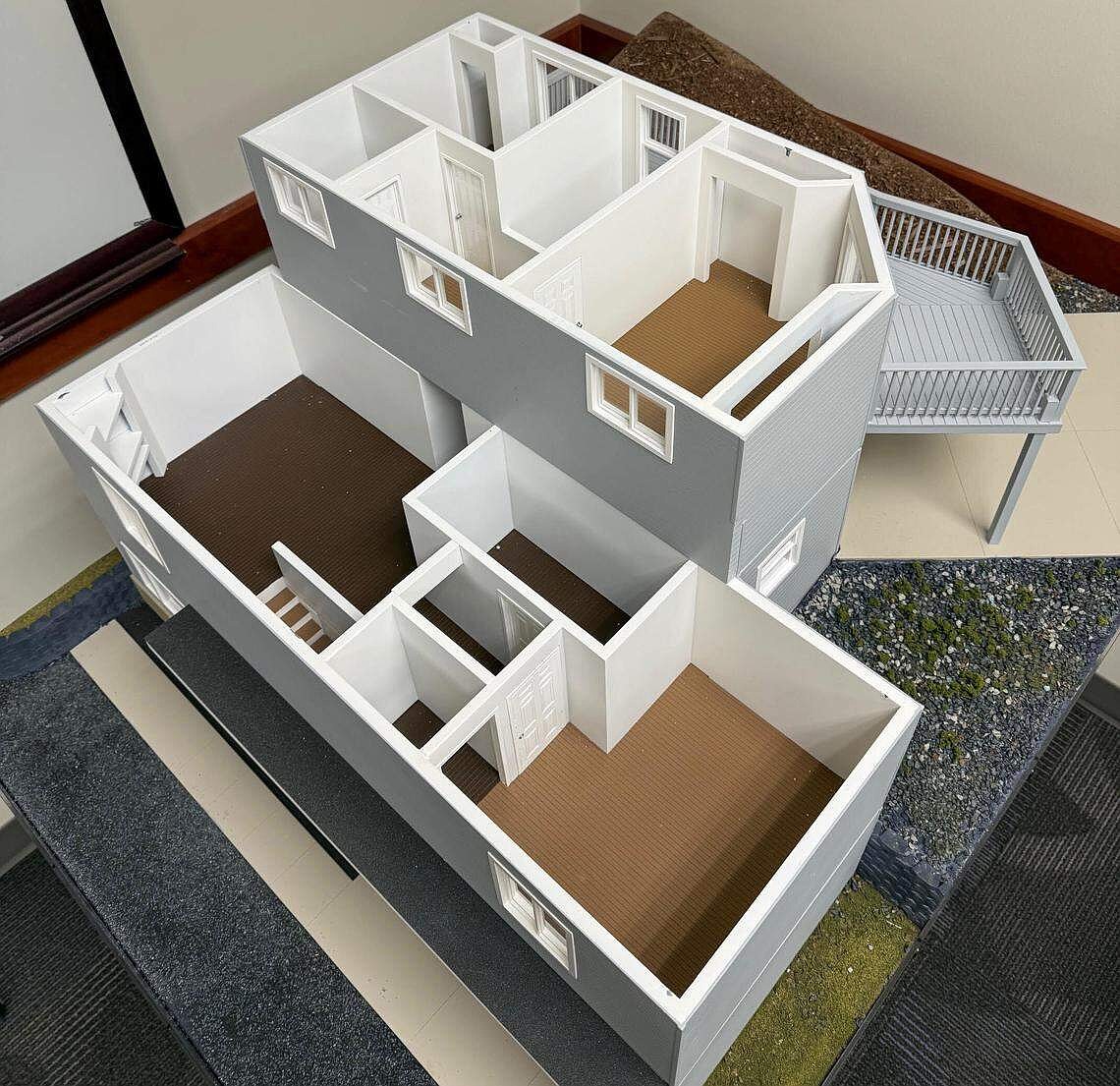
The FBI used 3D photo modeling to construct a 35-by-48-by-52-inch, not-to-scale version of the King Road home in Moscow where four University of Idaho students were fatally stabbed in November 2022. / Latah County Prosecuting Attorney’s Office Provided
Leading up to Bryan Kohberger’s anticipated capital murder trial, attorneys on each side clashed over a host of elements that could be presented to jurors, including a college assignment about crime scenes and a 3D model of the home in Moscow where four University of Idaho students were killed.
Over objections from the defense, Judge Steven Hippler approved the house model for use with witnesses in the courtroom for demonstrative purposes only, meaning it could not be considered a piece of evidence. He also allowed the prosecution’s push to try to admit as evidence the college term paper Kohberger completed while studying at DeSales University in Pennsylvania to illustrate his knowledge of processing crime scenes.
Kohberger, 30, later agreed to plead guilty to the four murders in a deal to avoid the death penalty, which ended the need for a trial. Hippler sentenced him last week to consecutive life prison terms with no chance of parole.
The four victims were U of I undergraduates Kaylee Goncalves and Madison Mogen, both 21, and Xana Kernodle and Ethan Chapin, both 20. The three women rented the home at 1122 King Road with two other female roommates, and Chapin was Kernodle’s boyfriend and slept over for the night.
Like the term paper, the not-to-scale model the FBI produced is no longer of use for the state’s planned purpose at trial. The 4-foot-tall King Road house model on wheels has not before been seen by the public, but the Latah County Prosecutor’s Office provided images of it to the Idaho Statesman in response to a public records request.
The U of I took control of the King Road property in spring 2023 after its prior owner donated it following the murders. Against the wishes of some of the victims’ families, the university razed the home in late December 2023 — almost a year to the day of Kohberger’s arrest. Neither the defense nor prosecution opposed its demolition ahead of the expected trial.
In the absence of the real thing — including as the trial moved from Moscow 300 miles south to Boise — the prosecution team intended for the model to help jurors grasp spatial relationships inside and outside of the three-story, six-bedroom former college home during witness testimony, they said in court records.
“Our intent is just simply to have this as a tool to help witnesses explain their testimony and help the jury understand,” Latah County Prosecutor Bill Thompson told the judge.
Defense made fiery objection to model
Anne Taylor, Kohberger’s lead attorney, countered that the defense had not received details about the model through the legal process of discovery to meet requirements of the rules of evidence. For Hippler to permit the FBI’s mock-up would violate her client’s constitutional rights, she said.
“This is an unfair surprise to Mr. Kohberger,” Taylor told the court in April. “The jury can place great weight on that, and it might not be actual. It could skew the testimony. It could skew the truth.”
Hippler, however, reasoned that the defense had equal access to the crime scene before it was knocked down, and still had upward of four months to prepare its own use of the diagram ahead of what was to be an August trial before Kohberger reached a plea deal. It is not uncommon for demonstrative exhibits to be disclosed close to trial, he added.
“There is a significant distinction between demonstrative trial exhibits or trial models, charts, things of that nature, and attempts to use things for evidentiary value in and of themselves,” Hippler said. “And the more complex, it’s not particularly different than a drawing by a witness or something like that.”
Jurors — and the public — could have expected to see the house model as a mainstay in the courtroom during testimony. That was to include investigators, Thompson said.
This article was originally published by the Idaho Statesman. To read more, click here.
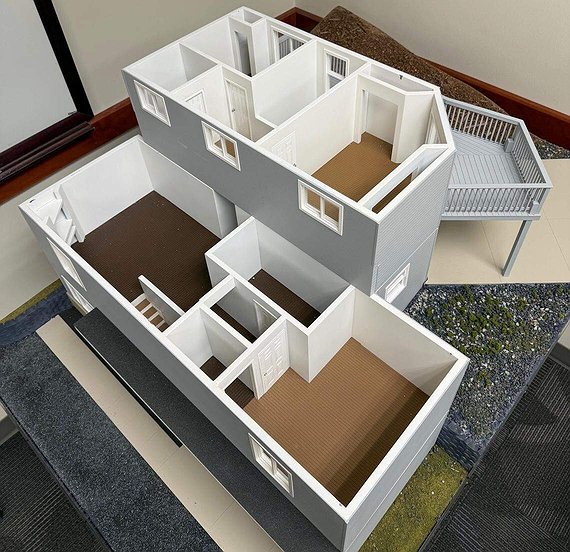 The FBI used 3D photo modeling to construct a 35-by-48-by-52-inch, not-to-scale version of the King Road home in Moscow where four University of Idaho students were fatally stabbed in November 2022. / Latah County Prosecuting Attorney’s Office Provided