
Ybarra bill designed to make it easier to fulfill demands for electricity, transmission
CHERYL SCHWEIZER | Hagadone News Network | UPDATED 6 months, 1 week AGO
Senior Reporter Cheryl Schweizer is a journalist with more than 30 years of experience serving small communities in the Pacific Northwest. She began her post-high-school education at Treasure Valley Community College and enerned her journalism degree at Oregon State University. After working for multiple publications, she has settled down at the Columbia Basin Herald and has been a staple of the newsroom for more than a decade. Schweizer’s dedication to her communities and profession has earned her the nickname “The Baroness of Bylines.” She covers a variety of beats including health, business and various municipalities. | June 16, 2025 5:25 PM
Key points
• Bill will allow public and private partners to work together on energy projects
• Companies can work with entities to meet specific energy needs
OLYMPIA — A bill co-sponsored by 13th District Rep. Alex Ybarra, R-Quincy, will make it easier for public entities to enter into agreements with private or other public partners to develop energy generation and transmission facilities.
Ybarra and Rep. Beth Doglio, D-Olympia, sponsored House Bill 1253, which passed the Washington House 94-1 and the Senate 49-0. Governor Bob Ferguson signed the bill into law on May 15 with an effective date of July 27, 2025.
Ybarra said the new law is designed to address some of the challenges as state officials attempt to shift energy use to new sources.
“We’re working both sides of the aisle to make this happen,” Ybarra said. “This isn’t a political thing for me, or an engineering thing. The physics book says, three laws of physics and this is how energy works. It’s not politics, it’s just physics and energy.”
The new law will allow public agencies, such as public utility districts, cities or joint operating agencies, to make agreements with both public and private partners. The law expands the options available to public entities.
Ybarra said that’s important, because while the Washington Legislature wants to move in-state electrical generation away from sources that produce carbon, legislators didn’t consider all the ramifications.
Ybarra voted no on the Climate Commitment Act, which sets up a cap-and-trade system, and the Clean Energy Transformation Act, which sets a deadline of 2045 to eliminate all carbon-producing sources of electricity. A 17-year employee of the Grant County PUD, Ybarra said his votes were based on his industry experience.
“I worked cap and trade with California back then, (when working for) the PUD, and I saw how that worked, or didn’t work,” he said.
Legislators overlooked critical factors like ensuring a way to get the energy from where it’s generated to where it’s used, he said. Both transmission and generation have to be available to ensure a facility makes enough money to make it worthwhile to potential owners.
“You have to generation to move on your transmission lines to pay for the transmission (lines), like a toll bridge,” he said. “Like the (Interstate) 405 toll bridge. We had to pay five bucks a car, well, that’s how you finance the bridge. Nobody is going to give you a loan for $100 million to build a bridge if you don’t have (an adequate) number of cars coming over every day to finance the bridge. The same with transmission – you build transmission, you have to have energy to move across that transmission line, because there’s a toll when you move that. That’s how they pay for the transmission line.”
It also matters how much energy is being transmitted over a power line, he said. The producer needs to generate enough to pay for the transmission charges.
Wind and solar generation can be – and are – frequently interrupted, and existing sources don’t produce enough electricity to meet the demand, at least not yet. He used Grant County as an example.
“Right now, you’ve got Group14, you’ve got 12, you’ve got Sila (Nanotechnologies). You’ve got, potentially, a steel manufacturer coming into the county. The PUD already told them they’re maybe eight years out, maybe longer, to get the energy they need,” Ybarra said.
The new law will allow public and private partners to, among other things, build energy sources closer to the customers.
“Public utilities can now work with entities to start bringing generation on-site, if needed. If the PUD can’t build the transmission for eight years, then they can build generation on site, so instead of having transmission lines, you just plug them in,” Ybarra said.
Even as additional sources are added, onsite energy production can serve an important role, he said. When it’s very hot or very cold and there are spikes in energy demand, the onsite facilities can help fill the gap.
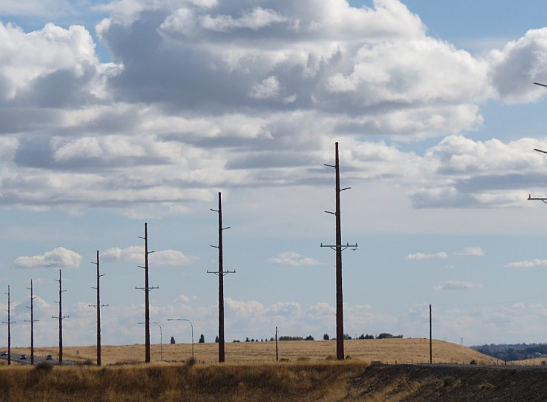
 Making it easier to build transmission lines was the goal of a bill sponsored by Rep. Alex Ybarra.
ARTICLES BY CHERYL SCHWEIZER

Three arrested in Royal City area thefts case
ROYAL CITY — Three men were arrested and booked into the Grant County Jail on suspicion of possessing stolen property after a search was served on a home near Beverly Thursday.
More park improvements planned for Royal City in ‘26
ROYAL CITY — Lions Park in Royal City now has a soccer field, so city officials will be working on the next phase of improvements in 2026. The first phase of upgrades to Apple Avenue also is scheduled for 2026, and both are among the projects reflected in the city’s 2026 budget. The budget was approved by Royal City City Council members Tuesday.
Sleep Diagnostic Center physician pleads guilty to Medicaid fraud
Charges involve charging Apple Health for recalled, altered CPAP devices
BREWSTER — A Brewster physician who operates a sleep diagnostic clinic in Moses Lake and Wenatchee will be sentenced March 24 as part of a Wednesday plea deal on Medicaid fraud charges.