
WSU, Cornell demonstrate high-tech gas monitoring system at dairy farm
JOEL MARTIN | Hagadone News Network | UPDATED 8 months, 1 week AGO
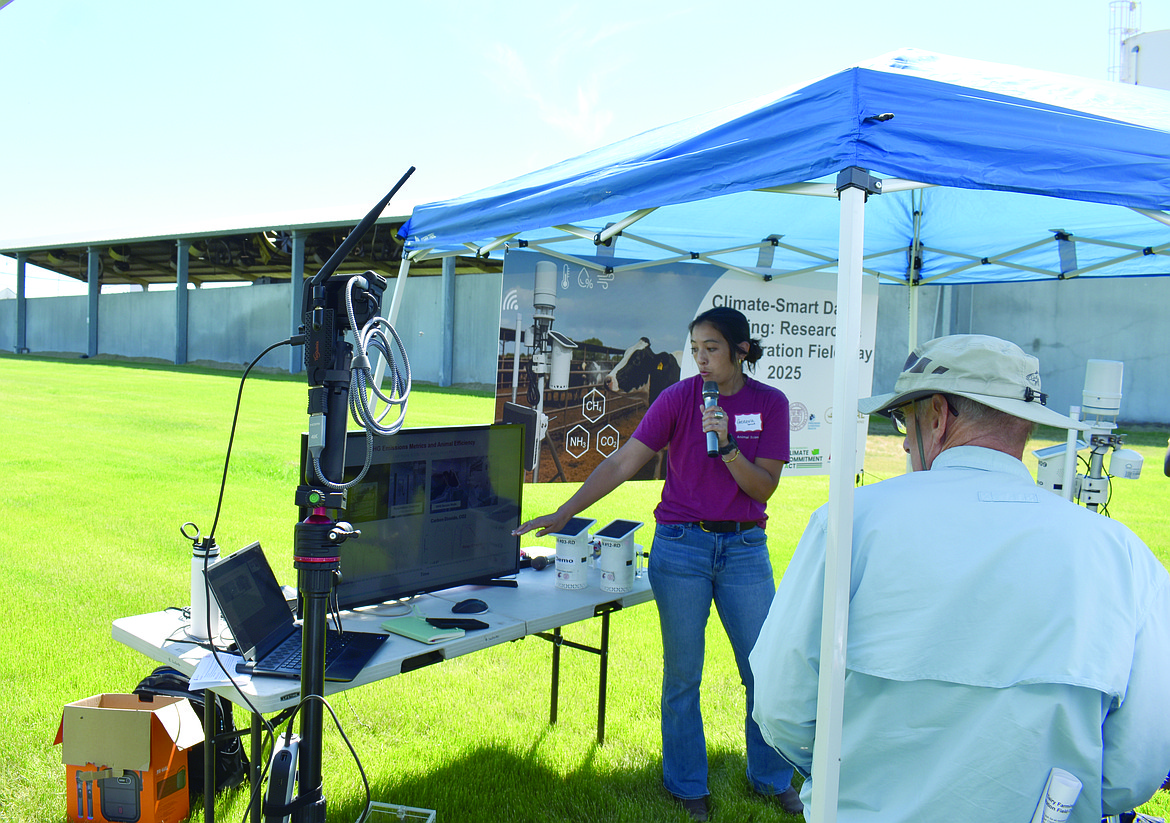
Cornell University researcher Geneva Graef demonstrates a wireless monitoring system for cattle emissions at Royal Dairy near Royal City May 31.
JOEL MARTIN/BASIN BUSINESS JOURNAL
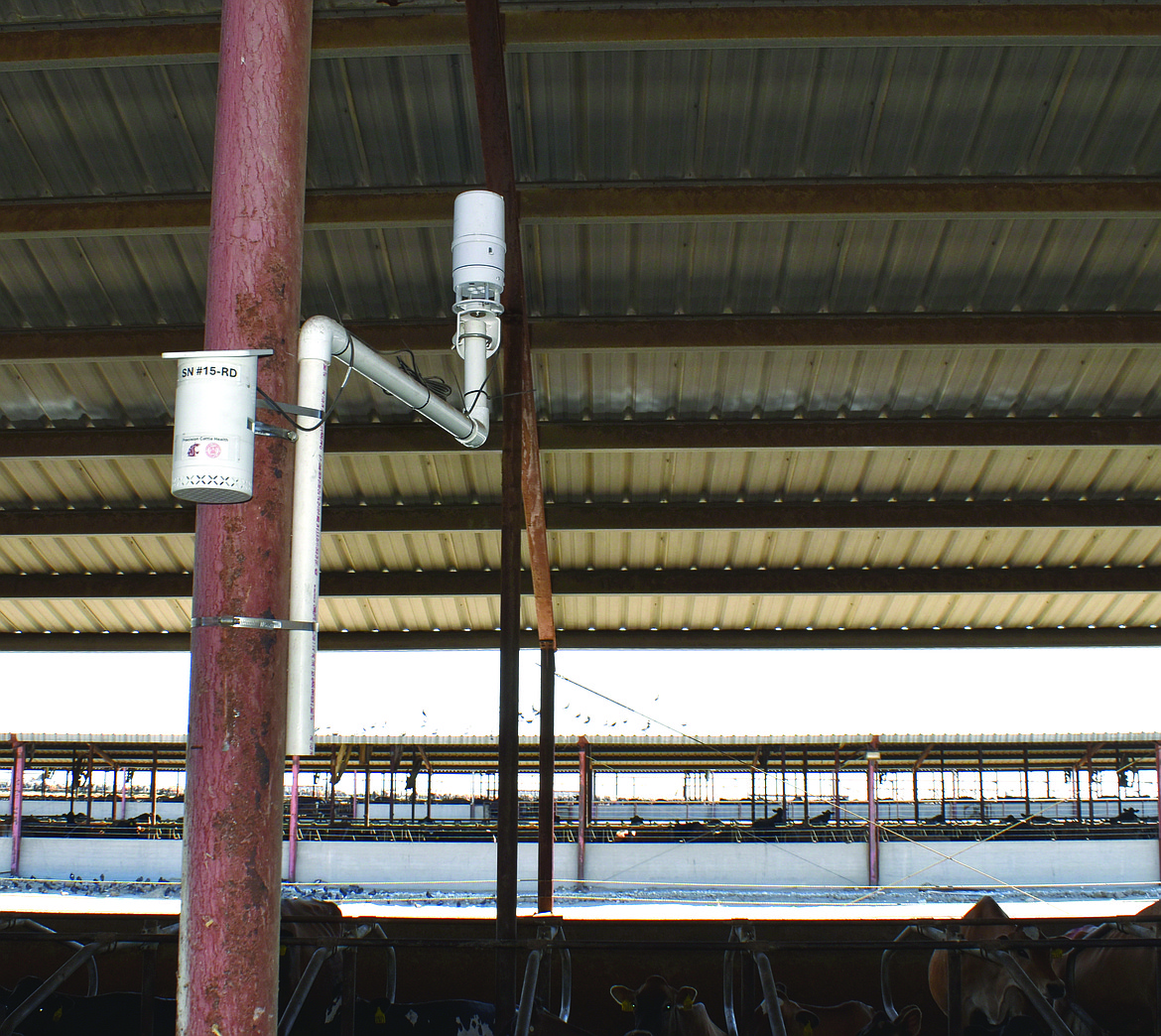
About two dozen of these sensors are mounted in cattle barns and other greenhouse gas-producing areas of Royal Dairy to measure carbon dioxide, methane, carbon ammonia and other gases.
JOEL MARTIN/BASIN BUSINESS JOURNAL
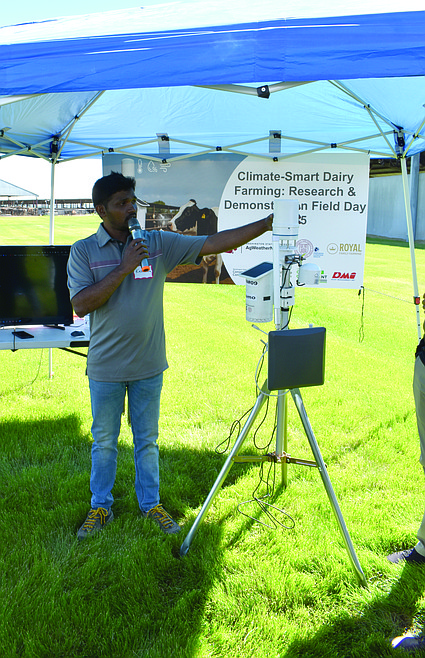
WSU Research Assistant Keshawa Dadallage shows a standalone, solar-powered monitor at the Climate-Smart Dairy Farming Research and Development Field Day May 31.
JOEL MARTIN/BASIN BUSINESS JOURNAL
Joel Martin has been with the Columbia Basin Herald for more than 25 years in a variety of roles and is the most-tenured employee in the building. Martin is a married father of eight and enjoys spending time with his children and his wife, Christina. He is passionate about the paper’s mission of informing the people of the Columbia Basin because he knows it is important to record the history of the communities the publication serves. | June 24, 2025 8:18 AM
ROYAL CITY — Dairy farming is taking a step into a lower-carbon future, researchers from Washington State University and Cornell University said at Royal Dairy near Royal City May 31.
“There was a big push on the carbon footprint from dairy farms in the last 10 years,” said Dr. Francisco Leal-Yepes of Cornell University at the Climate-Smart Dairy Farming Research and Development Field Day at Royal Dairy. “Dairy farmers are actually doing a great job to reduce their footprint, not only in terms of reducing methane emissions but also resource use.”
The event showcased a system that Washington State University researchers have developed to measure emissions from cattle. It’s an adaptation of WSU’s (Ag Weather Network) Smart Farms network of private weather stations that allow growers to monitor weather conditions statewide in real time.
The system on display at Royal Dairy used sensors placed in cattle barns and other farm locations.
“We have built this low-cost greenhouse gas and weather sensing system, which is a wireless sensor network that you can deploy throughout your dairy farm and see the emissions coming out and get the baseline,” said Lav Khot, an associate professor in WSU’s Department of Biological Systems Engineering who holds a doctorate from North Dakota State University in Agricultural and Biosystems Engineering. “Then Dr. (Leal-Yepes’) team is going to use that data and come up with some mitigation scenarios where you can add feed additives for the animals, or if it’s dairy manure you can add biochar in certain concentrations.”
The project is funded through Washington’s Climate Commitment Act and allows growers to access carbon markets with more accurate measurements, Leal-Yepes said.
WSU Research Assistant Keshawa Dadallage demonstrated the nuts and bolts of the system, which can be managed from a computer dashboard or a mobile device. It receives data from about 24 sensors deployed around the farm: some in cattle barns, some at the dairy’s worm farm, some in the compost yard – that can measure carbon dioxide from zero to 50,000 parts per million, methane up to 30,000 PPM and carbon ammonia up to 100 PPM, Dadallage said.
Part of the purpose of the field day was to encourage other cattle growers to participate in the study. WSU is looking for commercial operators to install the sensors and expand the network’s localized data collection. The sensors cost about $1,600 apiece, according to WSU’s literature, and participating growers can benefit from shared localized data and analysis linking each farm’s emissions data with production and health metrics. Growers’ private data remains private, Cornell graduate student Geneva Graef assured the attendees.
“Not that many farms in the US are feeding this product currently, and that’s essential to have these collaborations with people that are actually moving forward with the industry trying to implement these sustainable practices and see the value of validating and using these techniques,” Leal-Yepes said.
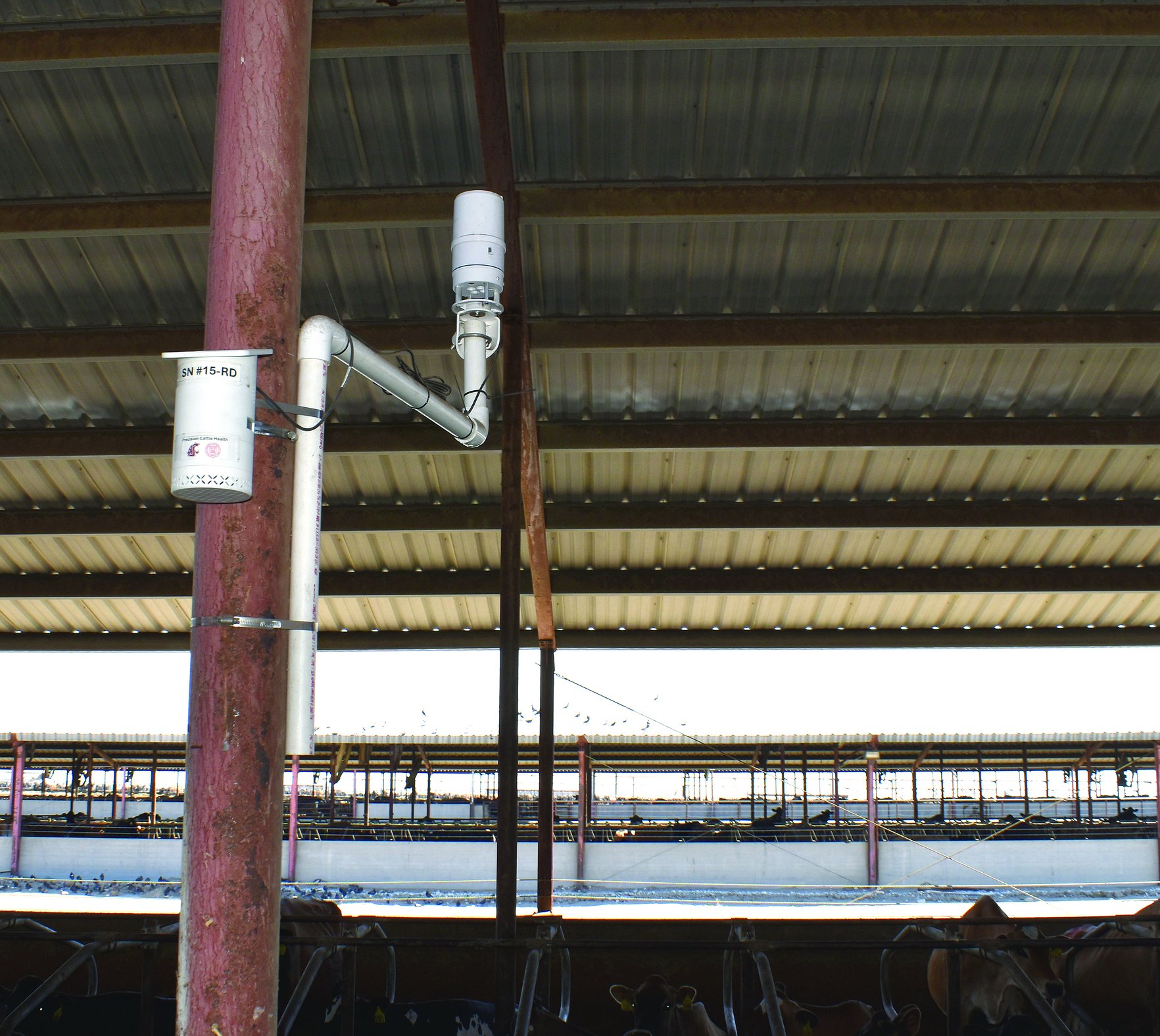 About two dozen of these sensors are mounted in cattle barns and other greenhouse gas-producing areas of Royal Dairy to measure carbon dioxide, methane, carbon ammonia and other gases.
JOEL MARTIN/BASIN BUSINESS JOURNAL
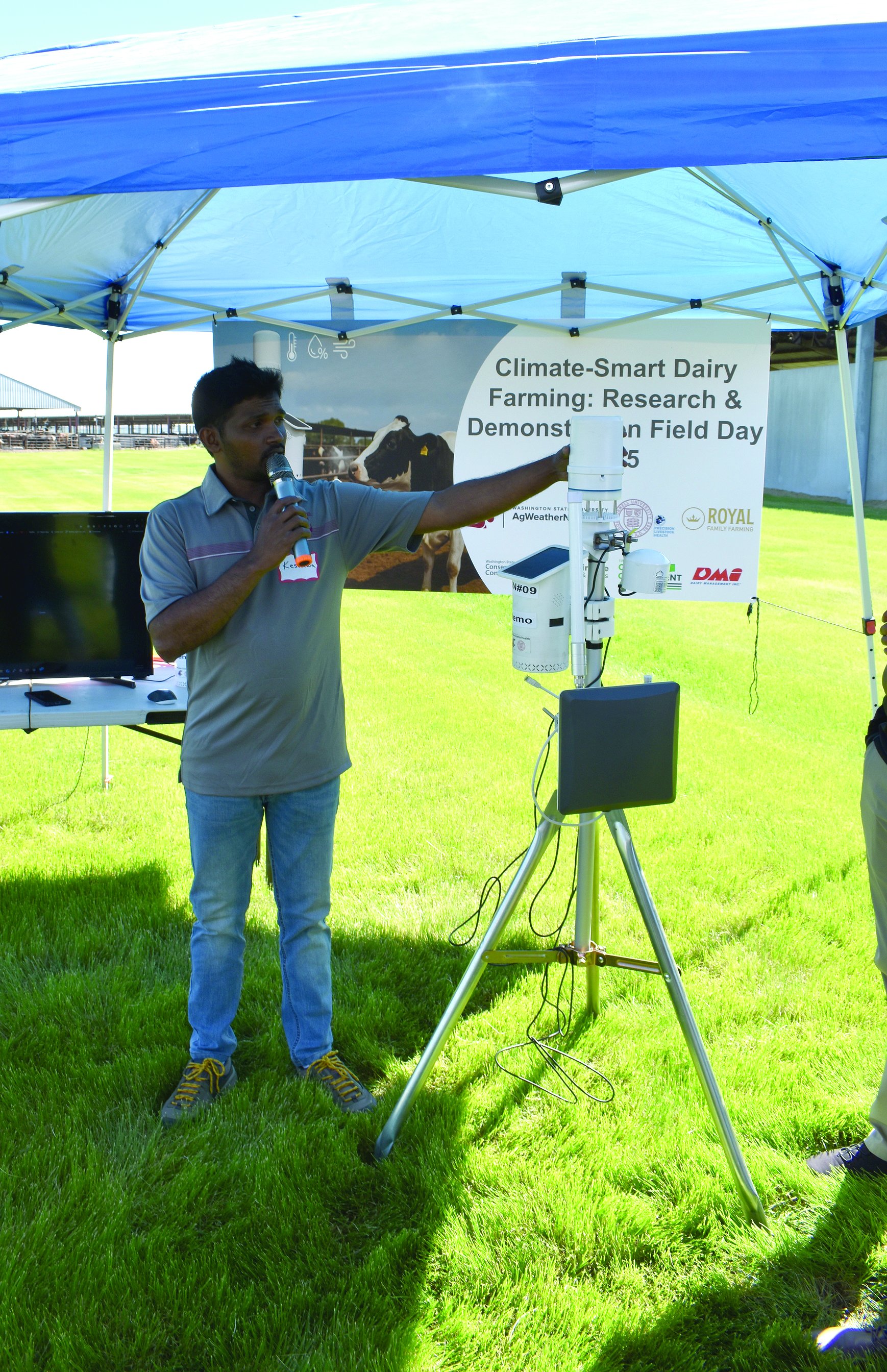 WSU Research Assistant Keshawa Dadallage shows a standalone, solar-powered monitor at the Climate-Smart Dairy Farming Research and Development Field Day May 31.
JOEL MARTIN/BASIN BUSINESS JOURNAL
ARTICLES BY JOEL MARTIN
Space Burger booth open March 13-15
MOSES LAKE — Those who can’t wait for the Grant County Fair can get their Space Burger fix next weekend, according to an announcement from the Lioness Club of Moses Lake. The iconic Grant County sandwiches will be available at the Grant County Fairgrounds March 13-15, according to the announcement. There is no admission fee to get into the fairgrounds that weekend.
SENIOR EVENTS: March 2026
COLUMBIA BASIN — Plays, art shows, auctions and more await seniors in the Columbia Basin this month. Here are some opportunities to get out and about in March.
Valentine’s Day cards flood Brookdale Hearthstone with love
MOSES LAKE — Residents at Brookdale Hearthstone Assisted Living in Moses Lake got Valentine’s Day greetings from across the country last month. “I believe that the only states we have not received (cards from) yet are Vermont and Maine,” Lifestyle Director Imelda Broyles said Feb. 24. “We keep receiving new cards every single day. They have not stopped. My residents are in awe with every single one of the cards that we’ve been receiving.” The Hearts Across America project started as a way for children in school classrooms to exchange Valentine’s Day cards with classes in other states or even countries, but the idea has expanded to senior living facilities, according to the project’s social media.