
WSU, Cornell demonstrate high-tech gas monitoring system at dairy farm
JOEL MARTIN | Hagadone News Network | UPDATED 1 year, 3 months AGO
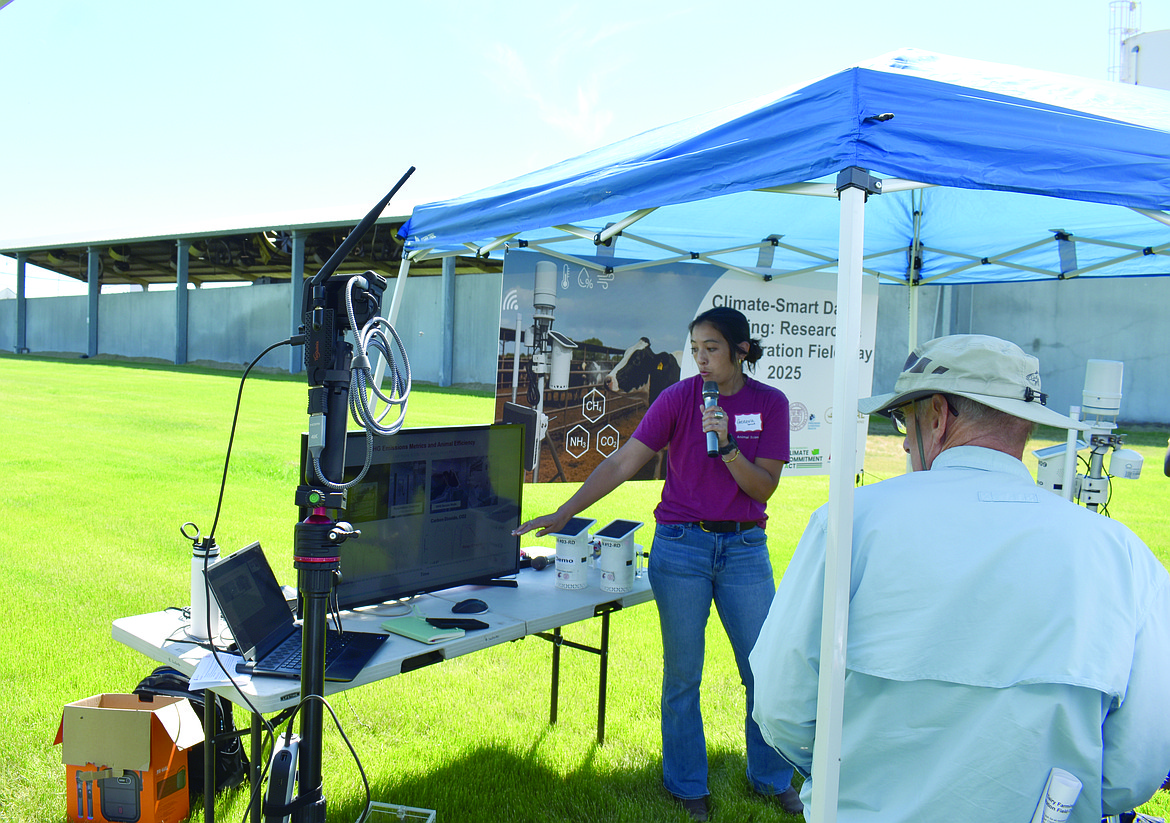
Cornell University researcher Geneva Graef demonstrates a wireless monitoring system for cattle emissions at Royal Dairy near Royal City May 31.
JOEL MARTIN/BASIN BUSINESS JOURNAL
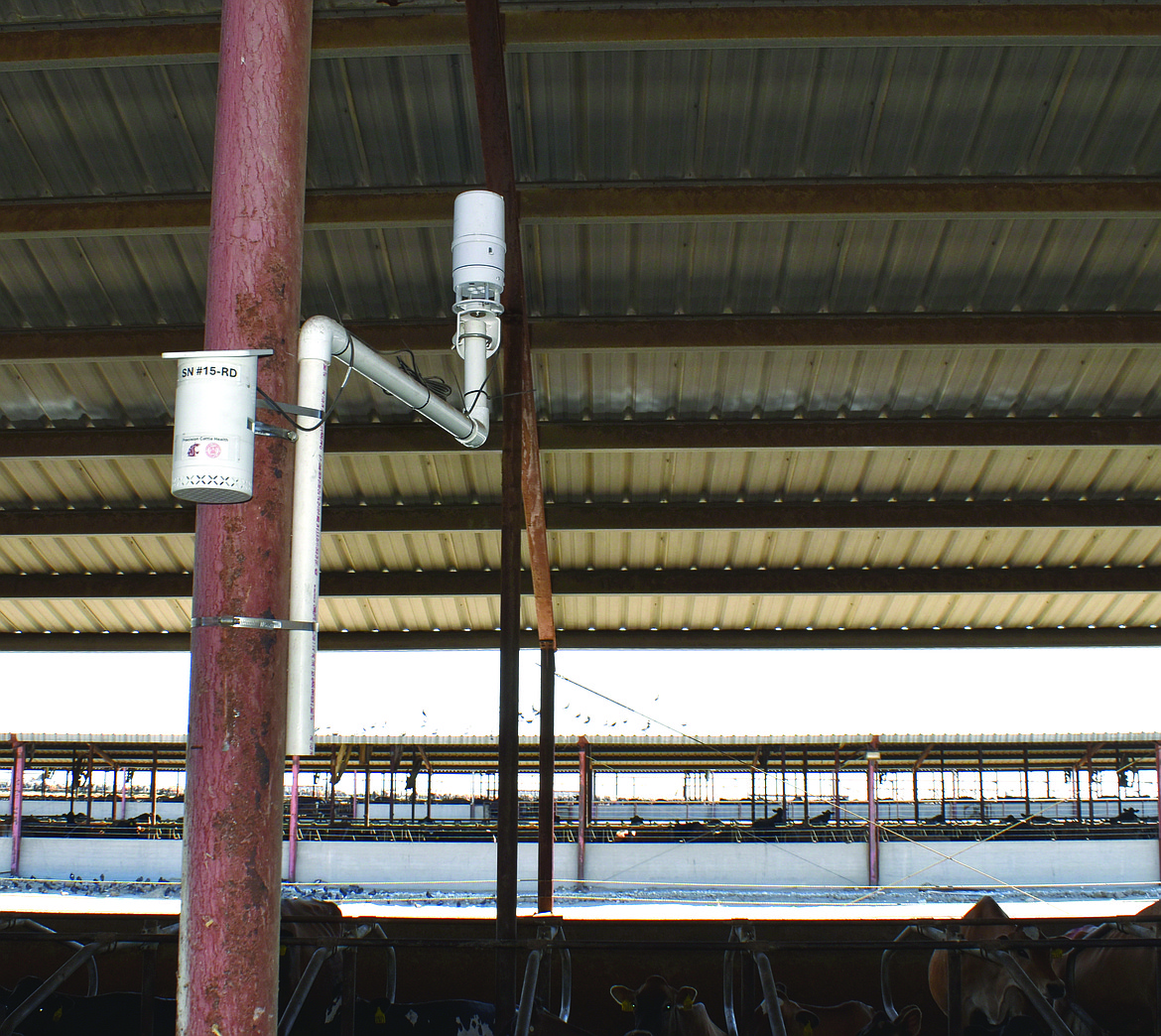
About two dozen of these sensors are mounted in cattle barns and other greenhouse gas-producing areas of Royal Dairy to measure carbon dioxide, methane, carbon ammonia and other gases.
JOEL MARTIN/BASIN BUSINESS JOURNAL
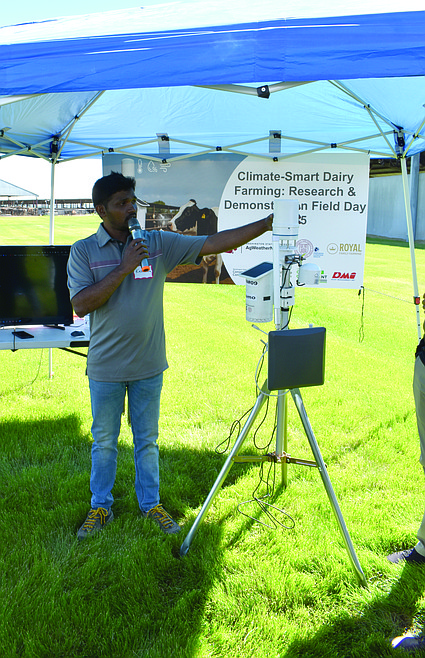
WSU Research Assistant Keshawa Dadallage shows a standalone, solar-powered monitor at the Climate-Smart Dairy Farming Research and Development Field Day May 31.
JOEL MARTIN/BASIN BUSINESS JOURNAL
Joel Martin has been with the Columbia Basin Herald for more than 25 years in a variety of roles and is the most-tenured employee in the building. Martin is a married father of eight and enjoys spending time with his children and his wife, Christina. He is passionate about the paper’s mission of informing the people of the Columbia Basin because he knows it is important to record the history of the communities the publication serves. | June 24, 2025 8:18 AM
ROYAL CITY — Dairy farming is taking a step into a lower-carbon future, researchers from Washington State University and Cornell University said at Royal Dairy near Royal City May 31.
“There was a big push on the carbon footprint from dairy farms in the last 10 years,” said Dr. Francisco Leal-Yepes of Cornell University at the Climate-Smart Dairy Farming Research and Development Field Day at Royal Dairy. “Dairy farmers are actually doing a great job to reduce their footprint, not only in terms of reducing methane emissions but also resource use.”
The event showcased a system that Washington State University researchers have developed to measure emissions from cattle. It’s an adaptation of WSU’s (Ag Weather Network) Smart Farms network of private weather stations that allow growers to monitor weather conditions statewide in real time.
The system on display at Royal Dairy used sensors placed in cattle barns and other farm locations.
“We have built this low-cost greenhouse gas and weather sensing system, which is a wireless sensor network that you can deploy throughout your dairy farm and see the emissions coming out and get the baseline,” said Lav Khot, an associate professor in WSU’s Department of Biological Systems Engineering who holds a doctorate from North Dakota State University in Agricultural and Biosystems Engineering. “Then Dr. (Leal-Yepes’) team is going to use that data and come up with some mitigation scenarios where you can add feed additives for the animals, or if it’s dairy manure you can add biochar in certain concentrations.”
The project is funded through Washington’s Climate Commitment Act and allows growers to access carbon markets with more accurate measurements, Leal-Yepes said.
WSU Research Assistant Keshawa Dadallage demonstrated the nuts and bolts of the system, which can be managed from a computer dashboard or a mobile device. It receives data from about 24 sensors deployed around the farm: some in cattle barns, some at the dairy’s worm farm, some in the compost yard – that can measure carbon dioxide from zero to 50,000 parts per million, methane up to 30,000 PPM and carbon ammonia up to 100 PPM, Dadallage said.
Part of the purpose of the field day was to encourage other cattle growers to participate in the study. WSU is looking for commercial operators to install the sensors and expand the network’s localized data collection. The sensors cost about $1,600 apiece, according to WSU’s literature, and participating growers can benefit from shared localized data and analysis linking each farm’s emissions data with production and health metrics. Growers’ private data remains private, Cornell graduate student Geneva Graef assured the attendees.
“Not that many farms in the US are feeding this product currently, and that’s essential to have these collaborations with people that are actually moving forward with the industry trying to implement these sustainable practices and see the value of validating and using these techniques,” Leal-Yepes said.
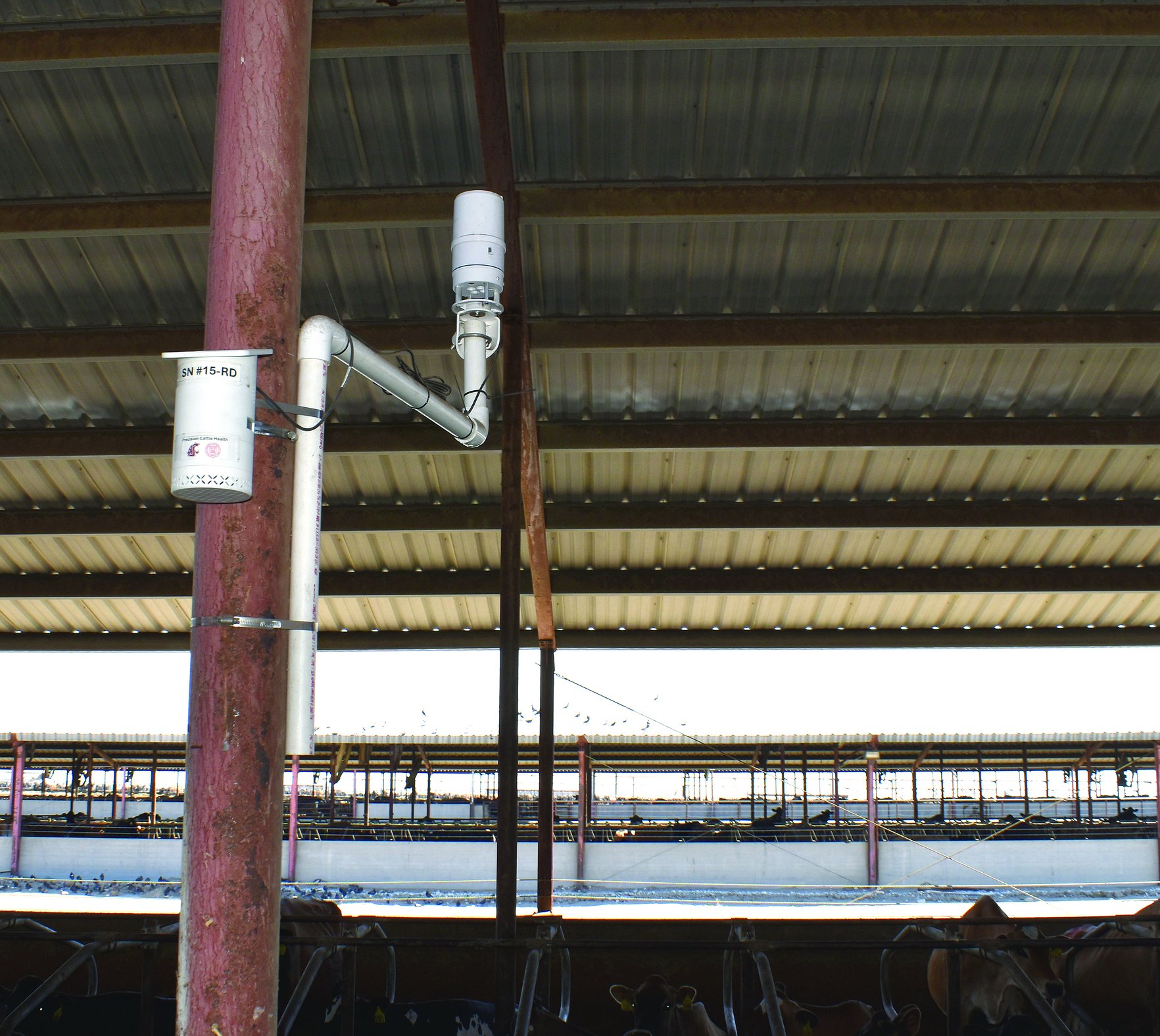 About two dozen of these sensors are mounted in cattle barns and other greenhouse gas-producing areas of Royal Dairy to measure carbon dioxide, methane, carbon ammonia and other gases.
JOEL MARTIN/BASIN BUSINESS JOURNAL
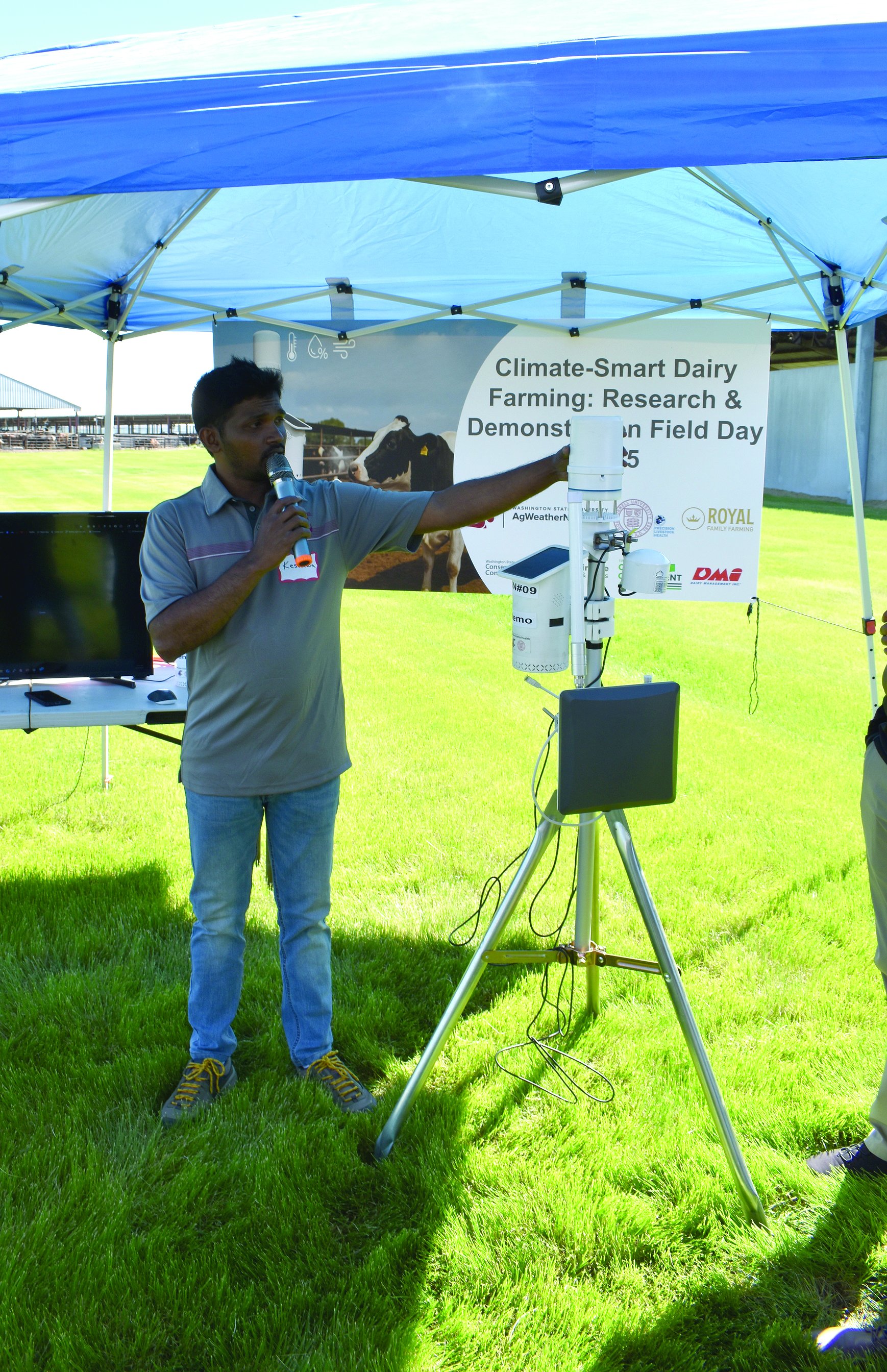 WSU Research Assistant Keshawa Dadallage shows a standalone, solar-powered monitor at the Climate-Smart Dairy Farming Research and Development Field Day May 31.
JOEL MARTIN/BASIN BUSINESS JOURNAL
ARTICLES BY JOEL MARTIN

Endless battle
Noxious Weed Control Board works to keep invasive plants under control
MOSES LAKE — Some of the nastiest plants in Grant County were the topic of a class led by Jay Johnson, a consultant with the Grant County Noxious Weed Control Board, Tuesday. The Noxious Weed Control Board, as its name would suggest, is tasked with keeping weeds under control in Grant County. That’s not a small job; the board’s website lists 129 species of noxious weeds that are found around Grant County. A noxious weed is defined as an invasive, non-native plant that threatens agricultural crops, local ecosystems or fish and wildlife habitat, according to the Noxious Weed Control Board. Washington state law requires that these weeds be identified and their spread kept to a minimum, if not completely eradicated. “We’re one of those agencies a lot of people don’t really understand,” Johnson said. “We’re a county office and … our funding is tax-based assessment. When you get your tax bill and you look down at all the expenses that you pay for, there we are.”

BASIN EVENTS: Oct. 16-24
COLUMBIA BASIN — Whether you feel like shopping, crafting, learning or seeing a show, there’s something happening for you this week in the Basin. Oct. 16 ‘My Family (Mi Familia)’ screening Spanning three generations, “My Family (Mi Familia)” is a heartfelt drama that follows the Sánchez family as they build their lives in East Los Angeles. Through love, hardship, triumph, and sacrifice, the film explores the immigrant experience, the strength of family bonds, and the traditions that connect one generation to the next. Lowrider show and taco truck before the screening. Sponsored by Columbia Basin Allied Arts, EDUBS C/S and the Moses Lake Creative District. $12 per person. Doors open at 6 p.m., film begins at 7 p.m. at the Moses Lake Civic Center Auditorium, 401 S. Balsam St. Tickets and info: www.cba-arts.org.

Moses Lake author encourages women to look beyond church culture norms
MOSES LAKE — A Moses Lake author’s book, “A Christian Woman Striving to Live Her Faith in a Man-Controlled World,” takes aim at the role to which many churches relegate the female half of their congregations. “It’s to encourage women in the faith,” Linda Curran said. “A lot of churches say, ‘Teach Sunday school, do this, do that, but don’t (evangelize.)’" In her book, Curran recounts a time when she moved to a new community and joined a church there. She was surprised to learn that, as a new female member, she had been automatically assigned church cleaning duties. When she questioned it, she wrote, she was met with condescension and her objections were brushed aside. In other churches, she said, women who were capable of teaching were relegated to “women’s ministry.”