
Megan Watson: A driving force behind Moses Lake Community Coalition’s prevention efforts
NANCE BESTON | Hagadone News Network | UPDATED 9 months, 2 weeks AGO
MOSES LAKE — In a community where the fight against substance abuse is both urgent and complex, Megan Watson said the Moses Lake Community Coalition ss a resource for the community.
As the MLCC coordinator, Watson said she is dedicated to creating impactful strategies aimed at preventing youth substance abuse through a collaborative approach that emphasizes understanding and addressing the unique needs of the local population.
Having joined the coalition nearly three years ago, Watson’s journey into prevention work began even earlier when she spent over two years with the Quincy Partnership for Youth. Her transition to Moses Lake was not just a career move; it was a personal one.
“I was able to make the switch to where I live, which was super cool for me,” she said. “I’m assigned as a prevention specialist for Grant County, focusing on youth substance use and finding effective, evidence-based approaches to address it.”
The coalition operates primarily with a base of volunteers, relying on the principle that every community is unique.
“If you’ve seen one community coalition, you’ve seen one community coalition,” Watson said. “They all operate differently because it’s very specific to where you live.”
This specificity drives her team to gather data to tailor prevention programs that effectively resonate with local youth.
According to Watson, the most pressing substances of concern among local youth include various forms of cannabis, particularly vape pens, and alcohol.
“One of the main things that we talk about is what parents can do to be preventative,” she said. “Parents are still the number one influence for kids when it comes to whether or not they use substances.”
With an alarming number of youth reporting access to substances from home, she encourages parents to engage in frequent, open conversations with their children about the risks.
One of the coalition’s key initiatives is the parent-focused program “Guiding Good Choices,” designed for families with middle school-aged children. Watson emphasized the importance of intervening during this critical transition period from childhood to adolescence.
“Sadly, we’re seeing use begin around nine and ten years old,” she said, drawing attention to the early ages at which risky behaviors begin taking root.
Watson’s daily role is characterized by a dynamic array of responsibilities ranging from administrative tasks to community outreach.
“I wear a dozen different hats,” she said. “It just changes all the time. It’s a fantastic job.”
She said the variety keeps her energized and deeply engaged in the coalition’s mission.
Among Watson’s notable successes is the coalition’s recent acquisition of a High Intensity Drug Trafficking Area grant. This funding will support initiatives like Guiding Good Choices and youth drop-in programs, providing safe spaces where young people can connect with responsible adults.
“We’re hoping to run it at least twice a year, every year,” she said, elaborating on her vision for Guiding Good Choices.
The Moses Lake Community Coalition also places significant emphasis on the role of collaboration with other community entities.
“We hear this at a whole lot of different (conversations), like, ‘We need to be collaborating.’ And definitely, yes,” Watson said.
Through partnerships with organizations such as the local library, the Boys and Girls Club, and various mental health services, the coalition endeavors to weave prevention efforts into the very fabric of community life.
Watson’s perspective on prevention is rooted in a profound understanding of community dynamics. She passionately argues the need for a collection of voices in the fight against substance abuse, noting that “in prevention, we have to saturate, not sprinkle, or it doesn’t work.”
She said this ethos fuels the coalition’s collaborative spirit, making it a cornerstone of their strategy.
As someone who grew up in a household affected by addiction, she said her personal connection to this work is motivating.
In the midst of ongoing conversations about substance abuse and community health, Megan Watson embodies the work of the Moses Lake Community Coalition. Through her leadership and unwavering commitment, she emphasizes that with every effort put forth, a healthier community is on the horizon—one where children can thrive free from the shadow of substances.
ARTICLES BY NANCE BESTON
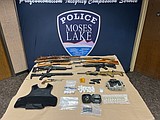
1 arrested after Highway 17 stop; detectives recover fentanyl, firearms
MOSES LAKE — The Moses Lake Street Crimes Unit conducted a traffic stop on Highway 17 near Randolph Road and executed a search warrant Friday morning as part of an ongoing narcotics investigation.

4th-year drought declaration in WA, subtle effects in the Columbia Basin
EPHRATA — Washington’s fourth straight year of drought is expected to hit some regions hard, but in Grant and Adams counties, the impacts will look different – quieter, less visible and centered underground. Statewide, the Department of Ecology issued an emergency drought declaration after a warm winter left Washington with about half its usual snowpack, raising concerns about low summer streamflows, stressed fish populations and heightened wildfire risk. Seven of the past 10 years have included drought somewhere in the state. “If you look at our mountains, the challenge we are facing is clear,” Gov. Bob Ferguson said during a press conference Wednesday. “We’re taking emergency action to protect fish, farmers and communities across Washington.”

Sleep Diagnostic Center to close after doctor’s sentencing
MOSES LAKE — The Central Washington Sleep Diagnostic Center announced it will be closing its doors effective April 30. This includes locations in Moses Lake, Spokane Valley, Brewster and Wenatchee. The announcement follows the March 25 guilty plea from Dr. Eric Edward Haeger, 57, in United States District Court to adulterating and misbranding medical devices with the intent to defraud or mislead, according to a statement from the U.S. Attorney’s Office. “The adulterations by Dr Haeger show a dangerous disregard for the safety of his patients,” Washington Attorney General Nick Brown said in a statement. “This is a win for patient safety, for protecting public dollars from fraud, and for ensuring citizens of Washington get necessary healthcare. This case exemplifies the great work our team is doing in collaboration with our federal partners to fight fraud and protect Washingtonians.”