
Libby residents fight trio of bills that could make suing corporations more difficult
HAILEY SMALLEY | Hagadone News Network | UPDATED 1 year AGO
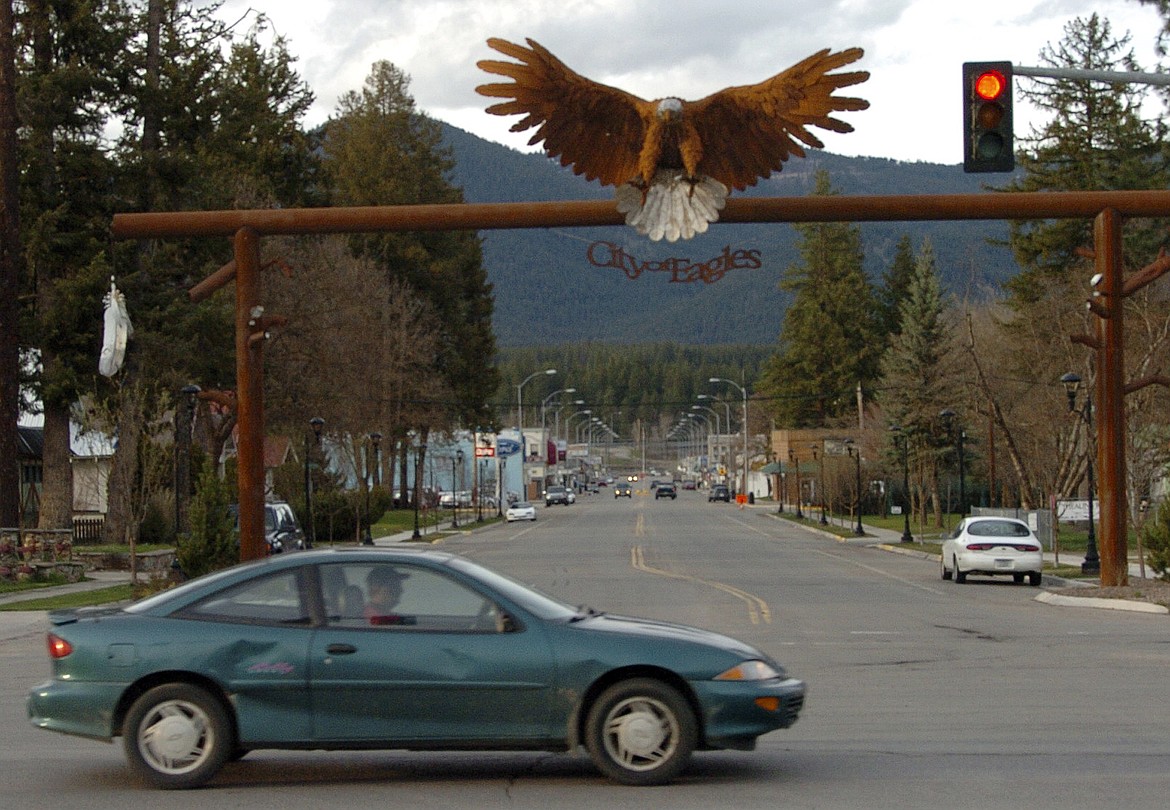
In this April 27, 2011, file photo, the entrance to downtown Libby, Mont., is seen. BNSF Railway attorneys are expected to argue before jurors Friday, April 19, 2024, that the railroad should not be held liable for the lung cancer deaths of two former residents of the asbestos-contaminated Montana town, one of the deadliest sites in the federal Superfund pollution program. (AP Photo/Matthew Brown, File)
A suite of bills that critics say could make it harder to sue corporations faced strong opposition from Libby residents at a Montana Senate Judiciary Committee hearing on Tuesday.
House Bills 301, 302 and 303 would overhaul key aspects of the litigation process and sparked concern for Libby residents still in the throes of a decades-long legal battle to receive compensation for asbestos-related injuries.
“[The legislation] will have, in my estimation, a very real and devastating impact on the cases going forward in Libby,” said Roger Sullivan, a Kalispell lawyer who has represented plaintiffs in thousands of asbestos injury lawsuits.
Many of those cases involve BNSF Railway, which transported the toxic vermiculite. The sponsor of the bills, Rep. Anthony Nicastro, R-Billings, has represented the railroad giant in cases related to asbestos exposure. When questioned at Tuesday’s hearing, he denied any conflicts of interest, claiming the bills would “have no impact” on his own litigation. Instead, Nicastro and other proponents argued that the bills would increase judicial efficiency and reduce frivolous lawsuits.
“That is utterly ridiculous,” retorted Al Smith, representing Montana Trial Lawyers Association.
Smith argued that the legislation would likely result in more time in court. A defense attorney paid by the hour might not mind that, Smith quipped.
Libby residents were unequivocal in their belief of the burden the legislation would impose on victims of asbestos exposure.
“This bill says I shall have to go to go to another hearing. I have to delay further down the road. I have to have more expenses,” said longtime Libby resident Kurtis Hafferman.
As a child, Hafferman walked along the railway tracks to reach his favorite fishing hole on the Kootenai River, often stopping to play in the piles of vermiculite that sloughed off passing trains. Decades later, he has not received compensation for an asbestos-related illness he is sure will kill him.
“That’s what corporations can do,” he told the committee. “They can delay these things until you’re dead. So, I’m asking you not to add another layer, another complexity into what I have to do.”
Sen. Mike Cuffe, R-Eureka, and Steve Gunderson, the former state representative for House District 1, also opposed the bill. Both have been diagnosed with asbestos-related diseases.
“It’s a hard thing to understand, and it’s a sad thing,” said Cuffe. “All I wanted to do today is stand up for my people.”
Cuffe told the committee members that he received numerous messages from constituents concerned about the legislation.
The Senate Judiciary Committee elected not to vote on the bills during the March 18 hearing. If the bills do pass committee, they will move to the full Senate floor for another round of votes.
Reporter Hailey Smalley can be reached at [email protected] or 758-4433.
ARTICLES BY HAILEY SMALLEY
Winging it through winter: Rare Anna's hummingbird finds shelter in Bigfork backyard
The bird turned out to be an Anna’s hummingbird — a rare find in western Montana. The Montana Natural Heritage Program’s bird distribution database has logged only 158 sightings of Anna’s hummingbirds in the state, including 21 sightings in Flathead County.

Business groups sue to stop proposed ban on political spending in Montana
The Kalispell Chamber of Commerce is one of several organizations to file suit over a proposed ballot initiative to ban corporate spending in politics, arguing it infringes on the free speech rights of businesses.

Mexican man who led deputies on high-speed chase in Kalispell receives federal prison sentence
A Mexican national arrested after a high-speed chase through Kalispell in June 2025 received an 18-month sentence for illegal reentry in federal court last week.