
OneD process passes independent test
CHERYL SCHWEIZER | Hagadone News Network | UPDATED 1 year, 5 months AGO
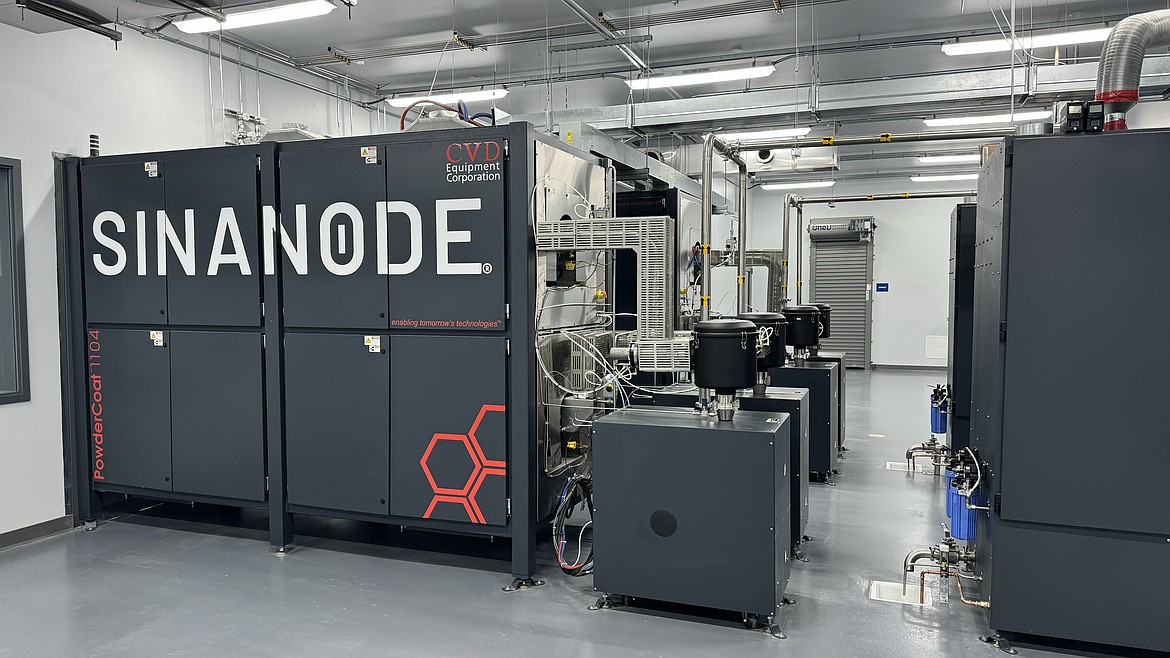
Testing of the manufacturing process used by OneD Battery Sciences indicated it resulted in a substantial decrease in carbon emissions, according to a report from an independent company.
FILE PHOTO
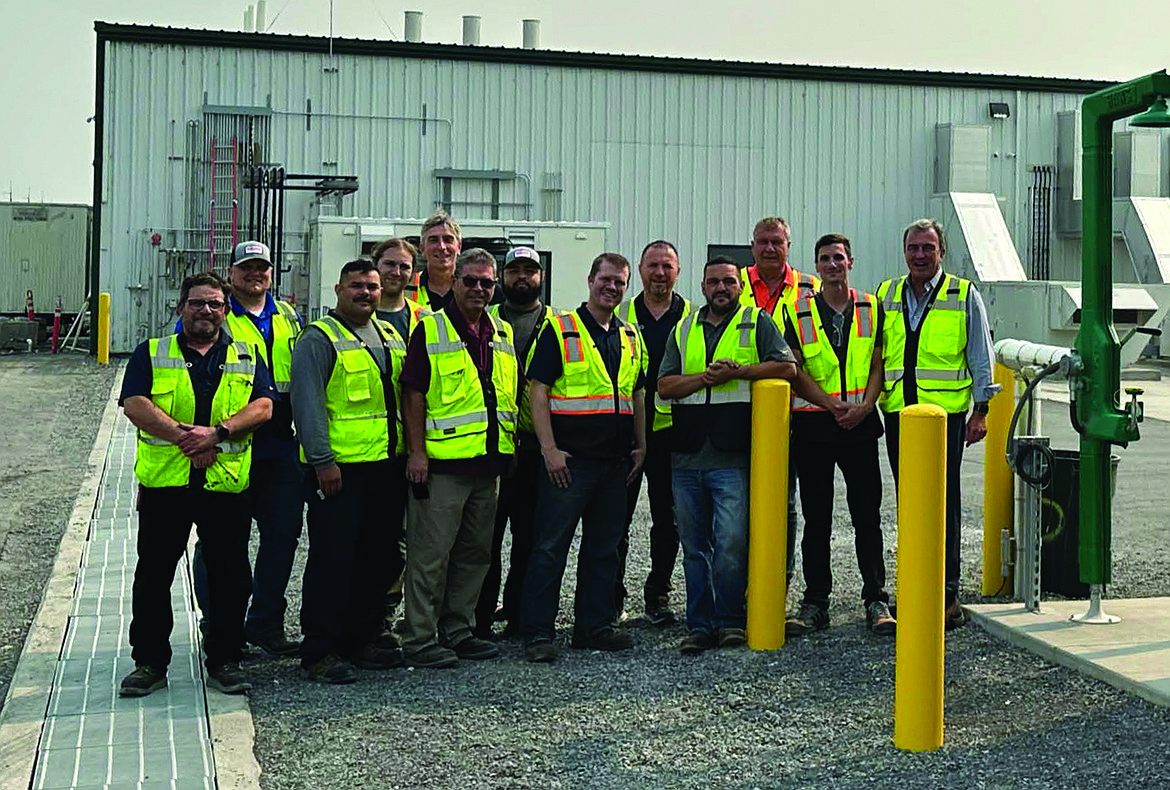
The OneD Battery Sciences team had a successful first run of SINANODE production in July of last year. From left: Abel de la Ossa, Tyson Olson, Leo Martinez, Andy Kirk, Jan-Marc Luchies, Rufino Garza, Leo Rodriguez, Nick Kamerath ,Ioan Horvat, Mario Hernandez, Klaas Heres, Justin Weckerle, Vincent Pluvinage.
Senior Reporter Cheryl Schweizer is a journalist with more than 30 years of experience serving small communities in the Pacific Northwest. She began her post-high-school education at Treasure Valley Community College and enerned her journalism degree at Oregon State University. After working for multiple publications, she has settled down at the Columbia Basin Herald and has been a staple of the newsroom for more than a decade. Schweizer’s dedication to her communities and profession has earned her the nickname “The Baroness of Bylines.” She covers a variety of beats including health, business and various municipalities. | March 19, 2025 2:30 AM
MOSES LAKE — Testing by a third party has indicated the process used by a company with a battery development facility in Moses Lake is less harmful to the environment than traditional alternatives, according to an announcement from OneD Battery Sciences. The results of testing by Minviro were released Tuesday.
Vincent Pluvinage, OneD chief executive officer, said the company submitted its process and its product to testing by an outside company to determine if its process reduces the amount of CO2 used in manufacturing batteries used in electric vehicles.
The tests determined that the OneD process could reduce the CO2 emissions produced by manufacturers by as much as 35%.
The case for vehicles run solely by electricity, Pluvinage said, is that they don’t contribute as much to CO2 emissions.
“When you drive around an EV, you don’t produce any CO2,” Pluvinage said. “But then people say, ‘Wait a minute, you’re quite right, there is no CO2 produced when you drive around, but it took a lot of energy and manufacturing to produce the battery.’ So people start asking, ‘What about the CO2 that was involved in making all of the battery materials and making the batteries? How much is that, and is that a problem?’ And it’s a fair question.”
In addition, Pluvinage said, most contemporary battery manufacture use graphite as the main component.
“Ninety-five percent of all the graphite that is used in EV batteries in the United States and Europe comes from China,” he said.
Chinese manufacturers have less environmentally friendly sources of power, Pluvinage said, not to mention the risk of one country supplying the majority of a crucial manufacturing component.
“What OneD has done – and it took us many, many years – is that we invented and patented a process where we can add some silicon inside the pores of the graphite particles. When we add the silicon, we actually can reduce the amount of graphite drastically,” he said.
It was important though, he said, to put the process to the test to confirm the claims made for it.
“We wanted to add the last element. We wanted to add an element that proves scientifically that the carbon footprint of the battery is reduced because of our technology,” he said.
It was important, however, to have the analysis conducted by a company with no connection to OneD, he said. The British company, Minviro, conducted what is called a comprehensive life cycle assessment.
“You need to give them all of your data about the manufacturing process,” he said. "Then they have a bunch of scientists that compute the carbon footprint and compare (that result) to today’s batteries that have been made with imported graphite from China. And when they finish writing that report – and that takes many, many, many months and answering tons of questions – that's not the end.”
The Minviro report was then reviewed by a panel of scientists who were anonymous to the company, using long-established international standards.
“It’s a very rigorous process,” Pluvinage said.
The independent analysis increases the company’s credibility, he said.
“This issue of having scientific data being verified by a third party, in many areas of business is very important,” he said.
 The OneD Battery Sciences team had a successful first run of SINANODE production in July of last year. From left: Abel de la Ossa, Tyson Olson, Leo Martinez, Andy Kirk, Jan-Marc Luchies, Rufino Garza, Leo Rodriguez, Nick Kamerath ,Ioan Horvat, Mario Hernandez, Klaas Heres, Justin Weckerle, Vincent Pluvinage.
ARTICLES BY CHERYL SCHWEIZER
Road projects on hold for Labor Day weekend
MOSES LAKE — With Labor Day weekend dead ahead, drivers will be able to move freely about the state. Most road projects are on hold for the holiday weekend. Nobody will be working on the Hansen Road overpass on Interstate 90, but the lane restrictions that are in effect will continue through the end of the project.

Cost estimates for water source alternatives given to Moses Lake City Council
Protected under the U.S. Endangered Species Act, efforts are ongoing to keep it self-sufficient
MOSES LAKE — It’s going to cost a lot of money to provide alternative water sources for the city of Moses Lake, but some of the possible alternatives will cost more than others. City officials provided the Moses Lake City Council with costs for various alternatives Tuesday.

Dryer vent cleaning is important -- but often overlooked
MOSES LAKE — Not all the maintenance a house needs is visible. Sometimes a potential problem just goes unnoticed until it causes trouble, sometimes serious trouble. But a lot of potential problems give off warning signs. Clothes dryers often do when they need a good cleaning.