
What’s the ‘State of the Lake?' — Fishery manager: Lake Pend Oreille angling is ‘about the best it’s ever been’
ERIC WELCH | Hagadone News Network | UPDATED 9 months AGO
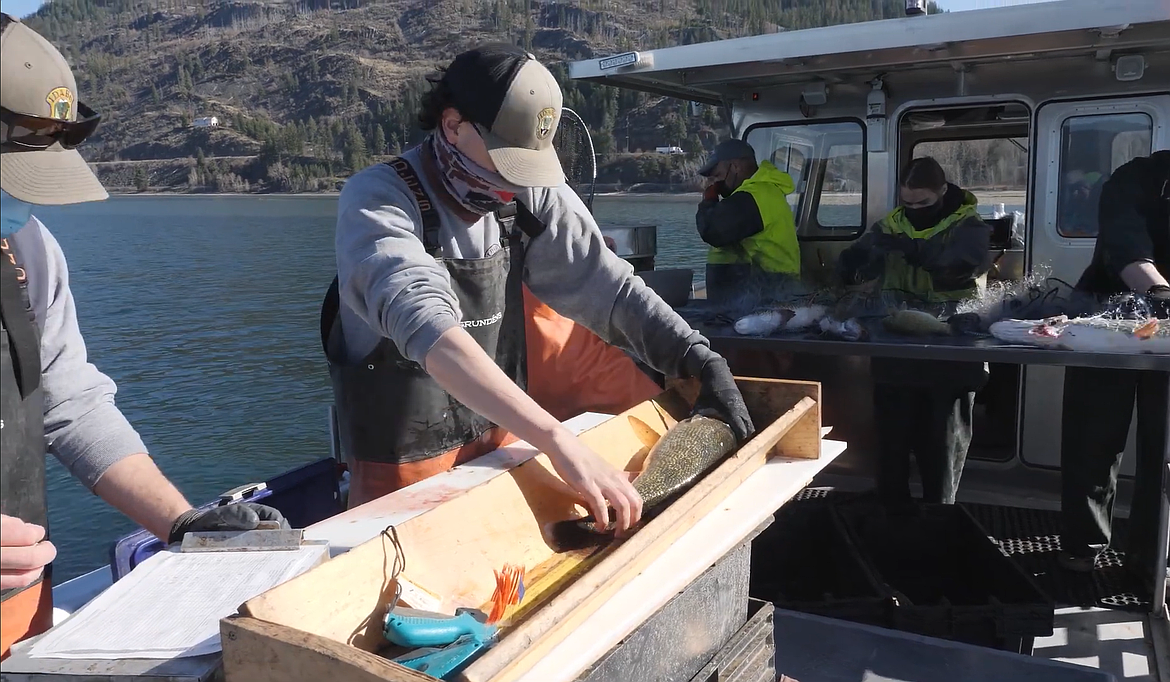
Idaho Department of Fish and Game personnel examine fish during a summer survey. The Lake Pend Oreille fishery is the most intensively managed resident fishery in Idaho and one of the most comprehensively evaluated inland fisheries in the country.
Photo courtesy IDAHO DEPARTMENT OF FISH AND GAME
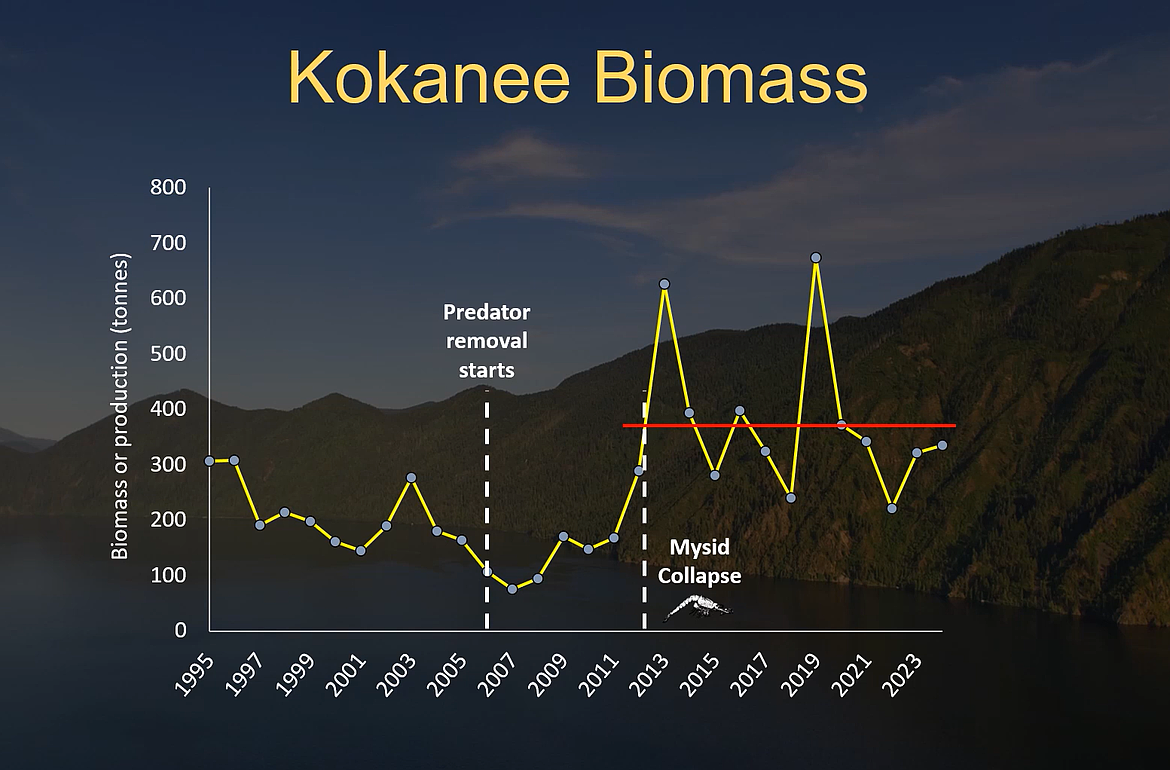
A recent rebound of kokanee salmon — a key food source for many fish in Lake Pend Oreille — has correlated with improved success for anglers targeting rainbow trout and other species.
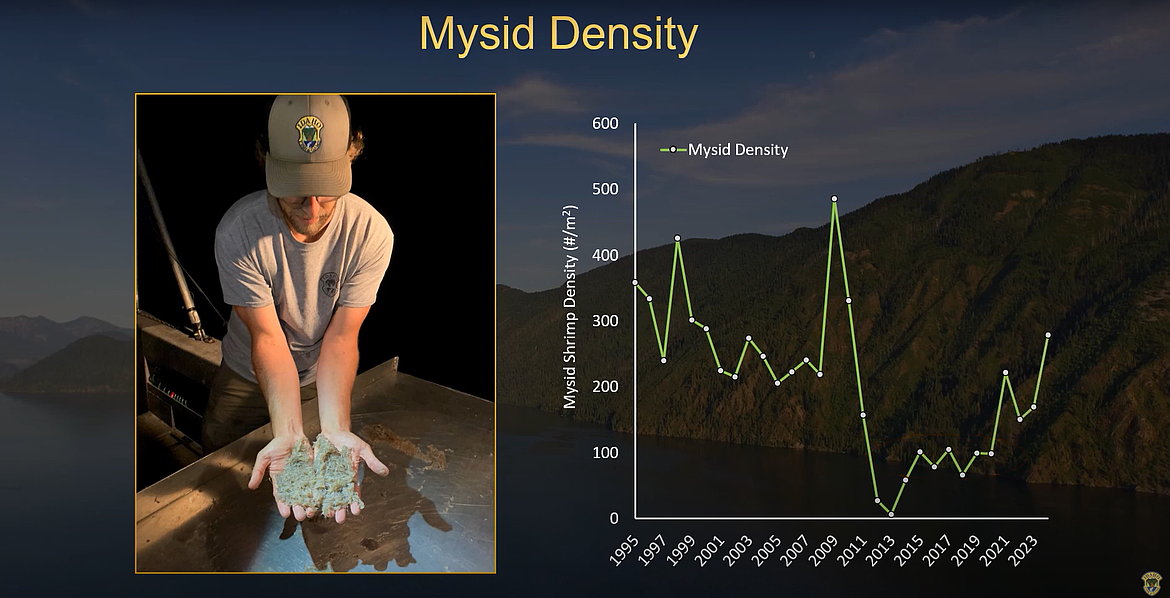
After a significant decline in the 2010s, mysid shrimp abundance in Lake Pend Oreille is rising again — which could correlate with a rise in the population of predatory lake trout.
SANDPOINT — In his annual “State of the Lake” preseason fishery update, Idaho Department of Fish and Game regional fishery manager Andy Dux had good news to share.
“I would argue that fishing on Lake Pend Oreille is about the best it's ever been,” Dux said. “The bar is set pretty high right now, and our main focus is on sustaining the fishery at the current level.”
In a presentation posted to YouTube March 21, Dux cited strong ecological diversity, an abundance of trophy-size specimens and a survey showing high angler satisfaction as evidence of a favorable fishing climate.
The foundation of it all, Dux said, is a recent rebound of kokanee salmon in the lake — a species desired by anglers and a key food source for game fish like rainbow trout and walleye.
“Kokanee are the cornerstone of the Lake Pend Oreille fishery,” said Ryan Hardy, IDFG research biologist. “They really are the number one reason why Pend Oreille is well known for growing such large fish species.”
A long-abundant species, kokanee were knocked down in the 1990s when a surge in Lake Pend Oreille’s mysid shrimp population created an ample food supply for predatory lake trout.
The lake trout boomed; by the end of the century, the species’ population was doubling every 1.5 years. Kokanee counts plummeted, and their scarcity threatened to collapse the seven other fish species that prey on the salmon.
IDFG took action in 2006 by organizing a commercial netting operation to control the lake trout population. That effort, combined with a natural cessation of mysid shrimp abundance, has resulted in a more stable and favorable fishing climate.
“We've moved out of a recovery phase,” Dux said. “It's now performing at an incredible level.”
Today, IDFG is focusing on another pair of non-native predators: walleye and northern pike.
Both species have been shown to prey on kokanee and have become more abundant in Lake Pend Oreille. To control the growth, IDFG initiated a walleye-netting program in 2018 and has begun catching a subset of the population and releasing them with $1,000 reward tags to encourage anglers to target the species.
Additionally, mysid shrimp abundance is rising again; the agency is carefully monitoring how the change will affect lake trout and thus kokanee.
“We expect that a fairly strong kokanee population can be sustained with more mysids present. But this may give us less margin for error,” Hardy said.
Although IDFG is controlling both lake trout and walleye, Dux emphasized that fishing for the species is still viable.
“That's important, because there's a common perception that because we're managing against these species, that fishing for them is poor,” he said.
“In fact, that's not the case — there's very good fishing opportunity being provided by these fish,” Dux added. “That's going to continue in the future, because eliminating their populations just isn't feasible.”
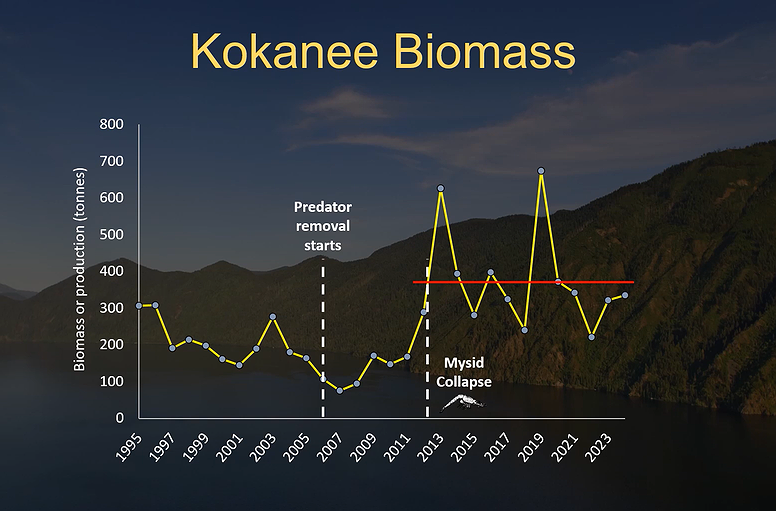 A recent rebound of kokanee salmon — a key food source for many fish in Lake Pend Oreille — has correlated with improved success for anglers targeting rainbow trout and other species.
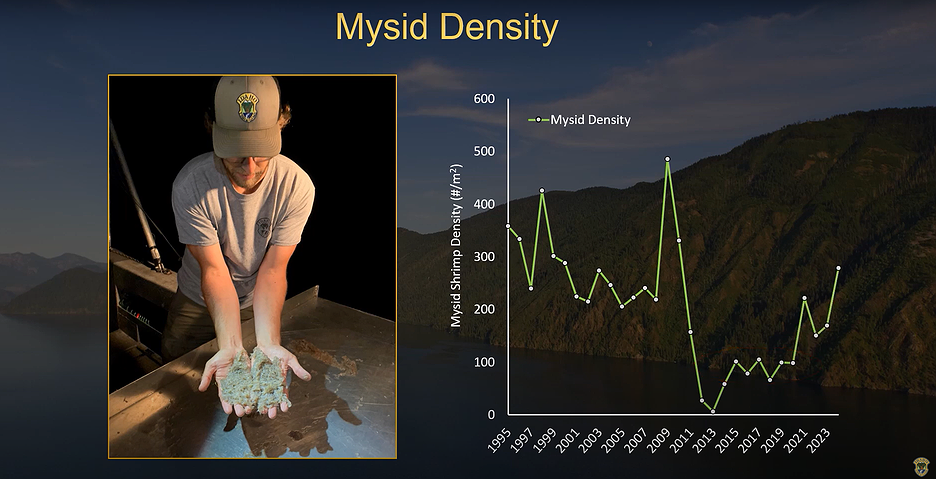 After a significant decline in the 2010s, mysid shrimp abundance in Lake Pend Oreille is rising again — which could correlate with a rise in the population of predatory lake trout.
ARTICLES BY ERIC WELCH

City personnel, community members discuss options as James E. Russell Center costs exceed revenue
Community planning and development director Jason Welker, who oversees Sandpoint’s parks and recreation programs and facilities, suggested that the city could either maintain its current approach at the facility, shrink the center’s operating hours, install new modular playing surfaces for mixed sports use on some of the courts, or recruit a nonprofit organization to operate the facility.

‘Expressions’ courses fill non-school art void
Teens participating in Gentry’s class practiced printmaking, painting and design to create works including a pop art-inspired self-portrait. “My goal when I'm teaching the kids is to just show them lots of different ways that you can make really cool art. It doesn't have to be just traditional,” she said. “The kind of art they do with me, they get to just express themselves, and it doesn't have to be perfection.”

City of Sandpoint sheds light on sewage incident outcome
On the morning of Feb. 24, an electrical control system failure caused pumps to shut off unexpectedly at Sandpoint’s municipal wastewater treatment plant — a city-owned facility that removes contaminants from sewage before discharging it into the Pend Oreille River.