
New legislation updates laws for working minors in WA
NANCE BESTON | Hagadone News Network | UPDATED 1 year, 2 months AGO
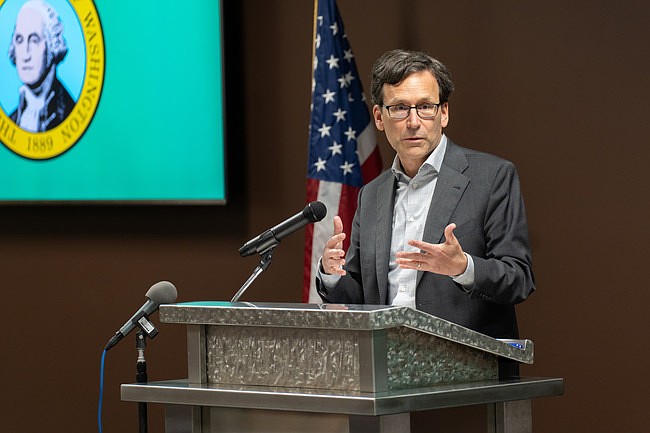
Washington Gov. Bob Ferguson signed Senate Bill 1644 into law on International Workers’ Memorial Day at the Western Washington Sheet Metal Joint Apprenticeship Training Committee’s DuPont campus. The bill will establish enhanced safety and health regulations for minors employed in both agricultural and non-agricultural industries.
COURTESY PHOTO/OFFICE OF THE WASHINGTON GOVERNOR
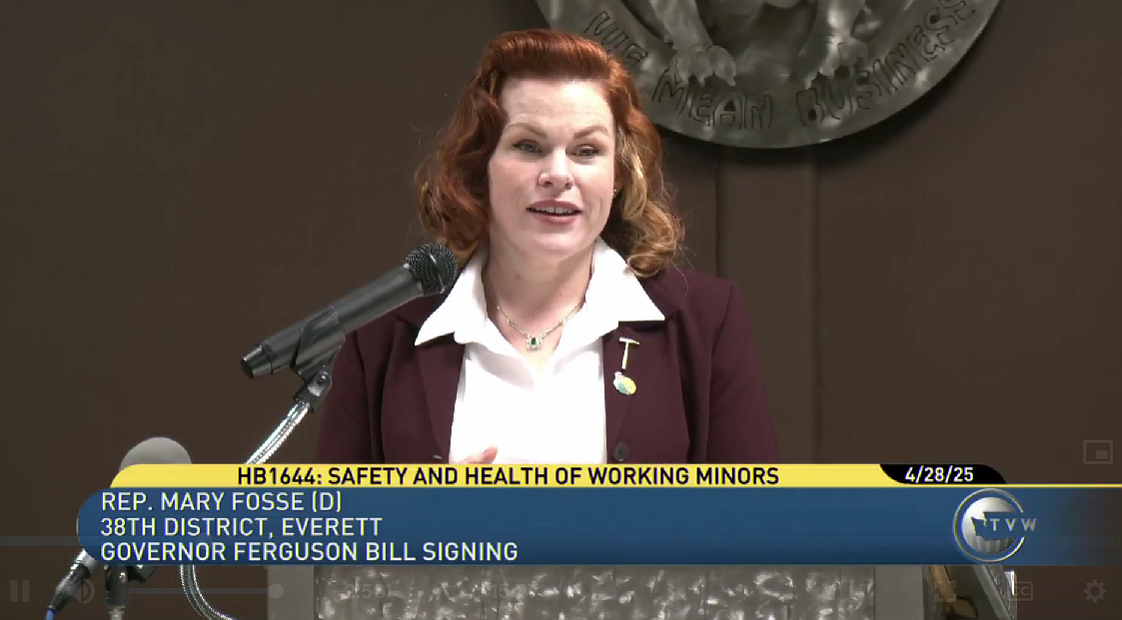
Democratic Rep. Mary Fosse from Everett, House Bill 1644, primary sponsor, spoke during the bill signing at Western Washington Sheet Metal Joint Apprenticeship Training Committee’s DuPont campus. She said this bill is important for the safety of the next generation of workers.
DUPONT— Washington State Governor Bob Ferguson recently signed Senate Bill 1644 into law, establishing enhanced safety and health regulations for minors employed in both agricultural and non-agricultural industries. Ferguson signed the bill on International Workers’ Memorial Day at the Western Washington Sheet Metal Joint Apprenticeship Training Committee’s DuPont campus.
The legislation, which passed the House with a 60-35 vote and the Senate with a 37-12 vote, aims to address increasing incidents of injuries and violations of child labor laws.
Sponsored by Representative Mary Fosse, D-Everett, the bill emerged after the revelation of statistics highlighting a rise in child employment and associated accidents.
According to the Department of Labor & Industries, injury claims by minor workers in Washington rose by 60% between 2009 and 2023. During this time, employment for 16-19-year-olds increased by over 30%, as reported by the Bureau of Labor Statistics. In 2024, around one-third of Washington’s 16-19-year-olds had jobs.
“Our laws haven’t kept pace with the protections minors clearly deserve,” said Fosse during the bill signing. “Outdated laws and a lack of meaningful accountability for violators are putting children at risk of injury and exploitation.”
SB 1644 introduces stricter penalties for employers who violate child labor laws, with fines ranging from $100 to $71,000, depending on the severity of the violation. It also mandates that the L&I revoke an employer’s minor work permit after a serious violation leading to severe injury or death, thereby prohibiting them from hiring minors for a designated period. This revocation, lasting a minimum of 12 months, is intended to deter employers from infringing upon minors’ safety and welfare.
The bill also requires L&I to conduct safety and health consultations at worksites before granting certain variances that would allow minors to perform jobs typically restricted based on age.
With the signing of this bill, Washington joins several other states reevaluating their child labor laws amidst rising concerns about workplace safety.
Supporters of the bill argued that it is a necessary step in modernizing outdated child labor laws.
“This legislation is about ensuring that our children are not subjected to unsafe working conditions,” Fosse said. She expressed gratitude for the collaboration between labor organizations and legislators that made the enactment of the bill possible.
However, some lawmakers raised concerns about the potential consequences of the new regulations. Representative Tom Dent, R-Moses Lake, who opposed the bill, voiced apprehensions that increased restrictions could lead to fewer job opportunities for young people.
“We’re making it harder for our young people to work and learn how to work. If we don’t allow them to gain this experience, they won’t know how to take direction or work under supervision,” Dent said.
Senator Judy Warnick, R-Moses Lake, echoed Dent’s concerns, stating that the stringent requirements might dampen interest in hiring youth, particularly in rural communities reliant on seasonal agricultural labor.
“I grew up on a farm where we hired high school students to help. This legislation makes it more difficult for employers to take on younger workers,” Warnick said. “It will leave many young people without job opportunities just as they’re starting to explore career paths.”
The penalties articulated in SB 1644 have also drawn criticism for being excessively harsh. Warnick pointed out that increased fines might discourage smaller construction and agricultural companies from hiring young workers.
“This creates a chilling effect on hiring youth, particularly in labor-intensive industries,” she said.
Nonetheless, Fosse maintains that the legislation strikes a balance between safeguarding minors and allowing responsible employers to provide job opportunities.
“And it’s not fair to our youth — or to all of the really reputable good businesses in Washington state — that when bad employers repeatedly violate minor worker rights and safety, they are still allowed to employ minors,” the Everett Democrat said.
This new law takes effect July 1, 2026.
 Democratic Rep. Mary Fosse from Everett, House Bill 1644, primary sponsor, spoke during the bill signing at Western Washington Sheet Metal Joint Apprenticeship Training Committee’s DuPont campus. She said this bill is important for the safety of the next generation of workers.
ARTICLES BY NANCE BESTON

Grant County Sheriff candidates discuss transparency, trust
EPHRATA — As Grant County voters prepare to submit their primary ballots, three candidates are vying for the position as Grant County Sheriff including incumbent Joey Kriete and challengers Josh Sainsbury and Darrick Gregg are competing in the upcoming primary election. To help readers compare the candidates' priorities, qualifications and plans for the office, each was asked the same question and given an equal opportunity to respond.

Grant County Commissioner candidates deliberate fiscal responsibility, budgeting
EPHRATA — Four Republicans are seeking election to Grant County Commissioner Position 3 in the upcoming primary: Shannon Durfee, Kelly Raap, Seth Weeks and Janice Flynn. To give voters a clear comparison of the candidates' positions and priorities, each was asked the same set of questions and provided the same deadline to respond. Durfee, Raap and Flynn submitted responses by the deadline; Weeks did not respond.

Sheriff candidates discuss staffing, retention
EPHRATA — As Grant County voters prepare to select their next sheriff, incumbent Joey Kriete and challengers Josh Sainsbury and Darrick Gregg are competing in the upcoming primary election. To help readers compare the candidates' priorities, qualifications and plans for the office, each was asked the same question and given an equal opportunity to respond. This installment focuses on one of the most pressing challenges facing law enforcement agencies: recruiting, retaining and supporting qualified staff within the Grant County Sheriff's Office.