
PUD revamping application fees for industrial users
CHERYL SCHWEIZER | Hagadone News Network | UPDATED 7 months, 1 week AGO
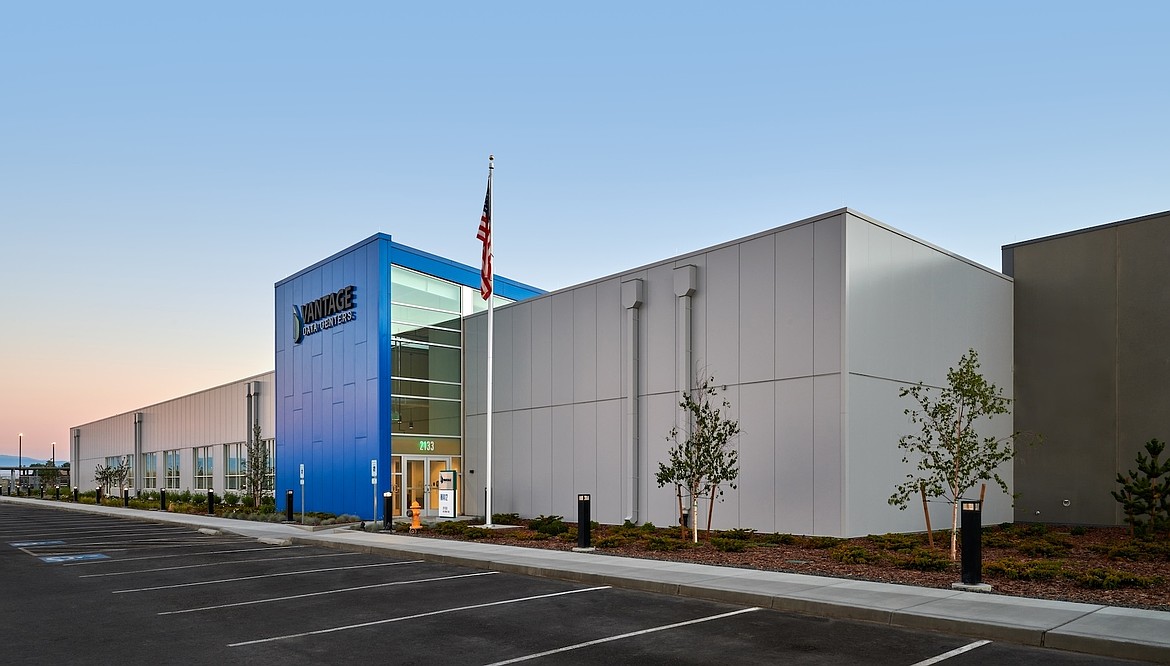
The demand from customers, including data centers, led Grant County PUD officials to revamp the utility’s application for service process, including potentially increasing application fees for industrial customers.
FILE PHOTO
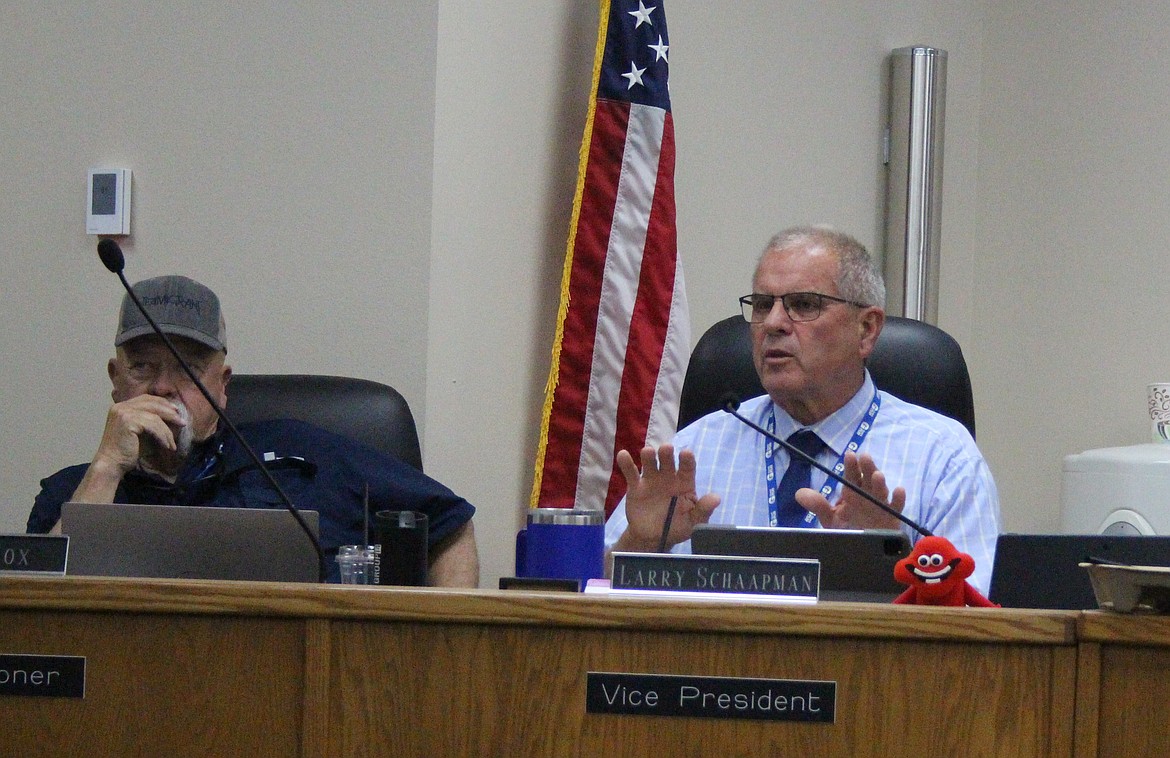
Grant County PUD commissioner Larry Schaapman, right, asked about streamlining the application process for electrical service during Tuesday’s discussion of application fees.
Senior Reporter Cheryl Schweizer is a journalist with more than 30 years of experience serving small communities in the Pacific Northwest. She began her post-high-school education at Treasure Valley Community College and enerned her journalism degree at Oregon State University. After working for multiple publications, she has settled down at the Columbia Basin Herald and has been a staple of the newsroom for more than a decade. Schweizer’s dedication to her communities and profession has earned her the nickname “The Baroness of Bylines.” She covers a variety of beats including health, business and various municipalities. | May 15, 2025 2:20 AM
EPHRATA — Grant County PUD Commissioner Larry Schaapman talked about one of the main questions surrounding the Grant County PUD’s proposal to raise application fees for large industrial customers, while Commissioner Tom Flint detailed one of the reasons for the change. The proposal was presented to commissioners at the commission meeting Tuesday and will be the subject of a further discussion at a workshop May 20.
The proposal would raise application fees and, depending on the size of the request for electricity, could raise them considerably.
“If we’re going to make this demand for these dollars, we better perform to a certain level, because there’s an expectation once that kind of money is (paid),” Schaapman said.
Flint, a longtime commissioner, said raising fees for industrial customers is in part a way to cushion the impact of a substantial change in demand. He cited the case of a customer using a lot of power at the time the PUD was working on a new operating license. Utility district officials contracted with another supplier in anticipation of future needs.
“(The customer) shut down, and we had pre-bought three years of power at three times what the normal cost would be,” Flint said. “We ate $50 million, and it went on everybody’s bill.”
Andy Wendell, senior manager for large power solutions, said the proposed fees would vary by the amount of power requested. The fees wouldn’t change for customers asking for up to five megawatts of power, remaining at $2,500 per megawatt. Wendell said that requests bigger than that require more work, which factors into the fee.
In addition, the PUD is approaching the limits of its share of the electricity generated by Priest Rapids and Wanapum dams. Additional electricity will have to be purchased from outside the region, and PUD commissioners have already said the cost for that extra power will be charged to the customer who requests it.
Requests for five to 10 megawatts will be $20,000 per megawatt, up from $6,500 per megawatt. Customers that want 10 to 40 megawatts will pay $60,000 per megawatt for the application, up from $15,000, and requests for 40 to 80 megawatts will be charged $100,000 per megawatt, up from $52,000. Requests above 80 megawatts are handled through a different process.
Part of the fee will be applied to construction for those customers who end up signing with the PUD, Wendell said. Part of it would be refunded to businesses that decide not to use the PUD’s power.
Customers who have reached the stage of having a “facilities agreement” will not have to pay the new fees. Any applicant who hasn’t reached that stage will have to pay the new fee to keep their place in line. Any application fees already paid would be deducted.
A facilities agreement includes information on the scope of work and a breakdown of PUD expenses.
Wendell said the new fees are also a way to determine if potential customers are serious about their requests, or if they’re filing to reserve power in case they need it. He said one goal of the change is to reduce the number of applications, which should help make what is now a cumbersome process a little easier.
Schaapman asked how long an applicant has to wait before learning when and how the PUD can meet their request.
“There’s a backlog in the queue for getting facilities designed,” Wendell said. “My understanding is (the delay) is around 16 months. We’re trying to improve that, and I think there’s some (progress) in some of our actions that we can narrow that down to where maybe it’s close to a year.”
Schaapman said that needed to be improved, and Wendell said Schaapman was right. But preliminary work, like weeding out speculative customers in the application process, needs to be done first, he said.
The new application process also includes an estimate from industrial customers of their anticipated power needs, Wendell said, along with the stipulation that the PUD may have to place limits on the amount of power used by a customer.
This story has been updated since its original post to reflect that customers requesting between 40 and 80 megawatts currently pay a $52,000 total fee.
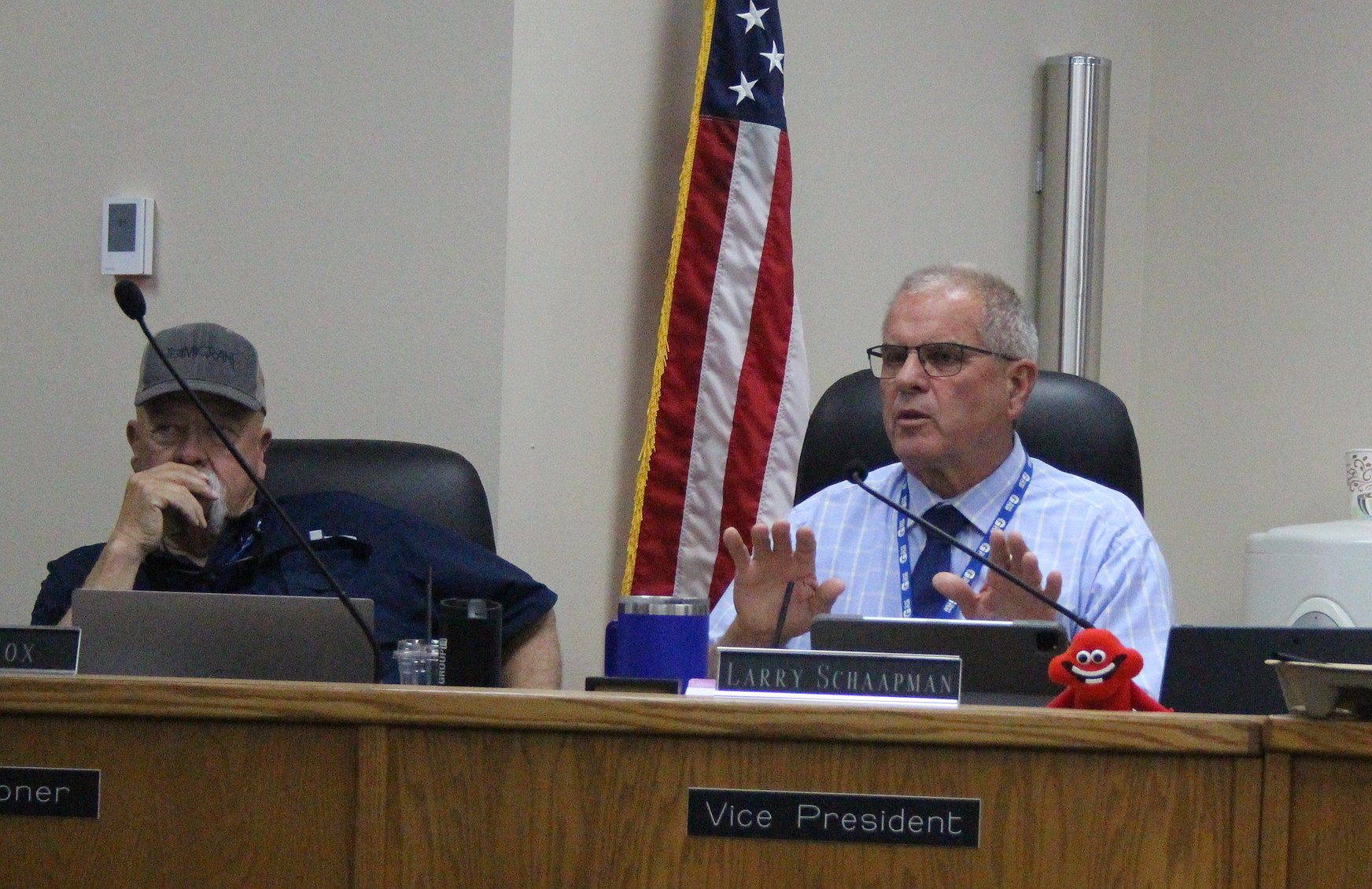 Grant County PUD commissioner Larry Schaapman, right, asked about streamlining the application process for electrical service during Tuesday’s discussion of application fees.
ARTICLES BY CHERYL SCHWEIZER

Othello approves $29M budget for 2026
OTHELLO — The city of Othello is projected to spend about $10.1 million from its general fund in 2026, the biggest part of a $29 million overall budget. Council members approved the 2026 budget earlier this month, and city Finance Director Spencer Williams said budget planning started in late summer.

New Othello mayor, council members sworn into office.
OTHELLO — New Othello Mayor Ken Johnson and two of three new Othello City Council members were sworn in Monday during the last council meeting of 2025. Alma Carmona and Kelli Camp joined Johnson Monday for the swearing-in.

Port of Moses Lake to build electrical generation, transmission lines
MOSES LAKE — The Port of Moses Lake will start construction of electrical transmission lines between port property and Rocky Ford to the north and the port and Connell to the south. Port officials also are working to build electrical generation facilities on port property.