
‘Whiskey Rebel’
JOEL MARTIN | Hagadone News Network | UPDATED 1 year, 5 months AGO
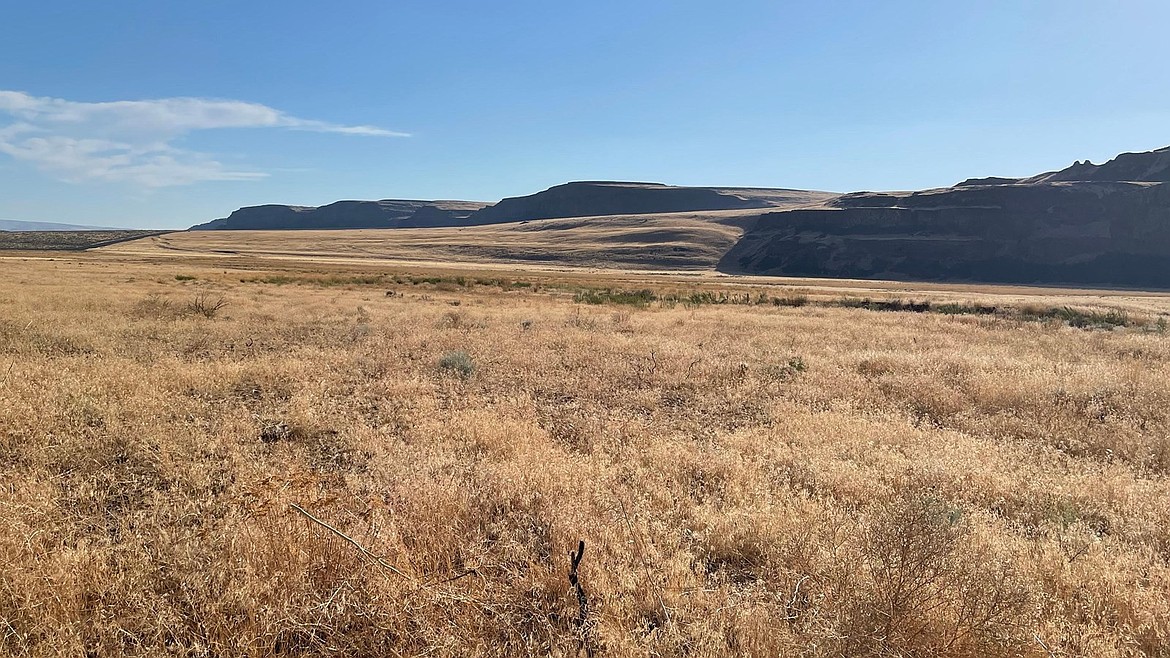
The wide-open, sparsely-populated Moses Coulee northwest of Ephrata is the setting for a new novel, “Whiskey Rebel.”
COURTESY PHOTO/NATIONAL PARKS SERVICE
Joel Martin has been with the Columbia Basin Herald for more than 25 years in a variety of roles and is the most-tenured employee in the building. Martin is a married father of eight and enjoys spending time with his children and his wife, Christina. He is passionate about the paper’s mission of informing the people of the Columbia Basin because he knows it is important to record the history of the communities the publication serves. | May 15, 2025 12:00 AM
MOSES LAKE — Out in the high desert country of Moses Coulee, it’s easy to imagine that strange things are happening just over the next ridge. There’s something peacefully secretive about the area northwest of Ephrata in the southern part of Douglas County, as though time stopped there and nobody was around to notice.
“Every place is fascinating, and there's nothing more fascinating than a place that's that many people seem to fly over or not care about,” said novelist Jeffrey Dunn, whose novel “Whiskey Rebel” is set in Moses Coulee. “Whiskey River” was released May 9 and made its debut at Auntie’s Books in Spokane, Dunn’s adopted hometown.
“Whiskey Rebel” is a buddy story of sorts, Dunn said. It follows Punxie Tawney, a post-traumatic Iraq war veteran, who meets manic drummer Hamilton Chance, whose ambition is to distill tax-free whiskey like his ancestors. The two join forces and set up their moonshining operation in the hills of Moses Coulee, only to be disrupted by a string of strange and mysterious characters.
The landscape plays a more significant role than just backdrop, Dunn said. Chance, the fervent freedom-loving distiller, draws inspiration from a story about Chief Moses.
“He (Chance) goes down to the Columbia River, and he's depressed by the water being all dammed up, but he was once told a story about the way Chief Moses, would always show up late. He had a flare for the dramatic, and he would grab a hold of his horse upstream and they would swim across the river to meet with whatever group of people were supposed to meet there. So he was always last and made a dramatic entrance.”
Dunn grew up in Pittsburgh, but his wife is a Northwester and lived for a time in the Palisades area, he said. That’s how he came to discover Moses Coulee, driving up Palisades Road to see a place she had lived briefly as a teenager.
“We turn and we start driving down the road,” he said. “And the best way I can describe it, (with) the basalt and the cliffs, there's a little strip of land. It's got some farms, some orchards but for the most part, it's a fairly forbidding place … I was just starting on this buddy novel, and I needed a place. I said, ‘If these two morons in this book are going tax free whiskey, where could you go and no one would know you were there?’ And bingo.”
Dunn and his wife raised their family in Spokane, he said, but the Moses Lake area was their favorite place to go for vacations, staying in town or at MarDon Resort and fishing the lakes in the area.
“There's a vibrancy in Moses Lake,” he said. “The traffic is always rolling; whether it's agricultural trucks or whatever it is, there's a lot of movement and people action. You can just feel it.”
Dunn has two other novels under his belt already, according to his website. “Radio Free Olympia” deals with a pirate radio operator in the rain forests of the Olympic Peninsula, and “Wildcat” is a romance set in the Rust Belt of Appalachia, where Dunn was born. He also published a collection of short stories and a book of poetry, both of which focus on the Inland Northwest.
“Except for one book, they're all Washington state books,” he said. “I didn't grow up here, but this is where I wish I would have been born.”
ARTICLES BY JOEL MARTIN

Endless battle
Noxious Weed Control Board works to keep invasive plants under control
MOSES LAKE — Some of the nastiest plants in Grant County were the topic of a class led by Jay Johnson, a consultant with the Grant County Noxious Weed Control Board, Tuesday. The Noxious Weed Control Board, as its name would suggest, is tasked with keeping weeds under control in Grant County. That’s not a small job; the board’s website lists 129 species of noxious weeds that are found around Grant County. A noxious weed is defined as an invasive, non-native plant that threatens agricultural crops, local ecosystems or fish and wildlife habitat, according to the Noxious Weed Control Board. Washington state law requires that these weeds be identified and their spread kept to a minimum, if not completely eradicated. “We’re one of those agencies a lot of people don’t really understand,” Johnson said. “We’re a county office and … our funding is tax-based assessment. When you get your tax bill and you look down at all the expenses that you pay for, there we are.”

BASIN EVENTS: Oct. 16-24
COLUMBIA BASIN — Whether you feel like shopping, crafting, learning or seeing a show, there’s something happening for you this week in the Basin. Oct. 16 ‘My Family (Mi Familia)’ screening Spanning three generations, “My Family (Mi Familia)” is a heartfelt drama that follows the Sánchez family as they build their lives in East Los Angeles. Through love, hardship, triumph, and sacrifice, the film explores the immigrant experience, the strength of family bonds, and the traditions that connect one generation to the next. Lowrider show and taco truck before the screening. Sponsored by Columbia Basin Allied Arts, EDUBS C/S and the Moses Lake Creative District. $12 per person. Doors open at 6 p.m., film begins at 7 p.m. at the Moses Lake Civic Center Auditorium, 401 S. Balsam St. Tickets and info: www.cba-arts.org.

Moses Lake author encourages women to look beyond church culture norms
MOSES LAKE — A Moses Lake author’s book, “A Christian Woman Striving to Live Her Faith in a Man-Controlled World,” takes aim at the role to which many churches relegate the female half of their congregations. “It’s to encourage women in the faith,” Linda Curran said. “A lot of churches say, ‘Teach Sunday school, do this, do that, but don’t (evangelize.)’" In her book, Curran recounts a time when she moved to a new community and joined a church there. She was surprised to learn that, as a new female member, she had been automatically assigned church cleaning duties. When she questioned it, she wrote, she was met with condescension and her objections were brushed aside. In other churches, she said, women who were capable of teaching were relegated to “women’s ministry.”