
Carp Classic defies weather to improve lake
JOEL MARTIN | Hagadone News Network | UPDATED 1 year, 4 months AGO
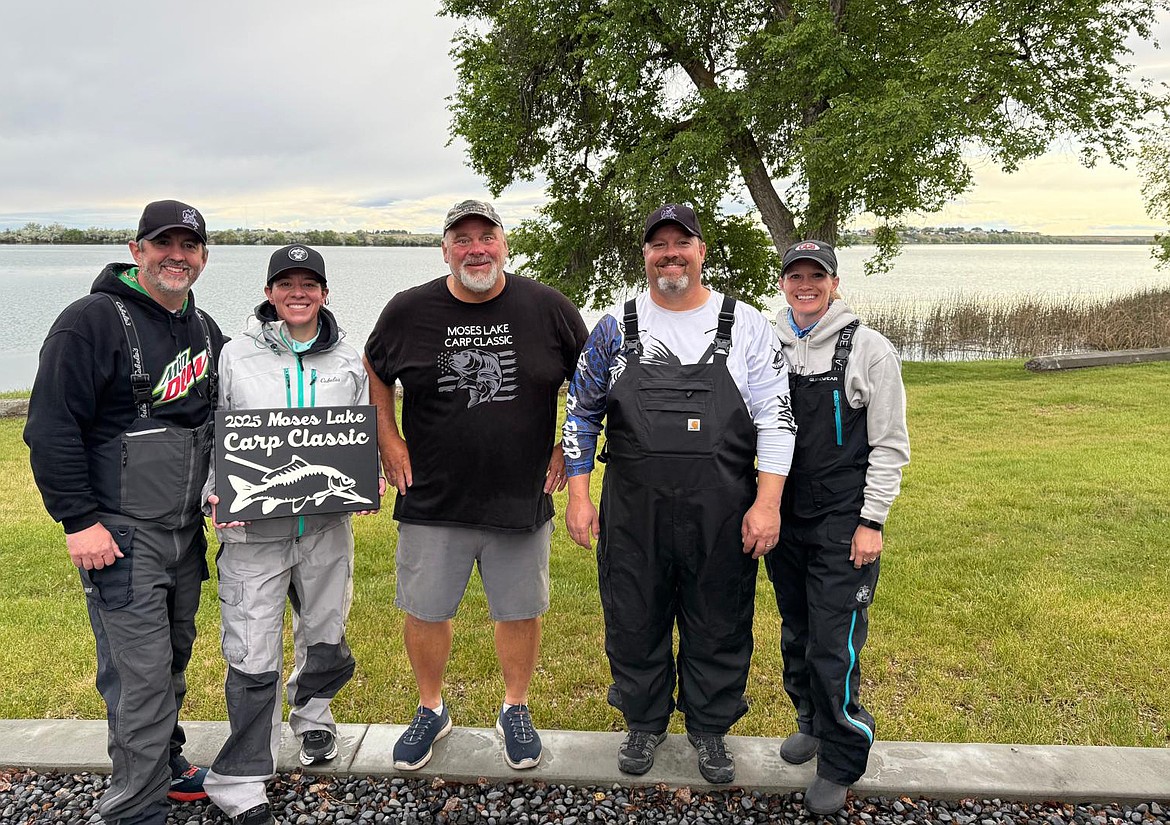
The winning team of carp hunters receives a plaque from Carp Classic organizer Ty Swartout Saturday. From left: Clint Novak, Jennifer Novak, Swartout, Chris Church and Holly Church.
COURTESY PHOTO/SANDIE SWARTOUT
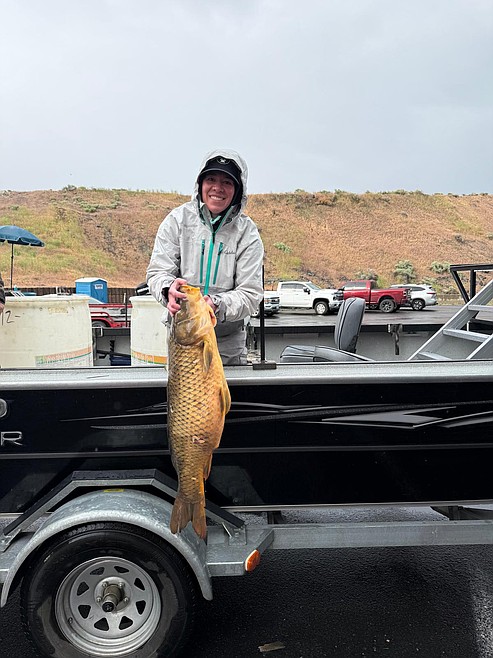
Jennifer Novak shows her prize-winning carp weighing almost 26 pounds at the Carp Classic Saturday.
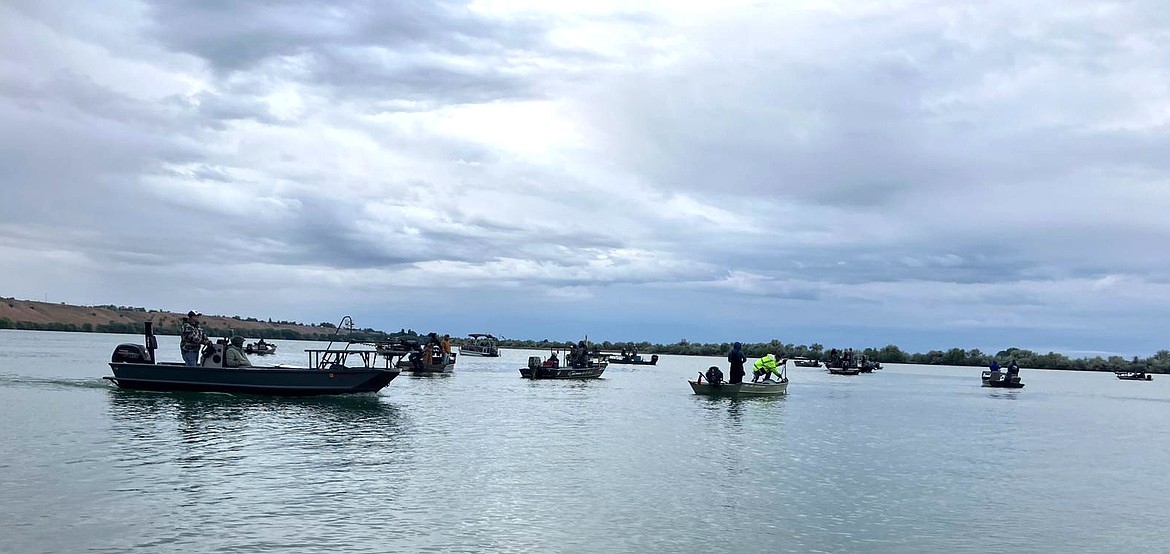
The unpredictable weather didn’t deter 27 boats of bowfishers from setting out from Connelly Park Saturday morning for the Carp Classic.
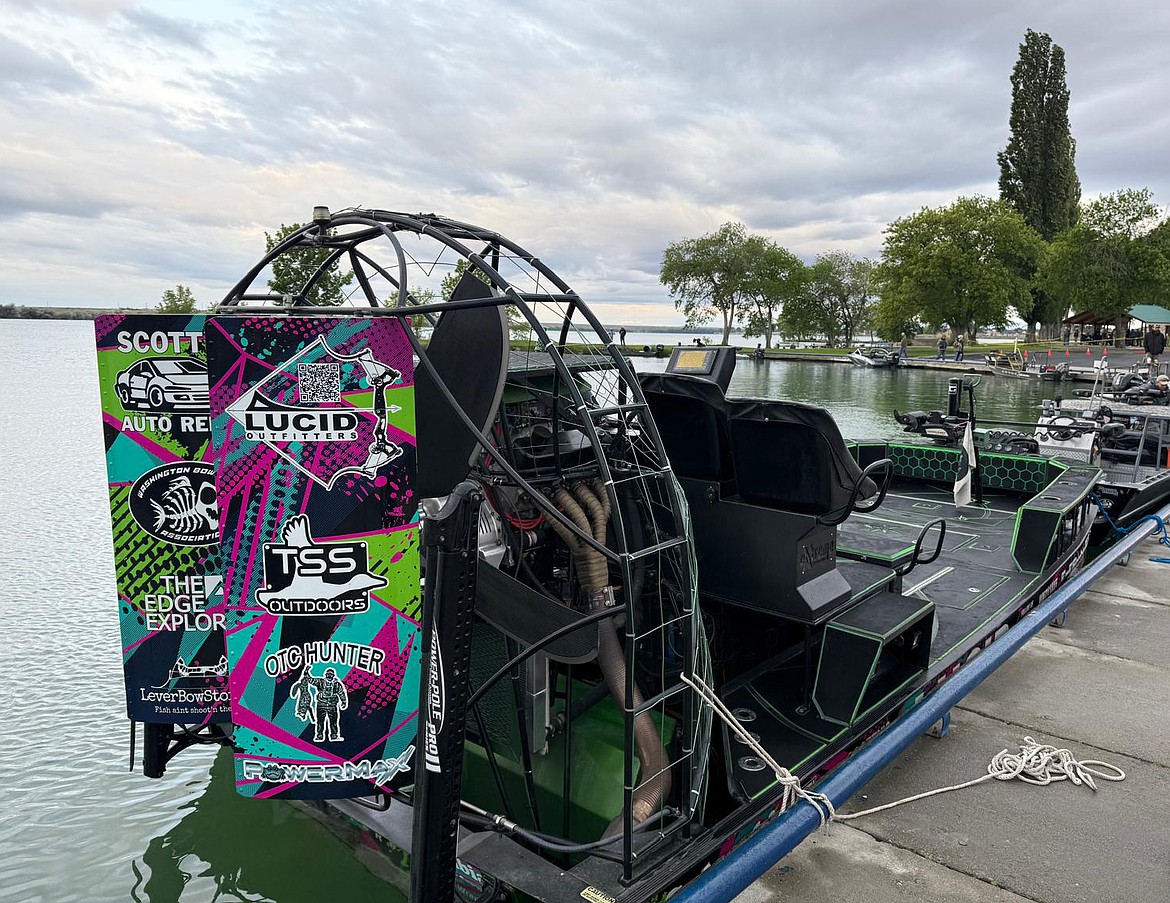
A boat waits to go out on Moses Lake Saturday morning for the Carp Classic.
Joel Martin has been with the Columbia Basin Herald for more than 25 years in a variety of roles and is the most-tenured employee in the building. Martin is a married father of eight and enjoys spending time with his children and his wife, Christina. He is passionate about the paper’s mission of informing the people of the Columbia Basin because he knows it is important to record the history of the communities the publication serves. | May 20, 2025 2:31 PM
MOSES LAKE — The Carp Classic wasn’t as big as it could have been, but it went well, all things considered. Twenty-seven boats filled with bow hunters set out from Connelly Park Saturday. That’s eight more boats than last year, said organizer Ty Swartout.
“The biggest year we ever had was 39, but this was good,” Swartout said, “I was excited to see 27 boats. The weather wasn’t that great, so I didn’t know what to expect, but all in all we ended up having a decent tournament.”
Bow fishers brought in 351 carp, a total of 3,400 pounds, organizer Sandie Swartout wrote in an email to the Columbia Basin Herald.
The cloudy weather and chilly temperatures impeded the hunt in several ways, Ty Swartout explained. The lack of sunshine made it hard to see fish in the already none-too-clear waters of Moses Lake.
“And then the cooler the temperature, the less the carp are up shallow where (hunters) will be able to see them,” he said. “The best-case scenario, it would be a really warm week before and the fish would be moving up in the shallows to spawn, and if we had good, clean water with a nice, sunny, windless day, it would be amazing. (It was like that) three years ago, we shot 1,000 fish.”
The Carp Classic originated in 2019, both as a sporting event and as a way to bring attention to the water quality in Moses Lake. Carp stirs up phosphorus from the bottom of the lake, which feeds the blue-green algae that can make the water toxic. In addition, carp are invasive and push out fish people want to catch. Taking 351 or even 1,000 carp out of the lake won’t make a huge dent in the 400,000 or so that are believed to be in the lake, Swartout said, but it makes at least some difference, and it gives the Moses Lake Watershed Council some leverage to convince the state to allow net removal or trapping to take out more.
“A lake can only handle so many pounds of fish, whatever that biomass is,” Ty Swartout said. “So, the way I look at it is, if we get 3,400 pounds out of the lake, there's a possibility of 3,400 pounds of bass, trout, walleye, perch, crappie, bluegill. I do believe the fishery’s already being helped by all the projects we’re doing.”
Jennifer Novak shot the biggest carp of the day, Sandie Swartout wrote, at 25.8 pounds. Novak’s team, which consisted of her, Clint Novak, Chris Church and Holly Church, also shot the ten largest fish, totaling 178.4 pounds of carp.
The team of Alex Mendoza and Victor Mendoza shot the largest number of carp, at 38.
Some of the prize money came from a donation by Moore Brewing Co. of Moses Lake, which kicked in $1.25 for each pint sold of its specially brewed beer, Carp Classic Ale. Another $2,800 came from other community sponsors, and local organizations and volunteers helped make the event possible, Ty Swartout said.
“The MLIRD allows us to use the park for free, and they provide a dumpster,” he said. “The Columbia Basin Conservation District provided support, along with the volunteers and the sponsors, and the shooters, of course. We (all) want to do something to make this lake healthier, so that we can use it all year round, and it doesn't impact our tourism or our economics.”
 Jennifer Novak shows her prize-winning carp weighing almost 26 pounds at the Carp Classic Saturday.
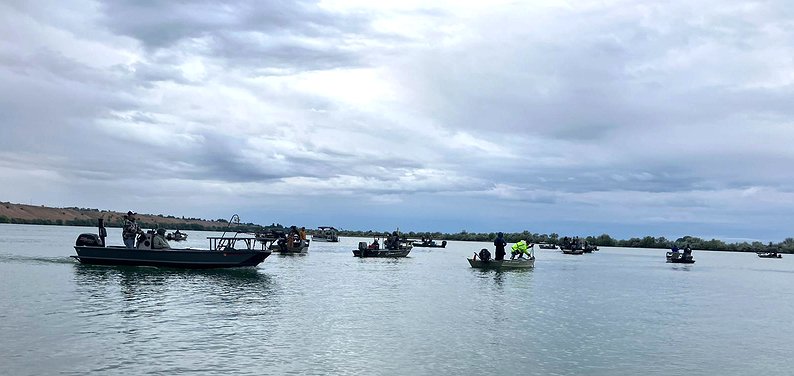 The unpredictable weather didn’t deter 27 boats of bowfishers from setting out from Connelly Park Saturday morning for the Carp Classic.
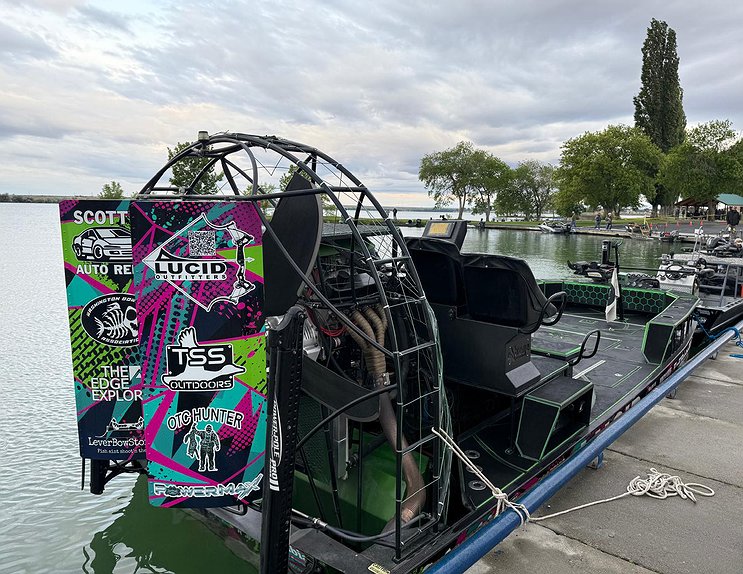 A boat waits to go out on Moses Lake Saturday morning for the Carp Classic.
ARTICLES BY JOEL MARTIN

Endless battle
Noxious Weed Control Board works to keep invasive plants under control
MOSES LAKE — Some of the nastiest plants in Grant County were the topic of a class led by Jay Johnson, a consultant with the Grant County Noxious Weed Control Board, Tuesday. The Noxious Weed Control Board, as its name would suggest, is tasked with keeping weeds under control in Grant County. That’s not a small job; the board’s website lists 129 species of noxious weeds that are found around Grant County. A noxious weed is defined as an invasive, non-native plant that threatens agricultural crops, local ecosystems or fish and wildlife habitat, according to the Noxious Weed Control Board. Washington state law requires that these weeds be identified and their spread kept to a minimum, if not completely eradicated. “We’re one of those agencies a lot of people don’t really understand,” Johnson said. “We’re a county office and … our funding is tax-based assessment. When you get your tax bill and you look down at all the expenses that you pay for, there we are.”

BASIN EVENTS: Oct. 16-24
COLUMBIA BASIN — Whether you feel like shopping, crafting, learning or seeing a show, there’s something happening for you this week in the Basin. Oct. 16 ‘My Family (Mi Familia)’ screening Spanning three generations, “My Family (Mi Familia)” is a heartfelt drama that follows the Sánchez family as they build their lives in East Los Angeles. Through love, hardship, triumph, and sacrifice, the film explores the immigrant experience, the strength of family bonds, and the traditions that connect one generation to the next. Lowrider show and taco truck before the screening. Sponsored by Columbia Basin Allied Arts, EDUBS C/S and the Moses Lake Creative District. $12 per person. Doors open at 6 p.m., film begins at 7 p.m. at the Moses Lake Civic Center Auditorium, 401 S. Balsam St. Tickets and info: www.cba-arts.org.

Moses Lake author encourages women to look beyond church culture norms
MOSES LAKE — A Moses Lake author’s book, “A Christian Woman Striving to Live Her Faith in a Man-Controlled World,” takes aim at the role to which many churches relegate the female half of their congregations. “It’s to encourage women in the faith,” Linda Curran said. “A lot of churches say, ‘Teach Sunday school, do this, do that, but don’t (evangelize.)’" In her book, Curran recounts a time when she moved to a new community and joined a church there. She was surprised to learn that, as a new female member, she had been automatically assigned church cleaning duties. When she questioned it, she wrote, she was met with condescension and her objections were brushed aside. In other churches, she said, women who were capable of teaching were relegated to “women’s ministry.”