
City of Sandpoint sheds light on sewage incident outcome
ERIC WELCH | Hagadone News Network | UPDATED 9 months, 3 weeks AGO
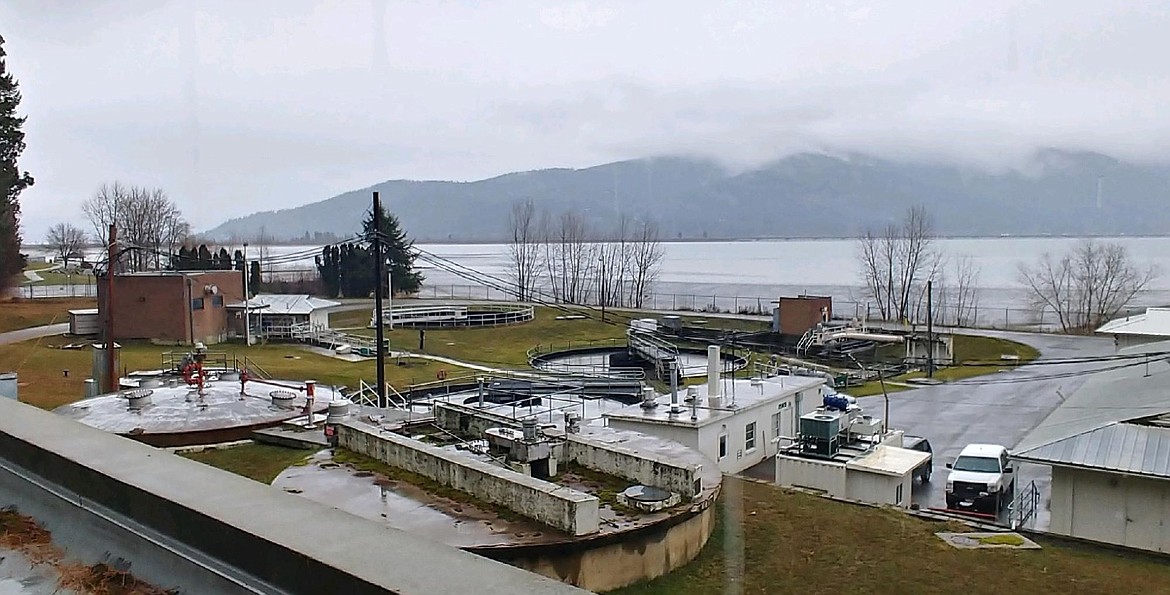
Sandpoint's wastewater treatment plant.
(Courtesy photo city website)
SANDPOINT — In a May 21 meeting, Sandpoint personnel described the outcome of a February wastewater discharge violation and the steps the city is taking to fortify its sewage treatment infrastructure.
Staff reported that after a March audit by the Idaho Department of Environmental Quality, Sandpoint is back in compliance with its discharge permit. They added that the city is investing in equipment to prevent future violations, but that a near-total replacement of the aging plant will be necessary to ensure long-term compliance.
On the morning of Feb. 24, an electrical control system failure caused pumps to shut off unexpectedly at Sandpoint’s municipal wastewater treatment plant — a city-owned facility that removes contaminants from sewage before discharging it into the Pend Oreille River.
While operators worked to restore function, an estimated 300-500 gallons of partially treated sewage flowed into the facility's parking lot and ultimately entered the river.
According to public works director Holly Ellis, the city has since worked with contractors to investigate the plant’s electrical systems and to soon install a ventilation system that will prevent mold in the facility going forward.
Ellis also noted that Sandpoint hosted Idaho Department of Environmental Quality personnel for an audit after the event. While they identified five violations and six areas of concern at the facility, Ellis noted during the May 21 meeting that the agents were sympathetic to the challenges operators face and described the visit as an opportunity to ensure the state is aware of the plant’s age and deficiencies.
“Many other wastewater districts would not welcome an audit, or they would try to keep regulators away,” Ellis said. “We are very much open to it because we know our plant is old and we know it needs to be fixed.”
While Sandpoint’s wastewater treatment plant dates back to the 1950s, according to Ellis, the facility still uses some 1940s components today.
Ellis told city councilors that the plant’s chlorine basin needs to be cleaned and that its skimming tank needs new concrete. The facility’s belt presses “urgently need to be replaced” with modern screw presses in a $2 million project that will likely come before the council for approval this summer.
The most difficult problem to address, however, is the infiltration of groundwater into sewage pipes that occurs when the area experiences heavy precipitation. By entering pipes at cracks and joints, Ellis reported that stormwater can raise the total volume of sewage arriving at the plant by a factor of seven, forcing operators to treat an artificially high amount of wastewater.
Despite efforts to replace and repair pipes, the infiltration problem has persisted; as Sandpoint’s population grows in the future, the city will need to have the necessary capacity to treat the rising volume of sewage.
In preparation for a new plant, the city contracted with engineering firm Keller Associates in August 2024 to create a preliminary engineering report, the step leading up to the design phase, for a new facility. Ellis told attendees Wednesday that the report is now complete and is undergoing review before it appears before city councilors and eventually state agents.
City staff and officials have said they intend to bring a bond measure to the November 2025 election to fund the project, which will likely be one of the most expensive city initiatives in decades. In January, a representative of Keller Associates estimated a new plant will cost $129,433,000.
Sandpoint Mayor Jeremy Grimm said during the meeting that he has asked U.S. congressmen Russ Fulcher and Mike Simpson, who represent Idaho in Washington, D.C., to consider supporting efforts to soften federal regulations by allowing wastewater plants to exceed contaminant limits during high-flow periods.
The suggested revisions, he said, would allow Sandpoint and other cities that suffer infiltration to build smaller and thus less expensive treatment plants.
“They seemed favorable to those potential changes,” Grimm said.
“It's truly an act of Congress,” he added. “So, fingers crossed on that one.”
ARTICLES BY ERIC WELCH

City personnel, community members discuss options as James E. Russell Center costs exceed revenue
Community planning and development director Jason Welker, who oversees Sandpoint’s parks and recreation programs and facilities, suggested that the city could either maintain its current approach at the facility, shrink the center’s operating hours, install new modular playing surfaces for mixed sports use on some of the courts, or recruit a nonprofit organization to operate the facility.

‘Expressions’ courses fill non-school art void
Teens participating in Gentry’s class practiced printmaking, painting and design to create works including a pop art-inspired self-portrait. “My goal when I'm teaching the kids is to just show them lots of different ways that you can make really cool art. It doesn't have to be just traditional,” she said. “The kind of art they do with me, they get to just express themselves, and it doesn't have to be perfection.”

City of Sandpoint sheds light on sewage incident outcome
On the morning of Feb. 24, an electrical control system failure caused pumps to shut off unexpectedly at Sandpoint’s municipal wastewater treatment plant — a city-owned facility that removes contaminants from sewage before discharging it into the Pend Oreille River.