
Loans, grants help a new generation of farmers take the field
JOEL MARTIN | Hagadone News Network | UPDATED 10 months, 2 weeks AGO
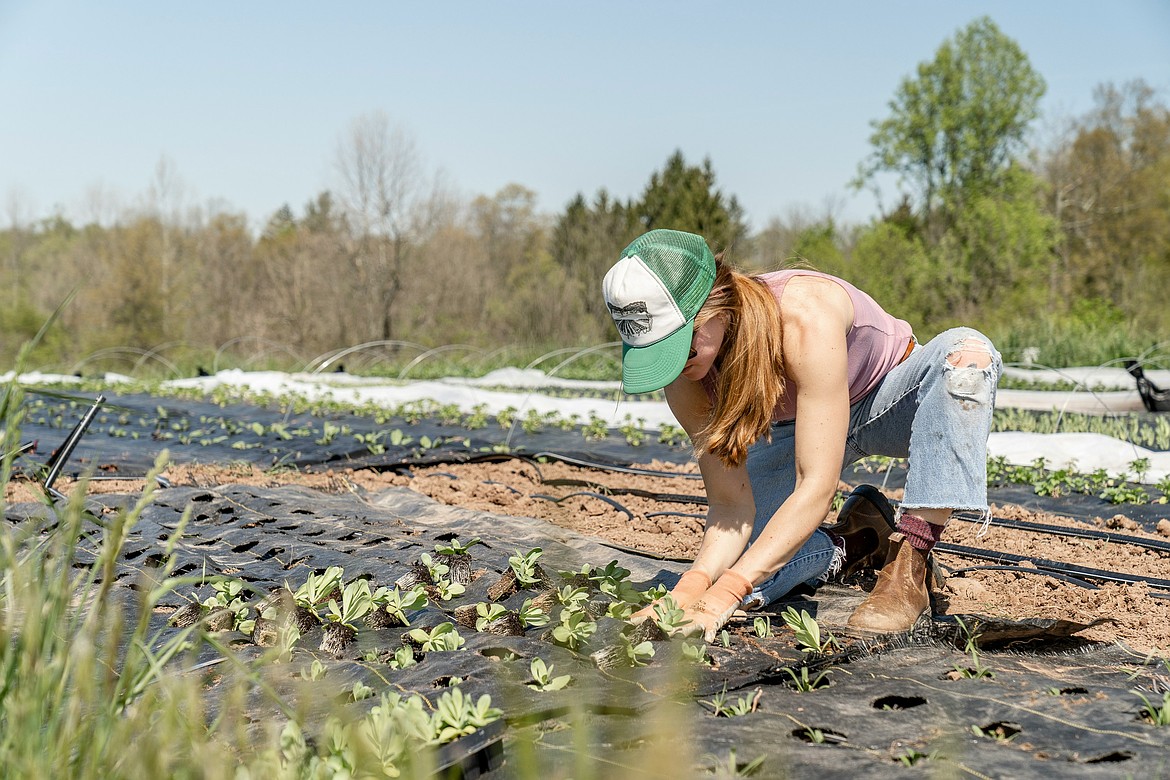
The U.S. Department of Agriculture has money available to help a new generation of farmers continue America’s agricultural tradition.
COURTESY PHOTO/ZOE RICHARDSON/UNSPLASh
Joel Martin has been with the Columbia Basin Herald for more than 25 years in a variety of roles and is the most-tenured employee in the building. Martin is a married father of eight and enjoys spending time with his children and his wife, Christina. He is passionate about the paper’s mission of informing the people of the Columbia Basin because he knows it is important to record the history of the communities the publication serves. | May 29, 2025 3:53 PM
SPOKANE VALLEY — As many as a third of farmers in the United States are over the age of 65, according to a study by the University of Minnesota’s Center for Farm Financial Management. Many of these have family members to pass their farms on to, but in order for American agriculture to continue, a new generation of farmers is needed.
The U.S. Department of Agriculture has assistance available for beginning farmers or those who are returning to the field after an absence, according to an announcement from the USDA. The USDA’s Farm Service Agency offers farm ownership and farm operating loans to farmers and ranchers who have trouble obtaining commercial credit from a bank, according to the announcement.
“Farming and ranching is a capital-intensive business and FSA is committed to helping producers start and maintain their agricultural operations,” Geremy Nelson, FSA Acting State Executive Director in Washington, wrote in the announcement. “FSA loans are designed to make sure that everyone has access to credit. Last year, FSA in Washington obligated $32.9 million in loans to beginning farmers and ranchers.”
Those loans come in two forms: ownership loans and operating loans. Ownership loans may be used to buy or enlarge a farm, build or improve buildings, improve soil and water conservation and pay closing costs. Operating loans may go to purchase livestock, poultry, farm equipment, fertilizer, and other material; for family living expenses; refinancing debts; paying hired farm laborers; installing or improving water systems for home, livestock or irrigation use; and other similar improvements.
The loans also come through two methods. Direct loans come straight from the USDA and can be for as much as $600,000 for an ownership loan or $400,000 for an operating loan, according to data from the USDA. Guaranteed loans are made through a participating private lender and max out at $2,251,000 for either ownership or operations.
To qualify as a beginning farmer, an individual must have operated a farm for less than 10 years and must not own a farm greater than 30% of the average farm size in the county. The applicant must participate substantially in the operation, according to the announcement. If the applicant is an entity, all members must meet these requirements as well as being related by blood or marriage. At least one member of the entity must have three years or more experience in the business operations of a farm.
The FSA also has a special program to assist with down payments in purchasing a farm, according to a fact sheet from the USDA. This program can also be used by retiuring farmers to transfer their land to the next generation. The borrower must be able to come with a down payment of at least 5% of the purchase price and the rest can be obtained from a private commercial lender and guaranteed by the FSA.
In addition to the loans, the USDA’s Beginning Farmer and Rancher Development Program offers grants for education, training and mentoring for beginning farmers and ranchers, according to the CFFM.
The BFRDP is administered through the National Institute of Food and Agriculture and can fund services relating to:
• Basic livestock, forest management, and crop farming practices.
• Innovative farm, ranch, and private, nonindustrial forest land transfer and succession strategies.
• Entrepreneurship and business training.
• Technical assistance to help beginning farmers or ranchers acquire land from retiring farmers and ranchers.
• Financial and risk management training, including the acquisition and management of agricultural credit.
• Natural resource management and planning.
• Diversification and marketing strategies.
• Agricultural rehabilitation and vocational training for veteran farmers and ranchers.
• Farm safety and awareness.
• Food safety and recordkeeping
“For over a decade, this highly successful initiative has provided competitively awarded grants to community organizations, state extension services, academic institutions, and producer groups to support and train new farmers and ranchers across the country,” the NIFA wrote on its website.
More information is available from the Farm Service Administration at bit.ly/FSAbeginningloans, the Center for Farm Financial Management at www.farmanswers.org,and the National Institute for Food and Agriculture at bit.ly/BFRDP.
ARTICLES BY JOEL MARTIN

Grand tour
‘Around the World in 80 Days’ takes audience on a global adventure
SOAP LAKE — There’s adventure, comedy and mystery in the Masquers Theater’s production of “Around the World in 80 Days,” opening Friday. “You have elephants, you have typhoons, you have a (scene in India) where they’re being chased by people who are shooting at them,” said director Cynthia Beyer. “A lot of action.” “Around the World in 80 Days” has 32 characters and was originally written for a cast of six people, Beyer said. That was a little bit much for the Masquers to take on, she said. “One actor was supposed to do 15 parts, another was supposed to do 12,” she said. “And I’m like, yeah, we’re not professionals here. We’re community theater.”
A sea of color
Palmer’s Adventure Farm debuts Tulip Fest
MOSES LAKE — Palmer’s Adventure Farm has begun its first annual Inland Northwest Tulip Fest.
Active listings up, sales steady in Washington statewide
MOSES LAKE — More homes were on the market in March 2026 than a year earlier, but sales are about the same, according to data from the Northwest Multiple Listing Service, which tracks real estate trends in 27 of Washington’s 39 counties.