
Loans, grants help a new generation of farmers take the field
JOEL MARTIN | Hagadone News Network | UPDATED 1 year, 4 months AGO
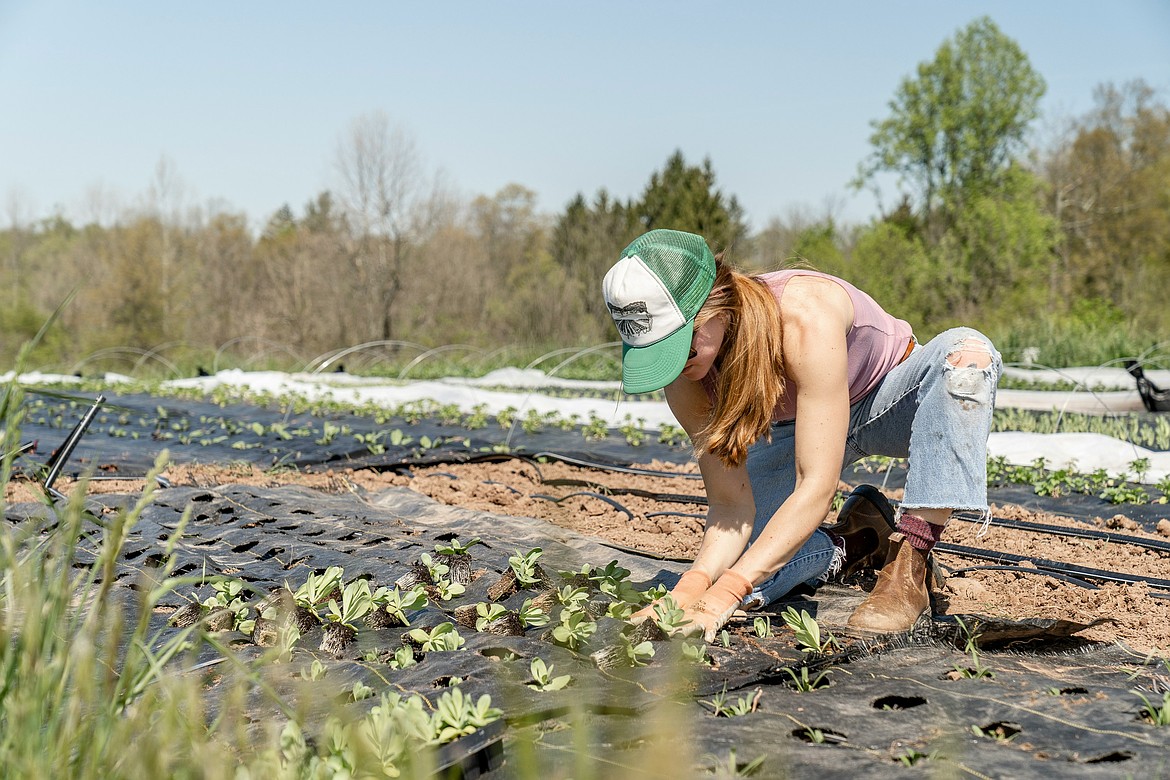
The U.S. Department of Agriculture has money available to help a new generation of farmers continue America’s agricultural tradition.
COURTESY PHOTO/ZOE RICHARDSON/UNSPLASh
Joel Martin has been with the Columbia Basin Herald for more than 25 years in a variety of roles and is the most-tenured employee in the building. Martin is a married father of eight and enjoys spending time with his children and his wife, Christina. He is passionate about the paper’s mission of informing the people of the Columbia Basin because he knows it is important to record the history of the communities the publication serves. | May 29, 2025 3:53 PM
SPOKANE VALLEY — As many as a third of farmers in the United States are over the age of 65, according to a study by the University of Minnesota’s Center for Farm Financial Management. Many of these have family members to pass their farms on to, but in order for American agriculture to continue, a new generation of farmers is needed.
The U.S. Department of Agriculture has assistance available for beginning farmers or those who are returning to the field after an absence, according to an announcement from the USDA. The USDA’s Farm Service Agency offers farm ownership and farm operating loans to farmers and ranchers who have trouble obtaining commercial credit from a bank, according to the announcement.
“Farming and ranching is a capital-intensive business and FSA is committed to helping producers start and maintain their agricultural operations,” Geremy Nelson, FSA Acting State Executive Director in Washington, wrote in the announcement. “FSA loans are designed to make sure that everyone has access to credit. Last year, FSA in Washington obligated $32.9 million in loans to beginning farmers and ranchers.”
Those loans come in two forms: ownership loans and operating loans. Ownership loans may be used to buy or enlarge a farm, build or improve buildings, improve soil and water conservation and pay closing costs. Operating loans may go to purchase livestock, poultry, farm equipment, fertilizer, and other material; for family living expenses; refinancing debts; paying hired farm laborers; installing or improving water systems for home, livestock or irrigation use; and other similar improvements.
The loans also come through two methods. Direct loans come straight from the USDA and can be for as much as $600,000 for an ownership loan or $400,000 for an operating loan, according to data from the USDA. Guaranteed loans are made through a participating private lender and max out at $2,251,000 for either ownership or operations.
To qualify as a beginning farmer, an individual must have operated a farm for less than 10 years and must not own a farm greater than 30% of the average farm size in the county. The applicant must participate substantially in the operation, according to the announcement. If the applicant is an entity, all members must meet these requirements as well as being related by blood or marriage. At least one member of the entity must have three years or more experience in the business operations of a farm.
The FSA also has a special program to assist with down payments in purchasing a farm, according to a fact sheet from the USDA. This program can also be used by retiuring farmers to transfer their land to the next generation. The borrower must be able to come with a down payment of at least 5% of the purchase price and the rest can be obtained from a private commercial lender and guaranteed by the FSA.
In addition to the loans, the USDA’s Beginning Farmer and Rancher Development Program offers grants for education, training and mentoring for beginning farmers and ranchers, according to the CFFM.
The BFRDP is administered through the National Institute of Food and Agriculture and can fund services relating to:
• Basic livestock, forest management, and crop farming practices.
• Innovative farm, ranch, and private, nonindustrial forest land transfer and succession strategies.
• Entrepreneurship and business training.
• Technical assistance to help beginning farmers or ranchers acquire land from retiring farmers and ranchers.
• Financial and risk management training, including the acquisition and management of agricultural credit.
• Natural resource management and planning.
• Diversification and marketing strategies.
• Agricultural rehabilitation and vocational training for veteran farmers and ranchers.
• Farm safety and awareness.
• Food safety and recordkeeping
“For over a decade, this highly successful initiative has provided competitively awarded grants to community organizations, state extension services, academic institutions, and producer groups to support and train new farmers and ranchers across the country,” the NIFA wrote on its website.
More information is available from the Farm Service Administration at bit.ly/FSAbeginningloans, the Center for Farm Financial Management at www.farmanswers.org,and the National Institute for Food and Agriculture at bit.ly/BFRDP.
ARTICLES BY JOEL MARTIN
Endless battle
Noxious Weed Control Board works to keep invasive plants under control
MOSES LAKE — Some of the nastiest plants in Grant County were the topic of a class led by Jay Johnson, a consultant with the Grant County Noxious Weed Control Board, Tuesday. The Noxious Weed Control Board, as its name would suggest, is tasked with keeping weeds under control in Grant County. That’s not a small job; the board’s website lists 129 species of noxious weeds that are found around Grant County. A noxious weed is defined as an invasive, non-native plant that threatens agricultural crops, local ecosystems or fish and wildlife habitat, according to the Noxious Weed Control Board. Washington state law requires that these weeds be identified and their spread kept to a minimum, if not completely eradicated. “We’re one of those agencies a lot of people don’t really understand,” Johnson said. “We’re a county office and … our funding is tax-based assessment. When you get your tax bill and you look down at all the expenses that you pay for, there we are.”

BASIN EVENTS: Oct. 16-24
COLUMBIA BASIN — Whether you feel like shopping, crafting, learning or seeing a show, there’s something happening for you this week in the Basin. Oct. 16 ‘My Family (Mi Familia)’ screening Spanning three generations, “My Family (Mi Familia)” is a heartfelt drama that follows the Sánchez family as they build their lives in East Los Angeles. Through love, hardship, triumph, and sacrifice, the film explores the immigrant experience, the strength of family bonds, and the traditions that connect one generation to the next. Lowrider show and taco truck before the screening. Sponsored by Columbia Basin Allied Arts, EDUBS C/S and the Moses Lake Creative District. $12 per person. Doors open at 6 p.m., film begins at 7 p.m. at the Moses Lake Civic Center Auditorium, 401 S. Balsam St. Tickets and info: www.cba-arts.org.

Moses Lake author encourages women to look beyond church culture norms
MOSES LAKE — A Moses Lake author’s book, “A Christian Woman Striving to Live Her Faith in a Man-Controlled World,” takes aim at the role to which many churches relegate the female half of their congregations. “It’s to encourage women in the faith,” Linda Curran said. “A lot of churches say, ‘Teach Sunday school, do this, do that, but don’t (evangelize.)’" In her book, Curran recounts a time when she moved to a new community and joined a church there. She was surprised to learn that, as a new female member, she had been automatically assigned church cleaning duties. When she questioned it, she wrote, she was met with condescension and her objections were brushed aside. In other churches, she said, women who were capable of teaching were relegated to “women’s ministry.”