
Idaho legislators talk Medicaid changes
CAROLYN BOSTICK | Hagadone News Network | UPDATED 10 months AGO
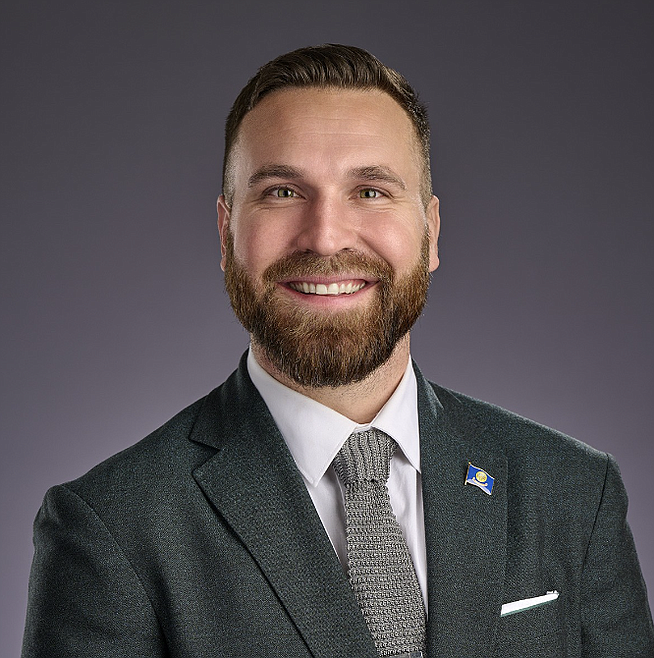
Redman
Carolyn Bostick has worked for the Coeur d’Alene Press since June 2023. She covers Shoshone County and Coeur d'Alene. Carolyn previously worked in Utica, New York at the Observer-Dispatch for almost seven years before briefly working at The Inquirer and Mirror in Nantucket, Massachusetts. Since she moved to the Pacific Northwest from upstate New York in 2021, she's performed with the Spokane Shakespeare Society for three summers. | May 31, 2025 1:00 AM
Idaho lawmakers are rushing to implement changes to the state's Medicaid program before 2026, or risk losing Medicaid expansion altogether, a program that currently serves thousands of Idahoans.
State leaders gathered Friday to examine how current care systems operate and what modifications House Bill 138 would require. The bill, proposed by Rep. Jordan Redman, R-Coeur d'Alene and passed by the Legislature this year, aims to "keep care available without expanding spending beyond what the program can sustain," Redman said Friday while video conferencing into a meeting from Washington, D.C., where he was attending a Make America Healthy Again event.
Under the new law, Medicaid expansion, signed into effect in 2018, will face significant changes.
One of the most immediate concerns involves Idaho's Healthy Connections program, which will end in 2026 due to funding cuts, according to Juliet Charron, deputy director of Medicaid and Behavioral Health with the Idaho Department of Health and Welfare.
"This is going to force a lot of primary care providers to shift business models," Charron said during Friday's presentation.
The program currently provides extended clinic hours to prevent avoidable emergency room visits, after-hours call services, and post-emergency care follow-up. Providers like Coeur d'Alene Pediatrics, which serves North Idaho youth, currently rely on these services.
Idaho has already begun unwinding Healthy Connections as funding decreases. To monitor the transition, the Department of Health and Welfare is bringing on case management company Telligen to track changes in health care delivery models.
The central question driving the proceedings, as Charron put it, was, "Are we going to do this in a smart way that's not insanely costly for the state?"
Redman emphasized that his bill represents reform, not restriction.
"The purpose of this reform is to shift care to more efficient and appropriate settings, not to limit it. Telehealth and community primary care clinics are all part of a broader strategy to ensure patients have options beyond the emergency room," he said.
However, the representative acknowledged the need for careful monitoring.
"I've been trying to frontload monitoring to raise the alarm for any wrinkles in the new law that arise with the Department of Health and Welfare," Redman said.
A persistent problem complicating the transition is Idaho's sluggish Medicaid reimbursement system, an issue that continues to frustrate providers.
"Providers are eating money because it takes too long to get the money back for reimbursement," said Rep. Josh Wheeler, R-Ammon, who compared the situation to the fox asking the hens how they're doing when discussing managed care organizations.
Redman promised improvements.
"On-time reimbursement will be written into state-specific contracts. That part is already moving," he said.
The reimbursement rates themselves present another challenge. They haven't increased since 2008 and would require legislative action to change.
Sen. Carl Bjerke, R-Coeur d'Alene, who has been tracking provider concerns, asked about compensation for lost coordination of care funding.
"It would be nice if we can suffer through nicely until we can fully transition through to that model," Bjerke said.
Redman expects reimbursement rates to surface as a topic in the next legislative session, noting that "that discussion will need to weigh access needs with long-term fiscal responsibility."
The financial pressures have some pediatric providers contemplating worst-case scenarios, including potentially dropping Medicaid coverage entirely, a development Redman said Idaho is working to prevent.
"The state remains committed to a Medicaid program that protects access for vulnerable populations while staying financially sustainable over the long term," he said.
According to previous Press reports, about 45% of Heritage Health patients are enrolled in Medicaid, representing about 65,000 patient visits last year. Locally, Kootenai Health has been alerted that at least one pediatric provider is considering whether they can continue accepting Medicaid patients as changes roll out.
The Idaho Medical Association, Idaho Medical Group Management Association, and the Idaho Chapter of the American Academy of Pediatrics are collaborating with providers statewide to develop contingency plans for various scenarios under the new legislation.
ARTICLES BY CAROLYN BOSTICK

'Bad actors' bill fails again
Aimed at protecting home, business owners
After high hopes this legislative session, lobbyist Ken Burgess said that the state bill intended to create protections against unscrupulous contractors won’t be moving on.

Students pitch future professions at reverse job fair
Students pitch future professions at reverse job fair
Ranging from criminology to cosmetology, Post Falls high school students pitched professions that sparked their interest during the reverse job fair on Wednesday at Real Life Ministries in Post Falls.

Kootenai Health, MultiCare celebrate Prairie Medical Campus groundbreaking
Kootenai Health, MultiCare celebrate Prairie Medical Campus groundbreaking
Although hundreds in attendance gathered at the site on Tuesday for the Prairie Medical Campus for a literal groundbreaking, Kootenai Health CEO Jamie Smith pointed out that the project also fulfilled the figurative definition by being new and innovative. “This campus is going to be a gamechanger for the region,” Smith said.