
Damming evidence: Citizen scientists track beavers through Lolo National Forest
HANNAH SHIELDS | Hagadone News Network | UPDATED 4 months, 3 weeks AGO
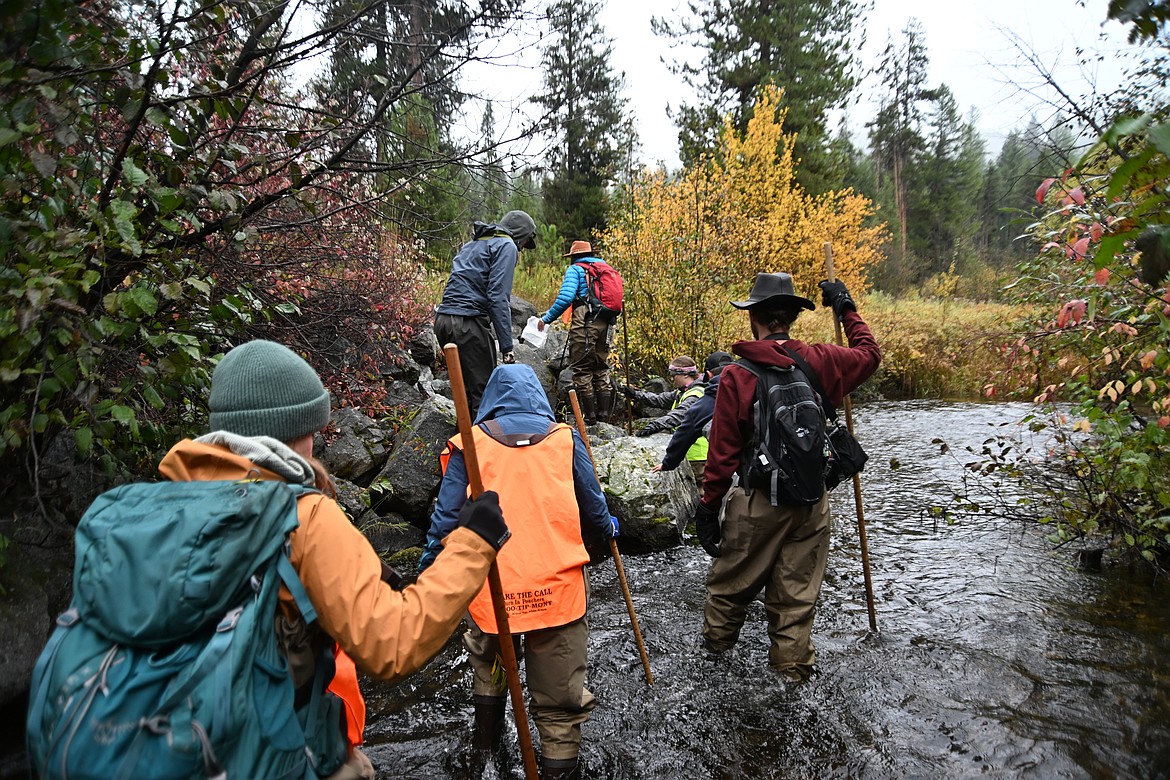
A group of citizen scientists climb up a stack of rocks near Lolo Creek during Beaver Blitz on Oct. 4. (Hannah Shields/Daily Inter Lake)
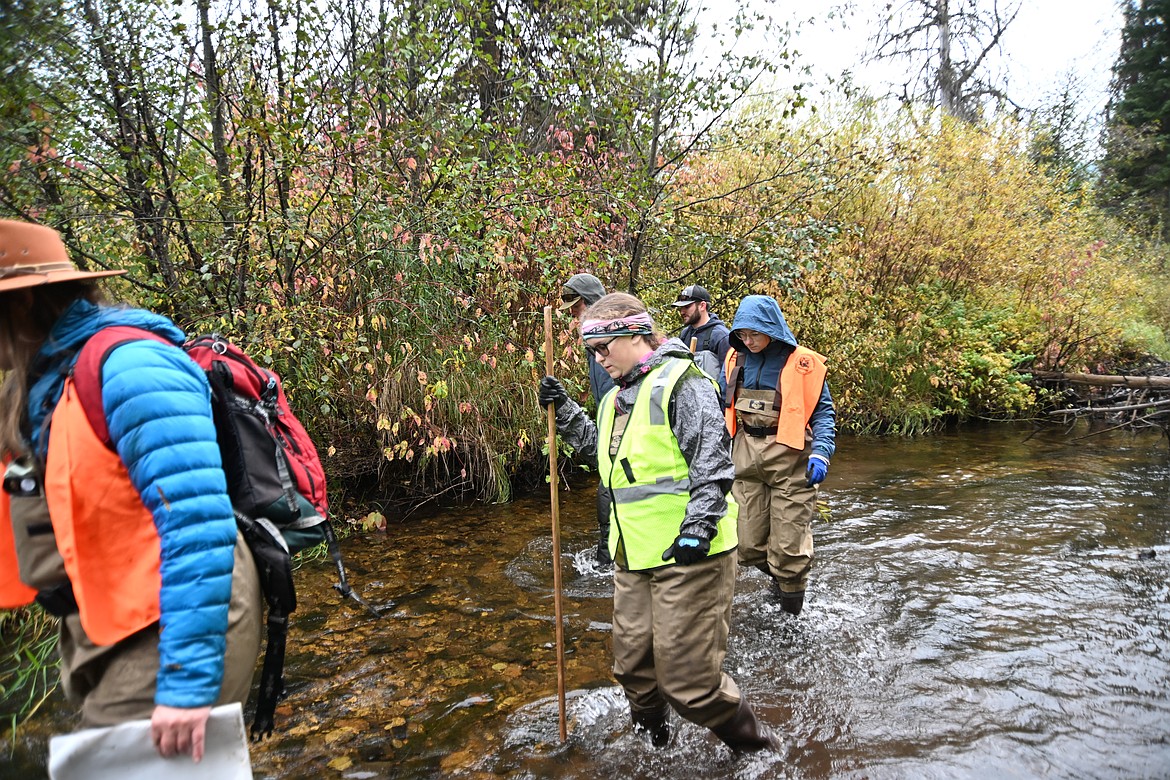
Maddigan Ward, a University of Montana student, sloshed through Lolo Creek during the Clark Fork Coalition's Beaver Blitz on Oct. 4. (Hannah Shields/Daily Inter Lake)
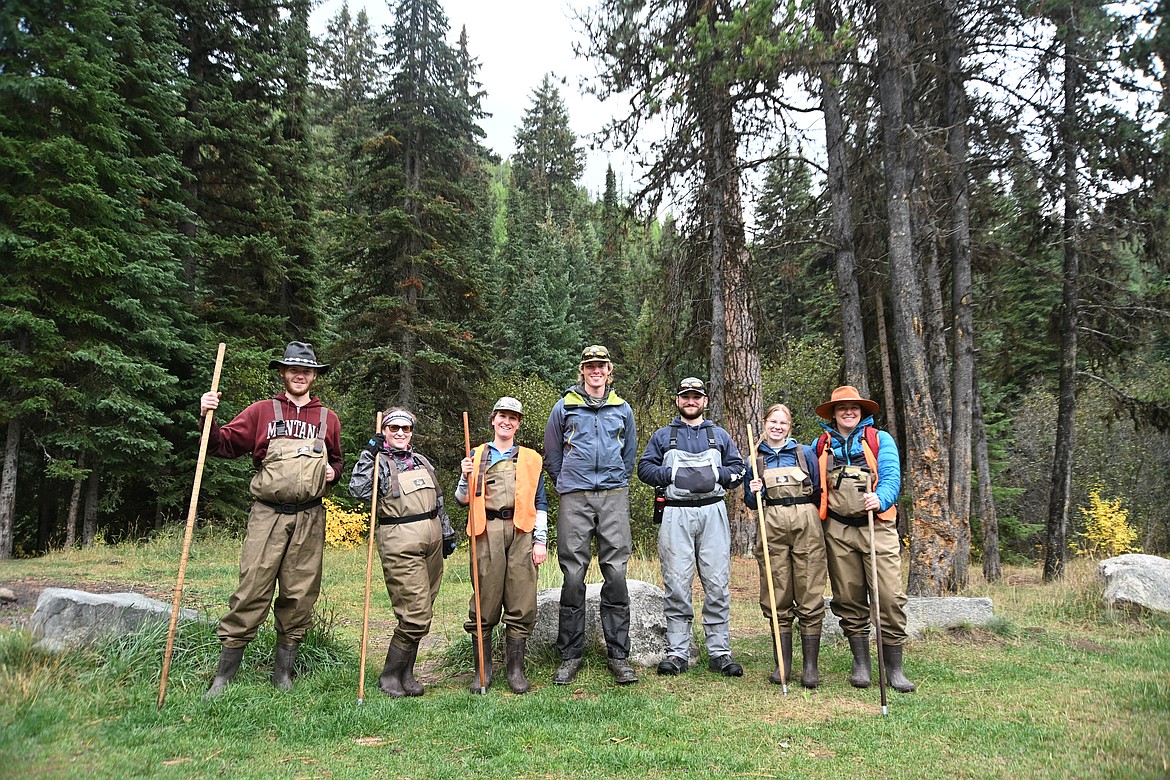
Left to right: David Wolfe, Maddigan Ward, Carmen Murrill, Hudson Weber, Kevin Dau, Jazmyn Goosen and Lily Haines smile after finishing up their explorations of Lolo Creek during the Beaver Blitz on Oct. 4. (Hannah Shields/Daily Inter Lake)
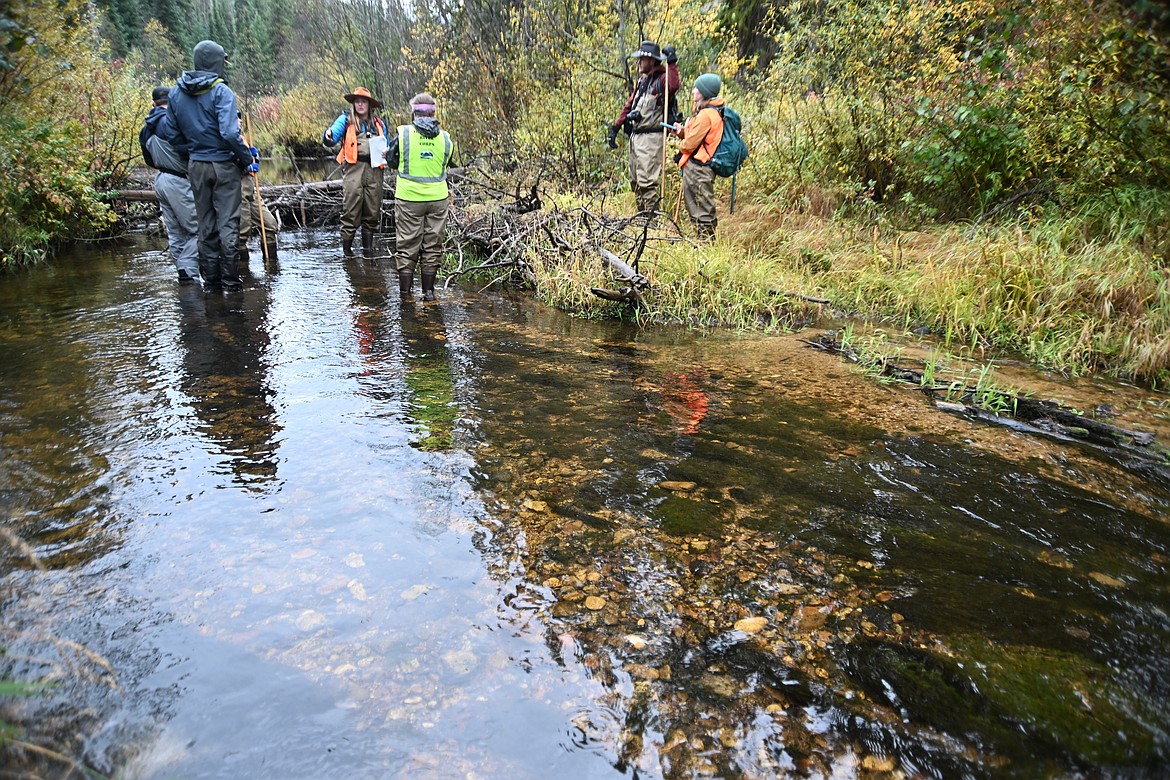
Clark Fork Coalition Community Manager Lily Haines guides group of volunteers during Beaver Blitz at Lolo Creek on Oct. 4. (Hannah Shields/Daily Inter Lake)
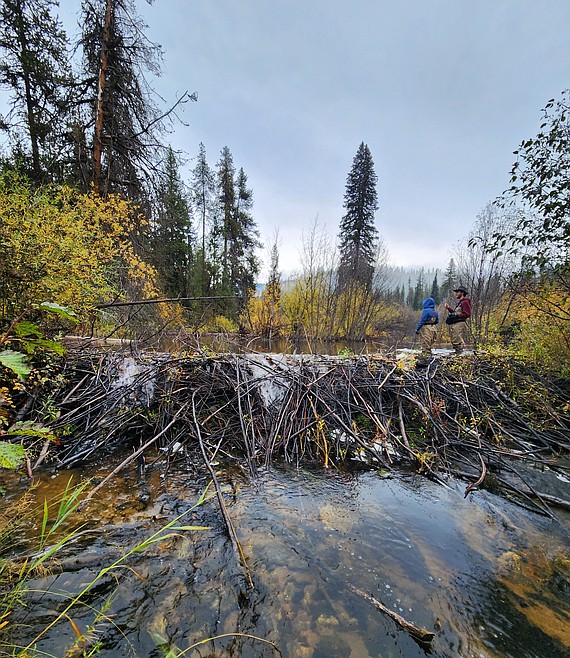
Two volunteers stand over a beaver dam in Lolo National Forest during the Clark Fork Coalition's annual Beaver Blitz Oct. 4-5. (Courtesy of Carmen Murrill/Wild Montana)
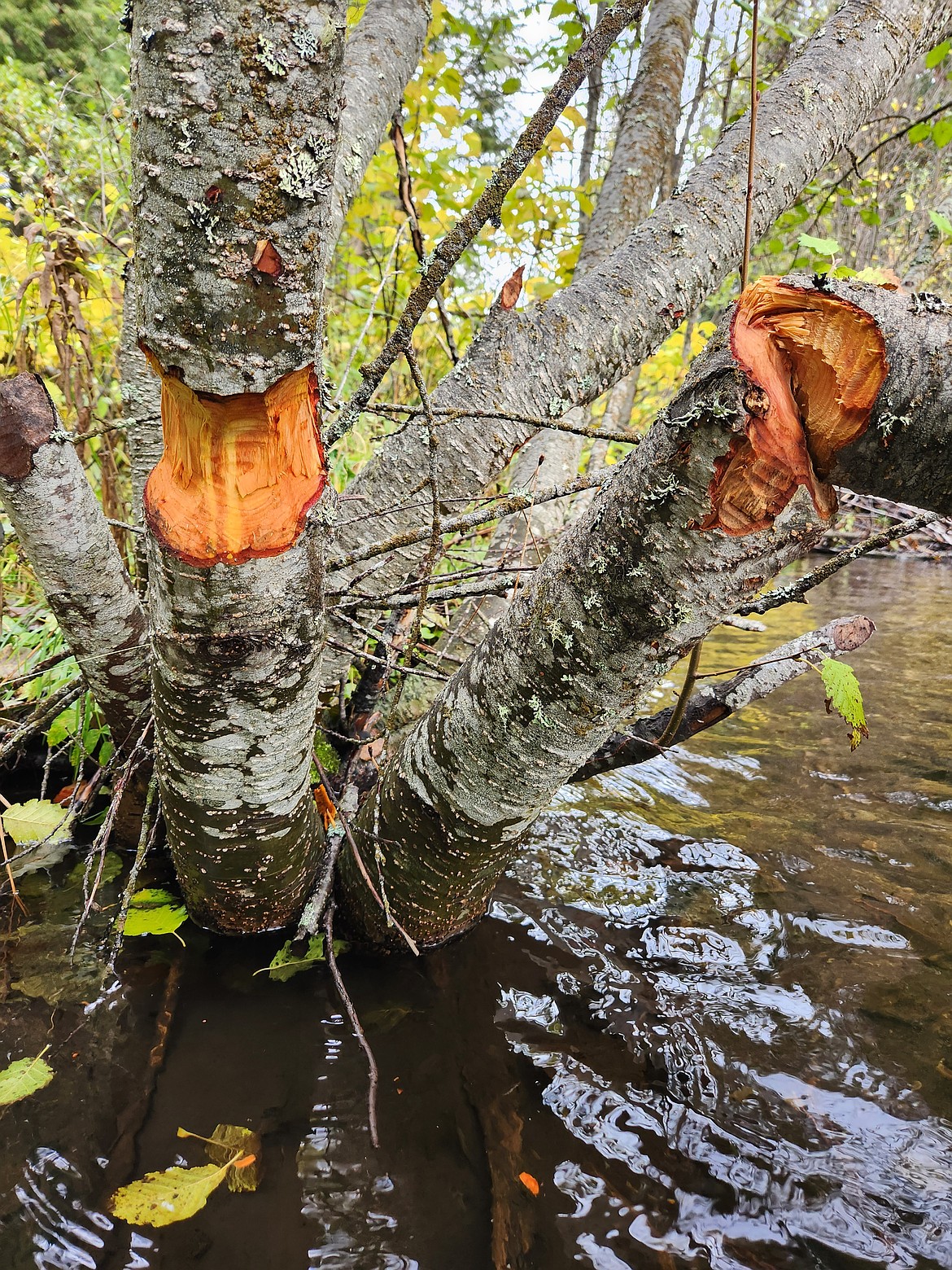
Trees chewed by beavers are spotted by volunteers during the Clark Fork Coalition's annual Beaver Blitz in early October. (Courtesy of Wild Montana/Carmen Murrill)
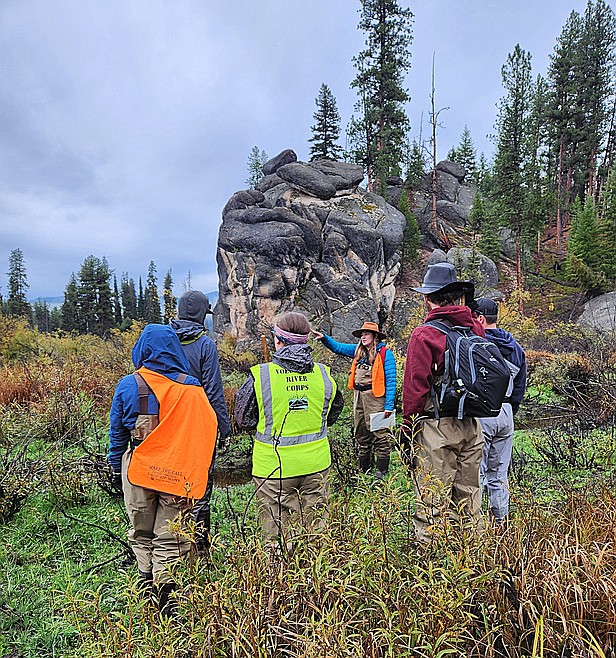
Clark Fork Coalition Community Manager Lily Haines guides a group of volunteers through a marsh near Lee Creek Campground on the first day of the Beaver Blitz on Oct. 4. (Courtesy of Wild Montana/Carmen Murrill)
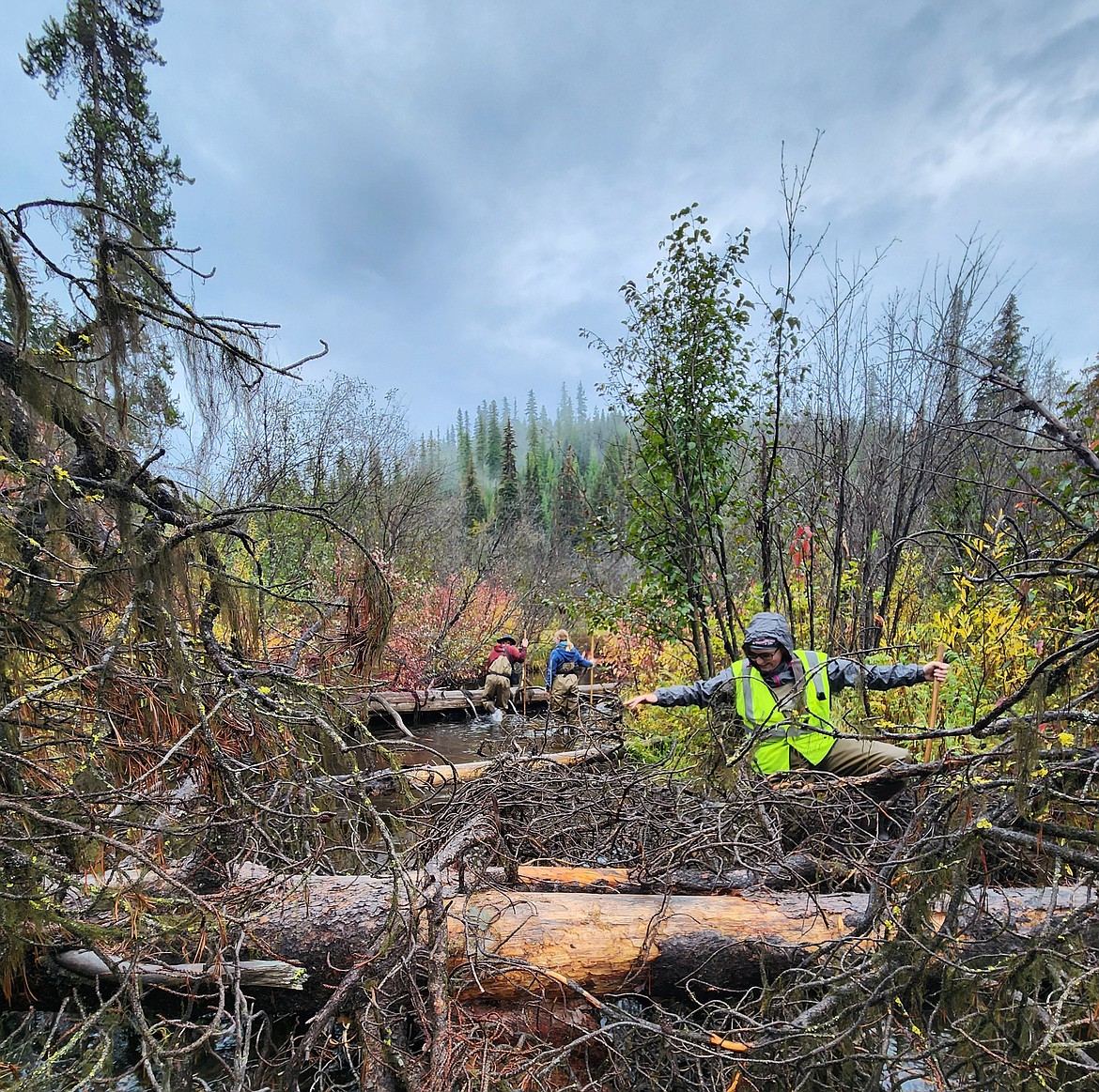
University of Montana student Maddigan Ward climbs over a fallen tree in Lolo Creek during the Clark Fork Coalition's annual Beaver Blitz on Oct. 4. (Courtesy of Wild Montana/Carmen Murrill)
RURAL GOVERNMENT REPORTER, REPORT FOR AMERICA Hannah Shields covers rural government and accountability reporting for the Daily Inter Lake and Northwest Montana weekly papers as part of the national Report for America program. Her reporting focuses on transparency, public spending and the impact of local government decisions on small communities. Shields has covered issues ranging from school district finances to development disputes and rural infrastructure projects. She regularly uses public records and investigative reporting to examine institutions that affect local residents. Her work helps bring greater oversight and visibility to rural government across Northwest Montana. IMPACT: Hannah’s work strengthens transparency and accountability in rural communities that often lack consistent watchdog coverage. | November 2, 2025 12:00 AM
Gray clouds hung overhead on an early October morning while the fall foliage crept into the Lolo National Forest, peppering trees with hues of bright red, burnt orange and golden yellow.
Water bubbled over beaver dams in Lolo Creek as it snaked through the forest before spilling into the Little Bitterroot River. The dams control the flow of the creek, adding a pause here and there, so that water pools onto the surrounding wetland soil, creating cool microclimates along the bank.
Acting like a sponge, the ground holds the water until it’s released later when the weather turns warm, and the river becomes shallow.
Beavers are an excellent tool in water storage, something Montana wildlife researchers have taken great interest in, when it comes to repairing water systems.
In the middle of the stream stood a small group of people, searching for signs of beaver activity. But they found themselves blocked by a fallen tree leading into a cluster of willows.
“We’re going to have to find our way over and around on that side,” said Lily Haines, community programs manager with the Clark Fork Coalition.
Two wildlife biology students from the University of Montana, Kevin Dau and Hudson Weber, sloshed ahead. There was no choice but to go straight through the willows.
The three volunteers were participating in the Clark Fork Coalition’s second annual Beaver Blitz, made possible in partnership with Wild Montana. In 2024, Wild Montana, a nonprofit community outreach program based in Missoula, was tapped by the Clark Fork Coalition as a resource to flag the event to the community and recruit volunteers.*
The Beaver Blitz is a citizen-led research project focused on gathering data on beaver movement. The information collected would benefit Montana researchers studying the dynamic nature and dispersal rates of this riparian species.
As the Treasure State’s water systems strain under climate change, population growth and increased demands for water, beavers pose a potential solution for watershed restoration.
“Data on where [beavers] were in our watersheds is something that had never been collected before,” said Haines while leaning against the hood of her Nissan Frontier.
A total of 17 volunteers, most of them wildlife biology students from the University of Montana, turned out to participate in the two-weekend event. They covered roughly a mile up Lolo Creek, a tributary of Little Bitterroot River, and roughly two miles up Burdette Creek, a tributary of South Fork Fish Creek.
Volunteers donned waders and bright orange vests as they searched for signs of beaver activity.
Dau peered through an assortment of foliage on Lolo Creek’s bank and picked up a thin branch with pointed ends, chewed by a beaver before it was left by the wayside.
The branch, identified as a clipping, is a tool used by beavers to construct their dams. Clippings are one of several signs of beaver activity that the group was scouting for. He logged it into an app on his phone, where the data would later be fed into the Montana Natural Heritage Project, a statewide database.
“My professor in my fisheries techniques class was telling us about what the Clark Fork Coalition was doing, and mentioned that the Beaver Blitz was going on,” Dau said. “We were like, ‘Yeah, let's help out the beavers. Let's see what's going on.’”
He and his buddy, Weber, volunteered to help out on the first day of the Beaver Blitz.
IN THE early morning, at the Lee Creek Campground, Haines gathered the six volunteers into a semi-circle for a brief overview of the most common signs of beaver activity —clippings, dams and caches (where the beavers store food).
The Clark Fork Coalition previously restored much of Lolo Creek by inserting man-made dams, mimicking natural beaver dams, in the water.
“One of the goals of a lot of this restoration, and a lot of the beaver restoration, is to put resources in place that allow beaver to spread back out through the watershed,” Haines told the volunteers. “We know they're here. We're hoping that as we work our way up, we can see them kind of moving up the drainage into those areas that have had some restoration treatment.”
On the ground exploration provides information that can’t be captured by aerial imagery. While useful to spot beaver colonies along streams, aerial imagery can’t tell the story of what beaver movement looks like. Ground exploration projects, like the Beaver Blitz, give a close-up observation of beaver activity.
“It gives you a lot more information than an aerial imagery survey, which really only shows you big, well-established colonies,” said Torrey Ritter, a nongame wildlife biologist for Montana Wildlife, Fish and Parks.
Ritter has lately become known as the state’s “unofficial beaver guy.” His interest in beavers piqued when he surveyed wildlife management areas as a technician for nongame biologists in Bozeman.
“Very quickly, I realized that a huge amount of our biodiversity was tied up in beaver colonies,” Ritter said. “We always talk about getting away from single species management, but here is a single species where, if we manage for it, we're getting dozens of other species on the landscape.”
Helping to guide future management is the data collected by the volunteers who spent time slogging through the water on days like the Beaver Blitz.
“One of the great things about being a nonprofit based in Missoula is we do just get a lot of people who bring expertise in areas of landscape conservation or wildlife biology out into the field with us,” Haines said. "Our volunteers are like a whole other qualified workforce that helps us get the work done.”
*This story was updated to mention Wild Montana's partnership with the Clark Fork Coalition in hosting the Beaver Blitz.
Reporter Hannah Shields can be reached at 758-4439 or [email protected].
READ MORE:
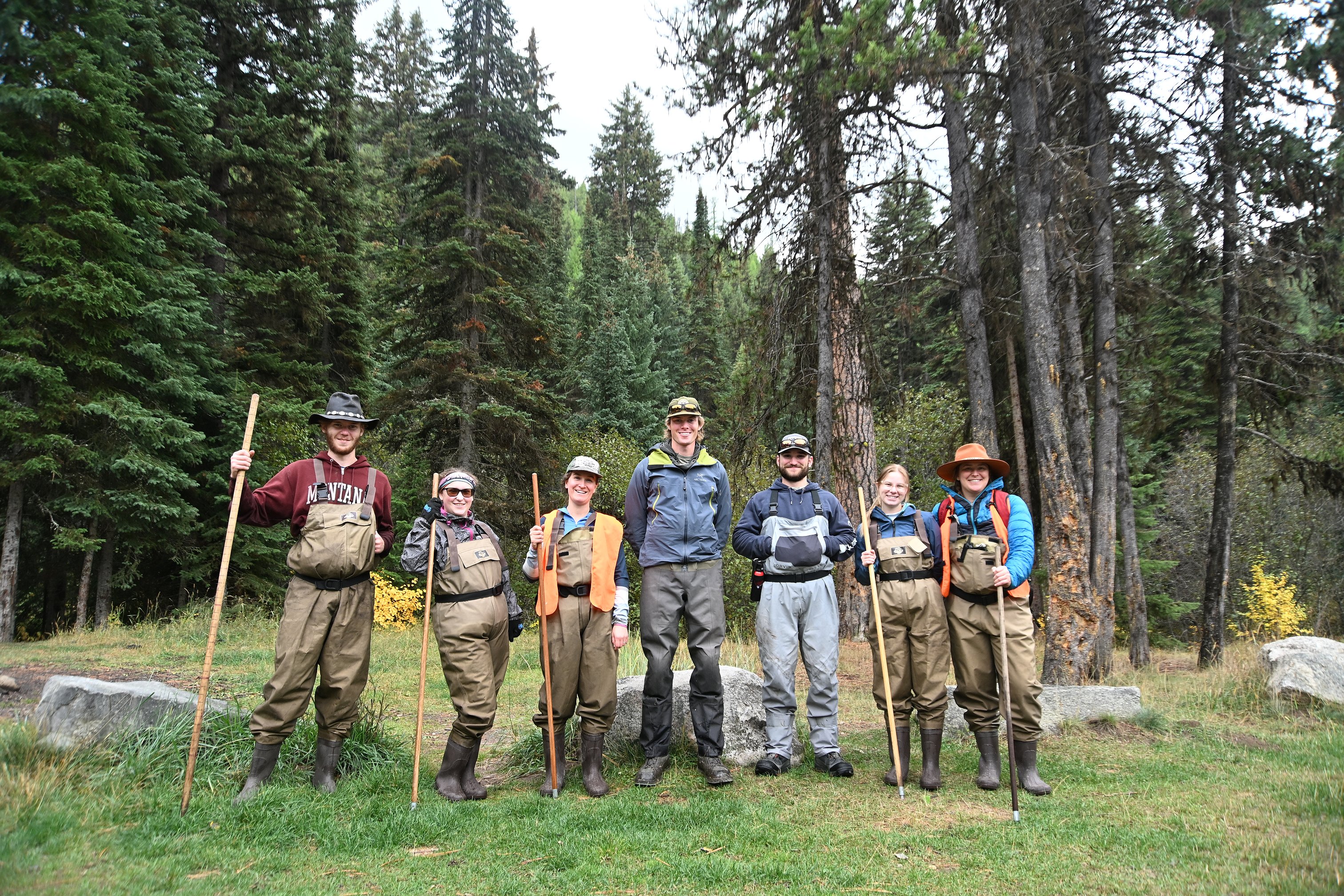 Left to right: David Wolfe, Maddigan Ward, Carmen Murrill, Hudson Weber, Kevin Dau, Jazmyn Goosen and Lily Haines smile after finishing up their explorations of Lolo Creek during the Beaver Blitz on Oct. 4. (Hannah Shields/Daily Inter Lake)
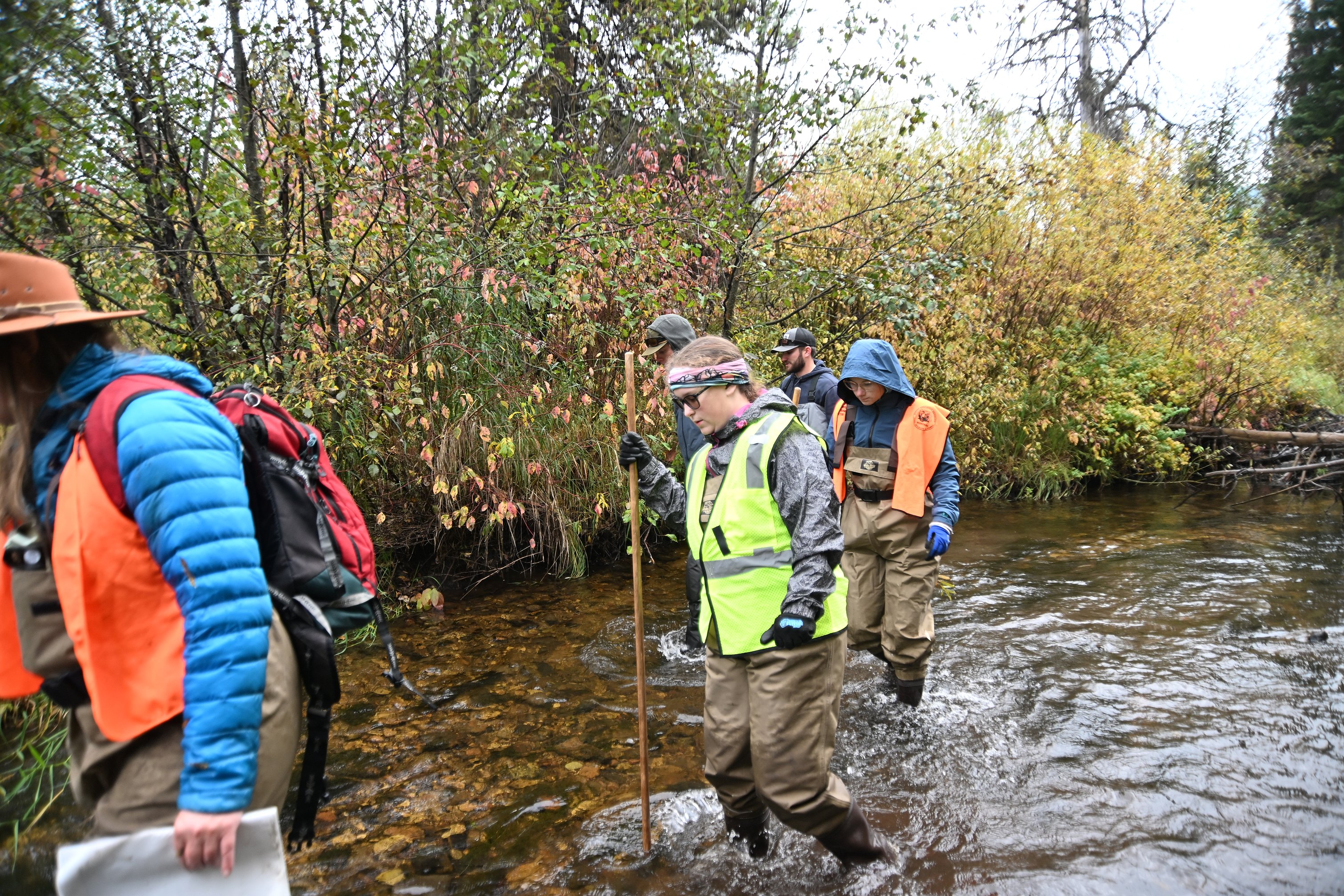 Maddigan Ward, a University of Montana student, sloshed through Lolo Creek during the Clark Fork Coalition's Beaver Blitz on Oct. 4. (Hannah Shields/Daily Inter Lake)
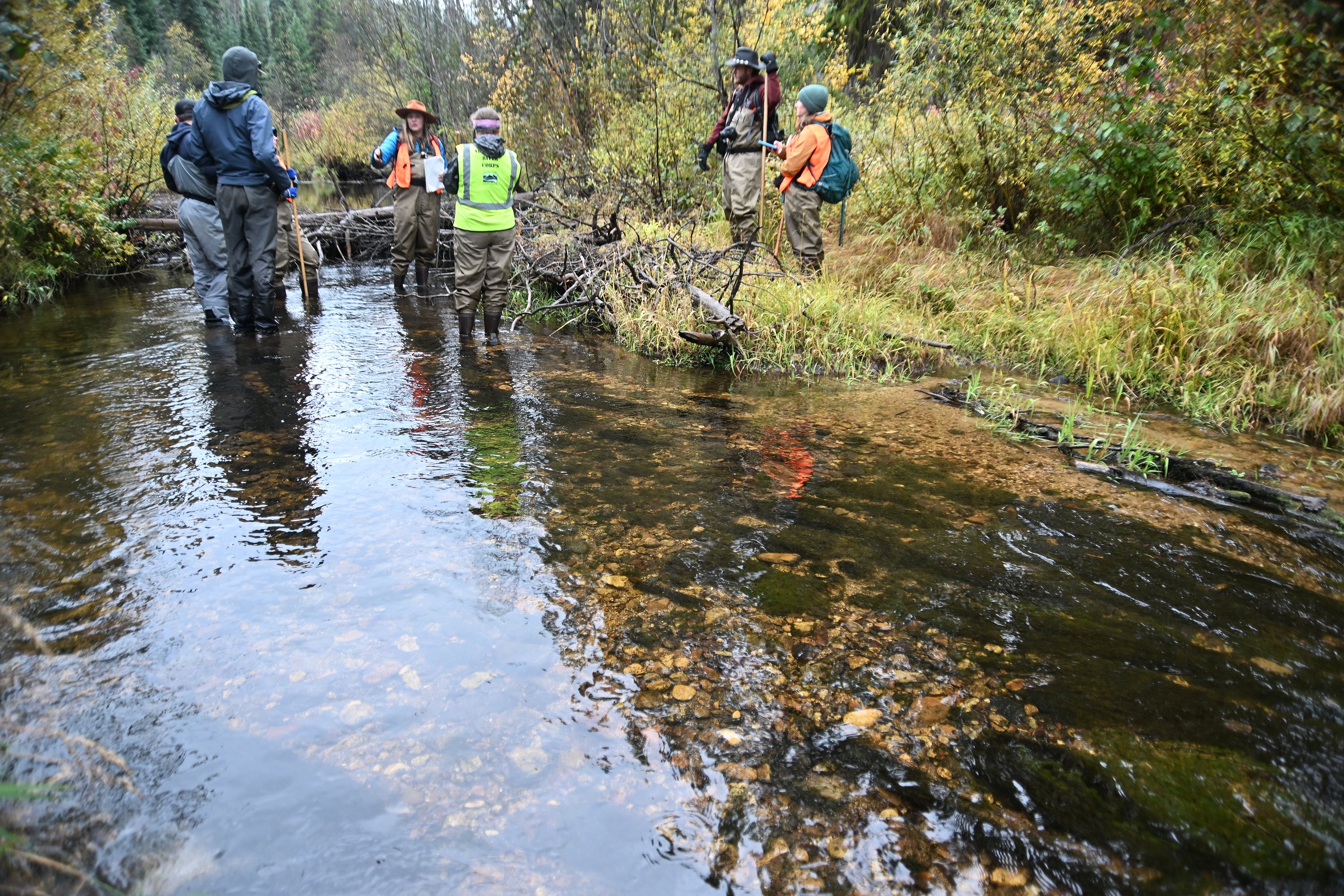 Clark Fork Coalition Community Manager Lily Haines guides group of volunteers during Beaver Blitz at Lolo Creek on Oct. 4. (Hannah Shields/Daily Inter Lake)
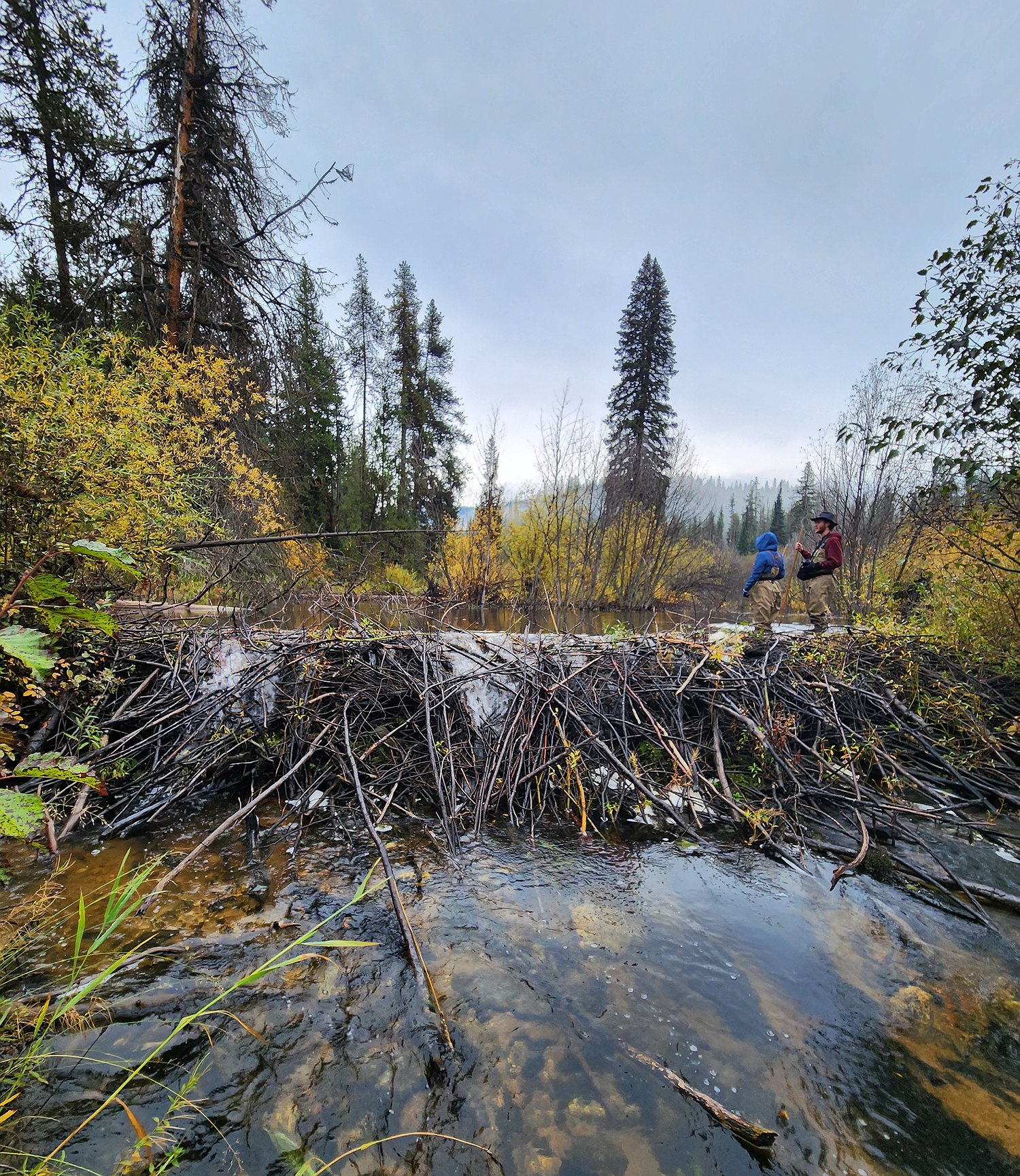 Two volunteers stand over a beaver dam in Lolo National Forest during the Clark Fork Coalition's annual Beaver Blitz Oct. 4-5. (Courtesy of Carmen Murrill/Wild Montana)
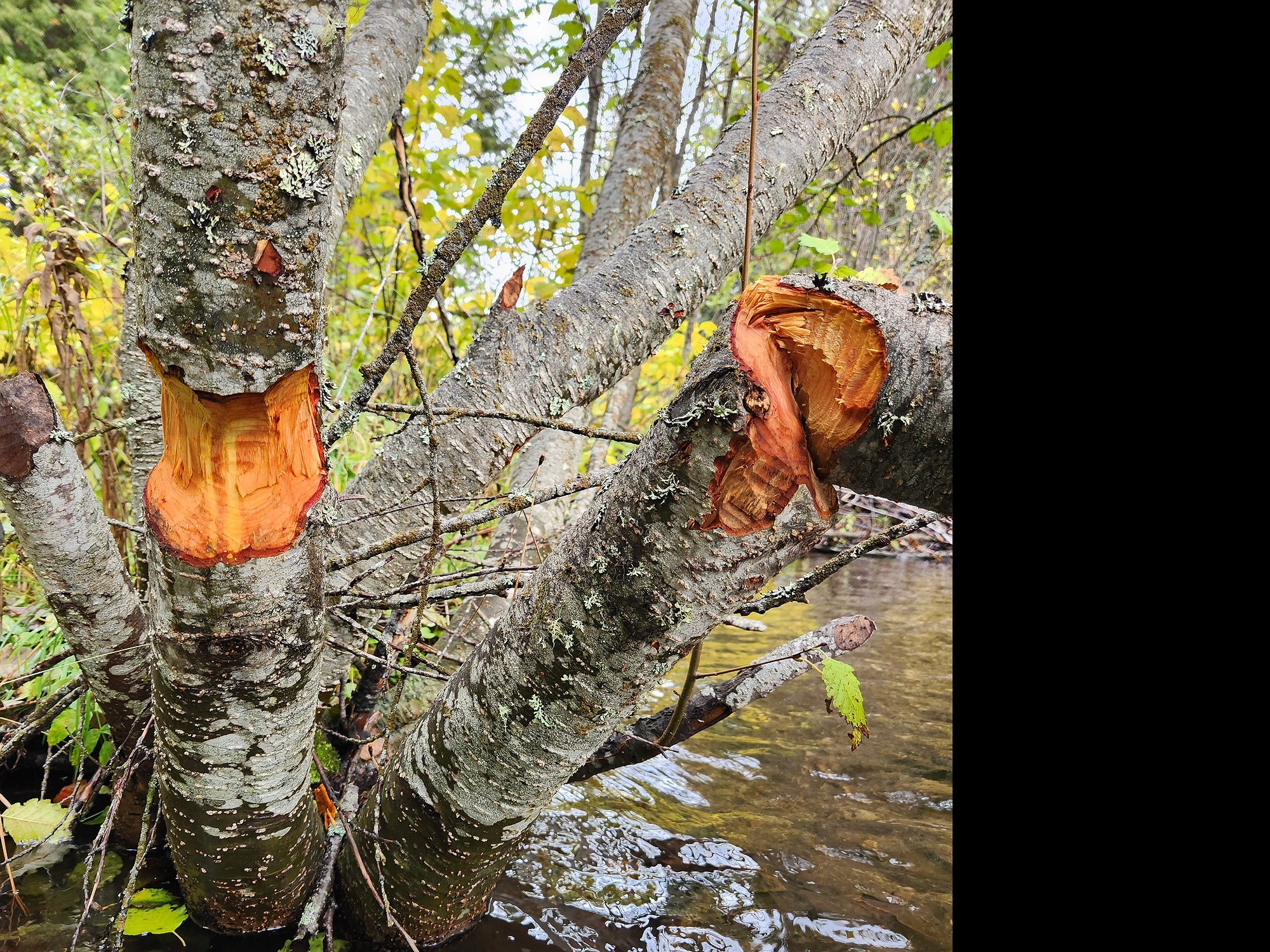 Trees chewed by beavers are spotted by volunteers during the Clark Fork Coalition's annual Beaver Blitz in early October. (Courtesy of Wild Montana/Carmen Murrill)
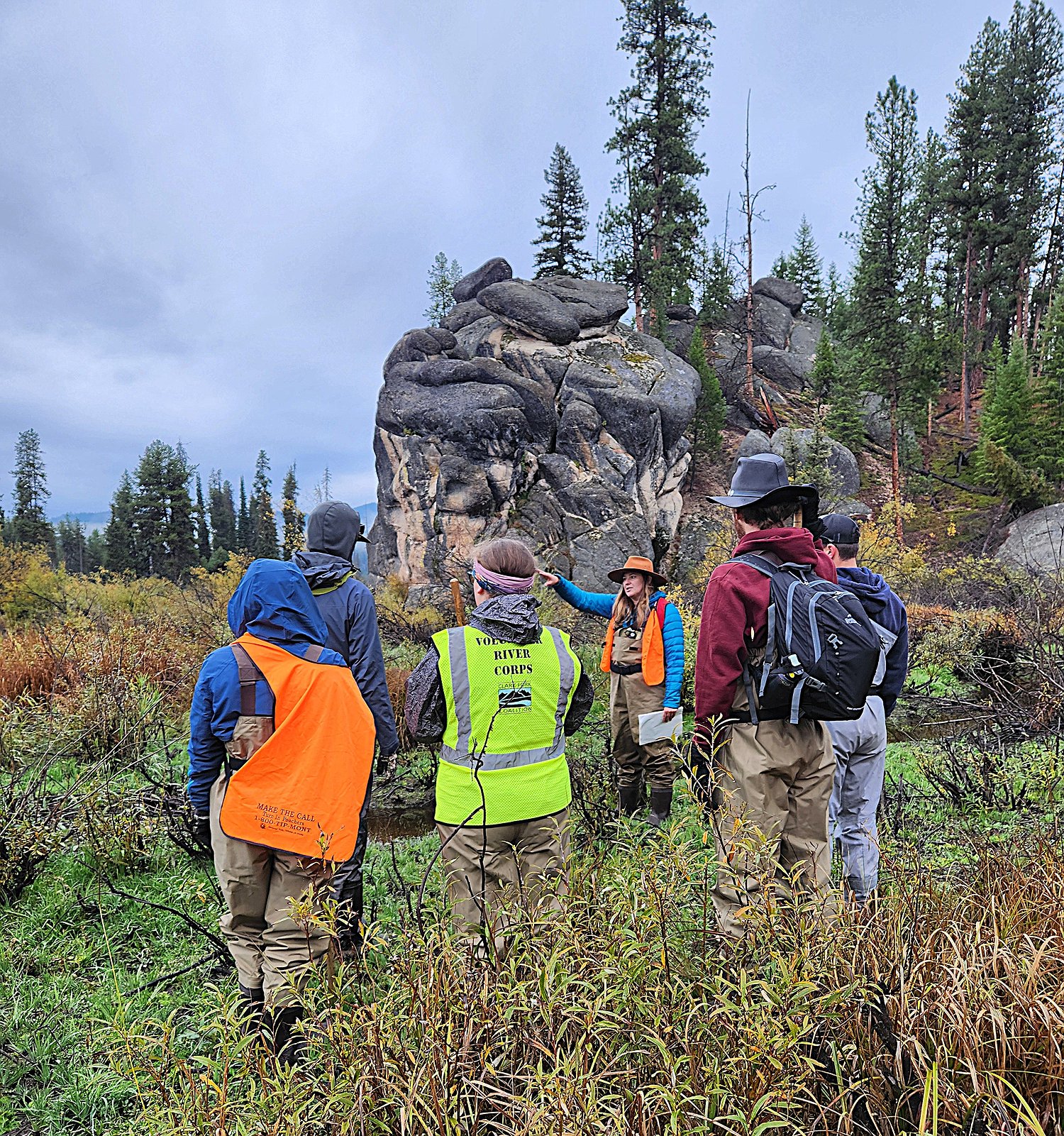 Clark Fork Coalition Community Manager Lily Haines guides a group of volunteers through a marsh near Lee Creek Campground on the first day of the Beaver Blitz on Oct. 4. (Courtesy of Wild Montana/Carmen Murrill)
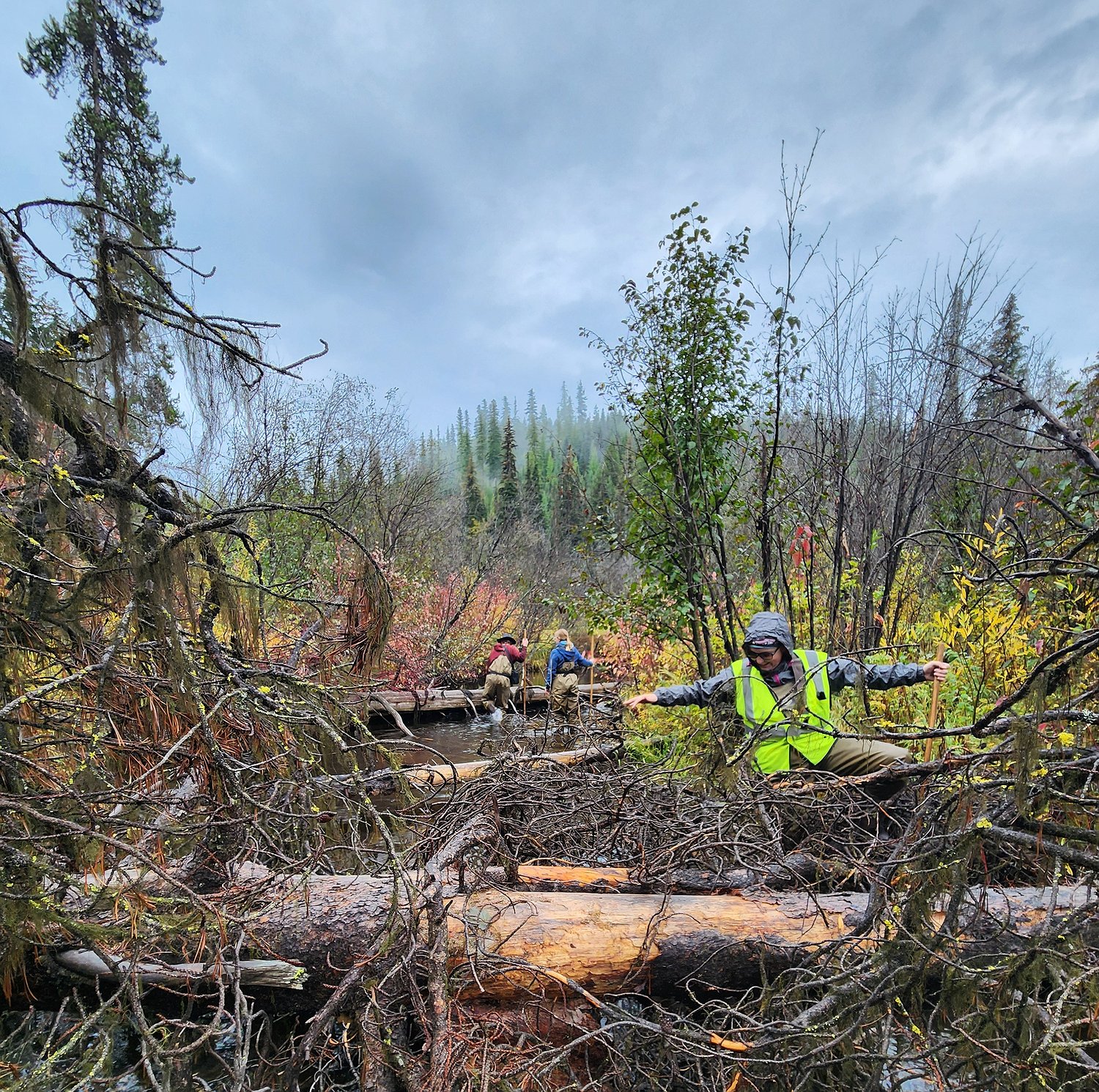 University of Montana student Maddigan Ward climbs over a fallen tree in Lolo Creek during the Clark Fork Coalition's annual Beaver Blitz on Oct. 4. (Courtesy of Wild Montana/Carmen Murrill)
ARTICLES BY HANNAH SHIELDS

Flathead Library director to retire after her contract expires in 2028
Flathead Library Director Teri Dugan will retire at the end of her contract, which was extended through 2028 by trustees on Thursday.
Flathead County Library continues negotiations for new Kalispell branch
Flathead County Library trustees are re-negotiating the purchase of property at the Kalispell Center Mall for a future Kalispell branch.
'We know we can do the job:' Smith Valley Fire Department deploys all-woman volunteer shift
Smith Valley Fire Chief Amy Beick walked into the station one December day and saw something she’d never encountered in her two decades at the department.