
Moravida honors departed loved ones, celebrates Hispanic culture
JOEL MARTIN | Hagadone News Network | UPDATED 11 months, 2 weeks AGO
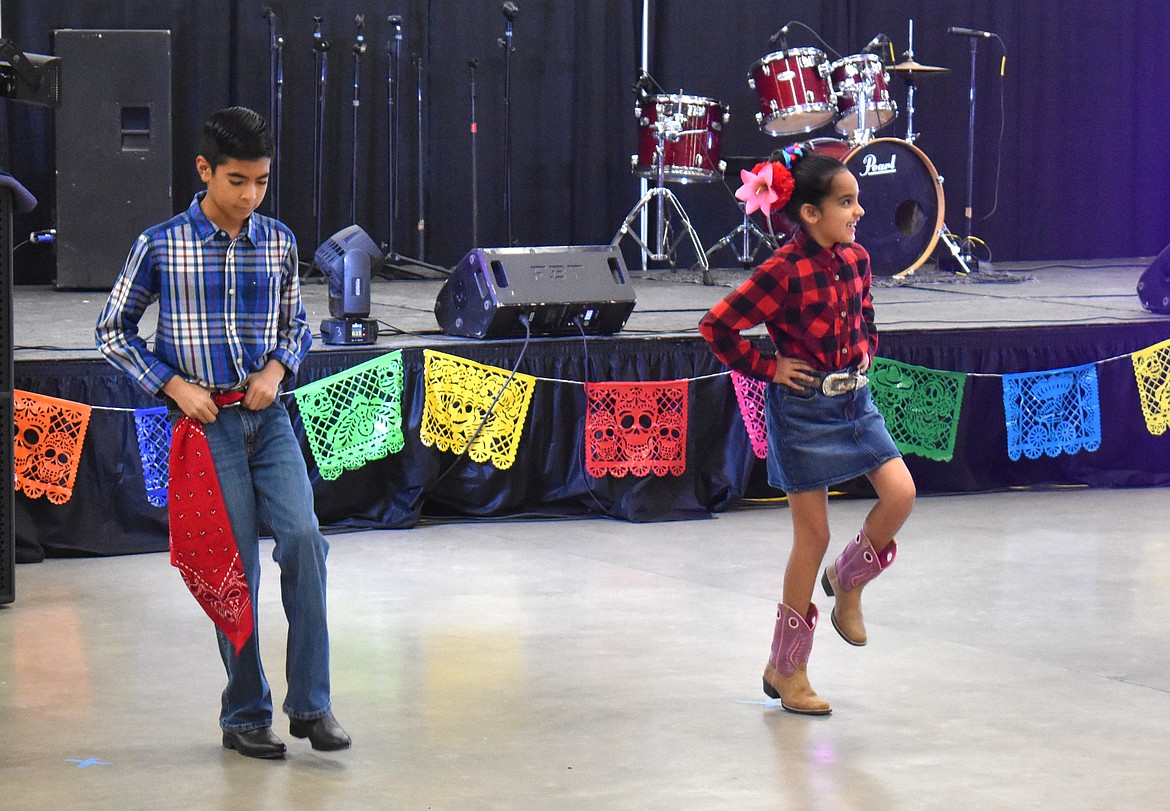
Dancers from Folklorico Our Lady of Fatima perform at the Moravida Festival on Saturday. Although the event commemorates those who have died, it represents celebration rather than a time of grief.
JOEL MARTIN/COLUMBIA BASIN HERALD
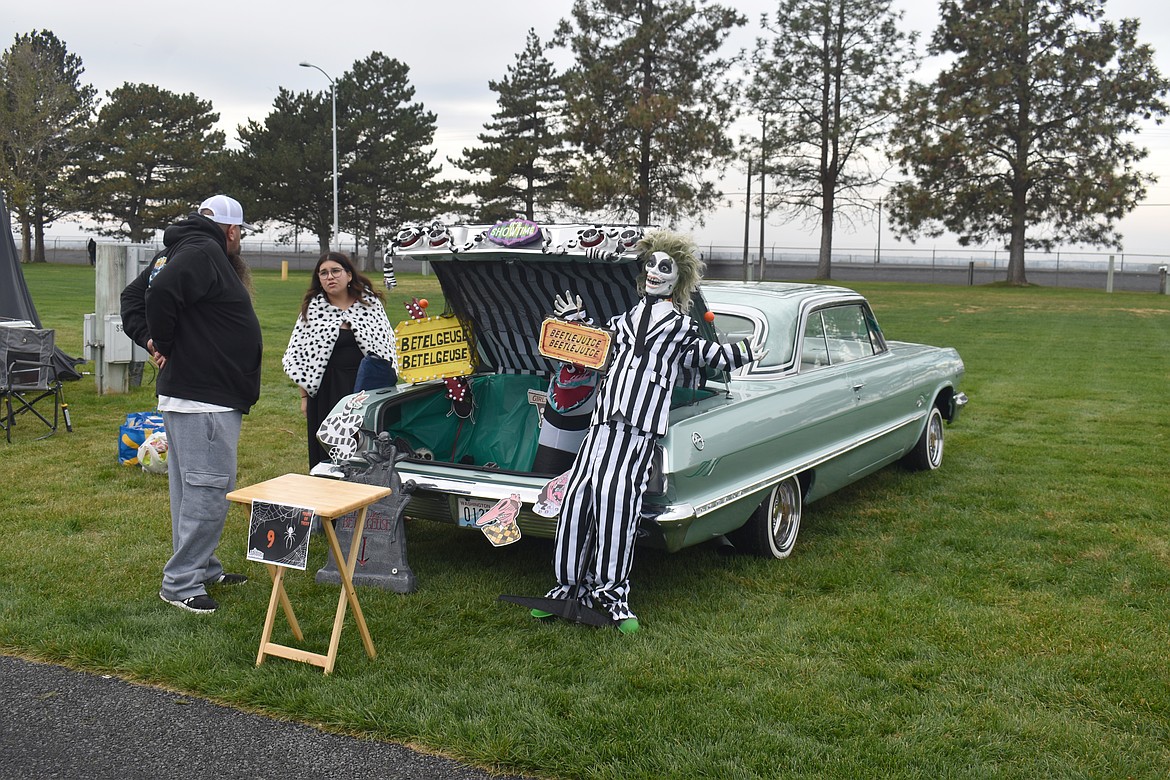
Ralph Gomez, left, and his daughter Lindsey Gomez show off his 1963 Impala for the Moravida Festival car show.
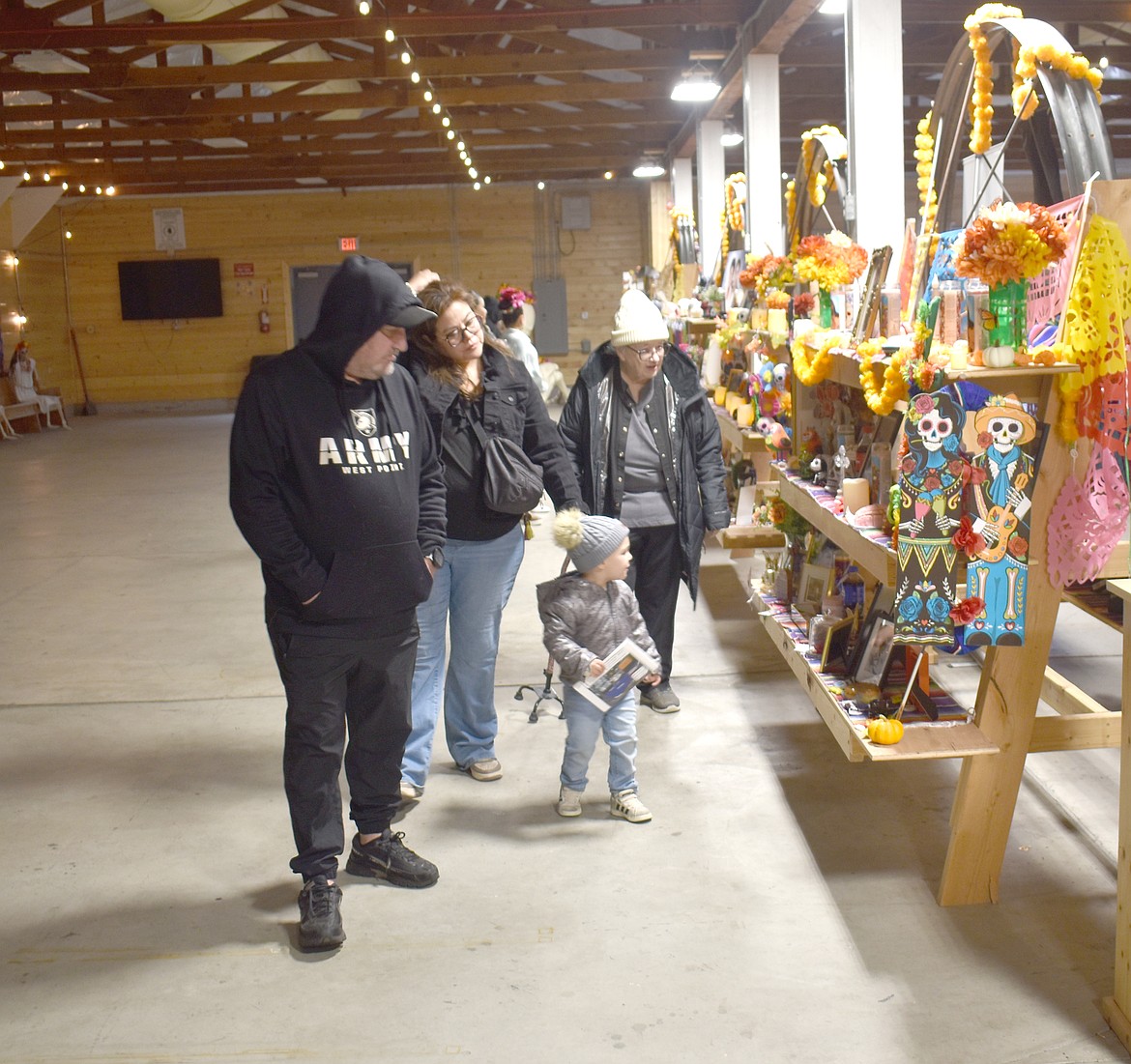
From left: Mike McCoy, his wife Laura McCoy, their 2 1/2-year-old son Mikey Jr. and Mike’s mother Diane McCoy look at the ofrendas, or altars, commemorating the departed at the Moravida Festival Saturday.
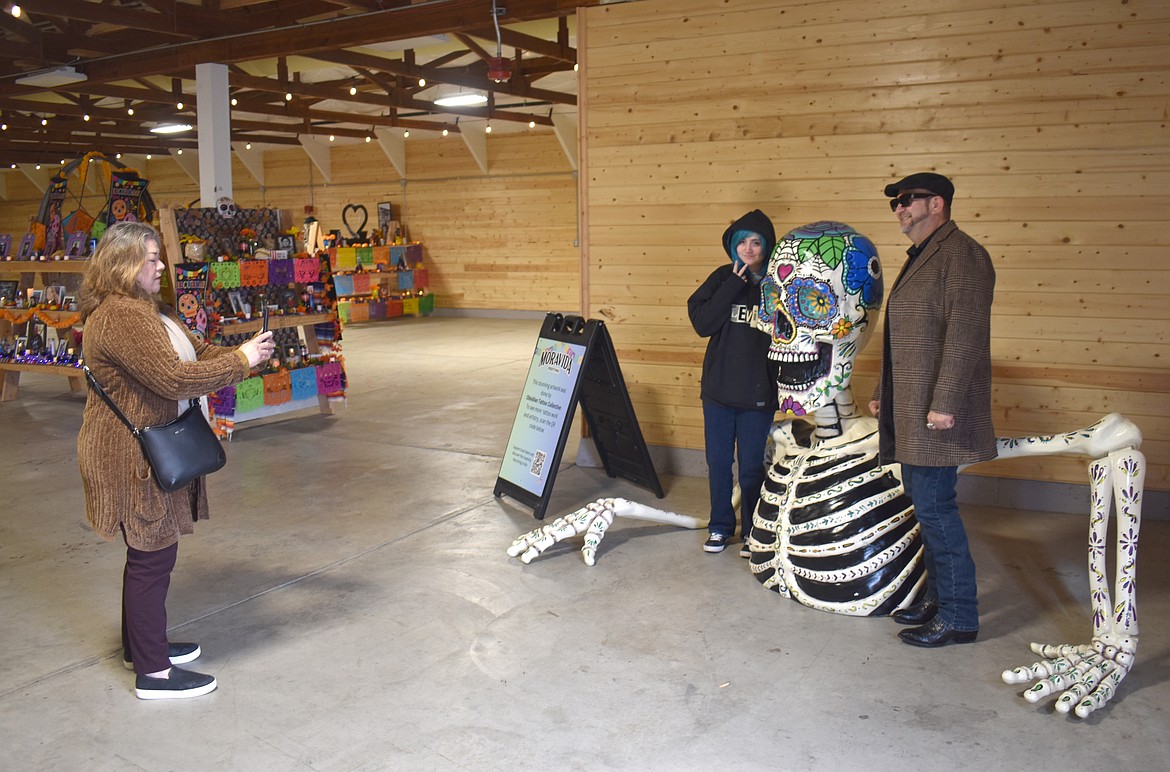
Julia Servin, left, takes a photo of her daughter Ana Servin and her husband Juan Servin. The Servins also had their own Dia de los Muertos display at home, Juan said.
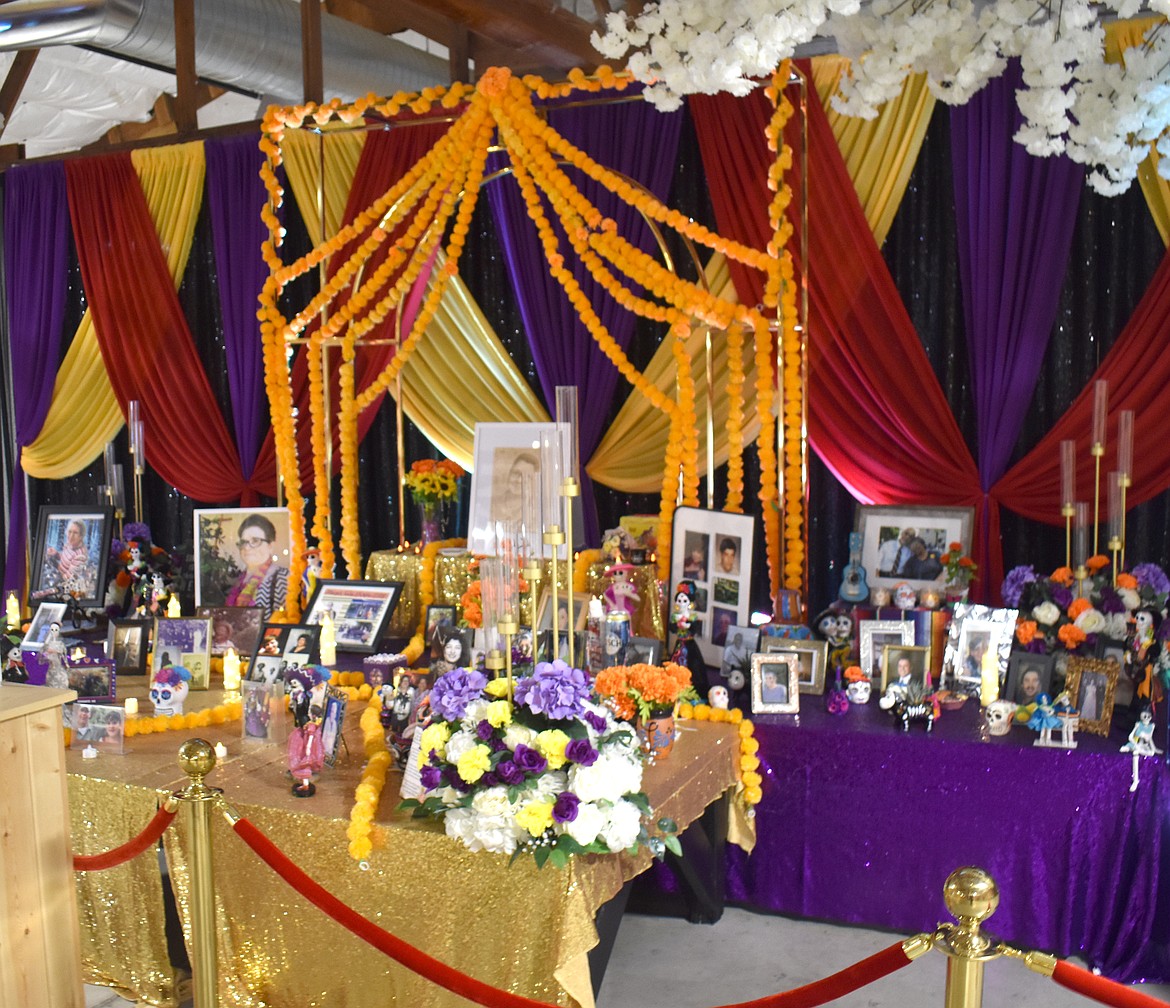
The Community Altar at the Moravida Festival commemorated the departed loved ones of the organizers, particularly committee member Guadalupe De La Rosa, who passed away in August.
Joel Martin has been with the Columbia Basin Herald for more than 25 years in a variety of roles and is the most-tenured employee in the building. Martin is a married father of eight and enjoys spending time with his children and his wife, Christina. He is passionate about the paper’s mission of informing the people of the Columbia Basin because he knows it is important to record the history of the communities the publication serves. | November 4, 2025 3:15 AM
MOSES LAKE — After all the Halloween candy is gone, the costumes are put away and the decorations are brought inside, it’s time to get down to the solemn part.
All Saints Day and All Souls Day, Nov. 1 and 2, are traditional Christian celebrations of those who have passed away. In Mexico, those two days are called Día de los Muertos, or Day of the Dead, and serve as a reminder that the line between this world and the next may not be as sharp as it seems.
“In Mexico, it is customary to have altars built, which we try to do here as well,” said Noemi Garcia, a member of the Moravida Festival Committee. “The traditional ones in Mexico are different. They're usually a lot bigger. They're at people's homes rather than in a community thing as it is here. But we try our best to keep that spirit alive.”
The Moravida Festival is in its fourth year now, serving not just as a memorial but as a celebration of Mexican culture. About 5,000 people were expected to come out for the eight-hour event, said organizer Rebecca Martinez. The name comes from the Spanish phrase “conmemorar vida,” meaning to commemorate life.
The 4-H Building had vendors of all kinds, the lawn had bouncy houses and food stands, and the Commercial Building hosted musicians and dancers, as well as tables where children could do draft activities. The south lawn was the scene of a car show, where owners of classic or customized vehicles vied for the most impressive display.
Ralph Gomez and his daughter Lindsey had decorated his 1963 Chevrolet Impala with memorabilia from the movie “Beetlejuice Beetlejuice,” with a stuffed mannequin of the title ghost, skulls and snakes and a sign that said “It’s show time.”
But the heart of the celebration was in the Ag Building, where the ofrendas, or family altars, were set up. Anyone who wanted to could create a display in memory of one or more loved ones. The theme was not of grief, but of loving memory. Candles and skull decorations were everywhere. The ofrendas had photos of the departed, but also representations of things that reminded the family of the person. One ofrenda had a microphone; another had boxes from Kentucky Fried Chicken.
“What people tend to place is things that those family members that are no longer with us like,” said committee member Guillermo Hermosillo. “Something very sacred, very special, very personal to each person and each family member.”
Besides his car entry, Gomez had an ofrenda set up, he said.
“We have grandparents, friends and aunts and uncles,” he said.
The ofrendas weren’t exactly like the ones in Mexico, said Mexico City native Juan Servin, who brought his family to see the ofrendas, but traditions also vary in Mexico.
“We made our own altar at home,” Servin said. “We know the meaning … one day is for the parents, the other day is for the elderly. Different generations, different cities and towns, they add things. It’s interesting to see the differences.”
At the head of the room stood the Community Altar, which Hermosillo decorated and which memorialized the committee members’ own families. One of those was committee member Guadalupe De La Rosa, who passed away in August. De La Rosa is deeply missed, Garcia said.
“We wanted to make sure and honor her this year,” Garcia said.
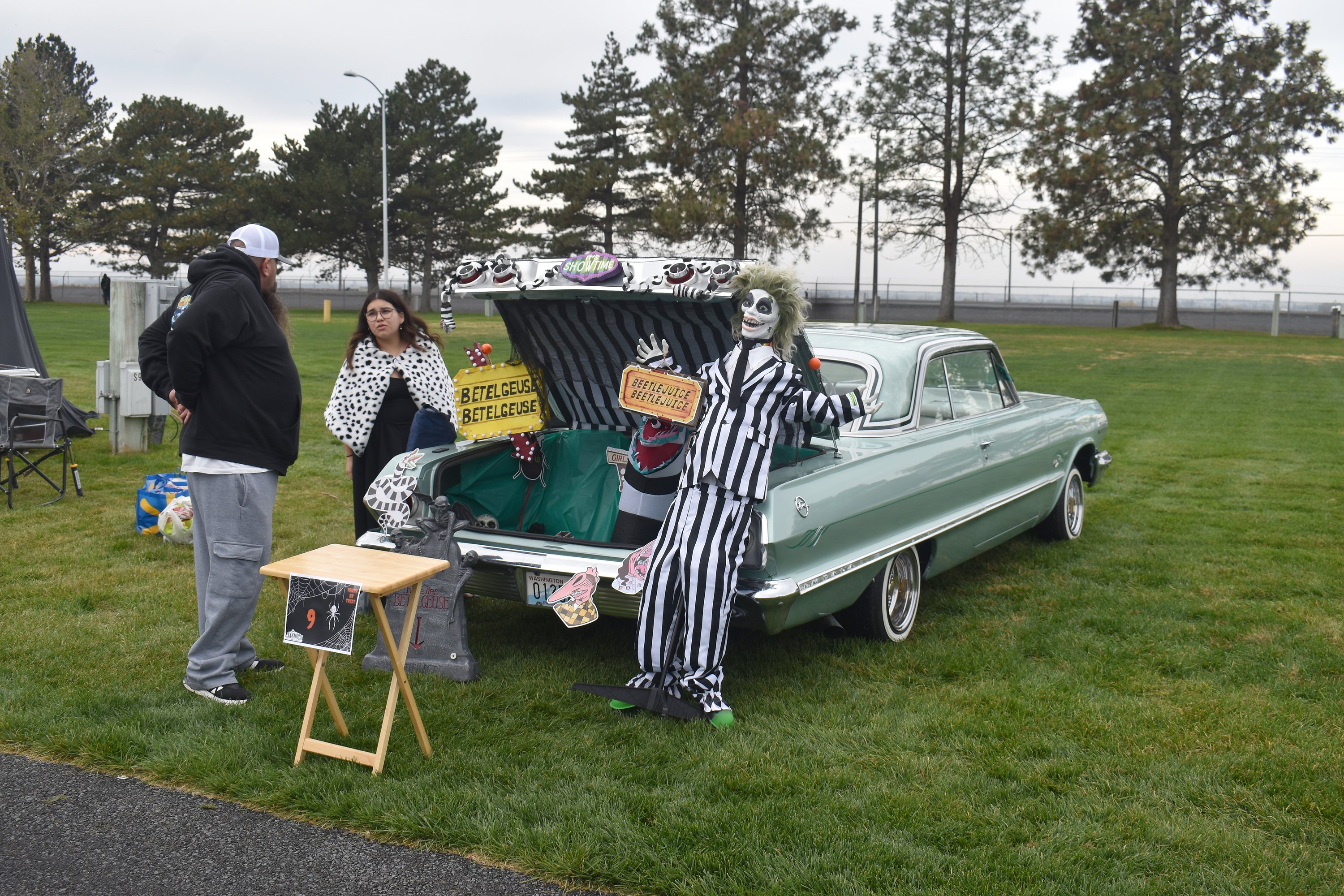 Ralph Gomez, left, and his daughter Lindsey Gomez show off his 1963 Impala for the Moravida Festival car show.
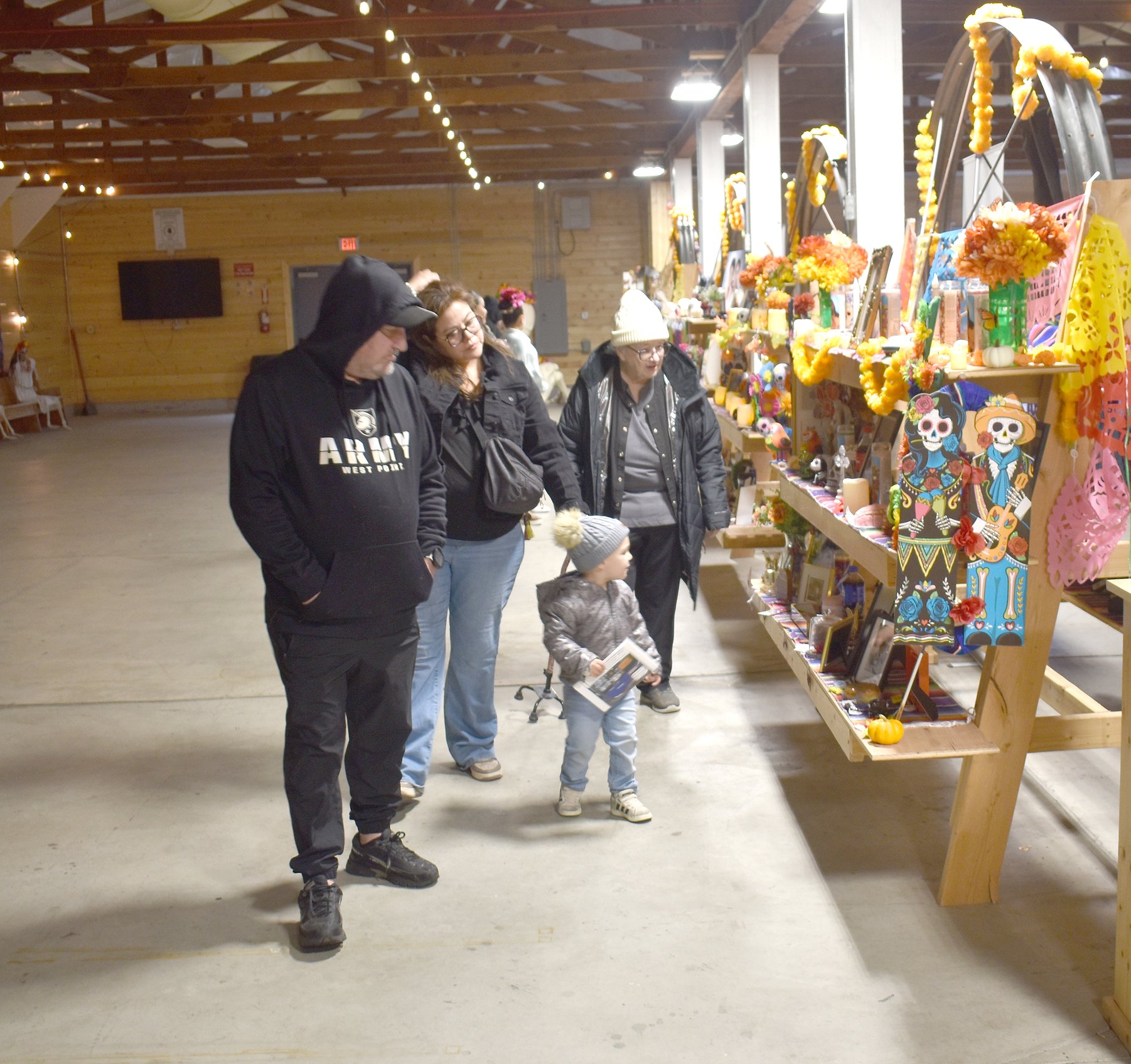 From left: Mike McCoy, his wife Laura McCoy, their 2 1/2-year-old son Mikey Jr. and Mike’s mother Diane McCoy look at the ofrendas, or altars, commemorating the departed at the Moravida Festival Saturday.
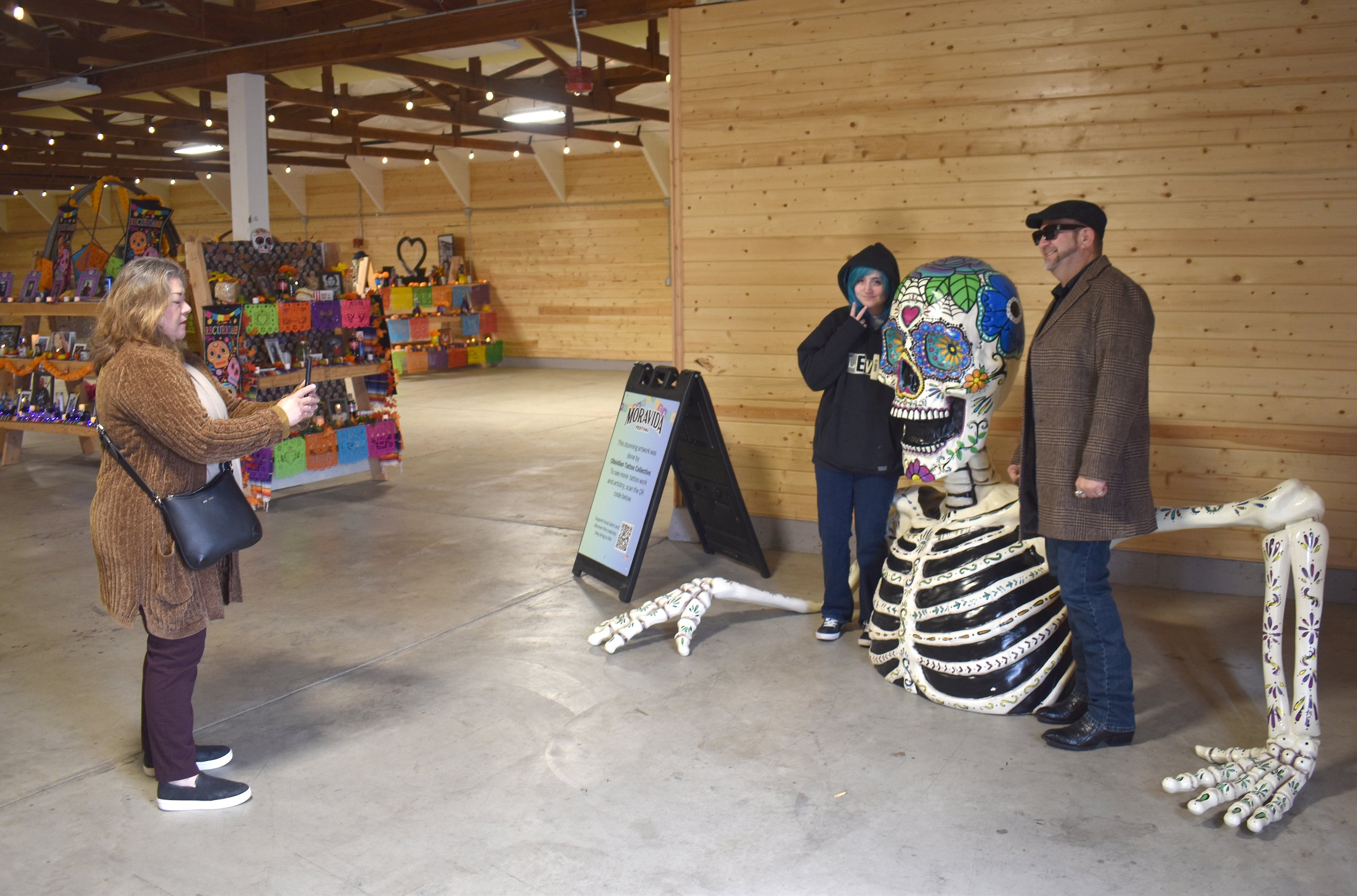 Julia Servin, left, takes a photo of her daughter Ana Servin and her husband Juan Servin. The Servins also had their own Dia de los Muertos display at home, Juan said.
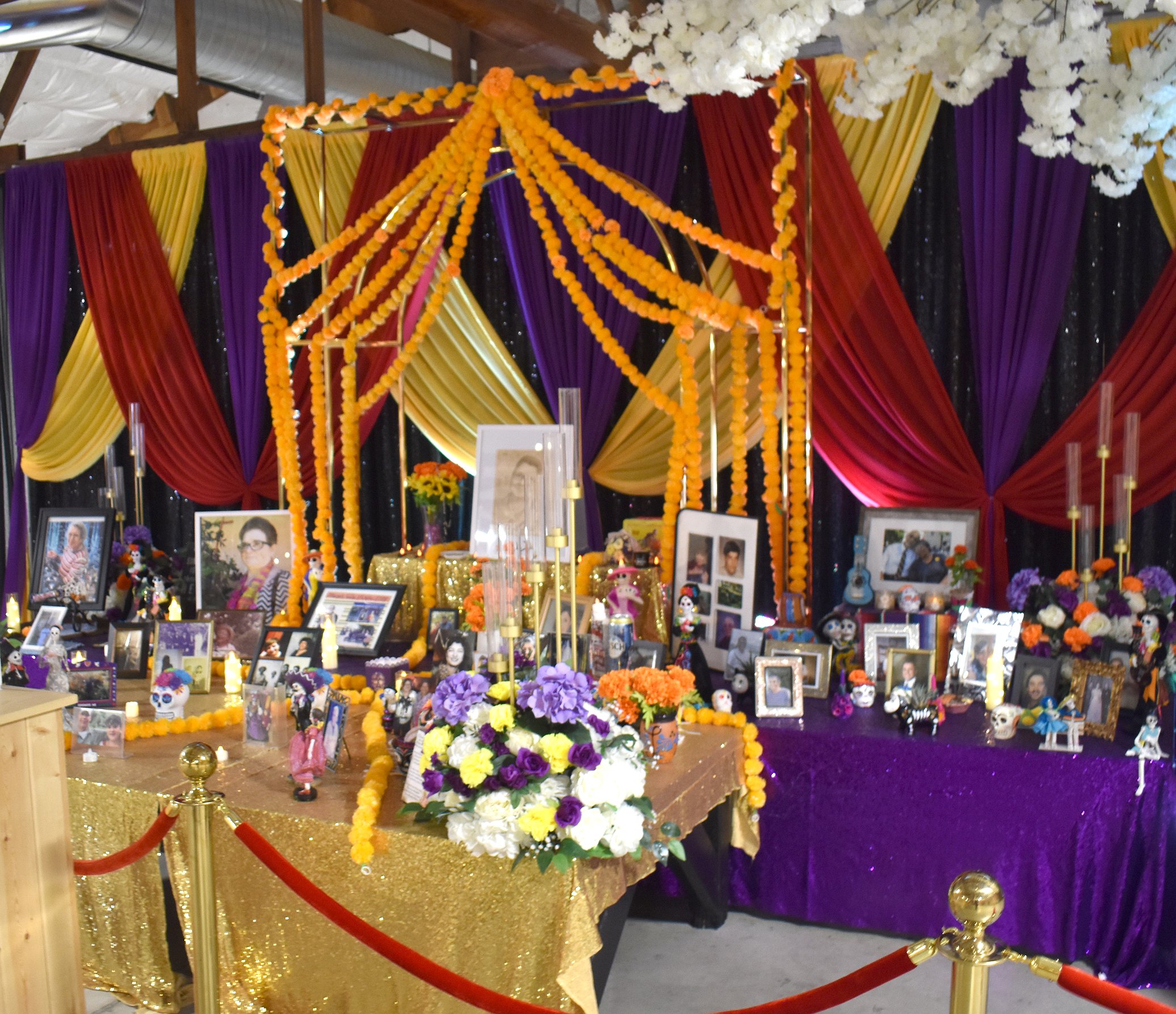 The Community Altar at the Moravida Festival commemorated the departed loved ones of the organizers, particularly committee member Guadalupe De La Rosa, who passed away in August.
ARTICLES BY JOEL MARTIN

Endless battle
Noxious Weed Control Board works to keep invasive plants under control
MOSES LAKE — Some of the nastiest plants in Grant County were the topic of a class led by Jay Johnson, a consultant with the Grant County Noxious Weed Control Board, Tuesday. The Noxious Weed Control Board, as its name would suggest, is tasked with keeping weeds under control in Grant County. That’s not a small job; the board’s website lists 129 species of noxious weeds that are found around Grant County. A noxious weed is defined as an invasive, non-native plant that threatens agricultural crops, local ecosystems or fish and wildlife habitat, according to the Noxious Weed Control Board. Washington state law requires that these weeds be identified and their spread kept to a minimum, if not completely eradicated. “We’re one of those agencies a lot of people don’t really understand,” Johnson said. “We’re a county office and … our funding is tax-based assessment. When you get your tax bill and you look down at all the expenses that you pay for, there we are.”

BASIN EVENTS: Oct. 16-24
COLUMBIA BASIN — Whether you feel like shopping, crafting, learning or seeing a show, there’s something happening for you this week in the Basin. Oct. 16 ‘My Family (Mi Familia)’ screening Spanning three generations, “My Family (Mi Familia)” is a heartfelt drama that follows the Sánchez family as they build their lives in East Los Angeles. Through love, hardship, triumph, and sacrifice, the film explores the immigrant experience, the strength of family bonds, and the traditions that connect one generation to the next. Lowrider show and taco truck before the screening. Sponsored by Columbia Basin Allied Arts, EDUBS C/S and the Moses Lake Creative District. $12 per person. Doors open at 6 p.m., film begins at 7 p.m. at the Moses Lake Civic Center Auditorium, 401 S. Balsam St. Tickets and info: www.cba-arts.org.

Moses Lake author encourages women to look beyond church culture norms
MOSES LAKE — A Moses Lake author’s book, “A Christian Woman Striving to Live Her Faith in a Man-Controlled World,” takes aim at the role to which many churches relegate the female half of their congregations. “It’s to encourage women in the faith,” Linda Curran said. “A lot of churches say, ‘Teach Sunday school, do this, do that, but don’t (evangelize.)’" In her book, Curran recounts a time when she moved to a new community and joined a church there. She was surprised to learn that, as a new female member, she had been automatically assigned church cleaning duties. When she questioned it, she wrote, she was met with condescension and her objections were brushed aside. In other churches, she said, women who were capable of teaching were relegated to “women’s ministry.”