
Epizootic Hemorrhagic Disease deaths could cause increased bear activity
EMILY HEIMARK | Hagadone News Network | UPDATED 11 months, 3 weeks AGO
Emily Heimark (Messer) joined the Lake County Leader in July of 2025 after earning a B.A. degree in Journalism from the University of Montana. Emily grew up in the rolling hills of southeast Missouri. She's lived in Montana since 2022 and honed her reporting craft through the UM J-School newspaper and internships at the RMEF Bugle Magazine and the Missoulian. At the Leader, she covers government, business, education, agriculture and community news. Contact Emily Heimark at [email protected] or 406.883.4343 | November 5, 2025 11:00 PM
The Confederated Salish and Kootenai Tribes Wildlife Management Program suspects Epizootic Hemorrhagic Disease is causing an uptick in white-tailed deer deaths in the Mission Valley. Consequently, recreators are warned of possible increases in bear activity near waterways as bruins feed off these deer carcasses.
CSKT Wildlife Management issued a press release on Oct. 14 reporting a recent increase in deer deaths on the Flathead Reservation in both the Mission Valley and Hot Springs area, which they suspect to be a cause of EHD. This disease affects ruminants – animals with four-chambered stomachs – such as elk and mule and white-tailed deer.
The disease is viral and transmitted by midges biting deer but is not contagious to humans or spread from animal to animal. CSKT wildlife biologist Cara Thompson explained that these midges like shallow water, so drought years and warm weather contribute to their increased population.
These midges are most common during summer and early fall but die off as colder weather approaches. CSKT is not tracking the number of deer affected on Flathead because it is a natural disease that will go away with time.
“It did happen all over Montana. I know it was particularly bad around the Hot Springs and Plains area, but even in central and eastern Montana too,” Thompson said.
“We haven't had any more reports of it in a while, but it can affect deer differently. It takes five to 10 days to incubate,” Thompson said. “Once symptoms start showing they can die within 24 hours, or even within three days.”
The CSKT Wildlife Management press release stated that animal meat that appears healthy at the time of harvest is safe to eat when properly cooked. But they recommend hunters consider getting a harvested animal tested for Chronic Wasting Disease.
CSKT Wildlife also released a press release on Oct. 27 warning hunters, anglers and recreators of possible increased bear activity caused by the increase in deer deaths. As carcasses are concentrated around water sources, they tend to attract bears.
Thompson explained that deer are often found by the water because this disease causes them to be feverish.
Bears are currently in hyperphagia, which is a period when they consume high amounts of food before hibernation. CSKT Wildlife warned that these water areas are a potential place for negative interaction with wildlife and advised people to use extreme caution when recreating.
Epizootic Hemorrhagic Disease and Chronic Wasting Disease present different symptoms in animals. EHD causes lethargy, foaming at the mouth and a swollen or blue tongue, but the animal generally looks healthy. Animals with CWD display droopy ears and excessive drooling, walk in circles, or look weak and skinny.
ARTICLES BY EMILY HEIMARK
Proposed changes to City of Polson government to appear on ballot
The Polson Local Government Review Study Commission completed its report earlier this year, and the proposed changes to the city charter and supplementary report of action to be taken will appear on the November ballot.

Native cowboy from Mission Valley travels to Kyrgyzstan for Nomad World Games
Reaching down from the back of his horse, he grabs the goat carcass, a total of 80 pounds of dead weight, as dust strikes him in the face; the adrenaline rush is never-ending, and the physical demands on his body are unreal.
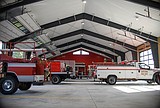
Rollins Fire completes community-funded addition and remodel
After outgrowing its space, the Rollins Volunteer Fire Department sought support from the community and raised $2.2 million to fund necessary upgrades and a station addition.