
Covenant Homeownership Project showing results
JOEL MARTIN | Hagadone News Network | UPDATED 11 months, 1 week AGO
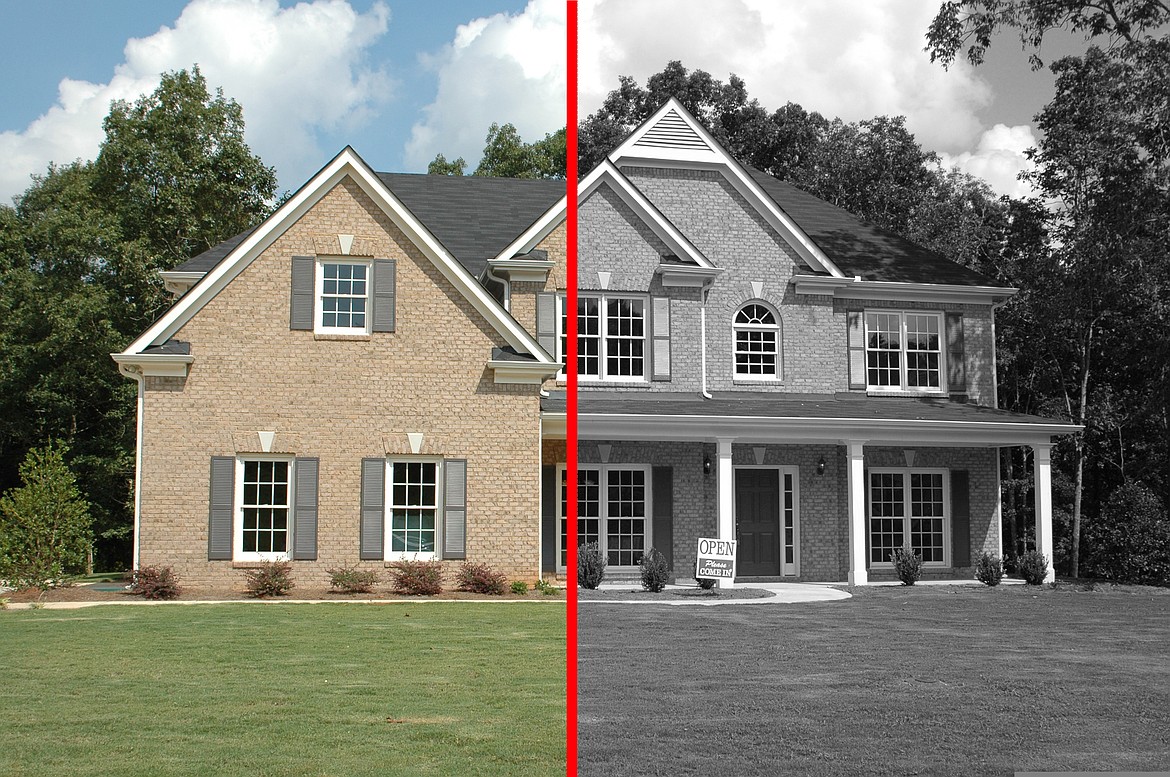
Restrictive covenants drew color lines in residential neighborhoods. A Washington program to correct that is gaining traction, professionals say.
PHOTO COURTESY PIXABAY/COLUMBIA BASIN HERALD GRAPHIC
Joel Martin has been with the Columbia Basin Herald for more than 25 years in a variety of roles and is the most-tenured employee in the building. Martin is a married father of eight and enjoys spending time with his children and his wife, Christina. He is passionate about the paper’s mission of informing the people of the Columbia Basin because he knows it is important to record the history of the communities the publication serves. | November 7, 2025 3:00 AM
MOSES LAKE — Washington’s Covenant Homeownership Project is beginning to do what it’s designed to.
“As of the beginning of last week, 886 people had closed on their homes using this program,” writes Margret Graham, communications director for the Washington State Housing Finance Commission, in an email to the Columbia Basin Herald. Another 92 buyers are waiting to close, she wrote.
Washington state imposes a $200 fee on every real estate transaction. The money is paid into a fund that assists minority buyers with down payments and closing costs, and in some cases even allows for loan forgiveness.
“Now we're seeing that come to fruition,” said Anne Fisher, branch manager for Guild Mortgage in Moses Lake. “We're actually utilizing the funds. We've had an opportunity now to help some customers to get those 20% down payments.”
The Covenant Homeownership Project is a response — delayed many decades — to a form of housing discrimination that barred minorities from certain neighborhoods. This was done through covenants, or agreements between buyer and seller, that the home would never be resold to a nonwhite owner, nor allow a nonwhite to occupy the residence. Exceptions were sometimes explicitly made for domestic servants.
Racially-based covenants were a common thing in the years following World War I, when large numbers of Black workers left the South to find work in New York, Chicago or Detroit. A 1917 Supreme Court ruling made it illegal for local governments to segregate neighborhoods, so developers sidestepped the process with covenants. The 1948 Shelley v. Kraemer Supreme Court ruling made the covenants legally unenforceable, and the Fair Housing Act of 1968 prohibited them completely.
In 2022, researchers from the University of Washington and Eastern Washington University undertook to find how many properties in Washington state carried those covenants. Hundreds were found in Grant County, mostly in Moses Lake, Soap Lake and Electric City, and a few in Ritzville as well. Those covenants can’t actually be removed, but the Covenant Homeownership Project aims to undo some of the damage done by them.
To qualify, a buyer must meet certain income requirements, and must also be a member of an ethnic minority and have lived – or have ancestors who lived — in Washington before 1968 and be able to document that.
“The program has been enthusiastically received by our partnering lenders — 243 loan officers at 49 companies have closed Covenant loans,” Graham wrote.
Most of the buyers who have taken advantage of the program are in King and Pierce counties, Graham wrote, but several eastern Washington counties have seen people benefit as well.
“We have a large Hispanic community with deep roots in this area, and in Washington state,” Fisher said. “Now, we have to prove (eligibility). That’s tricky. Proving the family lineage can be a little difficult.”
The cases they’re finding easiest to prove are of Native Americans, Fisher added, because of tribal documentation.
The program is having multi-generational benefits, Fisher said.
“I have a gal I just helped (who) purchased in Grant County, she's up in Coulee City,” Fisher said. “She didn't end up at the end of the day qualifying for that particular program. Unfortunately, she kind of fell out of the guidelines because she did pretty well for herself. However, I was able to help her son … to purchase a home and get 20% down to do so, and what that did to keep his payments down was awesome.”
The drawback to the program is similar to many other mortgage assistance programs, she said: People just don’t know about them. Even in times when the housing market seems out of reach, Fisher said, a mortgage professional can often find ways to get a new buyer into a home.
“A lender may not know about those programs and you might miss some serious opportunities,” she said. “There's a lot out there. And (a particular program) might not be the right answer for everybody, but (we can) figure out the right program and then and then make sure that they understand (it) … We explain to them why and (try to) go further than just giving them a home loan, helping them to be set up for their future.”
ARTICLES BY JOEL MARTIN
Endless battle
Noxious Weed Control Board works to keep invasive plants under control
MOSES LAKE — Some of the nastiest plants in Grant County were the topic of a class led by Jay Johnson, a consultant with the Grant County Noxious Weed Control Board, Tuesday. The Noxious Weed Control Board, as its name would suggest, is tasked with keeping weeds under control in Grant County. That’s not a small job; the board’s website lists 129 species of noxious weeds that are found around Grant County. A noxious weed is defined as an invasive, non-native plant that threatens agricultural crops, local ecosystems or fish and wildlife habitat, according to the Noxious Weed Control Board. Washington state law requires that these weeds be identified and their spread kept to a minimum, if not completely eradicated. “We’re one of those agencies a lot of people don’t really understand,” Johnson said. “We’re a county office and … our funding is tax-based assessment. When you get your tax bill and you look down at all the expenses that you pay for, there we are.”
BASIN EVENTS: Oct. 16-24
COLUMBIA BASIN — Whether you feel like shopping, crafting, learning or seeing a show, there’s something happening for you this week in the Basin. Oct. 16 ‘My Family (Mi Familia)’ screening Spanning three generations, “My Family (Mi Familia)” is a heartfelt drama that follows the Sánchez family as they build their lives in East Los Angeles. Through love, hardship, triumph, and sacrifice, the film explores the immigrant experience, the strength of family bonds, and the traditions that connect one generation to the next. Lowrider show and taco truck before the screening. Sponsored by Columbia Basin Allied Arts, EDUBS C/S and the Moses Lake Creative District. $12 per person. Doors open at 6 p.m., film begins at 7 p.m. at the Moses Lake Civic Center Auditorium, 401 S. Balsam St. Tickets and info: www.cba-arts.org.
Moses Lake author encourages women to look beyond church culture norms
MOSES LAKE — A Moses Lake author’s book, “A Christian Woman Striving to Live Her Faith in a Man-Controlled World,” takes aim at the role to which many churches relegate the female half of their congregations. “It’s to encourage women in the faith,” Linda Curran said. “A lot of churches say, ‘Teach Sunday school, do this, do that, but don’t (evangelize.)’" In her book, Curran recounts a time when she moved to a new community and joined a church there. She was surprised to learn that, as a new female member, she had been automatically assigned church cleaning duties. When she questioned it, she wrote, she was met with condescension and her objections were brushed aside. In other churches, she said, women who were capable of teaching were relegated to “women’s ministry.”