
Kratom has risks, says doctor
CAROLYN BOSTICK | Hagadone News Network | UPDATED 4 months, 2 weeks AGO

A sign advertises Kratom (Mitragyna speciosa) in a Coeur d'Alene convenience store. Local health provides have flagged dependency issues for the substance and law enforcement have become concerned about its use.
CAROLYN BOSTICK/Press

Dr. Benjamin Milam works at Kootenai Clinic Internal Medicine and is a Board-Certified Addiction Medicine Physician.
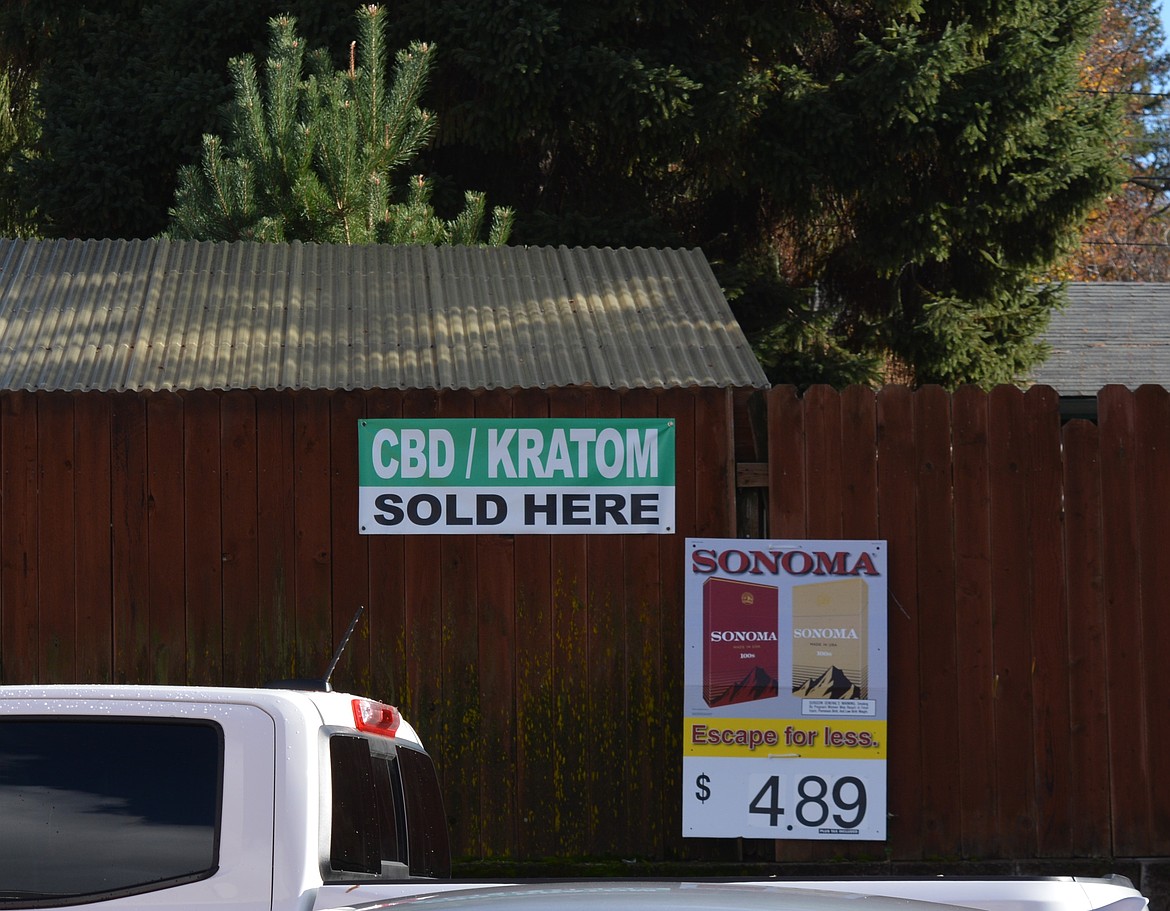
Kratom is advertised in addition to CBD products outside a Coeur d'Alene gas station.
Carolyn Bostick has worked for the Coeur d’Alene Press since June 2023. She covers Shoshone County and Coeur d'Alene. Carolyn previously worked in Utica, New York at the Observer-Dispatch for almost seven years before briefly working at The Inquirer and Mirror in Nantucket, Massachusetts. Since she moved to the Pacific Northwest from upstate New York in 2021, she's performed with the Spokane Shakespeare Society for three summers. | November 9, 2025 1:07 AM
It’s legal and available at convenience stores and online as tablets, capsules or extract, or even in the form of a tea.
Usually marketed as a stimulant, the substance known as kratom is legal in most states and no legislation has been moved forward in Idaho to regulate it.
However, health officials and law enforcement have major concerns.
The Drug Enforcement Administration has flagged kratom as a drug and chemical of concern and the U.S. Food and Drug Administration has warned consumers not to use kratom because of the risk of liver toxicity, seizures and substance use disorder.
Dr. Benjamin Milam of Kootenai Clinic Internal Medicine is a board-certified addiction medicine physician and said he’s been aware of kratom and its medical name, mitragyna speciosa, for about seven years.
“Kratom is not considered a safe herbal supplement,” Milam said. “This drug is associated with significant risks, including organ toxicity, dependence, fetal withdrawal and death, especially when combined with other substances.”
Kratom’s main active compounds act on opioid receptors, producing opioid-like effects and carrying the same risks for physical and psychological dependence.
Kratom is an herbal substance that can produce “opioid and stimulant-like effects,” according to the National Institute on Drug Abuse.
"As a health care provider, there are several important issues to keep in mind when it comes to kratom use. It can lead to addiction and withdrawal, liver injury, neuropsychiatric effects and sometimes serious toxicity, especially when used along with other substances,” Milam said.
Withdrawal symptoms often present in a similar manner to opioids. There have even been reports of newborn withdrawal when mothers used kratom during pregnancy in rare cases, Milam said.
Liver problems are also possible and may manifest as jaundice, along with itching and abdominal discomfort.
More than 2 million people in the United States use kratom annually, according to a Drug Enforcement Administration report from 2024.
"On the neurological and systemic side, users have reported seizures, confusion, hallucinations, fast heart rate, and in rare cases, respiratory depression or coma,” Milam said. “These problems are more likely — and often more severe — when kratom is taken with other substances, but they can happen with kratom alone as well.”
Law enforcement
Lt. Erik Hedlund in the Kootenai County Sheriff’s Office has noted an increased presence of kratom coupled with other substances.
Since kratom is readily available in Idaho, Hedlund has been worried about the risk of unregulated use since the substance can cause psychotic or hallucinogenic episodes.
“There’s not even age restrictions in Idaho,” Hedlund said. “We have to be reactive to what the Legislature does. We had a similar issue with bath salts a few years ago.”
Because kratom is not a regulated or controlled substance, law enforcement officials are not required to track usage of the substance, so it can be harder to compile usage across incidents.
“It's not an illegal substance, so there's not a lot we can do about it, per se,” Hedlund said.
Earlier this year, Coeur d'Alene police arrested a local man for stealing kratom from multiple businesses.
In Montana
During Montana's 2025 legislative session, several lawmakers drafted bills to study and regulate kratom, but all attempts failed.
Rep. Curtis Schomer, R-Billings, sponsored House Joint Resolution 60, which would have formed an interim study on the effects and regulations of kratom. The bill passed a House vote but died in the Senate.
“This is bad stuff; it’s hurting people,” Schomer told the Inter Lake earlier this month.
In September, the Blackfeet Tribal Business Council banned the usage and sale of kratom on the Northwest Montana reservation, citing concerns over the potentially addictive product.
Kalispell's Big Sky Treatment has a kratom addiction program. Whitney Harrah, a licensed addiction and mental health clinician at the outpatient rehab center, said she's seen kratom usage in a handful of patients, mainly combined with other substances. She advises staying away from the product entirely.
“The danger in using chemicals to regulate your mood and your mind is you never learn to be a human being,” Harrah said. “Part of the mindset that I’ve noticed is there is a belief here that if it’s legal, it’s good. You see that with alcohol, with pot, with kratom. It’s all just continued use of a chemical to assault and injure your brain.”
The issue with kratom, Harrah echoed, is that there is just not enough research or regulation to affirm its usage when not prescribed.
“I believe in people’s freedom,” Schomer, the Billings lawmaker, said. “But this is bad stuff being sold. It seems to have a lot of mixed reactions, but I care about it. I care about our children, and I think it’s important that the bad stuff gets stopped.”
Kratom has benefits, says senior fellow
The issue isn't pure kratom but rather the synthetic, unregulated market, contends Mac Haddow, a senior fellow on public policy for the American Kratom Association, a nonprofit dedicated to protecting the legal consumption of pure kratom.
Pure kratom has benefits, Haddow said. People will use it to alleviate chronic pain or as a harm reduction method for symptoms of opioid withdrawal.
When kratom was first introduced in the U.S., it was a pure product, Haddow said. But the substance has changed as it is manipulated to create different products like 7-OH.
“From that emerged a substantial adulterated market where kratom is not kratom,” Haddow said.
The American Kratom Association has lobbied for states to pass the Kratom Consumer Protection Act, which looks to establish safety guidelines and manufacturing practices for kratom vendors. As of October, 18 states have passed the legislation.
Future legislation deemed possible
State Sen. Carl Bjerke, R-Coeur d’Alene, said kratom has been mentioned as a potential source of future legislation before, but there wasn’t enough momentum with legislators to gain any traction when it comes to regulation in Idaho.
“I’m concerned about it, I’ve had a couple constituents reach out over the last three years and I’ve even brought it to the attention of health and welfare,” Bjerke said.
The known dependency and withdrawal issues associated with the substance brought it to his attention.
“It causes problems in our community, but there hasn't been pressure on either the state side or constituent side to move on regulation of the substance yet,” Bjerke said.
When there are federal classifications of drugs disseminated for the states to adopt, Bjerke said the substance will go into the state rules and regulations.
"At some point, it rises to ‘we’ve got to do something about it.’ These things get motion over the attention that surrounds them. My hope is that we don’t wait too long,” Bjerke said.
• • •
Daily Interlake Report Kate Heston contributed to this report.
 Dr. Benjamin Milam works at Kootenai Clinic Internal Medicine and is a Board-Certified Addiction Medicine Physician.
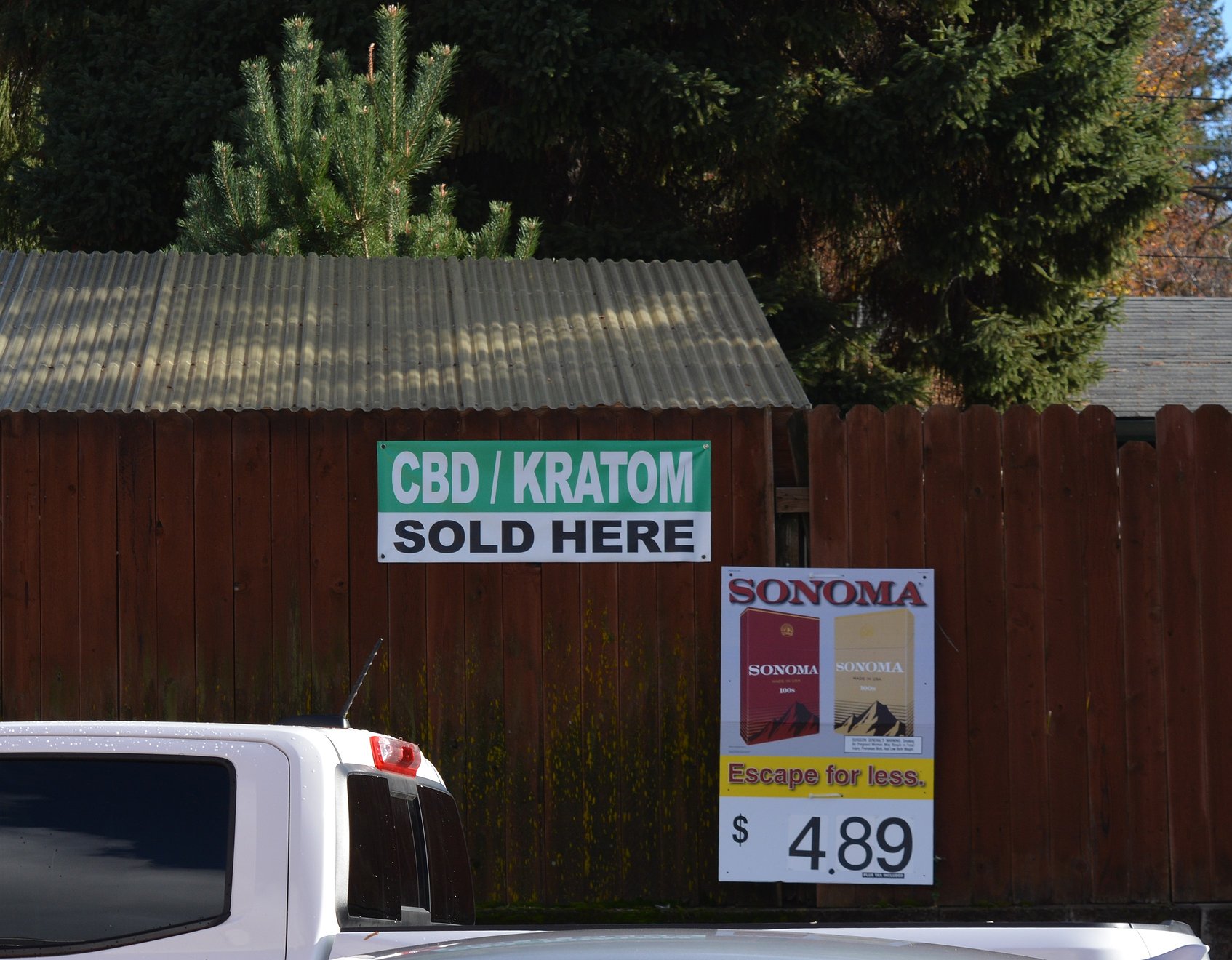 Kratom is advertised in addition to CBD products outside a Coeur d'Alene gas station.
.
ARTICLES BY CAROLYN BOSTICK

'Bad actors' bill fails again
Aimed at protecting home, business owners
After high hopes this legislative session, lobbyist Ken Burgess said that the state bill intended to create protections against unscrupulous contractors won’t be moving on.

Students pitch future professions at reverse job fair
Students pitch future professions at reverse job fair
Ranging from criminology to cosmetology, Post Falls high school students pitched professions that sparked their interest during the reverse job fair on Wednesday at Real Life Ministries in Post Falls.

Kootenai Health, MultiCare celebrate Prairie Medical Campus groundbreaking
Kootenai Health, MultiCare celebrate Prairie Medical Campus groundbreaking
Although hundreds in attendance gathered at the site on Tuesday for the Prairie Medical Campus for a literal groundbreaking, Kootenai Health CEO Jamie Smith pointed out that the project also fulfilled the figurative definition by being new and innovative. “This campus is going to be a gamechanger for the region,” Smith said.