
Rediscovering home: Can't go home again
BRUCE MOATS Mineral Independent | Valley Press-Mineral Independent | UPDATED 3 weeks, 4 days AGO
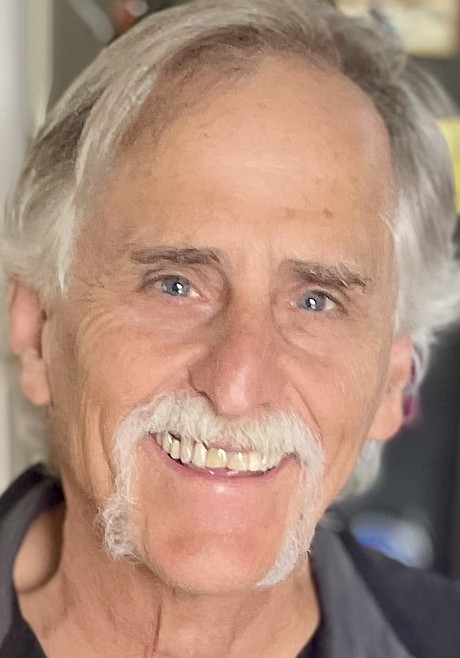
Bruce Moats
Maybe the old adage that one can’t go home again is true.
The saying has been ringing in my ears since returning to Superior, the place where I was born and raised, after 45 years away. I did visit my mother, Gloria, at least twice a year over the years, so I have been able to observe the changes here over time.
The scenery is the same. The weather has changed somewhat. The economy has drastically changed. During my youth, truckloads of logs harvested by tough men were delivered to a mill running full tilt.
Some of the people I grew up with are still here or a number of folks have joined me in recently moving back. But there are many new folks.
The farm fields are largely now plots for new homes. Only a few of old families are still running cattle. The Verleys, the Brockways, the Yorks, the Brickers and others have long abandoned ag pursuits. The Warnkens are raising hay. The Hollenbacks have substituted horses for cows.
Of course, my family ranch is now home only to two well-fed horses. Nearly all of these ag folks had other jobs like my dad at the mill.
The Donnelly brothers sold their herd some time ago, though I understand an associate is running a few on the Toots Bricker property. Tarkio also hosts the William and Yvonne Wheeler farm, which appears to me to be the biggest in the area. Debra Boyes is still running a few head at Tarkio. Sen. Denley Loge recently sold his cows.
During my youth one usually found solitude in these mountain drainages. Now, you find new homes up every drainage. Houses continue to be built in a subdivision miles up Dry Creek. Several large homes dot remote Keystone. These homes have been popping up since I left, but the growth has been rapid in the last ten years.
Septic permits issued over the last ten years testify to the growth in rural homes:
2015: 26
2016: 25
2017: 39
2018: 40
2019: 47
2020: 75
2021: 76
2022: 74
2023: 70
2024: 98
2025: 42 currently
I recently remarked to a member of one of the old families who still lives on the place that she had a lot of neighbors now. Her response, “And I don’t know any of them.”
Her response brought to the surface the question that plagued me during visits and now my return home: Who are these new residents of my hometown?
Sen. Loge, who has traveled the county while campaigning, says most are at or beyond retirement age. He said some are escaping from their previous home for various reasons, including politics. Others say, “It is so beautiful. I have traveled through here for years and decided it was where I wanted to live when work no longer dictated where I live.”
The Census Reporter, an online service of Northwestern University, lists the population of Mineral County in 2023 as 4,796. As federal forest land dominates Mineral County, it has only 3.9 people per square mile.
Our population continues to grow older, with median age at 50.1. Fifty-one percent are over 50 years old. The largest grouping is 60-69 at 18 percent, while those in their 50s and 70s come in at 13 percent each. The county is 25 percent older than the state. The median age of the United States is 40.
The decline in school enrollment also shows the graying of our population. The Superior enrollment stood at 308 last year. The previous years enrollment was 333 in 2023-24, 325 in 22-23, 352 in 21-22, 333 in 20-21 and 321 in 19-20.
The St. Regis mill closed in 2021, which probably caused much of the decline since that date. By the way, it seems Idaho Forest Products bought the mill in the first place because the company wanted the local timber resources for its Idaho mills.
Approximately 71 percent of county residents make less than $100,000 a year, which includes many households with two incomes. Three percent, or about 140 county folks, make more than $250,000 a year. I have my doubts that folks making under $100,000 are building the large homes populating the mountain drainages. Of course, income is what one makes in a year, and does not tell us much about what the accumulated wealth a person has.
This also begs the question about whether the houses are seasonal, second homes.
Are the owners counted here or elsewhere? The Census counts “people at their usual residence, which is the place where they live and sleep most of the time. People who do not have a usual residence, or who cannot determine a usual residence, are counted where they are on Census Day.”
Sen. Loge says many retirees living here are looking for ways to contribute to their local community. We need to find a way for them to become part of the community.
The Superior mill was not only a place of work, but, because it employed directly or indirectly most Superior residents, it was also a place where friends met, plans were made, and communication about community events took place. Now, it is Facebook where people talk about community events. Not a good substitute, in my opinion.
A childhood friend, who is moving back to Superior found himself alone on a Friday evening cruising the “main drag” in town. He asked his son where everybody was.
His son responded people go home and get lost in social media, watch streaming services or play video games. The drag in our day followed River Street and went down Fourth Avenue to the high school and then back. Teenagers circled the drag during or after the movie at the “showhouse,” or the Strand Theatre as it was officially called. Adults congregated at the local watering holes.
Now, the mill is but a ghost, the showhouse is gone and the historic Montana Bar no longer holds court in the old downtown.
A lot is going on around Superior, but each group seems to be running in its own lane. There are folks trying to change that and bring a bigger sense of community here. But it is a process that takes time.
Maybe I am just trying to go home again, when that home is no longer really there.
Maybe now, it’s just the way things are meant to be.