
What’s next for Sandpoint’s wastewater treatment plant
Bonner County Daily Bee | UPDATED 9 months, 3 weeks AGO
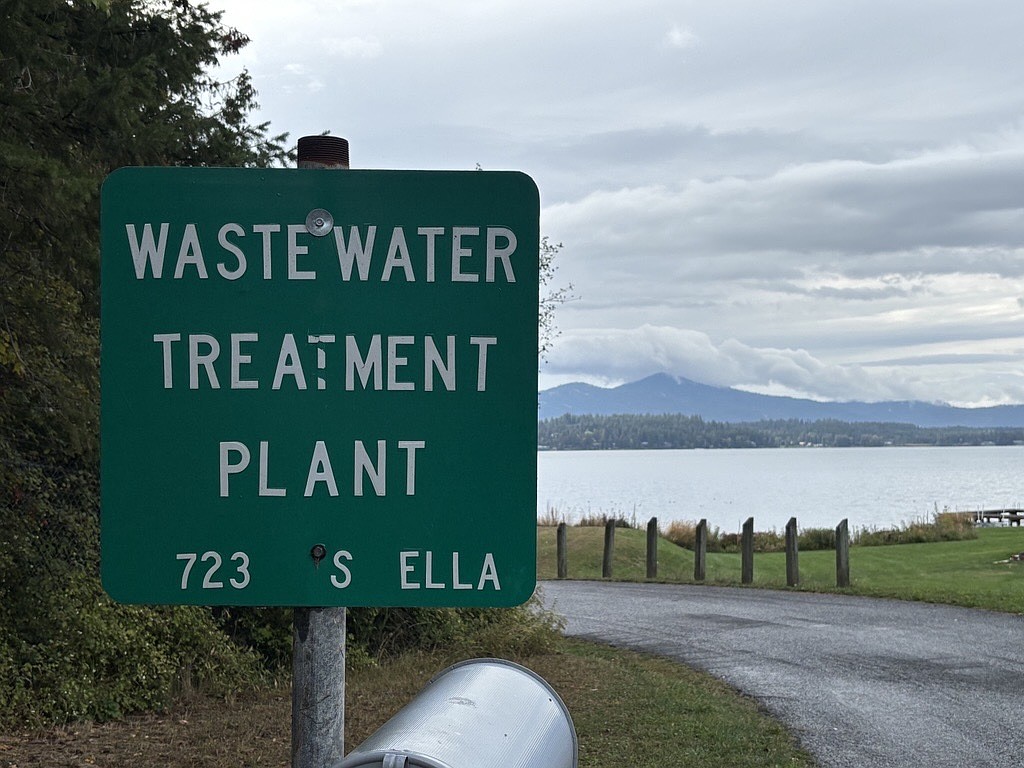
The sign at the entrance to Sandpoint's wastewater treatment plant.
Photo by JACK FREEMAN
SANDPOINT — Nearly 90% of all voters cast their ballot in favor of the $130 million bond, which will allow the city to completely renovate its wastewater treatment plant.
Sandpoint Mayor Jeremy Grimm said the margin was an unexpected, but appreciated, vote of trust in the city’s government. Following the election, Grimm said he and city staff will begin to search for grant funding for the project.
"We are going to go to our partners at the state and federal level, and we will now be able to clearly show them what the debt would do to our typical utility rates,” Grimm said. “We are going to work like mad to get grant funding, not low-interest loans, but actually partnership funding from the state and federal government.”
As of now, the city has secured a $3.5 million grant from the Idaho Department of Environmental Quality, but nothing from the federal government.
Without grant funding, the city estimates that sewer rates will rise by 106% over the next five years, rising to as much as over $200 monthly. Grimm said if that happens, rates will account for 5% of the median resident’s income and believes that the federal government would provide assistance if rates rose that high.
Grimm said the city will be working to develop a complete design of the renovated plant by late spring; currently, it only has a preliminary engineering concept. Grimm said the design will come in multiple phases, gradually getting more detailed while receiving feedback from the Sandpoint City Council and Grimm.
"Once we figure out and determine which process we are going to use to build it, finish the design and secure additional funding we will begin construction,” Grimm said. “I don’t anticipate earth moving until probably fall 2027.”
While the bond authorizes the city to go up to $130 million in-debt, Grimm said that the city will draw on the funds gradually, not all at once. Grimm said there will be no immediate increase to sewer rates, and that residents would only see increases as the city draws on its bond.
"We would take it in chunks, maybe a portion for the design and engineering, a portion for the first phase of construction and the final phase of construction,” Grimm said. “At the end of the project without any federal or state funding, that’s when the rates would be at their highest levels, so probably not until 2028.”
The city said the construction of the renovated plant will occur in phases to ensure that the plant stays operational. Once begun, the city estimates construction will be completed in five years.