
As winter nears, bears prepare for a long rest
By Jessica Reyes | Bigfork Eagle | UPDATED 2 weeks, 2 days AGO
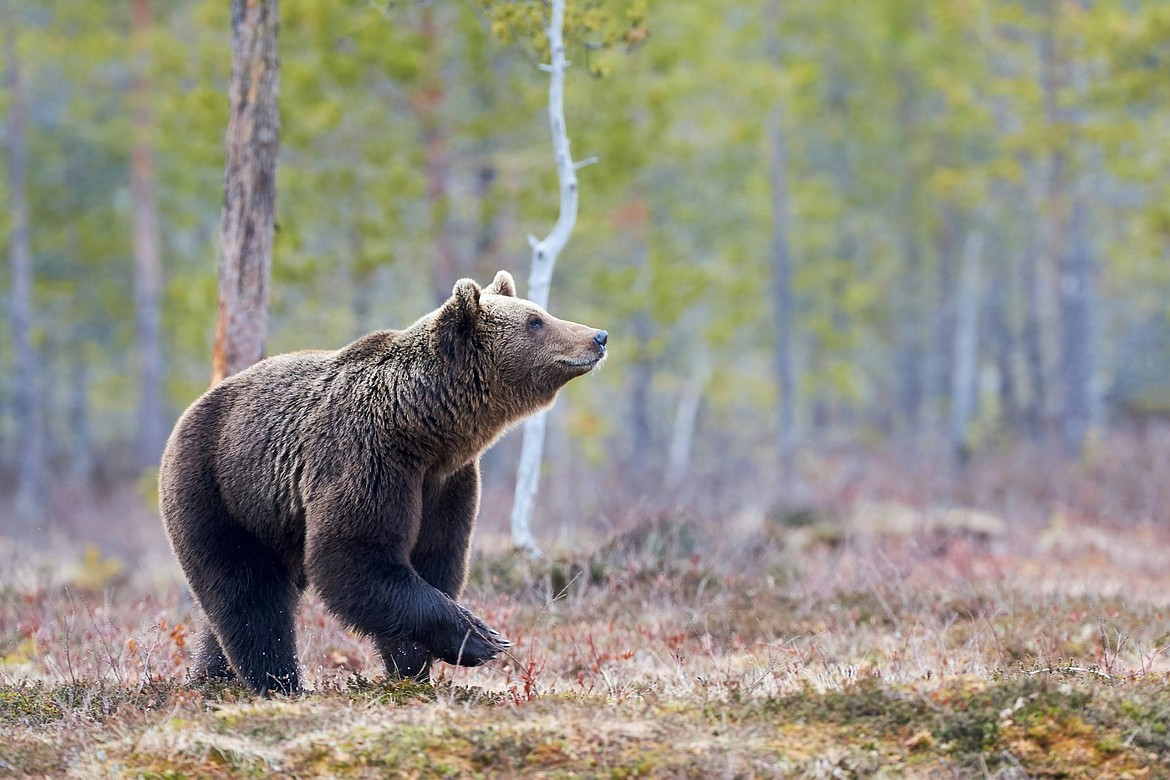
A grizzly bear. (Courtesy/Swan Valley Connections)
As people stock up on firewood and blankets to stay warm and cozy for the cold months ahead, bears across the region are also preparing for winter. Their seasonal survival strategy is simple: eat as much as possible, then find or dig a secure den to sleep through the months when food is scarce.
Grizzly bears choose a variety of den sites — under tree roots, inside natural caves, or dug into hillsides — usually between 6,000 and 8,000 feet in elevation in the Swan and Mission mountains. Dens are selected on northern, eastern, or western 30- to 60-degree slopes, with deep snow to provide insulation, warmth and protection.
Grizzly bears dig their dens within three to seven days, where they may move up to a ton of material. Dens consist of an entrance, a short tunnel and a chamber with bedding material that has air pockets and traps body heat. The bedding material consists of moss, grass, conifer boughs, or other vegetation.
Although commonly called “hibernation,” bears aren’t true hibernators. More accurately, bears enter a state of torpor, characterized by reduced metabolism, heart rate, respiration and body temperature. While true-hibernating animals like squirrels drop their body temperature to around 40 degrees, a bear’s body cools only to about 89 degrees — just 12 degrees below normal.
Their thick fur and fat reserves allow them to cut their metabolism in half and survive on about 4,000 calories of stored fat per day. During this time, bears don’t eat, drink, urinate or defecate. If a female has enough fat stored, she’ll give birth and nurse her cubs inside the den, usually birthing in January.
When bears enter their dens depends on the weather and food availability. Warm, snow-free conditions can delay denning, and in some areas, bears skip it entirely if they find ample human-associated food sources such as garbage or bird feeders. In the Swan watershed, bears typically den from mid-December to mid-March. Bear managers normally recommend securing bird feeders from March 15 through Christmas, when bears are active. However, if spring arrives early, the snow melting will cause them to be seen out and about sooner.
Through community actions, living responsibly in bear country, we can minimize potential human-bear conflicts, ensuring that bears remain wild and humans stay safe!
Swan Valley Bear Resources (SVBR) is a collaborative group that promotes coexistence between humans and bears and provides resources to anyone in the Bigfork, Ferndale, Swan Lake, and Condon communities. SVBR indefinitely loans out bear-resistant garbage containers for free and offers a cost-share program for electric fencing around attractants such as small livestock and orchards. We provide free property consultations to identify attractants and will design an electric fence to suit the landowner's needs, maintaining proper specifications to deter grizzly bears. Swan Valley Connections' trained staff will even install the electric fence at no cost.
Call Swan Valley Connections at (406) 754-3137 or email [email protected] to learn more about the resources available through Swan Valley Bear Resources.
To report bear sightings and conflicts, contact our local MT Fish, Wildlife & Parks Bear and Lion Specialist, Erik Wenum, at (406) 250-0062.
Jessica Reyes is the bear conflict prevention coordinator for Swan Valley Connections in Condon.