
Whitefish visitation steady despite shutdown, cautious optimism for winter
Zak Anderson | Whitefish Pilot | UPDATED 8 months, 3 weeks AGO
October brought a welcome rebound for the Whitefish lodging sector, with occupancy up 11.8% year-over-year and average daily rates (ADR) rising 2%. Despite these encouraging results, it’s important to note that October and November remain part of the traditional shoulder season, when occupancy typically falls below 50% and 25%, respectively, and room rates are less than half of what properties command in mid-summer.
Nationally, average hotel occupancy sits around 64%, underscoring Whitefish’s distinct hyper-seasonal pattern. Looking ahead, early indicators suggest that bookings for December, January, and February are up year-over-year—a particularly positive sign given the trend toward shorter booking windows and the absence of early-season snowfall.
Historically, early snow at Whitefish Mountain Resort has been a strong driver of advance bookings, so the resilience of winter demand points to growing market confidence and destination awareness. Early indications from the resort are that season pass sales, Frequent Skier Card sales, and lodging reservations on-mountain for the upcoming season are ahead compared to this same time last year.
On the visitor mix side, Canadian travel and spending were down 23% year-over-year, consistent with a nationwide slowdown in cross-border tourism. Since Canadians represent about 90% of all international spending in Whitefish, this decline has weighed heavily on the international segment.
The federal government shutdown, along with a mid-October GTSR seasonal closure in October, caused a sharp drop in park visitation and regional travel activity as a whole.
Another important factor shaping the market is the continued growth in residential development and second-home ownership across the Flathead Valley. While this dynamic hasn’t received as much public attention, it plays a significant role in driving local economic activity year-round. These “new locals” contribute to retail, dining and service-sector spending, complementing traditional visitor-based revenue. Even with this strong residential growth, visitation still accounts for just over 50% of all local spending, emphasizing the ongoing importance of tourism as a core economic driver.
Overall, the data paints a picture of stability and cautious optimism. The Whitefish market has managed to maintain steady performance despite national tourism slowdowns, reduced Canadian travel and broader economic uncertainty. If Canadian visitation were to rebound and external pressures such as inflation and policy disruptions eased, business confidence in the off-season would likely strengthen further.
For now, the region remains one of the bright spots in a darkening U.S. tourism landscape—buoyed by strong domestic demand, evolving visitor patterns, and the ongoing vitality of the local community.
Zak Anderson is the executive director of the Whitefish Convention and Visitors Bureau.
This article was provided through the partnership between Explore Whitefish (the Whitefish Convention and Visitors Bureau) and the City of Whitefish Sustainable Tourism Management Plan Committee. The Committee, working closely with local stakeholders, is committed to sharing transparent and timely information on the state of tourism in our community. The Sustainable Tourism Management Plan’s goals are to foster collaboration, improving visitor education, managing impacts on infrastructure and natural resources, and ensuring that tourism continues to provide broad benefits to local residents.
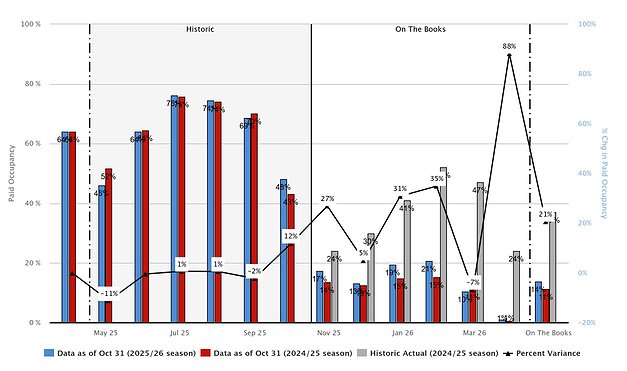 Lodging reservation projections, fall 2025. (Photo provided)